
 Asro
Asro
From the visceral terror of Francisco Goya’s Saturn Devouring His Son to the domestic intimacy of Dutch Golden Age interiors, the figure of the father has long served as a cornerstone of Western art history. Yet, these historical representations often lean toward archetypes: the patriarch, the provider, or the cautionary tale. In contemporary practice, however, the concept of "fatherhood" is being dismantled and reassembled by artists who view the paternal figure not as a static monument, but as a living, breathing, and often fractured subject.
On the occasion of Father’s Day, Hyperallergic examines 10 artists whose work confronts the multifaceted nature of father figures—ranging from the sacrifices of immigrant fathers and the silence of absent ones to the collaborative legacies of artist-fathers and the radical potential of future caregiving.
The Archive of Absence and Resilience
For many, the figure of the father is defined as much by his absence as by his presence. This tension between memory and reality forms the bedrock of work by artists like Arleene Correa Valencia and Larry W. Cook.
Arleene Correa Valencia: Weaving the Distance
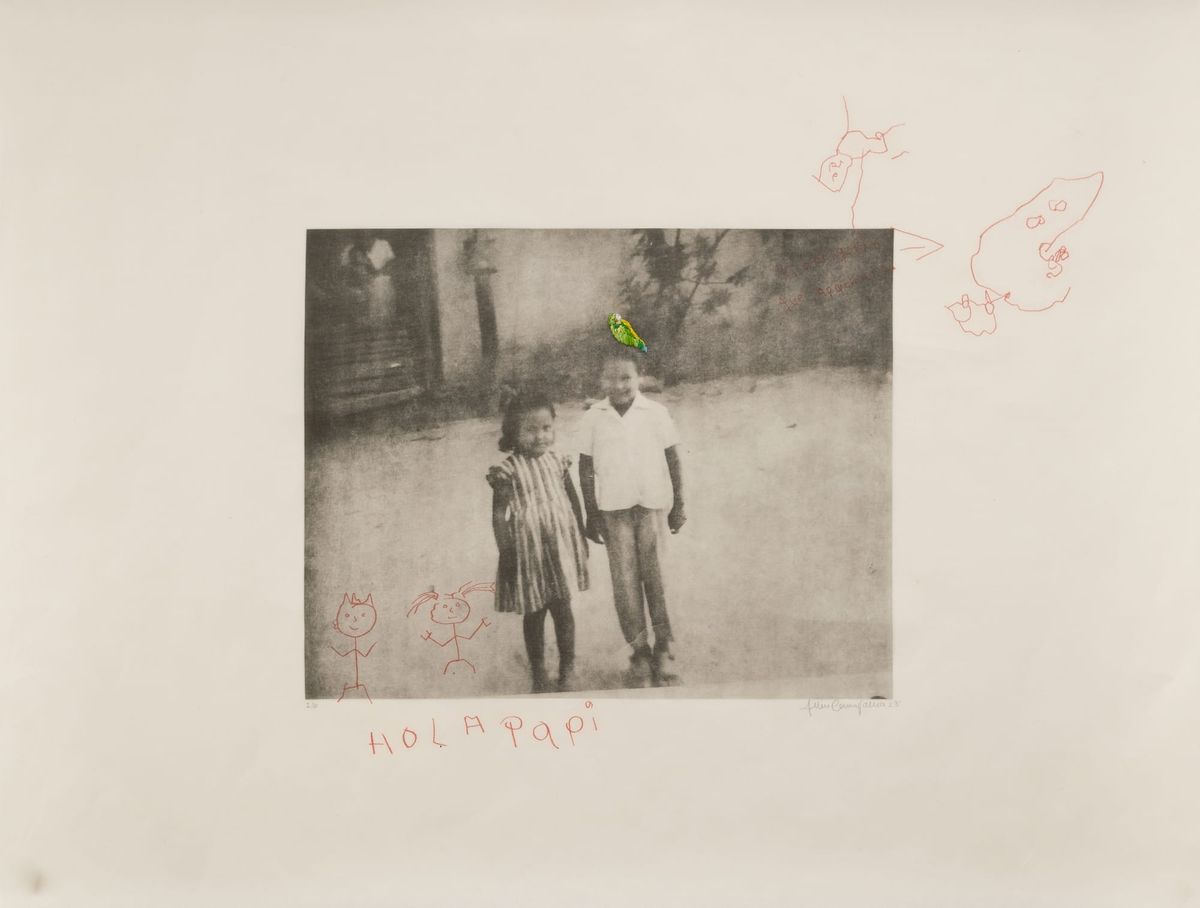
In 1996, Arleene Correa Valencia’s father departed Michoacán, Mexico, in pursuit of opportunity in the United States. While he eventually reunited with his family in Napa Valley, California, the interim years were defined by separation and the slow, fragile bridge of correspondence.

During her 2022 residency at Mullowney Printing, Correa Valencia channeled this history into Antes de mí, a series of copperplate photogravures. These works serve as a tactile archive of resilience, layering family photographs with hand-stitched embroidery, beading, and abstract etchings of Mexica imagery. In "Hola Papi," she incorporates a childhood drawing sent to her father—a poignant reminder of the art-making that sustained their connection across borders. "As a child, my Pa’s dream was to be an artist," she reflects. "I’ve always felt that I carry that dream inside me. Being an artist doesn’t feel like it belongs to me. It belongs to us."
Larry W. Cook: Reframing the Paternal Narrative
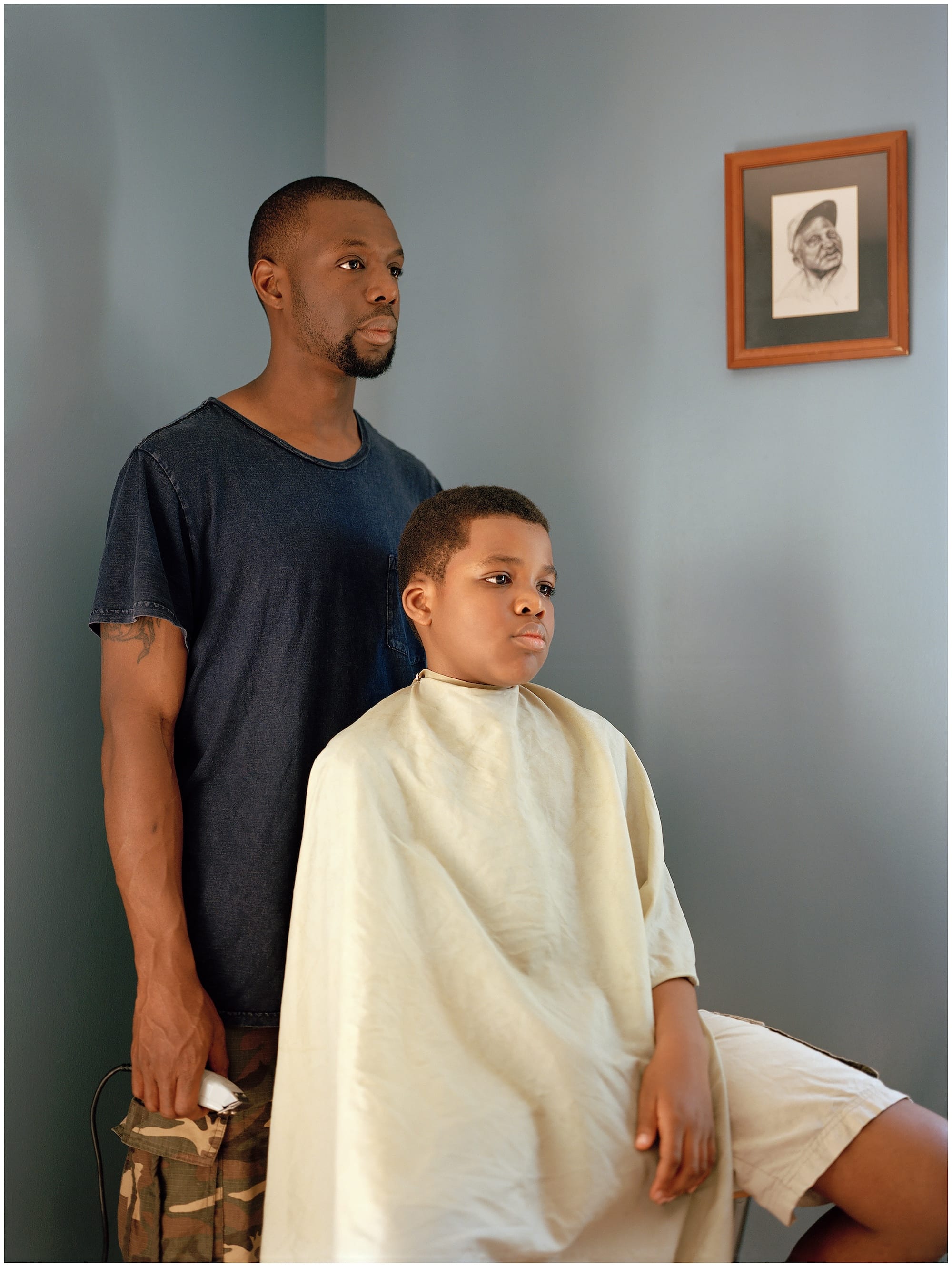
Larry W. Cook’s series Fatherhood (2018) offers a necessary correction to the often-politicized and reductive narratives surrounding Black fatherhood. An artist and professor at Howard University who grew up without his own father present, Cook turns his lens toward the "father-like" figures who stepped into that vacuum.
His photographs—depicting intimate, everyday moments like a child’s arm resting on a father’s chest or a mundane electric razor—defy the tropes of hyper-masculinity. By presenting these subjects with neutral, contemplative gazes, Cook invites the viewer to abandon their biases and confront the quiet, complex reality of paternal care.
The Myth of the Provider: Inheritance and Memory
The "provider" role is often laden with unspoken burdens. Artists like Amanda Ross-Ho and Melissa Joseph explore how the professional and personal struggles of their fathers shaped their own creative identities.
Amanda Ross-Ho: The Memory Palace of Objects
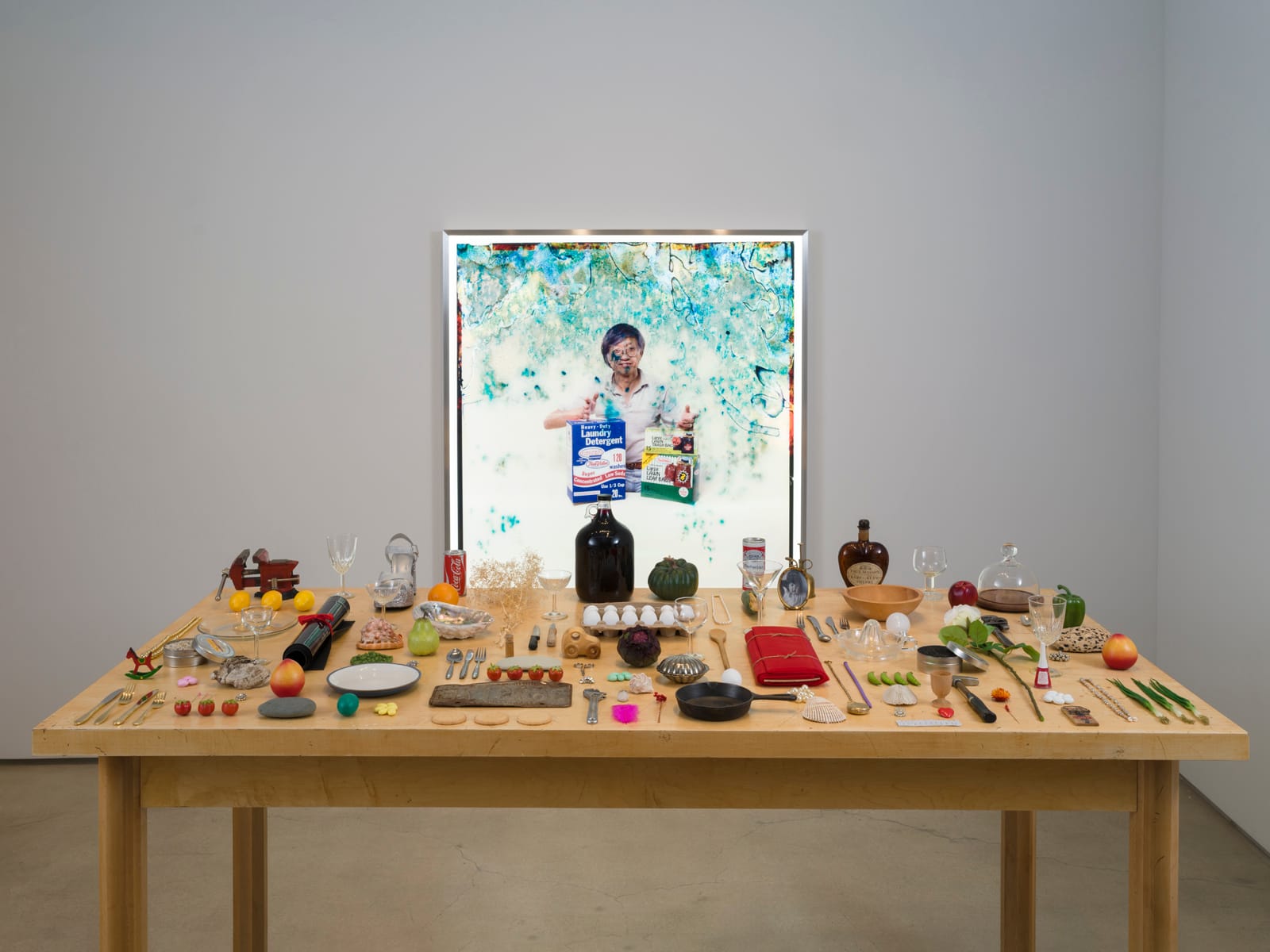
Amanda Ross-Ho’s Untitled Prop Archive (THE PORTFOLIO) (2024) is a brilliant interrogation of the "fake it ’til you make it" ethos required of many immigrants. Her father, Ruyell Ho, was a Chinese immigrant and art school graduate who successfully secured a commercial photography job by staging a portfolio of household objects.
Decades later, Ross-Ho reverse-engineered those images, meticulously recreating or sourcing the props—fake fruit, pearls, beer cans—to reconstruct her father’s workspace. The resulting installation, centered on a scale-model of their childhood kitchen table, transforms her father’s survival strategy into a quasi-religious altar, elevating the "commercial" to the sublime.
Melissa Joseph: Grief as a Creative Catalyst
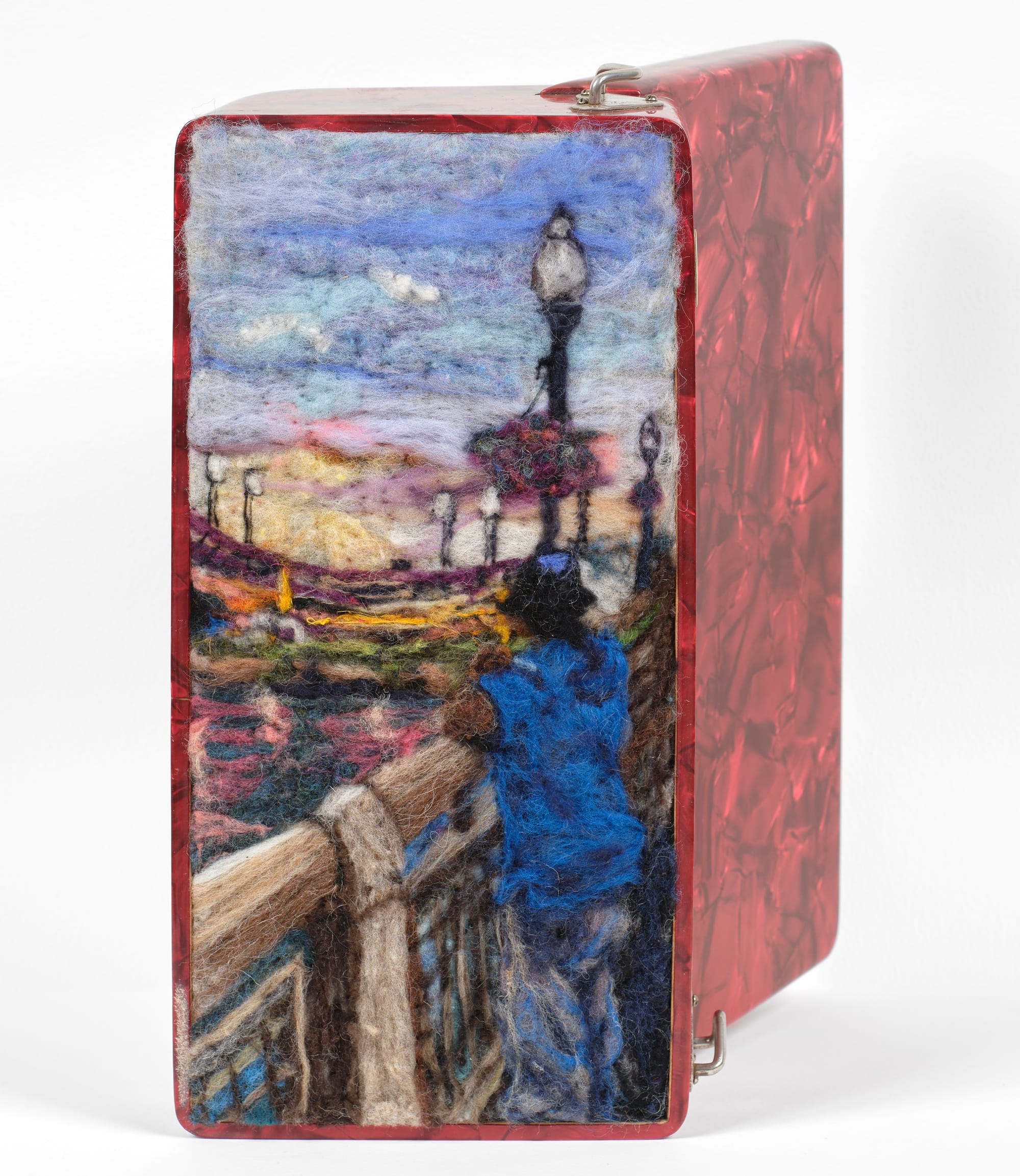
For Melissa Joseph, the premature death of her father, K.C. Joseph, was the catalyst for a total career pivot. A surgeon who faced systemic prejudice against his international credentials, K.C. found creative outlets in the mundane—folding napkins into intricate shapes or arranging surgical remains with magazine cutouts.
Joseph’s practice uses felt and found objects to "soften" these memories. "He was a complicated guy," she notes. "I think his last gift to me was that his death made me rethink the rest of the time I have left." Her work serves as a continuous conversation with a man who, though often silent, left an indelible mark on her aesthetic and emotional landscape.
Chronology of Influence: Collaborative Legacies
Artistic fatherhood often manifests as a dialogue across generations, whether through direct collaboration or the inheritance of a medium.
- 1955: David Hockney paints Portrait of My Father, beginning a lifelong practice of domestic portraiture.
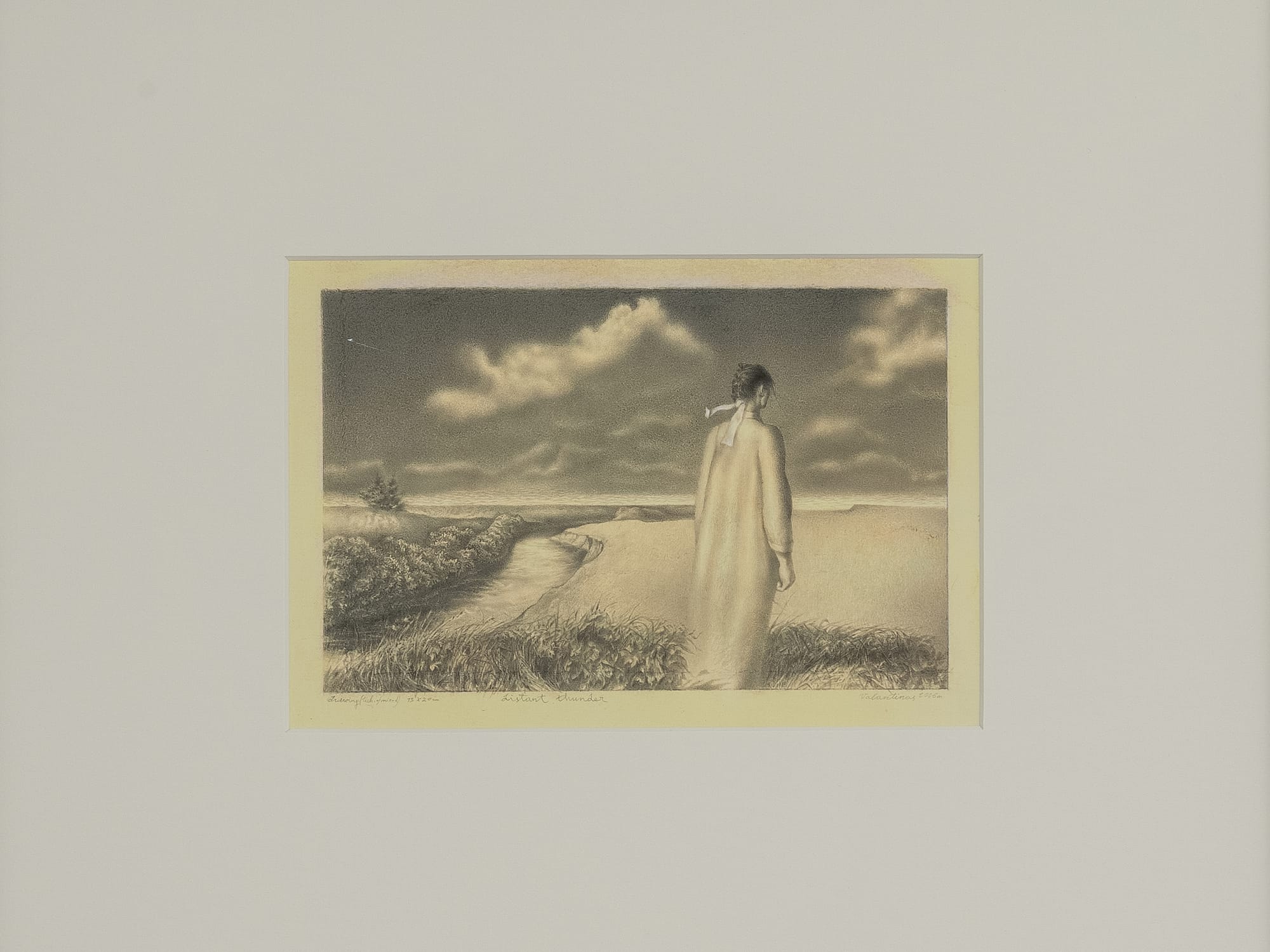
- 1974–2025: Rytis Valantinas, designer of Lithuania’s early banknotes, creates an extensive archive of design.
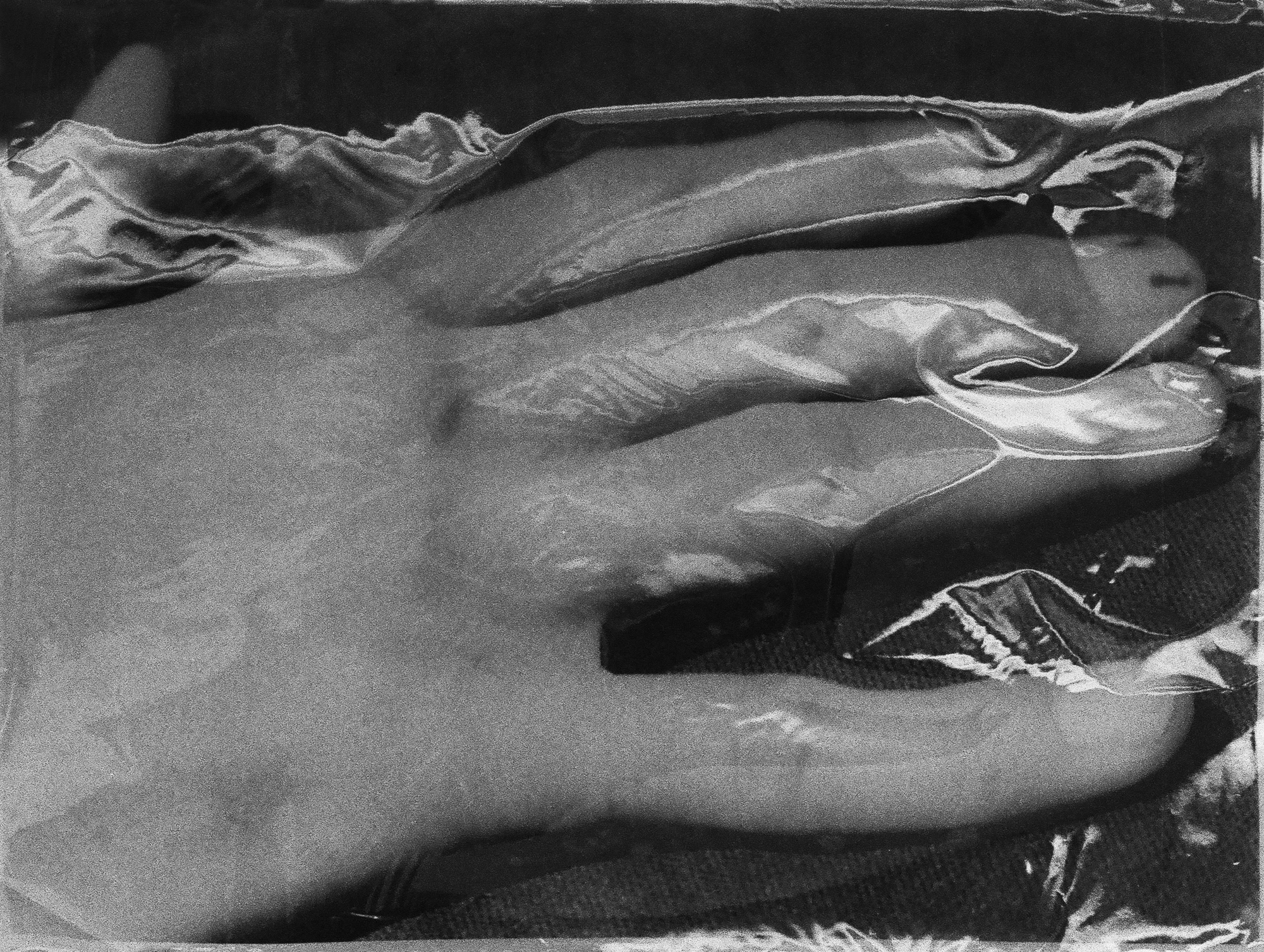
- 1978–2026: Matthew Westfall captures the era of the darkroom, creating negatives that his daughter, Alex Westfall, later salvages from a basement flood to weave into her own photography.
- 2026: Ei Arakawa-Nash presents Grass Babies, Moon Babies at the Venice Biennale, exploring the anxieties and optimism of modern parenting.
Implications: The Reimagined Paternal Figure
The work of these artists suggests a fundamental shift in how we perceive paternal authority. It is no longer synonymous with power or unassailable knowledge; instead, it is synonymous with vulnerability, performance, and the transmission of culture.
The Institutional Response
Institutions are increasingly recognizing the necessity of this discourse. Mykolas Valantinas’s exhibition Father II at the Contemporary Art Centre in Vilnius highlighted how digital tools, specifically AI, can be used to reconfigure a father’s legacy. By taking his father’s defunct banknotes and altering the imagery, Mykolas transforms the "national symbol" into a personal relic, challenging the sanctity of family and state history alike.
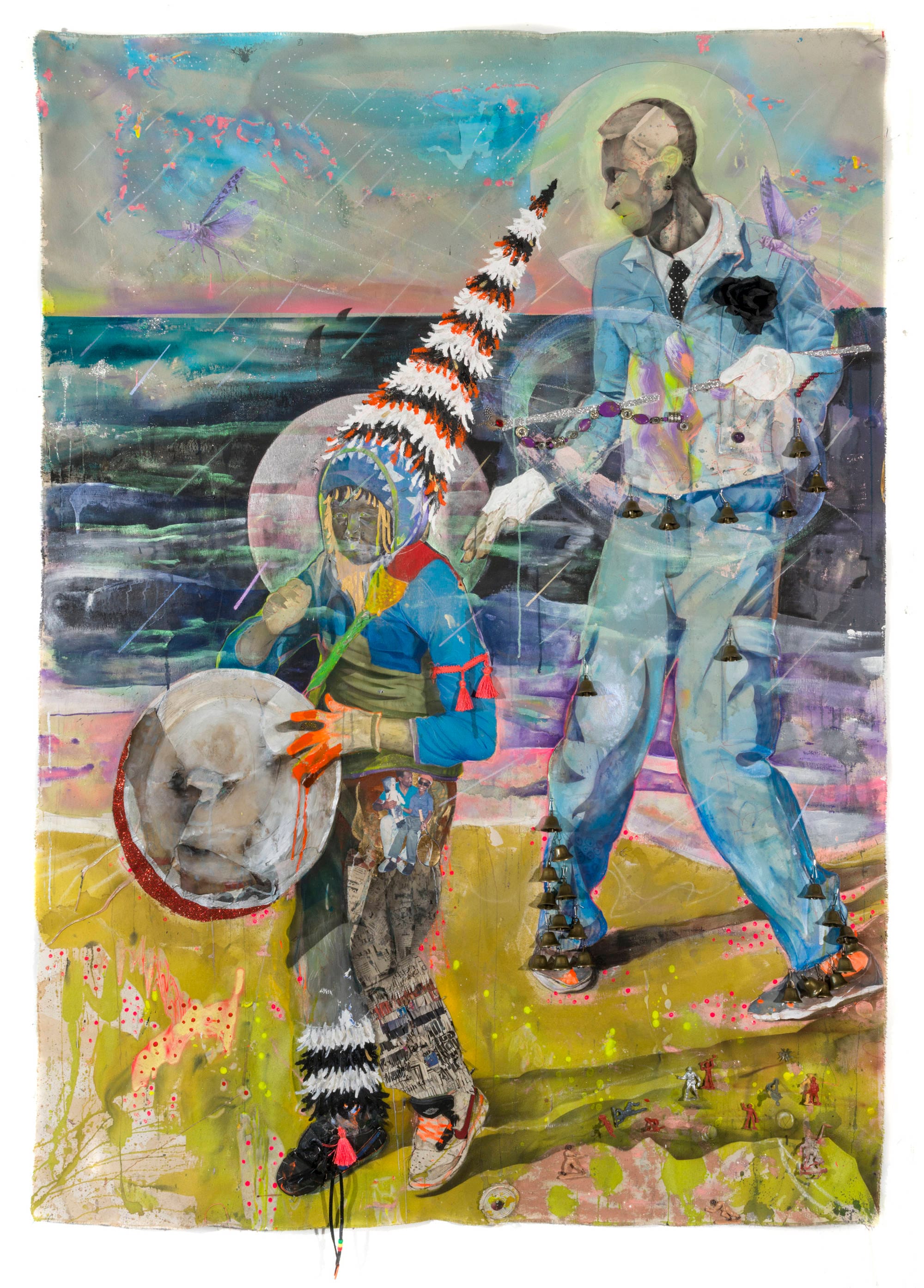
Similarly, the collaboration between Lavar Munroe and the late John Beadle at the Venice Biennale demonstrates that "fatherhood" is not restricted by biology. By invoking the spirit of a deceased artist and integrating Bahamian Junkanoo traditions, Munroe argues for a spiritual and artistic lineage that transcends the physical realm.
Bridging the Generation Gap
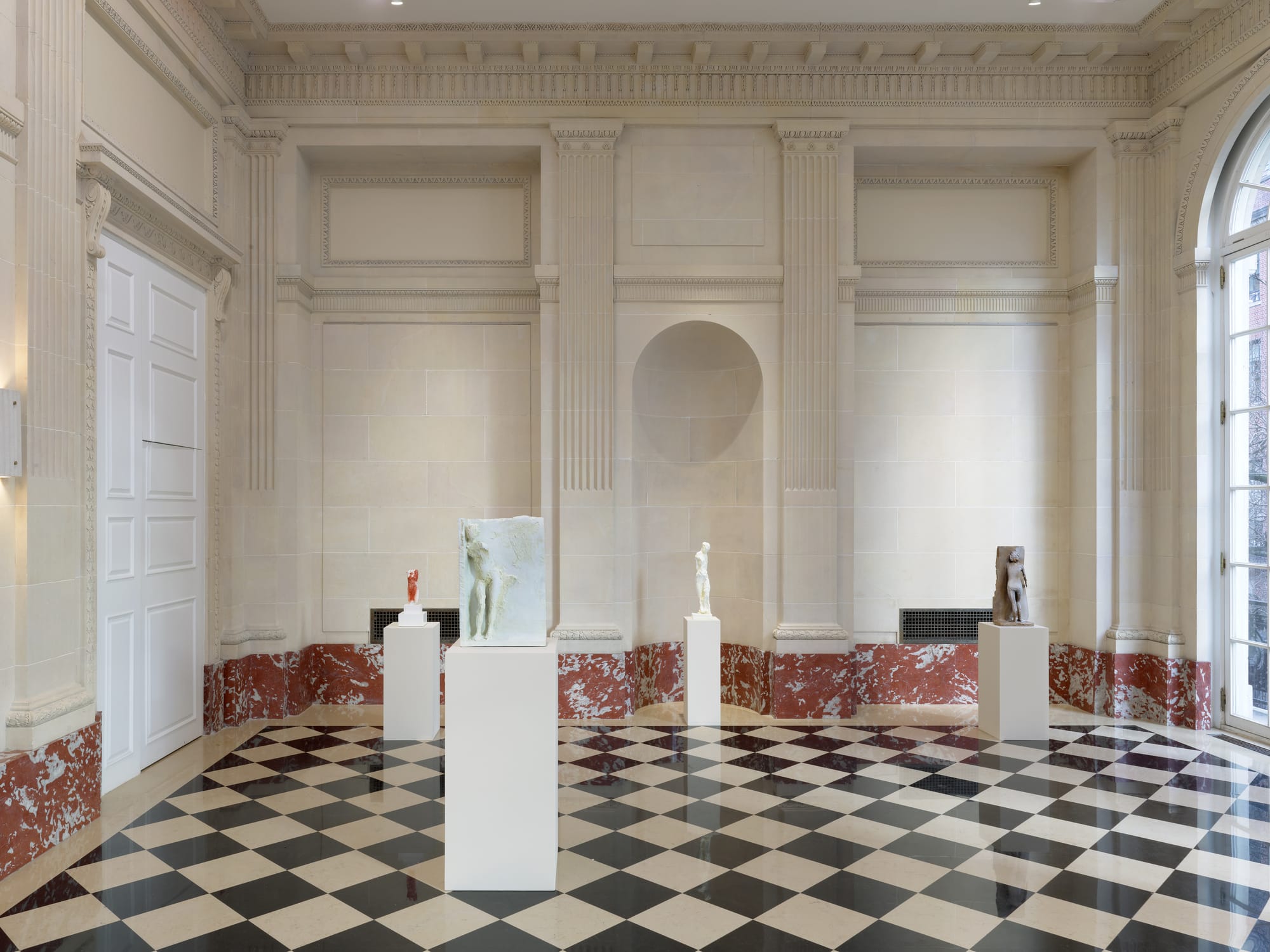
Perhaps the most touching example of this legacy is found in the work of Ruby Neri. By curating the retrospective of her late father, Manuel Neri—a titan of the Bay Area Figurative Movement—she recontextualizes his life not just as an artist, but as a storyteller of the "fantastical and wondrous." Her curation serves as a bridge, allowing the public to see the man behind the plaster and bronze.
Conclusion: A Future of Shared Care
The overarching theme of this contemporary reckoning is a transition from the iconic father to the human father. Whether it is Alex Westfall literally piecing together her father’s flood-damaged negatives or Ei Arakawa-Nash placing baby dolls in the hands of strangers to foster collective care, the focus has shifted toward reciprocity.
David Hockney, who passed away earlier this month, perhaps captured this best in his lifelong devotion to painting his family. His work reminds us that the "paternal portrait" is never truly finished; it is a collaborative project, constantly being adjusted, colored, and debated by those who remain to witness it. As we reflect on these 10 artists, it becomes clear that fatherhood is not merely a role one occupies—it is a narrative one builds, inherits, and, ultimately, reinterprets for the next generation.

 Neng Nana
 Evan Lee Salim