 Asep Darmawan
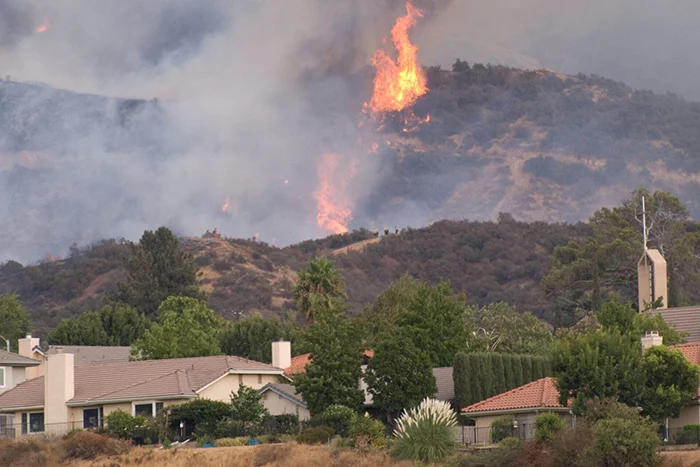
In the shifting landscape of climate-driven catastrophes, a new study has brought a sobering reality to light: the deadliest fires are not necessarily the ones that burn the most acreage, but those that ignite where our homes meet the wild.
A groundbreaking study published in Science Advances has quantified, for the first time, the disproportionate health burden of fires in the Wildland-Urban Interface (WUI). While these fires represent a relatively small percentage of global fire emissions, they are responsible for a significantly higher share of smoke-related premature mortality. By integrating satellite detection data with advanced atmospheric modeling, researchers have provided the most comprehensive evidence to date that proximity is the defining factor in the lethality of wildfire smoke.
The Core Findings: A Disproportionate Burden
The research team, utilizing a sophisticated atmospheric model, mapped the dispersion of pollutants like fine particulate matter (PM2.5) and ozone relative to human population centers. The findings are stark: because WUI fires occur in immediate proximity to residential areas, the smoke does not have the chance to dilute or disperse as it would in remote, uninhabited wilderness.
PM2.5—microscopic particles that penetrate deep into the lungs and enter the bloodstream—is the primary culprit. In WUI fires, these particles reach high-density populations almost instantly. Unlike forest fires in the deep backcountry, which may impact air quality across states or countries, WUI fires create localized, high-concentration "hotspots" of toxicity.
The study highlights a paradoxical reality: while massive, remote wildfires garner the most media attention due to their sheer scale and the visual spectacle of towering flames, the "smaller" fires creeping into the suburbs are the ones silently driving the global health crisis.
Chronology: A History of Increasing Vulnerability
To understand how we reached this point, we must look at the convergence of urban sprawl and climatic shifts over the last several decades.
The Era of Expansion (1980s–2000s)
As populations grew, suburban expansion pushed deeper into forests and shrublands. This created a sprawling "interface" where human infrastructure became permanently embedded in fire-prone ecosystems. During this period, fire suppression policies—often called the "fire suppression paradox"—led to an accumulation of "fuel loads" (dead leaves, brush, and small trees) in these areas.
The Climatic Shift (2010s)
The 2010s marked a turning point. Extended droughts, rising average temperatures, and changing precipitation patterns transformed these interface zones into tinderboxes. High-profile disasters, such as the 2017 Tubbs Fire in California or the 2019–2020 "Black Summer" in Australia, showcased how WUI fires could incinerate entire neighborhoods in hours.
The Era of Quantifiable Impact (2025)
The publication of this Science Advances study marks a new chapter. We have moved from observing the destruction of property to understanding the invisible, long-term destruction of public health. This study serves as a diagnostic tool, confirming that the "urban edge" is no longer just a housing issue—it is a critical public health emergency.
Supporting Data: By the Numbers
The methodology of the study relies on the intersection of three primary data sets: satellite fire detections, atmospheric dispersion models, and health outcome statistics.
- The Emissions Gap: WUI fires account for less than 10% of total global fire-related carbon and particulate emissions. However, they are estimated to contribute to nearly 20–25% of the total health burden associated with smoke exposure.
- Pollutant Concentrations: Atmospheric models indicate that PM2.5 levels in WUI areas can spike to 10 times the recommended World Health Organization (WHO) daily air quality guidelines within minutes of ignition.
- Population Exposure: With millions of homes now situated in "high-hazard" zones, the exposed population is significantly higher than it was even two decades ago.
- Mortality Trends: The study correlates historical fire data with death certificates and hospital admissions, finding a direct statistical spike in respiratory and cardiovascular events within 48 hours of a WUI fire event, even in cases where the fire did not reach the specific neighborhood affected.
Official Responses and Expert Analysis
The scientific community and disaster management agencies have reacted to the report with a call for a paradigm shift in how we manage the "urban edge."
CAL FIRE and Wildland Management
Representatives from fire management agencies have long advocated for "defensible space," but the new study suggests that fire management must now be treated as a public health intervention. "We aren’t just fighting flames to save homes anymore," noted one climate policy analyst familiar with the study. "We are managing the air quality for the very people living in those homes."

Public Health Agencies
The WHO and local health departments are reviewing the findings to adjust their early-warning systems. The goal is to move beyond simple "stay indoors" advice and toward more robust infrastructure improvements, such as HEPA filtration requirements for residential buildings in high-risk zones and the creation of "clean air shelters" during fire season.
The Academic Consensus
Researchers emphasize that this data proves the "urban sprawl" model is inherently unsustainable under modern climate conditions. The study authors argue that future city planning must prioritize "fire-resilient design," which includes not only physical barriers to fire but also atmospheric zoning that considers wind patterns and smoke accumulation corridors.
Implications: The Road Ahead
The implications of this research are far-reaching, touching on urban planning, insurance, and medical infrastructure.
Rethinking Urban Planning
If the WUI is the most dangerous place to live regarding air quality, then urban growth strategies must change. Governments may need to incentivize "infill development"—building within existing city limits—rather than expanding into the wildland fringe. This requires difficult political conversations about zoning and property rights.
Insurance and Economic Impact
The insurance industry has already begun raising premiums for homes in the WUI. This study provides a scientific basis for those hikes, as the "health cost" of these fires is now quantifiable. We may see a shift where homes in the WUI are categorized not just by their risk of burning, but by the "health liability" they pose to the local population.
Public Health Preparedness
The medical community must prepare for a surge in climate-related respiratory illnesses. This includes training healthcare providers to recognize the signs of smoke-related trauma even in patients who were not in the direct path of the fire. Furthermore, the installation of widespread air-quality monitoring networks in suburban areas will become as essential as fire hydrants.
Environmental Justice
A critical, though often overlooked, implication is the issue of equity. Not everyone can afford to move out of the WUI or install expensive air purification systems. As these fires become more frequent, the study warns of a growing "health inequality" where lower-income families living in more affordable, high-risk interface zones bear the brunt of the toxic smoke burden.
Conclusion: A Call to Action
The findings from the Science Advances study serve as a wake-up call. We have been viewing wildfires as a property-loss problem, when in reality, they are a fundamental health crisis. The smoke generated at the urban-wildland interface is a silent, creeping danger that respects no property lines.
To mitigate this, society must adopt a multi-faceted approach:
- Strict Zoning: Limit new development in high-risk interface zones.
- Infrastructure Upgrades: Mandate air filtration and smoke-sealing in residential buildings located near wildlands.
- Advanced Monitoring: Deploy high-resolution air quality sensors to provide real-time data to residents.
- Ecological Restoration: Manage the land surrounding our cities to reduce the "fuel load," effectively creating a buffer that lowers both fire risk and the intensity of smoke emissions.
The wildfire era is upon us, and the air we breathe is becoming an increasingly contested resource. By acknowledging the unique and deadly nature of WUI fires, we can begin to build more resilient communities, ensuring that the dream of living close to nature does not become a health hazard that we cannot escape.
The data is clear: the fire is at our doorstep. The question now is whether we have the policy, the foresight, and the courage to change how we live on the edge.

 Basiran
 Laily UPN