

 Neng Nana
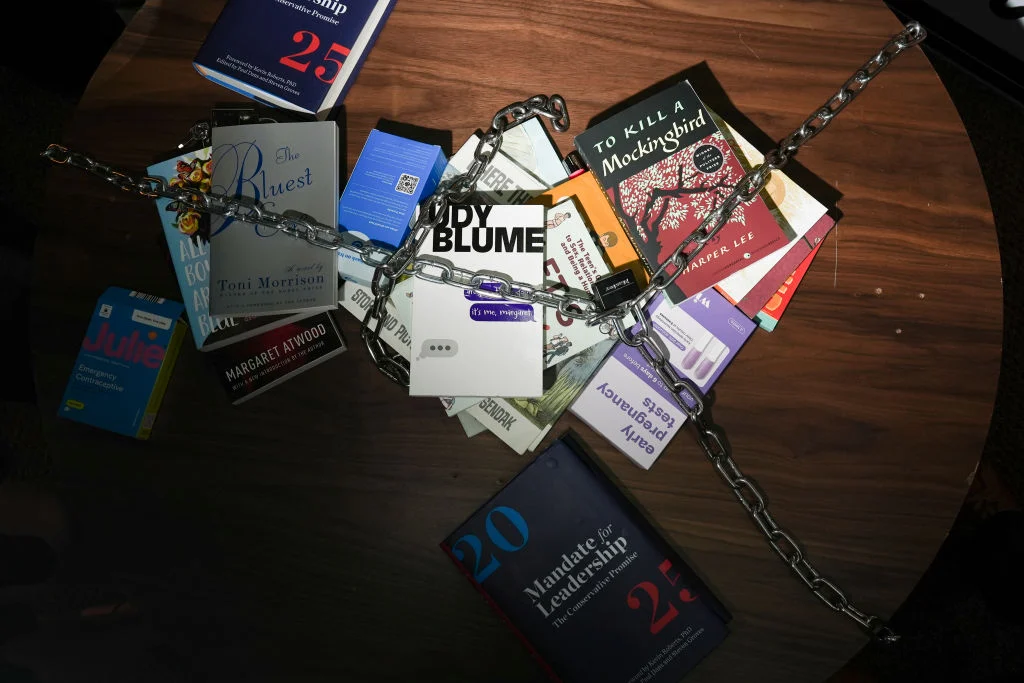
Every October, as Banned Books Week arrives, the cultural ritual is familiar: libraries display stacks of classic novels wrapped in caution tape, and social media feeds fill with lists of titles that “someone, somewhere” deemed dangerous. This year, the theme—“Let Books Be. Protect the Freedom to Read”—carries a weight that transcends traditional literary advocacy. It arrives during a period of record-shattering censorship that is fundamentally altering the landscape of education, gender expression, and intellectual autonomy in the United States.
While the imagery of a banned book can sometimes feel like a harmless curiosity, the contemporary reality of censorship is far more insidious. It is not merely a matter of removing a title from a shelf; it is a systematic narrowing of the stories available to women and girls to understand their bodies, their choices, and their lived experiences.
The Scale of the Crisis: A Chronology of Censorship
The trajectory of school book bans has accelerated with alarming velocity over the last several years. According to data from PEN America, the 2025–26 academic year saw an unprecedented 11,982 school book bans, impacting 7,370 unique titles. This figure represents the highest volume of censorship since the organization began tracking the phenomenon in 2021.
The timeline of this escalation reveals a shift from isolated parental complaints to a coordinated, high-level ideological movement:
- 2021–2022: Initial surges in challenges focus heavily on Critical Race Theory and LGBTQ+ themes, often localized in specific school districts.
- 2023–2024: The infrastructure of censorship matures. Pressure groups begin to utilize national networks to push for uniform policies that bypass local library boards.
- May 2025: A symbolic turning point occurs when Carla Hayden, the first woman and first Black person to lead the Library of Congress, is abruptly dismissed by the administration, signaling a federal shift toward the suppression of intellectual stewardship.
- 2025–2026: The sheer volume of titles removed—including staples like Jane Eyre and contemporary feminist texts such as Lessons in Chemistry and Here We Are: Feminism for the Real World—indicates a broader, more aggressive mandate to sanitize school curricula.
Supporting Data: The Anatomy of a Challenge
The justifications offered by those seeking to ban these books often diverge sharply from the actual content of the works. PEN America’s analysis of 3,743 unique titles challenged in recent cycles reveals a disconnect between rhetoric and reality:
- Sexual Violence vs. Pornography: Only 10 percent of the titles in the analysis contained on-the-page consensual sexual content. However, 19 percent depicted sexual violence, including rape or abuse. Experts warn that the catch-all labeling of these narratives as “pornographic” serves to gaslight survivors, framing their lived experiences as “inappropriate” rather than acknowledging them as valid reflections of reality.
- Identity as a Target: A staggering 39 percent of the challenged titles feature LGBTQ+ protagonists or characters. This suggests that the mere existence of queer identities is being categorized as “sexual” by default, a tactic designed to push marginalized experiences out of the public square.
- The Rise of Organized Pressure: Perhaps the most significant data point is the origin of these challenges. The American Library Association (ALA) reports that 92 percent of book challenges in 2025 were initiated by organized pressure groups, government officials, or political activists. Fewer than 3 percent originated from individual parents concerned about their own child’s specific reading materials. This reveals that the current wave of bans is not a grassroots movement of parents, but a top-down administrative effort.
The Weaponization of “Inappropriateness”
The core of the issue lies in who defines what is “appropriate.” Historically, the fear of literature has been a tool of social control. As former Librarian of Congress Carla Hayden noted, 19th-century authorities feared romance novels because they might give women ideas about marriage, independence, and lives beyond their traditional roles.
Today, the vocabulary has shifted, but the objective remains the same: to prevent women and girls from encountering narratives that question authority, refuse motherhood, or name the harm done to them.
When stories about sexual violence are labeled as “dangerous,” it reinforces a long-standing patriarchal expectation: that women should make accounts of their suffering palatable. They are encouraged to disclose without being “too angry,” to describe violence without being “too graphic,” and to tell the truth without making those in power uncomfortable. By banning books that provide language for these experiences, the censorship movement ensures that such stories remain silenced or hidden.
The Feminized Workforce: Librarians in the Crosshairs
The gendered nature of this conflict extends beyond the books themselves to the individuals tasked with managing them. According to the U.S. Bureau of Labor Statistics, 84.9 percent of librarians and media collections specialists are women.
When book-ban campaigns target a community, it is almost exclusively women who sit through the contentious board meetings, explain complex collection policies, and absorb the vitriol of aggressive activists. This is a deliberate political targeting of a feminized profession.
Consider the case of Amanda Jones, a Louisiana librarian who became the target of intense harassment after speaking out against censorship. Jones was subjected to online threats and accused of “promoting pornography to children.” Her experience illustrates a chilling pattern: a woman in a professional role is deemed a “trusted guide” until she defends access to information that challenges a specific ideological narrative. At that point, the librarian is transformed into a scapegoat, recast as a danger to the very children she serves.
Implications: Why the Freedom to Read is a Feminist Issue
The implications of these bans are profound. When we restrict access to literature, we are not just removing paper and ink; we are narrowing the boundaries of what women and girls know to be possible.
For a young girl, a book can be a mirror or a map. It can be the first place she sees a character who refuses to stay silent, who recognizes an experience she hasn’t yet been able to name, or who imagines a future that falls outside traditional domestic expectations. A queer teenager can find, within the pages of a library book, the validation that their history, their romances, and their futures are legitimate.
The freedom to read is the freedom to explore ideas that challenge the roles women are expected to occupy. Censorship is, therefore, a central tool in the patriarchal toolbox. By controlling the stories that people can access, those in power attempt to shrink the imagination of the next generation, preventing them from envisioning a world where equality is not just a dream, but a reality.
As we continue to navigate this period of heightened censorship, it is essential to recognize that the fight for the library is not a separate issue from the fight for reproductive freedom, bodily autonomy, or gender equality. They are part of the same struggle. When we lose the right to read our own stories, we lose the right to name our own experiences—and in that silence, inequality flourishes.
The question remains: who gets to decide which lives are permitted to be seen? The ongoing battle over our shelves is not about protecting children; it is about controlling the narrative of their lives. It is time for a broad, systemic defense of the right to imagine, the right to learn, and the right to exist in the public record.

 Reynand Wu
 Jia Lissa






