



 Evan Lee Salim
In the modern culinary landscape, the role of the professional chef has transcended the kitchen pass. No longer relegated solely to the arts of seasoning and plating, chefs have emerged as critical nodes in the global supply chain, serving as essential bridges between the soil and the plate. By wielding their substantial purchasing power and cultural influence, culinary leaders are now at the forefront of a movement to reshape how the world grows, produces, and consumes food.
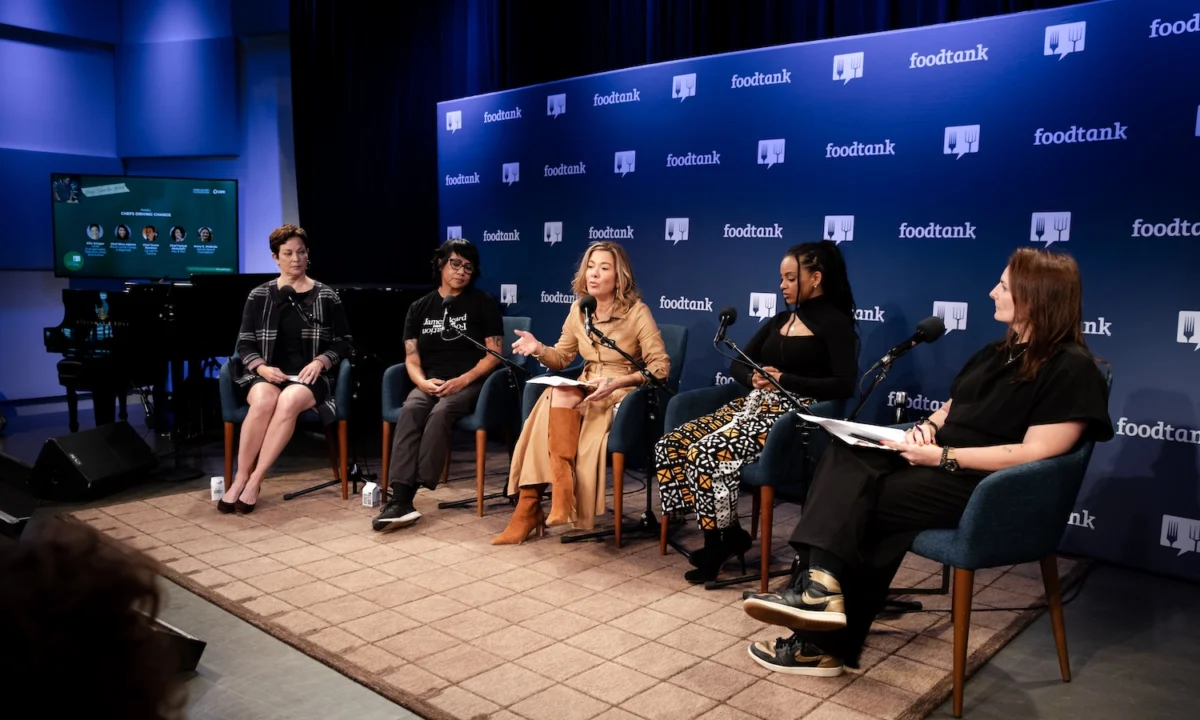
This evolution was the central theme of "Chefs Save the World," a high-profile summit held in partnership with the James Beard Foundation and CARE during Climate Week NYC 2026. The event convened an international assembly of chefs, farmers, and food security advocates to address the intersection of gastronomy and global crises—ranging from systemic food insecurity and climate instability to the persistent challenges of gender inequality and wage stagnation.
The Chef as a Catalyst for Change
"Chefs are in a very unique position on planet Earth to be changemakers," noted Andrew Zimmern, the Emmy- and James Beard Award-winning chef and television host. For Zimmern and his peers, the restaurant industry is no longer just a business of hospitality; it is an arena where the most pressing global issues of the 21st century converge.
As the industry faces what Erica Helms, Chief Growth Officer at the James Beard Foundation, describes as "the most difficult environment they’ve ever operated in," the pressure to innovate has shifted from the menu to the mission statement. Chefs are increasingly finding themselves tasked with solving systemic failures—such as the irony that many of the world’s food producers are themselves the most food-insecure populations—while simultaneously managing the razor-thin margins of the restaurant business.
Chronology of the Movement: From Culinary Arts to Global Advocacy
The shift toward "activist-chefs" did not happen overnight. Over the past decade, a growing awareness of the environmental footprint of the hospitality industry—from food waste to the carbon intensity of supply chains—has forced a reckoning.
- Early 2010s: The rise of the "Farm-to-Table" movement began to normalize transparency in sourcing. Chefs began prioritizing local produce, inadvertently creating a blueprint for regional food security.
- Late 2010s: The dialogue expanded to address social equity. The #MeToo movement and increased scrutiny on wage gaps led to a broader focus on kitchen culture, moving beyond the "toxic" hierarchies of the past toward more sustainable, human-centric labor models.
- 2020–2023: The global pandemic acted as an accelerant. As supply chains fractured, chefs realized that their dependence on global, industrial agriculture was a liability. Many pivoted to hyper-local partnerships, cementing the realization that a chef’s primary duty is to the integrity of their ecosystem.
- 2026 Climate Week NYC: The "Chefs Save the World" summit marked a formalization of these efforts. It signaled a move away from individual initiatives toward a unified, systemic approach to advocacy, focusing on Indigenous knowledge and climate resilience.
Supporting Data: The Pillars of Resilience
The discourse at the summit was grounded in the concept of "diversity." As Food Tank President Danielle Nierenberg articulated, "Better food begins with embracing diversity—in our fields, in our ingredients, in the people preparing our food, and in the people we welcome around our tables."
The Economic Paradox
The central tension in the industry remains the "tricky economics" of food. Liz Murray, COO at The Marlow Collective, raised a poignant question: "How do we balance the really tricky economics of being able to actually charge the cost of food to be able to pay farmers fairly and pay our employees and offer benefits?"
Data suggests that the current model is unsustainable. By failing to account for the "true cost" of food—which includes fair labor practices and regenerative farming methods—the industry has historically relied on externalizing costs, resulting in underpaid staff and struggling producers.
The Human Element
Chef Bleu Adams, Executive Chef at Black Lamb Group and Director of IndigeHub, emphasized that diversity is not a buzzword but a survival strategy. "If we demand more diversity in our food system, that is what is going to build resilience," Adams stated. When kitchens reflect the diversity of the communities they serve, they are better equipped to respond to local needs, foster innovation, and maintain the human capital necessary to survive economic downturns.
Official Responses: Shifting Power Dynamics
A critical takeaway from the summit was the necessity of decentralizing food aid and development. For too long, foreign aid and development models have imposed top-down solutions on communities that are already experts in their own survival.
The Role of Local Knowledge
Emily Janoch of CARE, an organization dedicated to fighting global poverty, highlighted a crucial distinction: "In many parts of the world, the people who are food insecure are the people who are growing the food. This is not a charity problem but a systems problem."
The experts gathered agreed that when crisis strikes, external aid should serve to empower rather than override. Chef Fariyal Abdullahi, Executive Chef and Partner at Hav & Mar, noted, "When you have the right partnership, it’s never to override what’s happening on the ground. They have the knowledge; they just need resources."
Decolonizing the Plate
Chef Sean Sherman, founder of NĀTIFS (North American Traditional Indigenous Food Systems), provided perhaps the most radical critique of the current status quo. Sherman argued that the Western culinary canon suffers from a pervasive "eurocentrism" that ignores the deep, ancestral knowledge of local landscapes.
Sherman’s work with the "Ring Diet"—a guide to the nutritional value of foods tied to local, Indigenous ecosystems—seeks to reverse this. He pointed out the irony of a city like New York, which prides itself on international culinary diversity, yet lacks a significant presence of authentic Native American cuisine. By reconnecting with regional ingredients and Indigenous practices, chefs can stop importing carbon-heavy ingredients and start celebrating the biological and cultural heritage of the land they occupy.
Implications: A Roadmap for the Future
The implications of this movement are profound. If the culinary world successfully shifts its focus toward sustainability, equity, and diversity, it could trigger a ripple effect across the broader global economy.
1. Reimagining Restaurant Economics
The future of the restaurant industry lies in transparency. As consumers become more educated, they are increasingly willing to pay a premium for food that is ethically sourced and labor-conscious. Chefs who can successfully narrate the "story" behind their food—from the farmer’s struggle to the server’s living wage—are finding success by building deep, loyal communities rather than just a customer base.
2. The Power of Curiosity
Chef Sean Sherman’s call to "be curious" is more than a culinary suggestion; it is a policy prescription. By moving away from the narrow set of industrial commodities that define the modern diet (corn, soy, wheat, and industrial meats) and embracing a wider variety of plants and proteins, we can improve global food security and biodiversity.
3. Policy and Advocacy
The collaboration between the James Beard Foundation, CARE, and Food Tank signals that the culinary world is ready to engage with policy. Whether advocating for fair labor legislation, supporting regenerative agriculture subsidies, or fighting food waste, chefs have the cultural capital to influence public opinion in ways that traditional lobbyists cannot.
Conclusion
The summit at Climate Week NYC 2026 proved that the chef’s apron is a symbol of responsibility. As these culinary leaders return to their kitchens, they carry the weight of a global food system in transition. The challenge ahead is significant: dismantling decades of industrial inequity, reversing the effects of climate change on agriculture, and ensuring that every person—from the farmworker to the diner—is treated with dignity.
"We have a lot of evolving to do as humans and as a global community," Sean Sherman remarked. "Food is that connection." By fostering a system that is as diverse as the ecosystems it relies upon, chefs are not just preparing meals; they are preparing a future.
For those interested in joining this movement, the dialogue continues through the ongoing events hosted by the James Beard Foundation and Food Tank. As these organizations emphasize, every meal is an opportunity to vote for the kind of world we want to inhabit.



 Asep Darmawan





