

 Asep Darmawan
As the global climate crisis intensifies, the narrative of environmental collapse is increasingly being told through the lens of water. Beyond the visible tragedy of shrinking rivers and warming oceans, a more insidious threat is emerging: the total destabilization of the food systems upon which billions of lives depend.
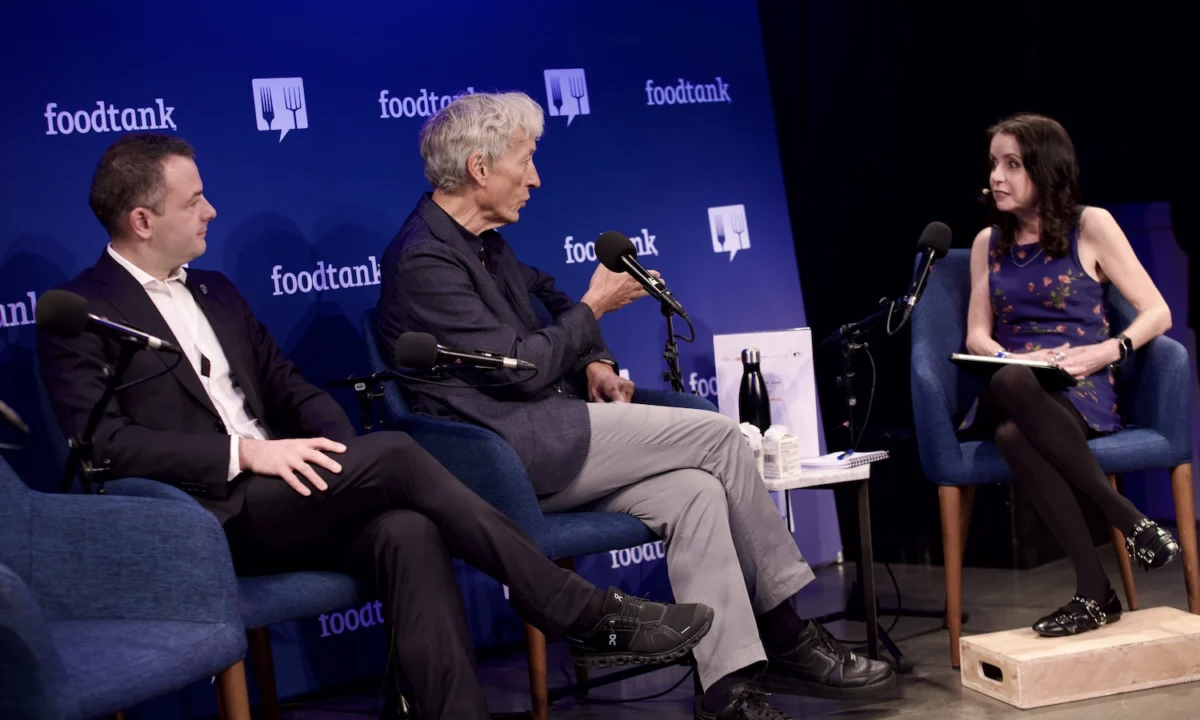
During the recent "Water and Blue Foods Summit"—held at Climate Week NYC in partnership with the Future Food Institute, the Monterey Bay Aquarium, and Venice Climate Week—experts converged to sound a definitive alarm. The consensus is clear: water scarcity is no longer just a meteorological or infrastructural challenge; it is a fundamental threat to human civilization, food security, and biodiversity.
The Reality of Water Bankruptcy
The summit opened with a sobering concept: "water bankruptcy." This term describes the point at which the rate of human water consumption and environmental pollution permanently exceeds the natural capacity of ecosystems to replenish themselves.
Kaveh Madani, Director of the U.N. University Institute for Water, Environment and Health, framed the crisis in stark terms. "Nature at the beginning is generous and resilient," Madani noted, "but after a while, it loses its resilience and can never go back to where it was. We are seeing more and more systems getting pushed into that stage and losing their capacity to bounce back."
This loss of resilience is not a distant, theoretical future; it is happening now. As aquifers are depleted and natural cycles are disrupted, the very foundations of global agriculture and fisheries are fracturing. When water systems collapse, the ripple effects are felt instantly in the grocery aisles and the kitchens of the world.
The Shifting Landscape of Blue Foods
While land-based agriculture has long dominated the discussion on food security, the summit highlighted the critical, yet fragile, role of "blue foods"—seafood and aquatic products.
According to data from the U.N. Food and Agriculture Organization (FAO), the state of our oceans is precarious. In 2021, only 62.3 percent of marine fish stocks were fished at biologically sustainable levels. This indicates that over one-third of our global wild-capture fisheries are currently being exploited at rates that jeopardize their long-term survival.
In response to these shrinking stocks, aquaculture has surged, producing 51 percent of aquatic animals for human consumption in 2022—marking the first time in history that farmed aquatic food has surpassed wild-capture fisheries. While this transition offers a path to meeting global protein demand, it also introduces new pressures on water quality and coastal ecosystems, requiring a delicate balance between production and preservation.
The Inseparable Link: Water and the Supply Chain
A recurring theme throughout the summit was the inescapable reality that "food does not come from the air." David Laborde, Director at the FAO, emphasized that water is the silent, essential engine behind every calorie consumed.
"You need water to grow your crops, feed your animals, process your food, and move things around," Laborde stated. This holistic view of the supply chain suggests that water mismanagement at any stage—from upstream irrigation to downstream processing—results in a failure of the entire system.
This systemic connectivity means that protecting water is synonymous with protecting the land. Brendan Shane of the Trust for Public Land argued that conservation cannot be siloed. "It’s all a system," Shane explained. "The water is flowing from the land, so if you want to protect the water, you need to protect and sustainably manage the land."
Consumer Behavior as a Conservation Strategy
The summit challenged the traditional notion that sustainability is the sole responsibility of producers. Chef Barton Seaver argued that the current conversation has focused too heavily on the supply side, largely ignoring the behavioral patterns of the end consumer.
"There’s an entire behavioral aspect of the consumers and their seafood purchasing choices," Seaver noted. By shifting demand, consumers can influence industry standards and incentivize more sustainable practices.
This shift in perspective extends to the very species we choose to eat. Wendy Norden of the Monterey Bay Aquarium suggested that we rethink the threat of invasive species. While often viewed as ecological disasters, they can, in specific contexts, represent an opportunity for adaptation. Through "invasivorism"—the practice of consuming non-native, invasive aquatic species—communities can help reduce the populations of harmful animals while diversifying their own food sources.
Jenn Kemmerly, Vice President of Global Ocean Conservation at the Monterey Bay Aquarium, underscored the global weight of these choices. Because the United States imports a significant portion of its seafood, domestic demand acts as a catalyst for environmental impacts abroad. "To choose sustainable seafood is the easiest, most in-your-face, top-of-mind choice to make right now," she asserted.
Bridging the Gap: Science, Finance, and Policy
Despite the abundance of research, a massive chasm remains between the scientific community, policymakers, and financial institutions. Sara Roversi, Founder of the Future Food Institute, expressed frustration with the current state of governance. "We need to connect the research to the policymakers, but unfortunately, what we are seeing is that policymakers are not looking at the science at all."
This lack of integration is exacerbated by the financial sector’s struggle to quantify and value water risk. Sarisher Mann of BNP Paribas noted that while interest in water resilience is growing, the financial world often lacks the vocabulary to translate scientific data into actionable investment strategies. "Finance doesn’t necessarily speak the language of the science," Mann said. "We need much more translation of that science."
Cities as Laboratories for Change
If international policy is moving too slowly, cities are increasingly acting as "experimental fields" for rapid innovation. Simone Venturini, Mayor of Venice, highlighted the potential for urban centers to pioneer solutions that can be scaled globally. "If something can work in Venice, it can work anywhere," he said, advocating for the city to be used as a living laboratory for climate adaptation.
Riccardo Luna, Co-Curator of Venice Climate Week, offered a final call to action. "Climate change is here to stay. It’s accelerating. But we have an opportunity. We have the playbook; we need to scale the solutions and take action."
Conclusion: A Call for Systemic Resilience
The Water and Blue Foods Summit painted a picture of a world at a crossroads. The technical solutions—from restorative aquaculture and sustainable land management to conscious consumption—already exist. The challenge, however, is one of scale and connectivity.
Water is the common denominator of all life, yet it is currently treated as an infinite resource in a finite system. To ensure food security for a growing global population, we must move beyond treating water, land, and food as separate entities. We must recognize them for what they are: one integrated, fragile, and essential life-support system.
As Danielle Nierenberg, President of Food Tank, succinctly put it: "Climate change is a water story. Food security is a water story. Public health, livelihoods, biodiversity, and resilience are all water stories." The task ahead is not merely to address these issues individually, but to weave them into a unified strategy for planetary survival.
The time for theoretical debate has passed. As global temperatures rise and water stress deepens, the need to scale these integrated solutions has never been more urgent. We possess the knowledge and the tools; now, we require the political and financial will to apply them before the systems we rely on pass the point of no return.

 Lina Irawan