


 Neng Nana
In an era where organic reach on major social media platforms has plummeted to record lows, nonprofit organizations are facing an existential crisis regarding digital visibility. As algorithmic changes prioritize paid content and personal connections over organizational posts, the traditional "broadcast" model of social media marketing is no longer sustainable. However, a significant opportunity remains untapped: the latent enthusiasm of the donor base.
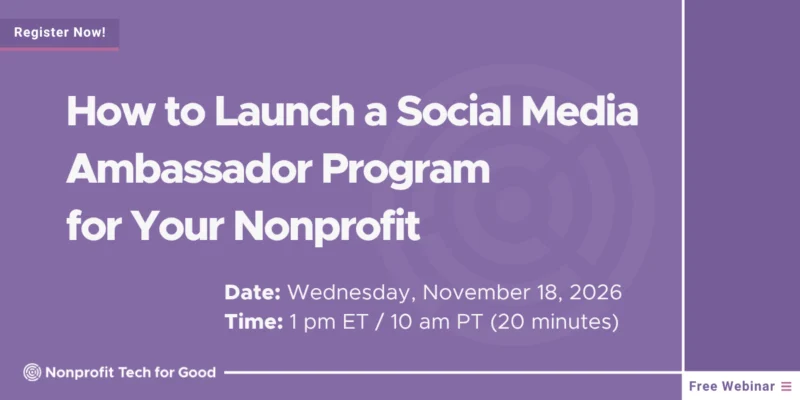
On Wednesday, November 18, 2026, Heather Mansfield, the founder of Nonprofit Tech for Good, will host a targeted, 20-minute masterclass titled "How to Launch a Social Media Ambassador Program for Your Nonprofit." This webinar arrives at a critical juncture, offering a roadmap for organizations to convert passive supporters into active digital advocates.
The Core Challenge: A Disconnect in Digital Mobilization
The most startling statistic in the nonprofit digital landscape is not one of declining revenue, but of wasted potential. Research indicates that 52% of online donors are willing to dedicate one to two hours per month to serving as social media ambassadors for their favorite causes. They are ready to share, advocate, and amplify—yet, only 9% of nonprofits have formalized programs to harness this volunteer labor.
This massive gap between donor intent and organizational execution represents one of the most significant missed opportunities in the philanthropic sector. While nonprofits struggle to gain traction in an oversaturated newsfeed, their most loyal donors are waiting for a mandate to help.
Chronology of the Digital Shift
To understand why this webinar is essential, one must look at the evolution of social media in the nonprofit space over the last decade:
- 2014–2018 (The Era of Organic Reach): Nonprofits could reliably reach their entire audience through organic posts. Facebook’s algorithm was permissive, and engagement was high without significant ad spend.
- 2019–2022 (The Algorithmic Pivot): Platforms began favoring "meaningful social interactions" between friends and family, effectively deprioritizing organizational content. Organic reach began its steady decline.
- 2023–2025 (The Pay-to-Play Reality): Faced with plummeting visibility, many nonprofits shifted their budgets toward heavy advertising. While effective for fundraising, it left smaller organizations—which lack large ad budgets—in the shadows.
- 2026 (The Rise of the Ambassador): As trust in corporate-driven content wanes, peer-to-peer influence has become the gold standard. The move toward ambassador programs represents the sector’s return to the "human-centric" model of advocacy.
Supporting Data: Why Ambassadors Outperform Algorithms
The efficacy of ambassador programs is rooted in psychological and sociological principles of trust. When a nonprofit posts a call to action, it is perceived as an advertisement. When an individual donor shares that same message, it is perceived as a personal endorsement.
The "Trust Dividend"
Studies consistently show that consumers trust recommendations from friends and family significantly more than branded content. By mobilizing ambassadors, nonprofits effectively bypass the algorithm. Because social platforms are designed to prioritize content from a user’s inner circle, a message shared by an ambassador is exponentially more likely to be seen than the same message shared by the nonprofit’s official page.
Cost-Efficiency
In a fiscal environment where overhead is under constant scrutiny, ambassador programs are remarkably cost-effective. They do not require the high-production values of professional ad campaigns, nor do they require the recurring costs of paid social media placements. The "cost" is primarily in staff time spent on coordination, training, and community building.
Expert Perspective: Insights from Heather Mansfield
Heather Mansfield has long been a leading voice in the intersection of technology and social good. Her upcoming webinar is designed to address the "how-to" of this transition.
"The reason most nonprofits fail to engage ambassadors is not a lack of interest from donors, but a lack of structure within the organization," Mansfield notes. "Ambassadors need a toolkit. They need clear instructions, curated content, and, most importantly, a sense of belonging to a mission that transcends the digital space."
In her upcoming session, Mansfield will dismantle the myths that prevent nonprofits from starting these programs:
- The "Expertise" Myth: Many organizations believe they need social media influencers with massive followings. In reality, the most effective ambassadors are those with highly engaged, local, or mission-aligned networks, regardless of the size of their follower count.
- The "Risk" Myth: Nonprofits often fear the lack of control that comes with decentralized messaging. Mansfield’s training emphasizes the importance of brand guidelines and simple, plug-and-play content that ensures consistency without stifling the authenticity of the volunteer.
Implications for the Future of Philanthropy
The implications of failing to launch these programs are clear: organizations that rely solely on their own social media accounts will continue to see their influence diminish. The future of digital fundraising is not in the hands of the organization, but in the hands of the community.
Democratizing Advocacy
By empowering donors to become ambassadors, nonprofits democratize their mission. They move away from being "top-down" organizations that dictate a narrative and toward being "bottom-up" movements that facilitate advocacy. This shift can have profound impacts on donor retention. A donor who is actively advocating for a cause is far less likely to churn than a donor who is only contacted during annual appeal cycles.
Navigating the Future of Privacy
As data privacy regulations tighten and third-party tracking becomes more difficult, social media advertising is becoming more expensive and less targeted. First-party data—the direct connection an organization has with its supporters—is becoming the most valuable asset a nonprofit can possess. Ambassador programs allow nonprofits to leverage that connection in a way that respects user privacy while maintaining visibility.
Webinar Details and Logistics
The upcoming webinar, scheduled for November 18, 2026, at 1:00 PM ET, is structured as a 20-minute intensive. It is designed for busy nonprofit professionals, development directors, and communications managers who require actionable, high-impact strategies without the fluff of traditional, hour-long seminars.
Registration and Access:
- Date: Wednesday, November 18, 2026
- Time: 1:00 PM ET / 10:00 AM PT
- Format: 20-minute live presentation followed by a curated Q&A
- Cost: Free
- Recording: The session will be recorded. Registrants who cannot attend live will receive a link to the recording within 24 hours.
Participants are encouraged to test their connection via the GoToWebinar Attendee System Check prior to the event to ensure a seamless experience.
Conclusion: A Call to Action for Nonprofits
The technology to amplify a nonprofit’s reach is already in place; it simply requires the internal commitment to organize and empower the people who already believe in the cause. With 52% of donors standing ready to participate, the question is no longer whether an ambassador program is "worth it," but rather why a nonprofit would choose to continue struggling in the dark.
This webinar serves as the first step for many organizations toward reclaiming their digital presence. By formalizing the way they work with their most dedicated supporters, nonprofits can turn the tide on the era of declining organic reach and build a sustainable, resilient, and human-powered digital strategy.
To register for the session, visit the official registration page.

 Suro Senen
 Reynand Wu






