

 Sagoh
By Staff Reporter
In the rapidly evolving landscape of digital philanthropy, the "spray and pray" model of fundraising is facing an existential crisis. For years, the nonprofit sector has operated under the assumption that volume is the primary driver of revenue: the more emails sent and the larger the contact list, the higher the total donation tally. However, as donor fatigue sets in and digital channels become increasingly saturated, this volume-based approach is showing clear signs of diminishing returns.
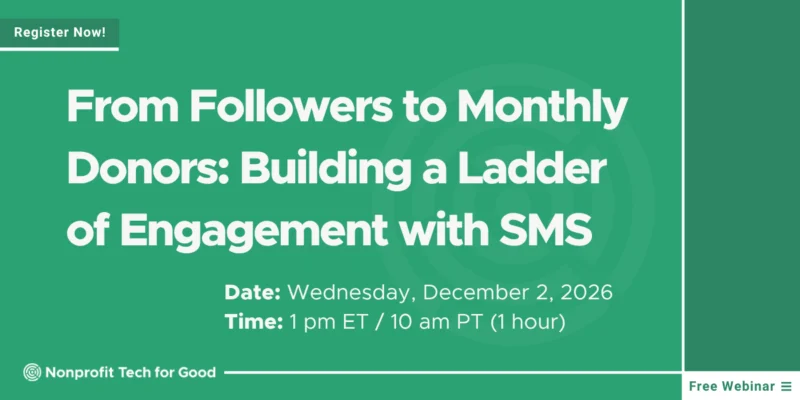
To address this shifting paradigm, industry experts are advocating for a pivot toward hyper-personalization and relationship-driven communication. On Wednesday, December 2, 2026, at 1:00 p.m. ET, Jedd Countey, Head of Partnerships at Ascend, will host a pivotal webinar titled "The Future of Supporter Engagement," aimed at equipping nonprofit professionals with the tools to transition from transactional interactions to sustainable, long-term donor relationships.
Main Facts: The New Era of Donor Engagement
The core premise of the upcoming session is that sustained organizational growth is no longer a byproduct of list size, but of donor sentiment and engagement quality. Data from the past several fiscal quarters suggests that organizations prioritizing personalized, value-driven communication are seeing higher retention rates and a significant uptick in monthly giving programs.
The webinar, which is free to the public, will serve as a diagnostic and strategic guide for nonprofits looking to modernize their donor journey. By focusing on three specific pillars—social media conversion, AI-assisted personalization, and behavior-based automation—Countey aims to provide a "repeatable playbook" for organizations of all sizes.
Event Overview
- Date: Wednesday, December 2, 2026
- Time: 1:00 pm – 2:00 pm ET
- Presenter: Jedd Countey, Head of Partnerships, Ascend
- Registration: Available via GoToWebinar
- Accessibility: A recording will be provided to all registrants within 24 hours.
Chronology: The Decline of Mass-Market Appeals
The transition toward personalized fundraising did not happen overnight. To understand the importance of the December 2nd webinar, one must look at the recent history of nonprofit digital strategy.
2022–2024: The Era of Digital Overload
During this period, nonprofits leaned heavily into automated mass-email marketing. While these tools were efficient, they contributed to a "noise" problem. Donors began receiving dozens of identical appeals, leading to a measurable decline in open rates and a rise in unsubscribes.
2025: The Rise of AI and First-Party Data
By 2025, the industry began experimenting with early-stage AI tools to segment audiences. Organizations that utilized these tools began to outperform their peers by delivering content that felt bespoke rather than broadcast.
2026: The Pivot to "Value-Driven" Communication
The current year has marked a definitive shift. The focus has moved away from the "ask" and toward the "experience." The strategies being presented by Countey are the culmination of this transition, emphasizing that the donor journey must be a two-way street.
Supporting Data: Why Personalization Matters
The argument for hyper-personalization is not merely theoretical; it is backed by concrete metrics. According to recent campaign data that will be highlighted during the webinar, organizations that have adopted the following three strategies have seen marked improvements in their key performance indicators (KPIs).
1. The Instagram Funnel
The transition of followers into donors has historically been a friction-heavy process. However, by using Instagram DMs combined with simple two-tap opt-in processes, nonprofits are bypassing the traditional "link in bio" bottleneck. Data indicates that followers who opt into SMS lists via social media are significantly more likely to become first-time donors because they have already established a brand affinity on a platform where they feel comfortable.
2. The AI-Enhanced Workflow
A major barrier to personalization has always been the "manpower" requirement. Teams cannot realistically write individual emails to 50,000 donors. AI is changing this equation. By using AI to categorize donor responses and identify high-intent supporters, nonprofits can automate the "heavy lifting" of data entry and segmentation. This allows staff to focus on high-value conversations that require a human touch, while the AI manages the cadence and relevance of general communications.
3. Behavioral Triggering
The "right time" for a donation appeal is rarely a generic date on a calendar. It is often a reaction to a specific behavior. Whether a donor has just clicked an article, watched a video, or visited a donation page without completing a transaction, these moments are critical. Organizations that automate follow-ups based on these behaviors report higher conversion rates for monthly giving programs, as the communication feels like a continuation of a conversation rather than an interruption.
Official Perspective: Insights from Ascend
Jedd Countey, representing Ascend, emphasizes that the goal is not to eliminate automation, but to refine it.
"Many fundraising programs are stuck in a cycle of diminishing returns because they treat every contact the same," Countey notes. "The organizations that are winning today are the ones treating their donor database like a community of individuals rather than a collection of email addresses. We aren’t just talking about changing the subject line of an email; we are talking about changing the entire supporter experience."
Countey’s approach is rooted in the belief that AI should act as an "augmented intelligence" rather than a replacement for human relationship-building. By using technology to identify which supporters are ready for an upgrade to monthly giving, or which supporters have lost interest and need re-engagement, nonprofits can save significant time and resources.
Implications for the Sector
The implications of this shift are profound for the broader nonprofit ecosystem. As the industry moves toward 2027, the gap between "digital-first" nonprofits and those relying on legacy strategies is expected to widen.
The Death of the "One-Size-Fits-All" Appeal
Organizations that refuse to adapt their communication strategies will likely continue to see their engagement metrics—specifically email open rates and donor retention—slide. The competition for the donor’s attention is no longer just against other nonprofits; it is against every digital service provider, retailer, and media outlet vying for the same screen time.
The Scaling of Human Connection
Perhaps the most optimistic implication is that technology is finally allowing organizations to scale intimacy. For years, "personal" fundraising was reserved for major gift officers who could manage a portfolio of 50 to 100 donors. With the strategies being presented in this webinar, organizations can theoretically provide a "major gift" experience to a much larger segment of their donor base.
Strategic Planning for 2027
For development directors and nonprofit executives, the webinar represents a necessary stop in planning for the upcoming fiscal year. The ability to integrate SMS, AI, and behavioral data into a cohesive funnel will likely be the primary differentiator between organizations that struggle to maintain their base and those that achieve year-over-year growth.
Conclusion: Preparing for the Webinar
The December 2nd session is designed to be highly tactical. Attendees should come prepared to audit their current donor journey and identify where the "leaks" are occurring.
Whether an organization is struggling with high churn in its monthly giving program or is looking for ways to revitalize a stagnant social media audience, the strategies presented by Countey offer a pathway to modernization.
Interested parties are encouraged to:
- Register Early: Secure a spot via the official GoToWebinar link.
- Test Your System: Ensure your connection is stable by visiting the GoToWebinar system check page ahead of time.
- Prepare Questions: As the session will focus on real-world application, having specific data points or challenges from your own organization ready will maximize the value of the Q&A segment.
By shifting focus from the sheer volume of appeals to the relevance and timing of those appeals, nonprofits can secure the loyalty of their supporters in an increasingly fragmented digital world. This webinar serves as the first step in that transformation.

 Suro Senen

 Reynand Wu






