


 Rifan Muazin
YEREVAN, Armenia — As the United Nations Biodiversity Conference (COP17) enters its critical final stretch, the atmosphere in Yerevan is thick with a mixture of urgency and mounting frustration. Negotiators from around the globe find themselves at a critical plateau, with the momentum of the Kunming-Montreal Global Biodiversity Framework (KM-GBF)—the "Paris Agreement for Nature"—stalled by procedural wrangling and the pervasive influence of corporate interests.
With only four years remaining to meet the ambitious 2030 targets, Greenpeace and other observers are calling on world leaders to reclaim the narrative. The upcoming ministerial High-Level Segment is now seen as the final opportunity for governments to prove that their commitments to halting nature loss are more than just ink on a page.
The Core Conflict: A Plateau in Progress
The primary objective of COP17 is to operationalize the KM-GBF, a landmark agreement designed to protect 30% of the Earth’s land and sea by 2030 (the "30×30" goal). However, as the second week of negotiations commences, the gap between the scientific necessity of action and the political reality of the conference floor is widening.
Observers report that corporate lobbyists are increasingly active in the halls of the venue, attempting to dilute language regarding the reform of harmful subsidies. Simultaneously, the lack of a clear, actionable funding mechanism to support developing nations has created a deadlock. Without a concrete financial pipeline, the ambitious goals set in previous summits risk being relegated to the status of empty promises.
A Chronology of the Standoff
The conference, which began with high hopes, has tracked a trajectory from collaborative optimism to entrenched bureaucratic obstruction:
- Week One: Initial plenary sessions focused on the Global Review of the KM-GBF. While states acknowledged the "implementation gap," debates quickly devolved into semantic arguments over reporting standards rather than substantive policy shifts.
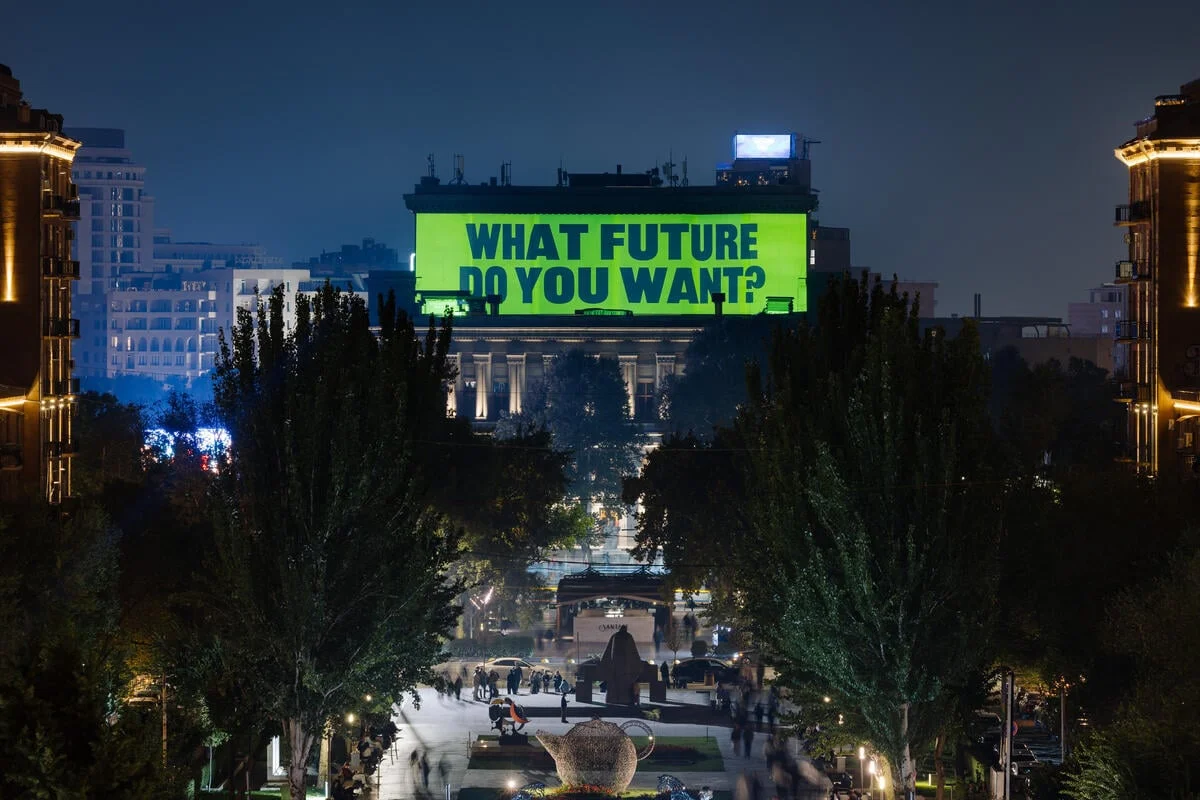
- The Weekend Turning Point: On Saturday, the frustration hit a breaking point. Greenpeace staged a high-visibility intervention at Yerevan’s iconic Opera Theatre. By projecting the message, "What future do you want?" and "Delay is destruction" onto the landmark, activists successfully dragged the discourse out of the sterile negotiation rooms and into the public eye, highlighting the disconnect between political caution and the accelerating biodiversity crisis.
- The Current Phase: As the ministerial High-Level Segment approaches, the focus has shifted to whether ministers will have the political capital to override the technical stalemates. The core issue remains the "alignment" of global financial systems—specifically, how to redirect the billions of dollars currently flowing into environmentally destructive industries toward restoration and conservation.
Supporting Data: The Cost of Inaction
The urgency of COP17 is underscored by grim ecological data. Scientists associated with the Convention on Biological Diversity have noted that the "drivers of biodiversity loss"—intensive agriculture, infrastructure development, and extractive industries—are accelerating.
According to internal Greenpeace policy briefs presented during the summit, the world is currently falling short of the required investment in nature-positive sectors by hundreds of billions of dollars annually. When subsidies for fossil fuels and industrial agriculture are factored in, governments are effectively paying to dismantle the very ecosystems they have pledged to protect. The "30×30" target is mathematically achievable, but only if governments reform fiscal policies to stop the hemorrhaging of natural capital.
Human Rights and the Crisis of Representation
Perhaps the most contentious issue at COP17 involves the role of Indigenous Peoples and local communities (IPLCs). As the primary stewards of the world’s most biodiverse regions, their inclusion is not merely a matter of equity; it is a scientific necessity.
However, negotiations regarding the governance of the new subsidiary body on Article 8(j)—which pertains to traditional knowledge—have been marred by paternalism. Several nations are currently debating how to "represent" Indigenous voices rather than empowering them to self-determine their role in the negotiations.
The Voice of the Frontlines
Solomon “Uncle Sol” Kaho‘ohalahala, an Indigenous Native Hawaiian Elder, delivered a stinging rebuke to the conference regarding these exclusionary practices.
"It is unacceptable that governments are still trying to decide who is going to represent Indigenous Peoples and local communities in the negotiations," Kaho‘ohalahala stated. "We are not just terms to be discussed in negotiation rooms, to be added or deleted from text agreements. We are the ones standing on the frontlines of nature protection, fighting for our survival and for the future of the planet."
His testimony highlights a fundamental flaw in the UN process: the failure to recognize that nature conservation cannot be achieved by top-down bureaucracy when the most effective protectors of that nature are being sidelined by those very same bureaucratic structures.
Official Responses: Greenpeace’s Demand for "Walking the Talk"
Greenpeace International has been a vocal critic of the lack of decisive leadership. An Lambrechts, a Biodiversity Politics Expert at the organization, argues that the time for "recognizing the problem" has long passed.
"COP17 has taken stock of the gaps that must be closed to keep the 2030 targets within reach," Lambrechts noted. "Countries agree there is a problem. They now need to own the moment and move from recognition to action. Governments must send a strong signal that they are ready to walk the talk. That includes reforming subsidies and fiscal and financial policies to align with nature and human rights protection."
The sentiment is echoed by Camila Jardim, an International Political Expert with Greenpeace Brazil. Jardim emphasizes that the decisions made in Yerevan are not isolated—they serve as a precursor to the upcoming UN climate conference, COP31. "The decisions governments make in Yerevan will matter beyond this conference," Jardim said. "COP17 must send a strong signal to COP31 that climate and biodiversity action must reinforce each other. There is no time for further delay."
Implications: The High-Level Segment and Beyond
The ministerial High-Level Segment serves as the final, high-stakes filter for the agreements reached in Yerevan. If the ministers fail to provide the political leadership necessary to break the current deadlock, the implications for the global environment will be profound:
- Erosion of Trust: Failure to empower Indigenous communities and bridge the financial gap will alienate the very partners needed to implement biodiversity projects on the ground.
- Market Instability: Continued support for destructive industries creates a volatile economic environment that ignores the long-term reality of ecosystem collapse.
- Climate Synergy Failure: By failing to link biodiversity loss with climate change, nations are essentially fighting two halves of a single crisis separately. Ecosystems like peatlands, forests, and seagrass beds are essential carbon sinks; if they continue to degrade, the targets set under the Paris Climate Agreement will also become unattainable.
As the curtains prepare to close on COP17, the global community is watching to see if the rhetoric of "ambition" will be matched by the reality of "action." The consensus among civil society is clear: the current plateau is a failure of will, not a failure of possibility. Whether the world leaves Yerevan with a blueprint for survival or a monument to delay will depend entirely on the decisions made in these final, grueling days.
Media Contact Information
For those following the ongoing developments, the Greenpeace International media team remains on-site:
- Diego Gonzaga, Communications Lead at CBD COP17: +1 415 527 9440 | [email protected]
- Jaqueline Sordi, Media Lead at COP17: +55 51 99678 9048 | [email protected]
- Greenpeace International Press Desk: +31 (0)20 718 2470 (24/7 availability) | [email protected]


 Nila Kartika Wati
 Laily UPN





