

 Nila Kartika Wati
BALTIMORE, MD — In an era often defined by political polarization and social fragmentation, a quiet but potent movement is coalescing in the heart of America’s most resilient cities. From Tuesday, October 14, through Thursday, October 16, more than 100 grassroots leaders, community organizers, and social innovators descended upon Baltimore for the Change Collective’s annual National Change Lab.
The event served as a high-level summit for graduates of the Change Collective fellowship, a program dedicated to identifying and empowering local leaders from five distinct metropolitan cohorts: Chicago, Detroit, Jackson, Memphis, and San Antonio. While the attendees hailed from vastly different geographies, the convening was anchored in the spirit of Baltimore—a city that has become a living laboratory for community-driven progress.
The Architecture of Civic Trust
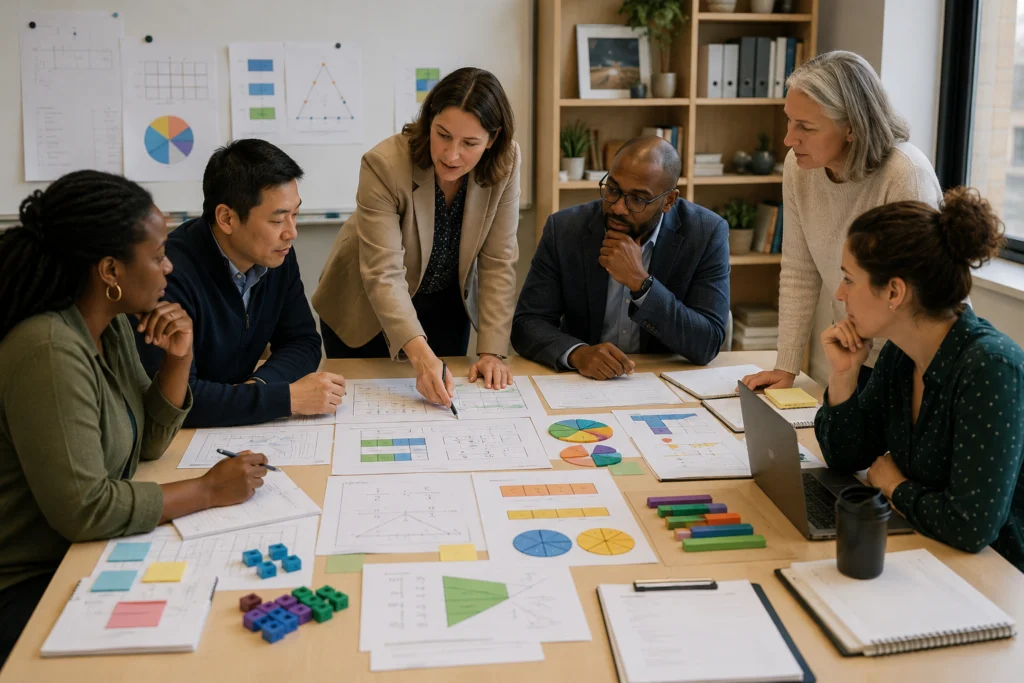
The National Change Lab is more than a conference; it is an incubator for what the organization calls "Civic Action Plans." These are tangible, ground-level projects designed by fellows to address systemic challenges—ranging from digital literacy and housing equity to youth mentorship—within their respective neighborhoods.
This year’s programming emphasized the "soft power" of civic institutions. A standout moment occurred when the leadership of Baltimore’s two professional sports pillars, the Orioles and the Ravens, took the stage to discuss the role of athletics in community cohesion.
Catie Griggs, President of Business Operations for the Baltimore Orioles, articulated a vision of stadiums as "third spaces" where civic trust is forged in the absence of political tension. "The Orioles take a tremendous amount of pride in creating a space where our community can show up, come together, and where their first interaction with a stranger can be a high five over a home run," Griggs stated.
Sashi Brown, President of the Baltimore Ravens, echoed this sentiment, framing the team’s presence as a fundamental social responsibility. "For the Ravens, it is a belief that we are a rare and unique unifying force for Baltimore that the entire region can rally around," Brown noted. By positioning sports as a bridge-builder, the discussion set a tone for the conference: that civic engagement is not merely the domain of activists, but a shared responsibility across all sectors of society.
A Chronology of Collaboration
The three-day summit followed a rigorous schedule of intellectual exchange and practical skill-building.
Tuesday: The Groundwork of Governance
The opening day focused on the nexus between state government and local innovation. In a candid fireside chat, Maryland Comptroller Brooke Lierman and Fagan Harris, senior advisor to Governor Wes Moore, challenged attendees to rethink the traditional grant-writing paradigm.
Lierman urged the cohort to look beyond simple government funding. "Use the role of government and the power of convening," she advised, emphasizing that the state’s most powerful tool is often its ability to bring disparate stakeholders to the table. Harris underscored the "powerful and unique alchemy" of this collaboration, defining it as the marriage between the "leaders on the ground doing the work" and the "elected officials who have those communities’ backs."
Wednesday: Navigating a Complex Democracy
Mid-week, the discourse shifted toward the macro-challenges facing American democracy. Hahrie Han, inaugural director of the SNF Agora Institute at Johns Hopkins University, and Xavier de Souza Briggs, a Senior Fellow at the Brookings Institution, led a session on the future of civic action.
Han, author of Undivided: The Quest for Racial Solidarity in an American Church, challenged the fellows to cultivate internal fortitude. "How do I equip people to develop the compass they need to navigate the complex, uncertain world we live in?" she asked. The conversation centered on the necessity of anchoring local action in personal values, ensuring that leaders remain resilient even when the outcomes of their work are not immediately visible.
Thursday: Innovation and the Capital Hustle
The final day was dedicated to the practical realities of non-profit sustainability. The keynote featured Baltimore-based innovators Brittany Young (B-360), Andrew Coy (Digital Harbor Foundation), and Bree Jones (Parity Homes). Their discussion demystified the fundraising process, offering a masterclass in social entrepreneurship.
The Economics of Equity: Insights from the Field
Perhaps the most potent takeaway from the National Change Lab was the challenge to traditional investment narratives. Bree Jones, whose work with Parity Homes focuses on rehabilitating redlined neighborhoods, offered a blistering critique of how institutional investors view marginalized communities.
"Big institutional investors look at Black neighborhoods as a deficit," Jones noted. "If the investors don’t think that there is a market, let me prove that there is a market." Her work serves as a blueprint for others in the collective, demonstrating that rebuilding the "social fabric" is not just a moral imperative, but a viable economic strategy.
Brittany Young, founder of B-360, built on this by emphasizing the "art of the pitch." She described her journey from a small pilot program involving 30 students to a thriving organization, stressing that storytelling is the engine of fundraising. "I’m really big on storytelling," Young shared. "Telling the story of starting with ‘if you invest a million dollars, here is what I am going to do with that million dollars, that outcome, and that return.’"
Andrew Coy provided the final piece of the puzzle, advising leaders to cultivate "FOMO" (fear of missing out) among potential donors. He encouraged the fellows to be mobile, suggesting that leaders should look for opportunities outside their immediate geography to gain the recognition necessary to leverage support back home.
Implications for the Future
The implications of the 2024 National Change Lab are clear: the future of American democracy is being written at the hyper-local level. The Change Collective, an initiative of the non-profit Civic Nation, is proving that when you bridge the gap between grassroots organizers and institutional power, the result is a more resilient civic culture.
By focusing on five cities with historically underserved populations, the Collective is not just providing leadership training; it is creating a cross-pollination of ideas. A solution found in Jackson, Mississippi, is being adapted for a neighborhood in Detroit; a community-building strategy from San Antonio is being tested in Memphis.
As the fellows returned to their respective cities, they carried with them more than just new networks; they returned with a reinforced commitment to what the organizers call "the work." In the words of the speakers, the work is difficult, often under-funded, and frequently unacknowledged by national media. Yet, as the energy in Baltimore demonstrated, it is the only path forward for a nation struggling to reconcile its values with its reality.
About the Organizing Entities
The Change Collective remains a vital hub for this work, training leaders who represent a diverse spectrum of ideologies, backgrounds, and vocations. Through the infrastructure provided by Civic Nation—a 501(c)(3) nonprofit dedicated to strengthening civic culture—these leaders have access to national mentorship, research, and collaborative opportunities that would otherwise be unavailable to them.
As Civic Nation continues its mission—which includes other initiatives like When We All Vote and It’s On Us—the National Change Lab stands out as a unique proof-of-concept. It is evidence that the "biggest issues of our time," as Civic Nation describes them, are not solved in Washington, but in the community centers, church basements, and school boards of the nation’s towns and cities.
The 2024 convening in Baltimore has set a high bar for future gatherings. It has successfully moved the needle from abstract theory to actionable, replicable, and scalable models of social change. For the fellows of the Change Collective, the lesson of the week was clear: in a world of uncertainty, the most reliable compass is the community itself.
For more information on the Change Collective or to view the Civic Action Plans of the 2024 fellows, visit change-collective.org.

 Raul Delapena Setiawan
 Sagoh






