



 Lina Hope
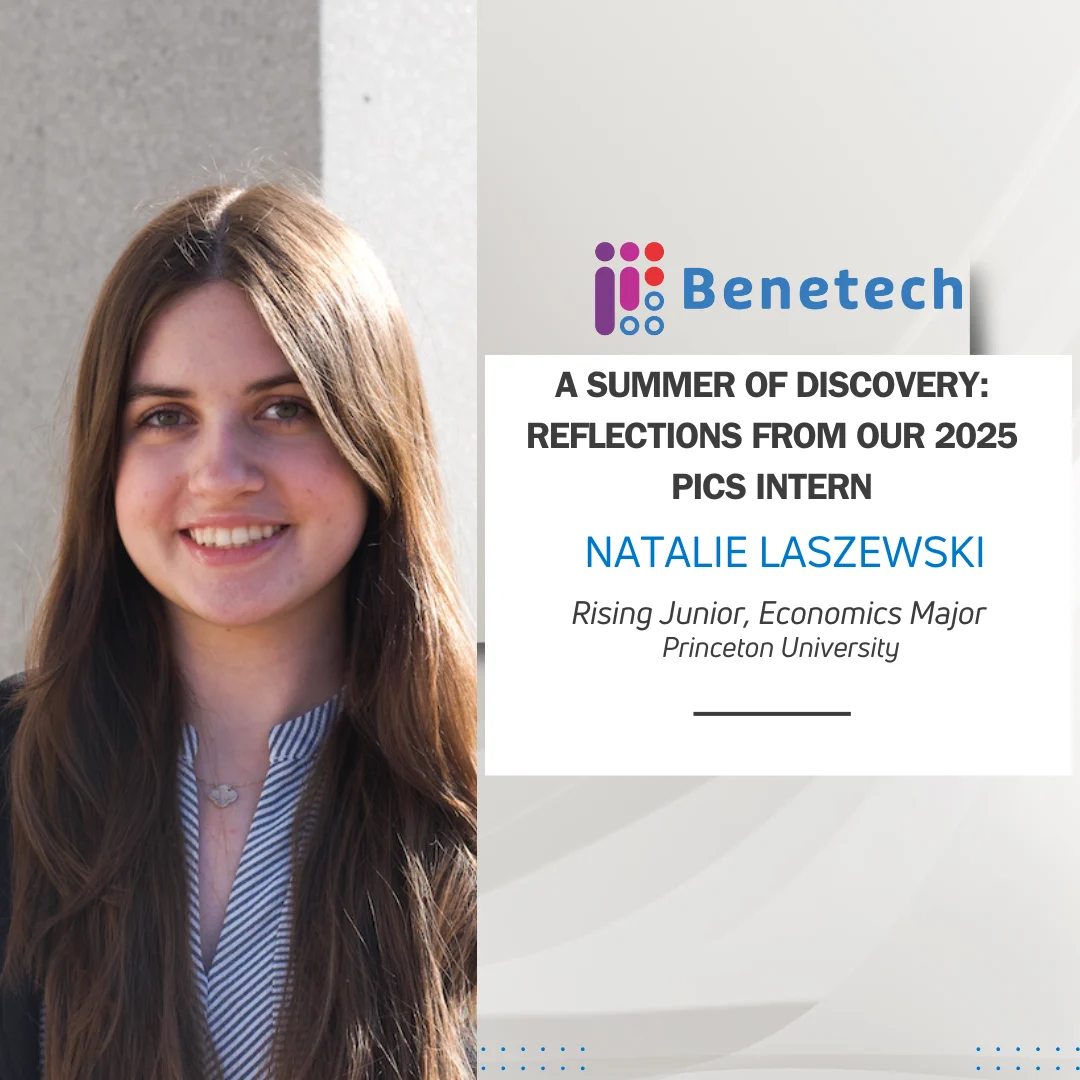
This summer, Benetech, the nonprofit leader in software for social good, welcomed Natalie Laszewski, a rising junior at Princeton University, into its ranks. Joining through the prestigious Princeton Internships in Civic Service (PICS) program, Laszewski—who is pursuing a degree in Economics with minors in Computer Science and Finance—spent eight weeks immersed in the organization’s mission to empower communities through accessible technology.
While internships are often viewed as a stepping stone for students to pad their resumes, Laszewski’s tenure at Benetech evolved into a profound exploration of how data, communication, and human empathy intersect to solve systemic challenges in education. From diving into complex marketing strategies to conducting qualitative research on the life-changing effects of accessible reading, Laszewski’s journey serves as a blueprint for the modern, mission-driven professional.
The Genesis of an Internship: Mission-Driven Alignment
The PICS program, which connects Princeton students with nonprofit organizations across the country, is designed to foster a sense of civic duty among the next generation of leaders. For Laszewski, the selection of Benetech was a deliberate choice rather than a placeholder.
"When I saw Benetech’s mission around education and accessibility, it was something I wanted to learn more about," Laszewski noted. In an era where students often prioritize high-frequency finance or big-tech roles, Laszewski sought a different currency: impact.
Upon her arrival, she was immediately struck by the organizational culture. "Everyone seemed so passionate about the work they were doing," she observed. "I’m a firm believer that if you’re passionate about your work, you do better work and make a greater impact." This alignment between personal values and professional output set the tone for her eight-week tenure, providing her with a front-row seat to how a nonprofit leverages technical innovation to bridge the "digital divide" for individuals with print disabilities.
Chronology of Growth: A Summer of Discovery
Laszewski’s internship was structured to provide a comprehensive look at the "machinery" behind a social-impact organization. Her work spanned the Marketing, Communications, and Advancement teams, requiring her to shift gears between analytical research and creative storytelling.
Weeks 1-3: Foundations and Integration
The initial phase of the internship focused on immersion. Laszewski familiarized herself with the ecosystem of Benetech’s flagship initiative, Bookshare—the world’s largest accessible online library for people with reading barriers. She engaged in onboarding processes that prioritized understanding the unique needs of users with dyslexia, visual impairments, and other print disabilities.
Weeks 4-6: The Qualitative Deep Dive
The core of her internship centered on her landmark case study project. This period required Laszewski to step outside her comfort zone. Moving away from the quantitative focus of her Economics degree, she pivoted to qualitative research. She conducted interviews with Bookshare users, an experience that demanded both academic rigor and emotional intelligence.
Weeks 7-8: Strategic Synthesis and Reflection
In the final stages, Laszewski focused on synthesizing her findings. She transitioned from data gathering to data storytelling, utilizing design tools like Canva and content management systems like WordPress to bring the human stories she had uncovered to the public sphere. These final weeks were characterized by a transition from learner to contributor, as she began to offer strategic insights on how the organization communicates its value proposition.
Supporting Data: The Human Element of Accessibility
While her Economics studies often involve charts, trends, and market forecasting, Laszewski found that the most compelling "data" she encountered this summer was the lived experience of Bookshare users.
Her case study project highlighted the transformative power of accessible reading. Through her interviews, she gathered evidence of the "accessibility gap" in education. One particular story involved Sharene Nathan, a Bookshare member who reflected on the trajectory of her academic life. Nathan noted how vastly different her educational journey might have been had she been granted early access to the resources Bookshare provides.
Another user, Tyrese, shared a more visceral success story. Once a reluctant reader who dreaded literacy-based assignments, Tyrese spoke with palpable excitement about the books he was now queued to read through the platform.
For Laszewski, these interactions provided the context behind the numbers. "Hearing their stories made me emotional," she admitted. "It gave me a real sense of purpose during my internship." These narratives are not merely anecdotes; they are the qualitative backbone that proves the efficacy of accessible technology in fostering lifelong learning.
Official Perspectives: The Value of Civic Service
The PICS program at Princeton is built on the premise that student talent, when applied to the public sector, creates a compounding return for society. Benetech’s leadership viewed Laszewski’s contributions as a vital addition to their communications and advancement goals.
By providing a platform for a high-achieving student to exercise her skills, Benetech successfully bridged the gap between academic theory and practical, real-world application. The organization’s team provided the mentorship necessary for Laszewski to navigate technical challenges, such as learning new platforms like Muck Rack, while encouraging her to take ownership of the storytelling process.
This symbiotic relationship—where the intern gains clarity and the organization gains fresh perspectives—is the hallmark of a successful internship model. It reflects a growing trend in the nonprofit sector: the need for "cross-pollination" between academic institutions and civic organizations.
Implications: A New Lens on Accessibility
Perhaps the most significant takeaway from Laszewski’s summer was the evolution of her understanding regarding accessibility. Like many, she entered the internship with a foundational knowledge of the topic, but she left with a nuanced, systemic understanding.
"Accessibility in education is an intricate topic with many layers," she reflected. "Reading about challenges is one thing, but when you hear directly from someone living with a print disability, it changes your perspective."
The implications of this realization are significant. As the digital economy expands, the necessity for inclusive design becomes more critical. By integrating accessibility into the core of her professional worldview, Laszewski is now part of a growing cohort of future leaders who understand that technology is only as good as its inclusivity. She is leaving her internship not just with a polished portfolio of work—ranging from research case studies to digital marketing assets—but as a more "globally educated citizen."
Lessons for the Future: Navigating the Remote Workplace
One of the most profound challenges of the modern internship is the remote environment. For many students, the lack of a physical office can hinder professional growth and social connection. However, Laszewski’s experience proved that intentionality can overcome distance.
"I learned it’s important to reach out and connect with people around you," she advised. "Even though we worked remotely, I still built meaningful relationships with the team." Her success in a digital-first environment speaks to the importance of proactive communication—a skill that is increasingly vital in the post-pandemic workforce.
For future interns, her advice is clear: Engagement is a choice. Whether through virtual coffee chats or active participation in team meetings, the intern who seeks connection is the one who gains the most from the experience.
Conclusion: The Path Ahead
As Natalie Laszewski returns to Princeton, the impact of her summer at Benetech remains. She describes the experience as a "summer of discovery," one that has crystallized her career ambitions. She is now leaning toward a career path that centers on research, specifically one that blends data-driven analysis with a commitment to social impact.
Benetech’s role in this transition cannot be overstated. By offering a space where curiosity is rewarded and empathy is practiced, the organization has helped shape a future leader who understands that business and technology do not exist in a vacuum.
"I’m thankful to Benetech for giving me clarity on my career path and for helping me grow both professionally and personally," she concluded. "This has been a truly transformative summer."
As she steps into the next chapter of her academic and professional life, Laszewski carries with her the stories of the people she interviewed, the technical skills she mastered, and the conviction that, when empowered by technology, every individual can reach their full potential. For Benetech, her time with them is a reminder that the future of social impact is in good hands—provided those hands are connected to the right tools, the right community, and a deep, abiding sense of purpose.

 Iffa Jayyana
 Suro Senen