
 Lina Hope
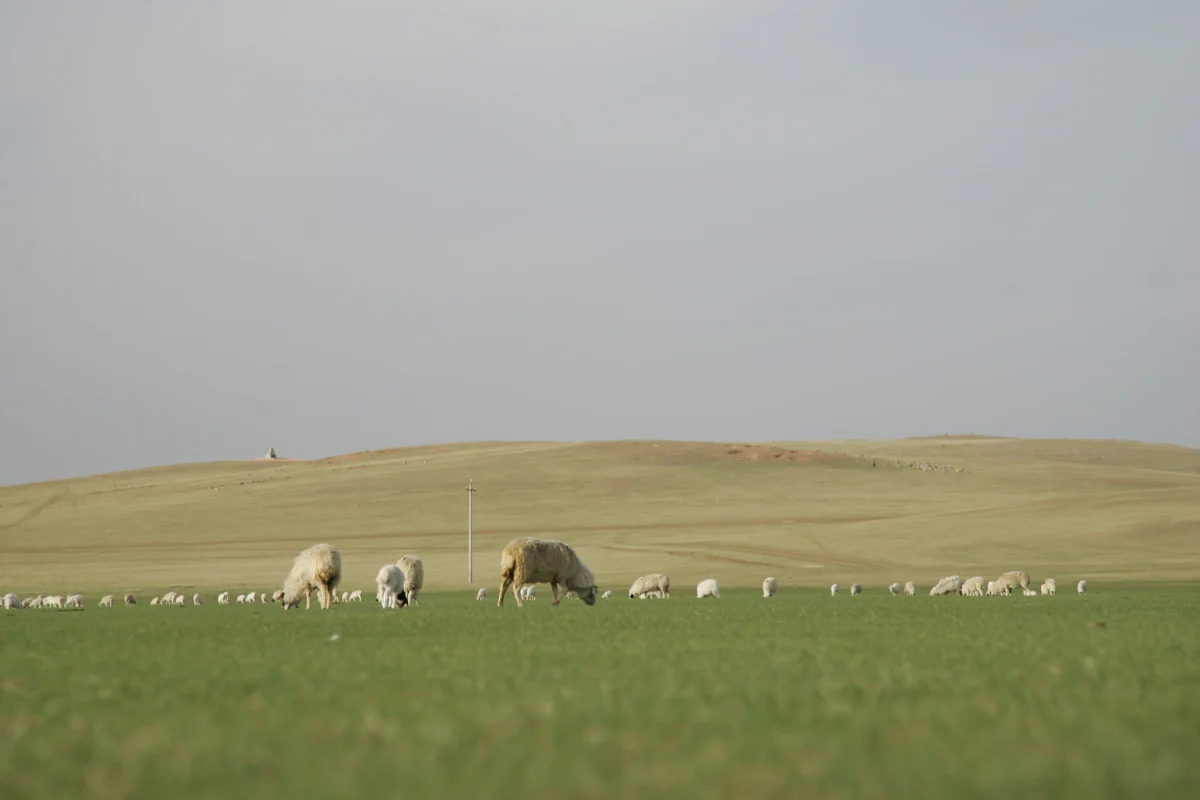
ULAANBAATAR, Mongolia — As the international community gathers at the United Nations COP17 desertification conference, a significant strategic shift is taking place in how the world approaches the restoration of its most overlooked ecosystems. The International Livestock Research Institute (ILRI), in collaboration with a consortium of global partners, has officially launched the STELARR Rangeland Restoration Investment Hub—a sophisticated financial bridge designed to connect private capital with high-impact, sustainable livestock value chains.
The initiative aims to address a staggering $278 billion finance gap that currently hinders global efforts to reverse land degradation. By shifting the narrative from rangelands as "neglected wastelands" to "productive, carbon-rich assets," the Hub seeks to catalyze private sector investment into landscapes that sustain two billion people and form the backbone of global commodity markets.
The Strategic Importance of Rangelands: A Planetary Reservoir
Rangelands—encompassing grasslands, shrublands, woodlands, wetlands, and vast desert expanses—are the silent workhorses of the Earth’s climate system. They cover more than 50% of the world’s terrestrial surface and hold approximately one-third of the planet’s total soil carbon reservoir.
Beyond their ecological function as carbon sinks, these landscapes support the production of globally vital commodities, including cashmere, premium beef, and essential botanical extracts such as gums and resins. Despite this, rangelands have historically been sidelined in international climate finance, receiving a fraction of the attention afforded to tropical rainforests.
The STELARR (Sustainable Investments for Large-Scale Rangeland Restoration) project aims to correct this imbalance. By providing a curated portfolio of investment opportunities, the Hub offers a mechanism for corporations to meet their environmental, social, and governance (ESG) targets while simultaneously stabilizing supply chains that are increasingly vulnerable to climate-induced disruption.
Chronology of the Initiative: From Concept to COP17
The launch at COP17, held in Ulaanbaatar from August 17 to 28, represents the culmination of years of collaborative research and policy advocacy.
- Foundation Phase: The initiative was built upon the groundwork laid by the UNCCD Rangelands Initiative and the Global Landscapes Forum. Researchers identified that the lack of "investment-ready" projects was the primary bottleneck preventing private capital from entering the restoration space.
- Development of STELARR: Led by ILRI, the STELARR project was established with funding from the Global Environment Facility (GEF). The goal was to build a bridge between scientific restoration methodology and the rigors of institutional finance.
- Pipeline Curation (2024–2025): Throughout the last 18 months, partners including the IUCN, the Rangelands Stewardship Council, and various CGIAR centers worked to identify and vet projects across Brazil, Colombia, Kenya, Kyrgyzstan, Mongolia, and South Africa.
- August 26, 2026 (The Milestone): The official presentation of the Hub at the Business for Land (B4L) pavilion at COP17. This event serves as the primary forum for potential investors to engage with project leads and gain an understanding of the verification metrics and stewardship standards required for participation.
The Economics of Restoration: High Returns, Higher Impact
One of the most compelling arguments for the STELARR Hub is the robust return on investment (ROI) associated with land restoration. Empirical evidence suggests that for every dollar invested in restoring degraded rangelands, there is a potential return of up to $35 in ecosystem services and productivity gains.
Key Performance Indicators (KPIs) for Investors
To ensure transparency and integrity, every project listed on the Hub must adhere to a strict set of principles. These include:
- Evidence-Based Metrics: Projects must utilize satellite monitoring and on-the-ground ecological assessments to prove carbon sequestration and biodiversity gains.
- Social Equity: Initiatives must demonstrate clear benefits to local and pastoralist communities, ensuring that restoration does not lead to land displacement.
- High Animal Welfare: Livestock-based projects must align with modern ethical standards, ensuring that productivity increases are not achieved at the cost of animal health.
- Economic Viability: Projects must prove they can reach a break-even point and generate long-term profitability through sustainable commodity extraction.
Case Studies: The Pipeline of Opportunity
The Hub currently showcases a diverse pipeline of projects that demonstrate the breadth of the rangeland investment opportunity.
1. Brazil: The Elysium Cerrado Restoration Project
Located in the heart of Brazil’s Cerrado, this project seeks to restore 30,000 hectares of degraded pastureland. By implementing silvopastoral and Integrated Crop-Livestock-Forestry (ICLF) systems, the project aims to integrate native trees back into the landscape. With a $60 million investment requirement, the project is projected to double or even triple the net income of local ranchers. Revenue streams are diversified through the harvesting of native products like baru nuts and macaúba oil, insulating producers from the volatility of beef market prices.
2. Kenya: The KAVADI Hub
Focusing on the Arid and Semi-Arid Lands (ASAL), the KAVADI Hub represents a grassroots-to-market model. The initiative supports smallholder pastoralists in the sustainable harvesting of high-value botanicals, including frankincense, gum Arabic, and moringa seeds. Having already secured $500,000 and generating $300,000 in annual revenue, the Hub is seeking a second round of funding to scale operations. The capital will be used to upgrade processing factories and restore over 200 hectares of degraded land, effectively linking local conservation to global cosmetic and pharmaceutical supply chains.
3. Colombia: The GANSO Carbon Program
As the carbon market matures, the GANSO program offers a specialized financial instrument. This 40-year project is designed to generate high-integrity, verified carbon credits. By transforming traditional livestock production into a regenerative, carbon-capturing enterprise, the project requires $800,000 to scale, providing an entry point for investors looking to offset their footprint while contributing to systemic landscape-level change.
Expert Perspectives: The Imperative for Private Action
Fiona Flintan, Senior Scientist at ILRI and lead of the STELARR Hub, emphasized that the current threats—invasive species, encroaching desertification, and climate instability—are existential.
"Rangelands are vital ecosystems that provide livelihoods for two billion people as well as valuable commodities," Flintan noted during the COP17 proceedings. "However, they face growing existential threats. Investing in rangeland restoration offers a rare opportunity for the private sector to support both greater profitability and sustainability by building resilience and stabilizing supply chains from these critical landscapes."
Industry experts suggest that the private sector has historically shied away from rangelands due to perceived complexity and the difficulty of measuring impact in pastoral landscapes. The STELARR Hub aims to de-risk these investments by providing standardized reporting frameworks, effectively acting as an intermediary that translates ecological data into financial language.
Implications for the Future of Sustainable Finance
The launch of the STELARR Hub is a direct challenge to the status quo of climate finance, which has long favored quick-win projects over long-term, landscape-scale restoration.
The Ripple Effect on Policy
The collaboration between the UNCCD’s Business for Land initiative and the STELARR Hub signals a shift in international policy. Governments are increasingly looking for ways to incentivize private sector participation in restoration as state budgets struggle to meet the massive capital requirements of the global climate agenda.
Redefining Livestock Value Chains
For the livestock industry, the Hub represents a pivot toward "regenerative production." By proving that restoring soil health leads to higher forage productivity, better herd health, and increased yields, the project provides a blueprint for a sector that is often criticized for its environmental footprint.
Long-Term Sustainability
The success of this initiative will be measured not just by the number of hectares restored, but by the ability to maintain these systems for the long term. If the Hub succeeds in its pilot phase, it could serve as a template for other regions, including the Sahel and the steppes of Central Asia, where rangeland degradation threatens to trigger mass migration and regional instability.
As the COP17 conference draws to a close, the focus now turns to implementation. The investment cases identified in Brazil, Kenya, and Colombia are proof-of-concept tests. If these projects deliver the promised returns to both investors and local communities, the STELARR Hub could well become the primary global engine for rangeland restoration in the coming decade, finally providing the scale of funding required to heal the world’s forgotten landscapes.


 Evan Lee Salim

 Asep Darmawan






