


 Jia Lissa
By: Getting Smart Staff
As the global landscape of work continues to shift under the weight of rapid technological advancement and changing economic demands, the traditional K-12 educational model faces a critical inflection point. How do we prepare students for a future that is increasingly defined by adaptability, human connection, and creative problem-solving?
In Chicago, the answer is being drafted in real-time. For the past three years, Getting Smart has hosted a series of regional "New Pathways" events—sponsored by Britebound—aimed at bridging the gap between classroom instruction and the modern workforce. The most recent convening in Chicago brought together a powerful coalition of district leaders, educators, philanthropic funders, and workforce development organizations to explore two vital pillars of modern pedagogy: entrepreneurship and the arts.
The Convergence of Innovation and Education
The Chicago convening was more than just a conference; it was an incubator for ideas. Hosted by Getting Smart and anchored by influential voices such as Shawnee Caruthers, Victoria Andrews, and Liz Texeira, the event served as a nexus for those dedicated to reimagining the student experience.
The program kicked off with a keynote address by Kara May of Art in Motion, who set a visionary tone for the day. Her insights provided the framework for a series of interactive panels and workshops that featured representatives from organizations such as Future Founders, Uncharted Learning, the Lincoln Lodge Comedy Club, and Big Picture Learning. These sessions moved beyond theory, tackling the practical mechanics of embedding entrepreneurial mindsets into the curriculum and using creative outlets—such as comedy and the arts—to foster youth agency.
The event’s true power lay in its diversity. Attendees spanned the entire educational ecosystem, from district superintendents navigating the complexities of large-scale systemic change to foundation partners investing in the next generation of human capital. By bringing these stakeholders into the same room, the convening underscored a fundamental truth: the "new pathway" to student success is not a solo project—it is a community-wide endeavor.
Lessons from the Field: Reflections on Entrepreneurship
A highlight of the convening was a series of panels featuring founders and entrepreneurs at various stages of their careers—from recent high school graduates to seasoned industry leaders. These speakers reflected on the impact of their own K-12 experiences, identifying the specific moments that sparked their curiosity and the skills they believe are now essential for the next generation.
The consensus was clear: in an age where automation threatens routine tasks, the "human" skills—creativity, critical inquiry, and resilience—are the new currency. Speakers emphasized that we must design learning environments that prioritize these attributes. By treating students as creators rather than consumers of information, educators can better equip them to thrive in an unpredictable economy.
Case Study: The Academy for Global Citizenship (AGC)
To understand how these principles manifest in practice, the convening highlighted the work of the Academy for Global Citizenship (AGC), a K-8 public charter school within the Chicago Public Schools (CPS) system. Serving over 500 learners, AGC stands as a testament to the fact that holistic, sustainable, and dual-language education can thrive even in the face of broader district enrollment challenges.
The school is organized around a "Village" model—clusters of grade bands that cultivate a deep sense of community and civic duty. Here, education is not confined to textbooks. Seven-year-olds participate in a curriculum that includes cooking, gardening, and service, integrating real-world skills into their daily academic routine.
Furthermore, AGC serves as a physical manifestation of sustainability. As one of the few schools to receive the Living Building Challenge certification, the campus is not merely energy-neutral; it is a regenerative space that contributes power back to the local grid. By living and learning in a structure that prioritizes environmental stewardship, AGC students are internalizing the concept that they can be active, positive agents of change in their world.
The Power of Practical Application: Oak Park and River Forest High School
Just outside the city limits, Oak Park and River Forest (OPRF) High School provides a compelling example of how entrepreneurial thinking can be scaled to a large, comprehensive campus. Serving approximately 3,900 students with a faculty of 400, OPRF has successfully infused its culture with an infectious spirit of inquiry.
The school’s participation in Uncharted Learning’s INCubatoredu program has been a catalyst for this shift. Unlike traditional business simulations, this program challenges students to engage in rigorous market analysis, utilizing tools like MRI-Simmons consumer research. Students are not just writing business plans; they are conducting evidence-based research, analyzing competitors, and identifying genuine customer pain points.
The diversity of the student projects is telling of their engagement:
- Apparel Design: One team is prototyping ski and snowboard apparel that fuses streetwear aesthetics with high-performance protective padding.
- AI Integration: Another group is developing AI-driven solutions for sports coaches to streamline the creation of athlete highlight reels.
- Practical Innovation: Other students are designing ergonomic replacement soles for athletic shoes, battery-free self-warming baseball gloves, and travel platforms specifically tailored to the needs of Gen Z and younger travelers.
These projects do more than teach business; they teach students to recognize opportunities, investigate problems, and iterate on solutions. This commitment extends to the culinary arts, where students run an on-campus restaurant and delivery service. By managing these operations, students gain a visceral understanding of the responsibilities and possibilities inherent in creating value for others.
Expanding the Horizon: Fenton High School
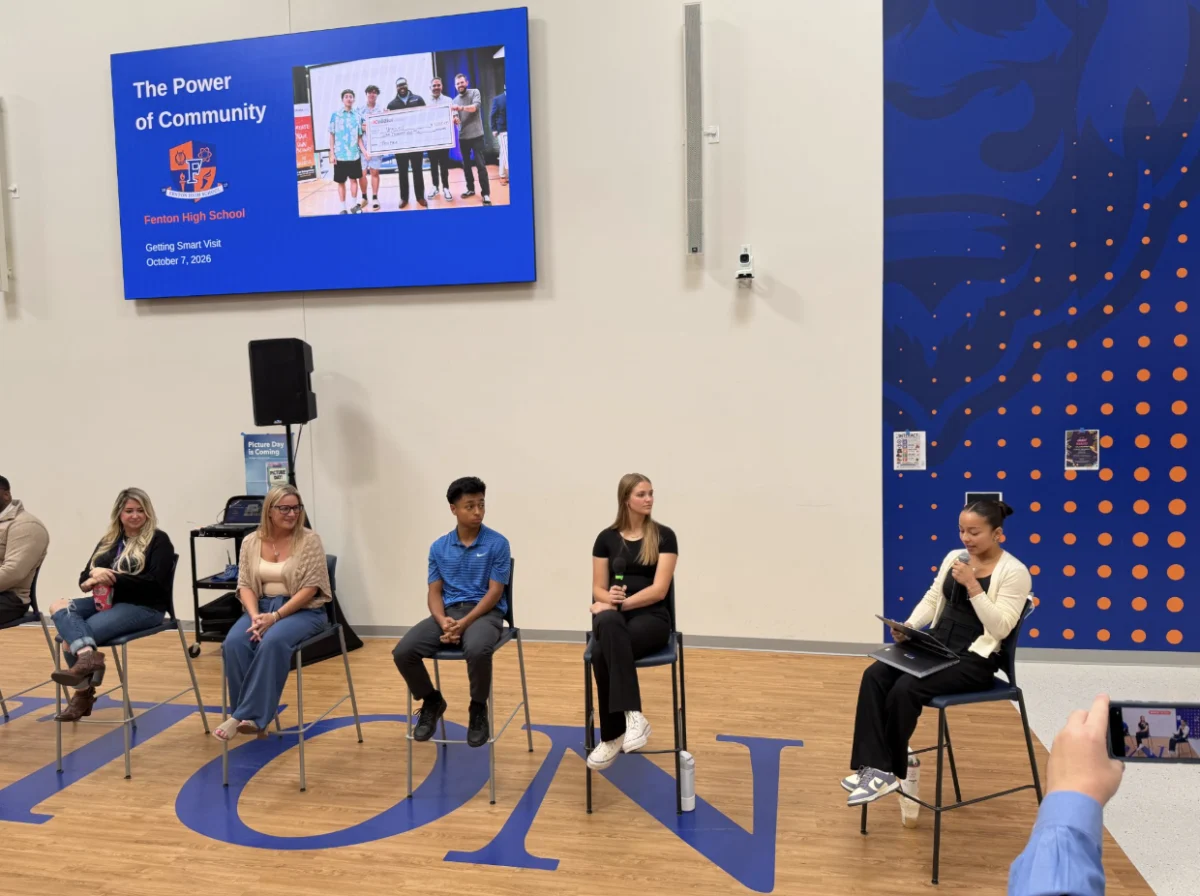
Fenton High School, a single-school district located less than 10 miles from O’Hare International Airport, serves as a model for how smaller, diverse communities can provide expansive opportunities. With over 1,200 students, Fenton has built a robust academic ecosystem that includes advanced placement, dual enrollment with the College of DuPage, and intentional work-based learning.
Under the leadership of Superintendent Dr. Jason Klein, Fenton has begun implementing the INCubatoredu program. While still in the early stages of adoption, the administration has already noted a marked improvement in student agency and the acquisition of "durable skills."
During the convening, the panel discussion featuring Dr. Klein, local business leaders, and students highlighted a shared vision: the realization that the world is changing, and therefore, the definition of a "prepared" student must evolve. The consensus among the Fenton community was that the focus must move beyond standardized testing toward personalized learning paths that connect students directly with their local economic environment.
The Future of the Educational Ecosystem
The implications of the Getting Smart Chicago convening are far-reaching. As we analyze the data and the feedback from these three institutions, several key themes emerge:
- Agency as an Academic Driver: When students are given the agency to choose their focus, their engagement and persistence levels rise.
- Community-Embedded Learning: The strongest programs were those that connected the school to the local business community, whether through internships, mentorships, or community-led projects.
- The Shift Toward "Durable Skills": There is a move away from rigid content delivery toward the development of soft skills—adaptability, communication, and emotional intelligence—that are increasingly resistant to displacement by AI.
- Systemic Sustainability: Schools that focus on holistic development, such as the Academy for Global Citizenship, show that educational success is tied to the student’s wellbeing and their relationship to their environment.
Conclusion: A Call to Action
The Chicago event demonstrated that the "New Pathways" to success are not hidden; they are being forged by educators and students who are willing to challenge the status quo. Whether through the sustainability-focused curriculum of a K-8 charter, the high-stakes entrepreneurial incubators of a large suburban high school, or the diverse, community-aligned programs of a smaller district, the message is the same: the future of education is active, experiential, and profoundly human.
As we look toward the next year of regional events, the challenge for the broader educational community remains the same. How do we take these pockets of excellence and scale them? The answer lies in the collaborative spirit seen in Chicago—a willingness to listen to students, to involve local partners, and to prioritize curiosity above all else.
By fostering environments where students are encouraged to be problem-solvers and creators, we are not just preparing them for the workforce; we are preparing them to build a more resilient, creative, and human-centric world. The path is clear, and as the leaders in Chicago have proven, the time to walk it is now.

 Laily UPN
 Nila Kartika Wati






