

 Ali Ikhwan
For decades, the American high school experience was governed by a singular, implicit promise: if you study hard, graduate, and secure a seat in a four-year university, you have effectively purchased a ticket to the middle class. However, as the global economy undergoes a radical transformation driven by artificial intelligence, automation, and a cooling public sentiment toward higher education, that promise is fraying.
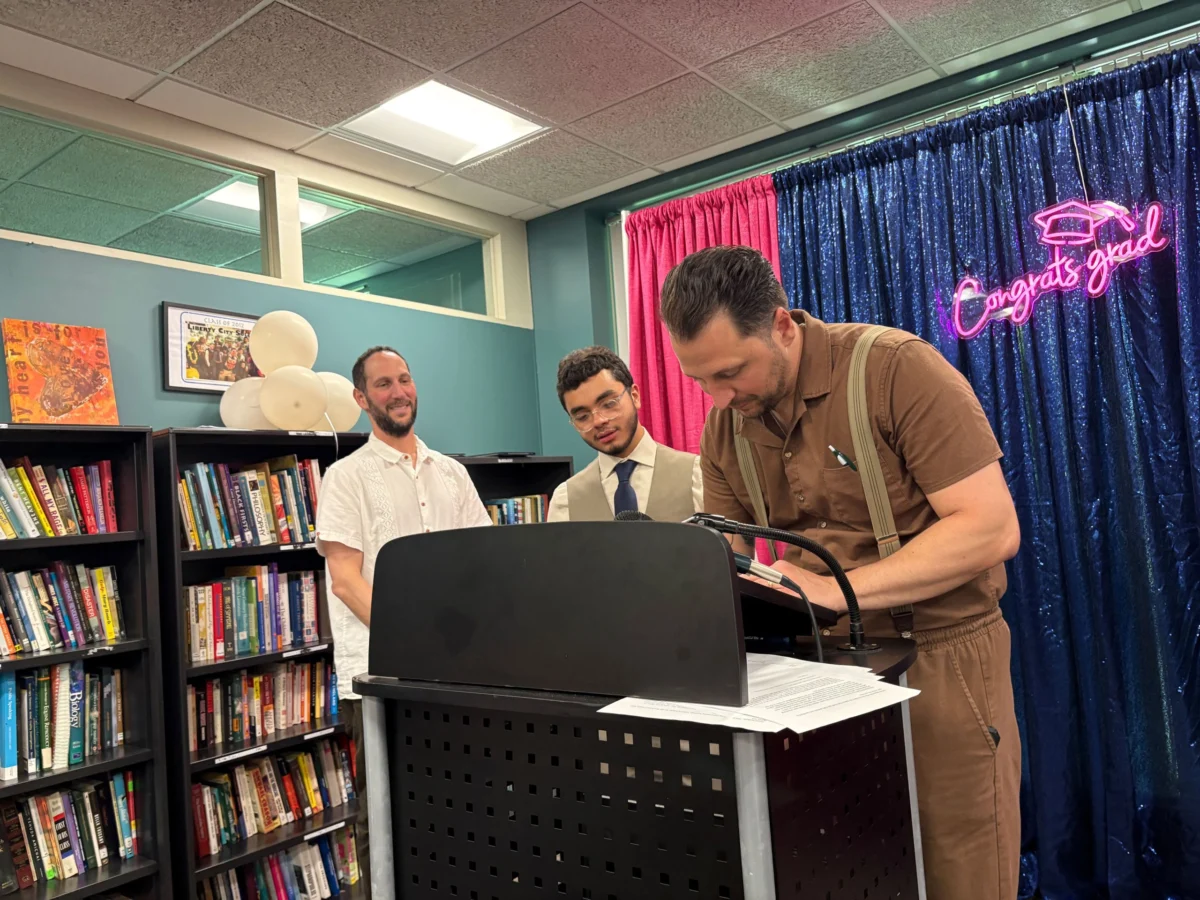
Evan Perez, a first-year student at Babson College, sits at the nexus of this shift. A graduate of The Met High School in Providence, Rhode Island, Perez is a testament to the power of "real-world learning." While his peers in traditional districts were tethered to standardized testing and rigid lecture halls, Perez was building an AI-related business and interning in professional environments. Yet, even as a scholarship recipient with a track record of success, he grapples with the transition, noting that while he was taught how to pitch ideas and advocate for himself, he occasionally feels the sting of gaps in his academic preparation—a byproduct of a curriculum that prioritized hands-on research over traditional core coursework.
Perez’s story is not an anomaly; it is a signal. As The Hechinger Report embarks on a nationwide inquiry into the evolution of secondary education, his experience highlights the central tension facing U.S. schools today: How do we marry the rigors of traditional academics with the fluidity of career-connected learning in an era of rapid technological disruption?
The Cracks in the Conventional Model
The current educational landscape is suffering from a crisis of relevance. A recent report by the National Association of State Boards of Education (NASBE) underscores a jarring reality: the high school model, largely unchanged for over a century, is failing to resonate with its primary constituents. Nearly three in four high school graduates report feeling underprepared for the realities of life after commencement, while one-third of educators admit their students lack the foundational skills necessary for the modern workforce.
This disillusionment is mirrored by public perception. A July Gallup poll revealed that confidence in higher education has slipped significantly, with only 38 percent of Americans expressing "a great deal" or "quite a lot" of faith in the system. Perhaps more tellingly, 25 percent of those who lacked confidence cited the failure of colleges to adequately prepare students for the labor market as their primary reason for skepticism.
When schools fail to bridge the gap between "schooling" and "working," they inadvertently create a vacuum. Into that vacuum now steps a growing movement of reformers, policymakers, and educators who argue that the high school of the future must be a hybrid—a space where intellectual development and vocational agility coexist.
A Chronology of Educational Innovation
The push for career-connected learning is not entirely new, but its urgency has intensified over the last decade.
- The Early 2010s: The rise of "Early College" models and P-TECH schools in cities like New York began demonstrating that students, particularly from underserved backgrounds, could thrive when given a dual-track path that combined high school with associate degree credits and paid internships.
- The Mid-2010s: States like Indiana and Massachusetts began to pivot toward vocational flexibility. In Massachusetts, the popularity of technical high schools surged to such a degree that many districts had to abandon competitive admissions in favor of lotteries to manage the influx of applicants.
- The 2020s (The AI Shift): The widespread availability of generative AI has fundamentally altered the job market. As automation threatens to render entry-level administrative roles obsolete, the value proposition of traditional education—memorization and rote test-taking—has plummeted.
- The Present Day: We are seeing a proliferation of "pathway" models. From Niagara Falls, New York, where ninth-graders choose specialized tracks ranging from construction to entrepreneurship, to statewide initiatives that issue "seals" on diplomas based on post-secondary intent (college, career, or military), the consensus is shifting: one size no longer fits all.
The Data: Why "Pathways" Matter
The transition toward career-connected learning is supported by growing, albeit complex, data. While traditional academic metrics like SAT scores remain the standard for college admissions, longitudinal studies on career-pathway students suggest a different set of advantages.
In programs like those in Delaware, students who engage in structured career pathways show higher rates of industry-recognized credential attainment. However, researchers are quick to note the "evaluation challenge." It remains difficult to track long-term ROI for students in these programs because success is measured in varied ways: employment stability, wage growth, and the ability to pivot in the face of economic shocks, rather than just raw academic scores.
Furthermore, the "AI literacy" factor is becoming a new benchmark for success. As employers increasingly demand workers who can operate alongside, rather than against, intelligent systems, schools that teach technical adaptability are seeing higher student engagement. Students are not just learning how to code or how to build; they are learning how to manage systems, a skill set that bridges the gap between vocational trade and white-collar strategy.
Official Responses and Policy Frameworks
State legislatures and educational commissions are currently grappling with the legislative implications of these shifts. A new state policy framework, currently gaining traction, argues for the formal integration of career-connected learning into the core state mandate. The proposal posits that career exploration should not be an elective or an afterthought, but a foundational pillar of the high school experience.
"We are seeing a move away from the binary choice of ‘college or bust,’" says one policy analyst involved in the new commission on career readiness. "The goal is to build a high school that is ‘and’—academics and career, theory and practice, college and apprenticeship. The challenge is ensuring that these pathways don’t become ‘tracking’ systems that inadvertently lower expectations for certain students."
The concern over "tracking"—the historical tendency to steer marginalized students away from college prep and toward vocational training—remains the greatest hurdle for policymakers. To succeed, these new models must be inclusive, ensuring that every student, regardless of background, has access to both high-level academic content and the tools to navigate a changing labor market.
The Implications for the Future of Work
The implications of this shift are profound. If high schools successfully integrate career preparation, we may see a significant cooling of the "degree inflation" that has defined the last thirty years. If a high schooler can graduate with both a rigorous academic diploma and an industry-recognized credential in, for example, data analytics or advanced manufacturing, the necessity of a four-year degree as the only "safe" path becomes less certain.
For students like Evan Perez, this is not just about policy; it is about survival. His reflection—"Are classes useful when AI is automating so much?"—is a challenge to the entire educational apparatus.
As we look toward the future, the primary task for school districts is to define what "academic excellence" means in an age of AI. If the future of work favors those who can synthesize information, solve novel problems, and adapt to new technologies, then the high school of the future must be a place where those skills are explicitly taught.
The movement toward career-connected high schools is more than a trend; it is a structural response to a changing world. As The Hechinger Report continues to investigate these programs, the focus will remain on the efficacy of these models and the voices of those they serve. Are these schools truly preparing students for the future, or are they simply reacting to the pressures of the present? The answers will lie in the towns, classrooms, and internships where the next generation is currently redefining what it means to be ready for the world.

 Laily UPN
 Nila Kartika Wati






