


 Nana Wu
By Martha Wilson
In the late 1980s, I found myself in the crosshairs of a moral crusade. As the founder of Franklin Furnace—an organization that has spent the last half-century championing avant-garde and transgressive performance art—I watched as the "Morality Action Committee" unleashed a wave of hysteria against our exhibition Carnival Knowledge. They flooded the mailboxes of legislators across the country with claims that we were peddling pornography to children. It was a calculated, manufactured outrage designed to intimidate the arts community into silence.
Today, as I watch a new generation of artists and institutions face mounting pressure from right-wing legislators and cultural watchdog groups, that era of the Reagan-era Culture Wars feels less like history and more like a blueprint. This is precisely why Isaac Butler’s new book, The Perfect Moment: God, Sex, Art, and the Birth of America’s Culture Wars (2026), is not merely a retrospective; it is a vital survival guide for the modern era.
The Architecture of Outrage: Understanding the Roots
Isaac Butler, a critic and theater director, possesses a unique vantage point. Though he is younger than I, and thus did not navigate the trenches of the 1980s as an artist, he possesses the keen analytical eye of an observer who understands the cyclical nature of moral panic.
Butler’s investigation into the past was ignited by the troubling events of 2020, when the Tate Modern, the Museum of Fine Arts (Boston), the Museum of Fine Arts (Houston), and the National Gallery of Art collectively postponed a major Philip Guston exhibition. The stated concern was that Guston’s depictions of the Ku Klux Klan—intended as a searing critique of American white supremacy—might be "misinterpreted" by a contemporary audience. For those of us who lived through the censorship battles of the late 20th century, this preemptive capitulation was a chilling signal that the weaponization of "offense" had evolved into a tool of institutional self-censorship.
The Perfect Moment meticulously chronicles the birth of these tactics, showing that the modern playbook—mass-mailing campaigns, the targeting of public funding, and the framing of art as a threat to national morality—was not an accident. It was an innovation.
Chronology of a Conflict: From Scorsese to Serrano
Butler’s narrative brings to life the chaotic theater of the 1980s and 90s, a time when the friction between fundamentalist religious groups and the burgeoning contemporary art scene reached a boiling point.
The Weaponization of the Mail
One of the most significant takeaways from Butler’s work is the role of Reverend Donald Wildmon and the National Federation for Decency. Long before the digital age, Wildmon mastered the art of the mass-mailing campaign. He understood that a deluge of letters, however misinformed, could paralyze a creative project or a political career. Butler illustrates how this strategy successfully crippled the production and distribution of Martin Scorsese’s The Last Temptation of Christ (1988), setting a precedent for how organized pressure groups could dictate the cultural conversation.
The Senate Floor and the "Piss Christ"
Perhaps no single moment captures the absurdity and vitriol of the era as well as the controversy surrounding Andres Serrano’s Piss Christ (1987). The photograph—a luminous, ethereal image of a plastic crucifix submerged in the artist’s own urine—became the ultimate lightning rod for the Right.
In 1989, the confrontation moved from the gallery to the halls of power when Senator Alfonse D’Amato, in a display of performative outrage, tore a reproduction of the catalog image in half on the floor of the United States Senate. It was a seminal moment that transformed art criticism into legislative theater, stripping the work of its nuance and reducing it to a singular, inflammatory symbol to be destroyed.
The Corcoran and the Censorship of Robert Mapplethorpe
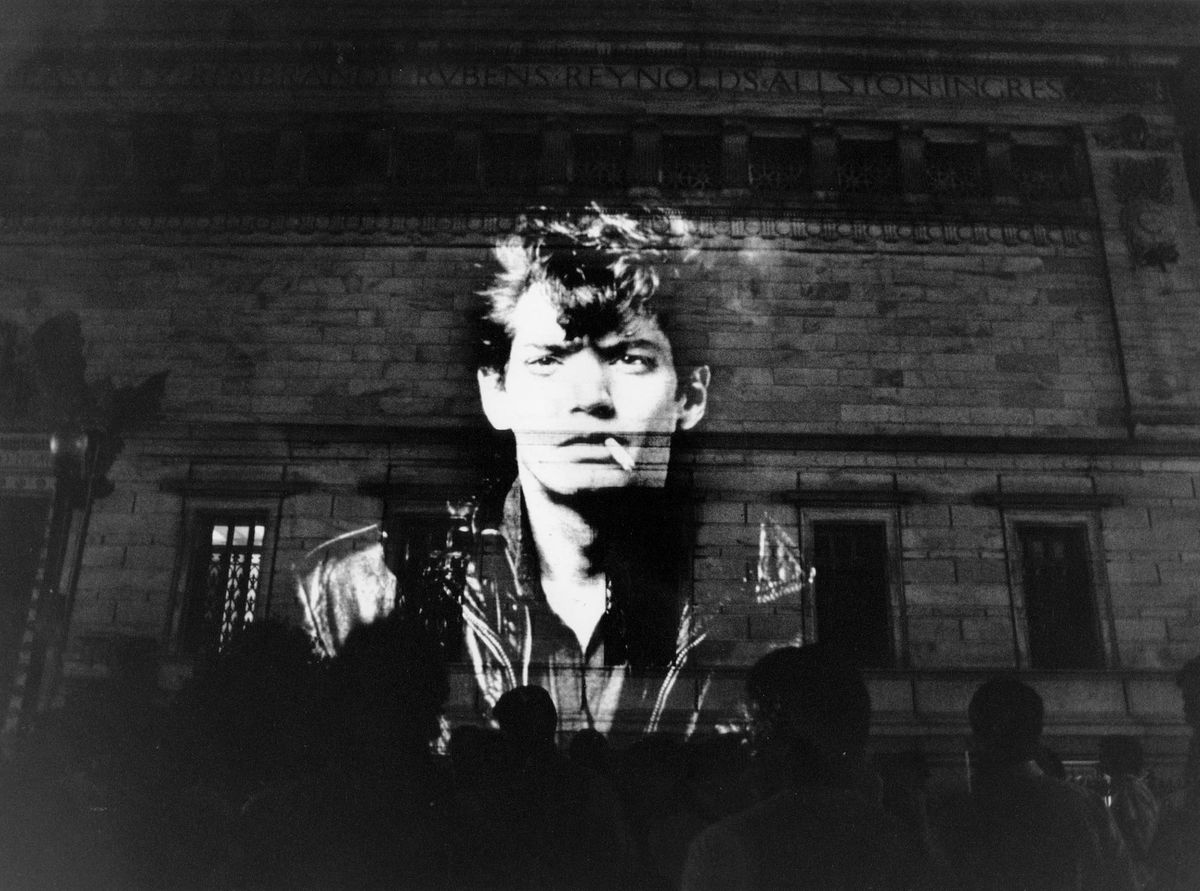
The titular subject of Butler’s book, The Perfect Moment, refers to the Robert Mapplethorpe retrospective that became the definitive casualty of the era. By the mid-1980s, Mapplethorpe’s genius was undeniable, yet his status as a gay man dying of AIDS, combined with his unflinching explorations of sadomasochism, Black male nudes, and the innocence of childhood, made him the perfect target for the burgeoning conservative media machine.
The exhibition had traveled through several cities with relative success, but when it was scheduled to open at the Corcoran Gallery of Art in Washington, DC, in June 1989, the political climate had shifted. Faced with the threat of lost funding and intense public pressure, the Corcoran’s leadership made a decision that would haunt the institution for years: they canceled the exhibition before it even opened.
Butler provides a nuanced account of this betrayal. He doesn’t just blame the conservative aggressors; he examines the internal fractures within cultural institutions. The fallout sparked a massive, years-long struggle between Senator Jesse Helms and Representative Sidney Yates over the very survival of the National Endowment for the Arts (NEA). It was a battle for the soul of public funding, one that forced every arts institution in America to choose between artistic integrity and financial survival.
Supporting Data and Institutional Responses
What makes Butler’s analysis so compelling is his commitment to a balanced, evidence-based approach. He does not shy away from the complexity of the arguments on both sides. He documents how:

- The NEA’s Vulnerability: The NEA’s reliance on congressional appropriations made it an easy target for culture warriors who viewed the funding of "controversial" art as an affront to the taxpayers.
- The Strategy of Contagion: Conservative groups utilized the fear of "corrupting influences" to create a sense of urgency that bypassed reasoned debate, focusing instead on the emotional visceral reaction to images like Mapplethorpe’s.
- The Institutional Pivot: Institutions that initially stood their ground, such as the Contemporary Arts Center in Cincinnati, faced intense legal and political scrutiny, proving that the costs of dissent were high, but the costs of silence were often higher.
Implications for the Contemporary Arts
As we navigate an era where organizations are once again being targeted for their content—often via "hit lists" that threaten the very existence of inclusive public history—Butler’s work serves as a sobering reminder that we are in a repetitive cycle.
The modern "war on art" is not new. The tactics deployed against the Smithsonian, against LGBTQ+ history, and against artists who dare to challenge the status quo are direct descendants of the strategies perfected by the likes of Donald Wildmon and Jesse Helms.
The Lesson of Resilience
The primary implication of The Perfect Moment is that culture is a battleground, and it is a battleground that cannot be ignored. When institutions preemptively cancel exhibitions or hide away works they deem "too sensitive," they aren’t protecting the public; they are emboldening the forces that seek to shrink the boundaries of human expression.
Butler’s book makes it clear that the defense of creative freedom requires more than just high-minded ideals—it requires organization, political engagement, and an unwavering commitment to the work, even when it is uncomfortable.
Final Thoughts
Reading The Perfect Moment as someone who was there—who faced the post-cards, the protests, and the threats—is a powerful, sometimes painful, experience. Isaac Butler has managed to capture the frantic energy of those years while providing the necessary distance to see the patterns forming today.
If we wish to avoid the mistakes of the past, we must understand them. We must recognize that the "perfect moment" for censorship is always presented as a moment of "public safety" or "moral protection." By telling these stories with such clarity and rigor, Butler provides us with the tools to push back, to stand our ground, and to ensure that the arts remain a space for the difficult, the beautiful, and the essential, no matter how much the political winds may howl.
This is not just a book for historians; it is a book for anyone who believes that the freedom to create is the foundation of a free society. Read it, study it, and then go out and defend the work. The fight for our cultural future is happening right now, and as history shows, we cannot afford to lose.


 Neng Nana
 Azzam Bilal Chamdy





