


 Dwi Wanna
By Investigative Desk
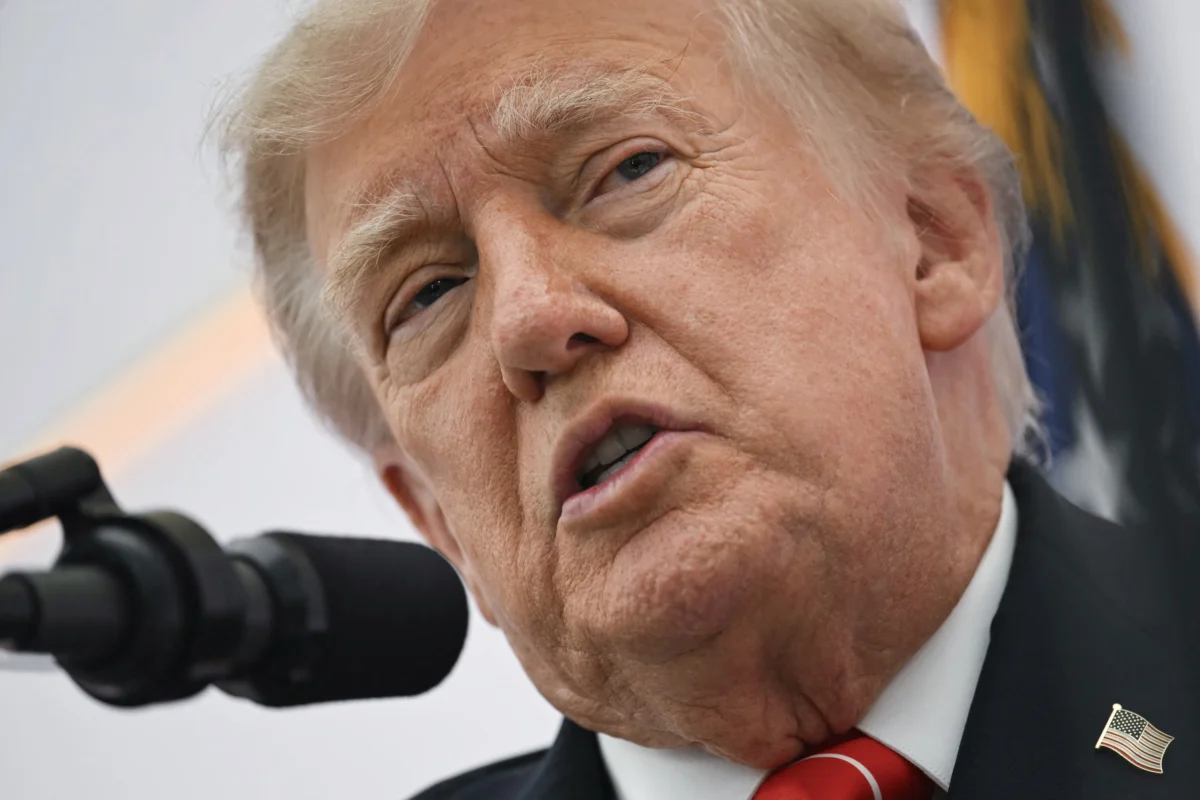
In a development that has sent shockwaves through the American political landscape, President Donald Trump has issued a series of statements on the social media platform Truth Social that civil rights advocates and legal scholars describe as a direct incitement to racial hostility. Targeting the Somali immigrant community in Minnesota, the President characterized the state’s demographic shift as a “takeover” and explicitly called for citizens to “fight back.”
The remarks, delivered on Thursday, have prompted intense scrutiny, with critics arguing that the President is not merely utilizing nationalist political rhetoric, but is actively endangering a specific minority group by suggesting that federal government intervention—in the form of armed agents—could be deployed to support civilian-led “resistance” against them.
The Nature of the Rhetoric
In his post, the President wrote: “The once Great State of Minnesota is being taken over by Somali Immigrants. There is Violence, Murder, and Mayhem all over the State. The people of Minnesota must fight back.”
The language utilized by the President echoes the "Great Replacement" conspiracy theory, a white supremacist trope that posits that non-white immigrants are being imported to intentionally displace the native-born population. By framing the presence of Somali residents as an existential threat to the state’s well-being, the President has bypassed conventional political debate and moved into the realm of mobilization.
Perhaps most alarming to legal experts is the President’s subsequent suggestion regarding the federal government’s role. “The Somalians should not be allowed to get away with what they are doing. They view you as weak and stupid people. Fight back Minnesota, fight back! If you need, the Federal Government will come to your rescue.”
A Chronology of Escalating Tensions
The recent statements represent the culmination of a long-standing pattern of anti-immigrant sentiment emanating from the White House. To understand the gravity of the current situation, one must look at the timeline of the administration’s posture toward Minnesota’s Somali community:
- 2024 (The ICE Crackdowns): Immigration and Customs Enforcement (ICE) intensified targeted raids in Minneapolis, with the President frequently referring to Somali individuals using derogatory terms such as “garbage.” These raids fostered an atmosphere of profound instability and terror within the community.
- Early 2026 (The Assault on Representative Ilhan Omar): Following a rally where the President singled out Rep. Ilhan Omar (D-Minnesota) and the Somali community for harsh criticism, a violent incident occurred at a town hall. An assailant, who public records later revealed had expressed explicit support for the President’s ideology on social media, assaulted Rep. Omar with a chemical irritant (vinegar).
- Late 2026 (The Current Crisis): Following the President’s recent Truth Social posts, community leaders have reported an immediate spike in localized threats. The rhetoric has shifted from general immigration policy debates to direct invitations for citizens to act against their neighbors.
Supporting Data: The Reality of the Risk
The concerns raised by human rights organizations are not abstract. Minnesota has, over the past decade, seen a documented rise in hate crimes targeting Islamic centers and community hubs. The Council on American-Islamic Relations (CAIR) has noted that the state has previously experienced fire-bombings of mosques, incidents that are frequently preceded by periods of intense, state-sanctioned dehumanization.
Data from the FBI’s Uniform Crime Reporting (UCR) program, while often subject to reporting lags, consistently shows that rhetoric targeting specific ethnic or religious minorities correlates with localized spikes in bias-motivated crimes. Jaylani Hussein, executive director of the Minnesota chapter of CAIR, emphasized that the President’s words carry the weight of policy. “President Trump is placing a target on the backs of Somali Americans,” Hussein stated. “His words are not simply political rhetoric. They are a dangerous invitation to hatred and potentially violence.”
Official Responses and Legal Pushback
The President’s remarks have been met with swift and fierce condemnation from state officials. Minnesota Attorney General Keith Ellison has emerged as a primary figure in the opposition, vowing to challenge any attempt by the federal government to intervene in state affairs under the guise of suppressing the Somali community.

“We’ve seen what Trump’s government coming to the ‘rescue’ looks like,” Ellison remarked on social media. “It ended with two Minnesotans shot dead by federal agents, racial profiling, assaults, and the violation of our rights. Never again.” Ellison further signaled his intent to use the full force of his office to block federal overreach, stating he would not hesitate to “drag [the President] back to court” should federal agents be deployed to facilitate the “fight” the President has called for.
Community members, meanwhile, describe a climate of pervasive fear. Faisa Ahmed, a former deputy campaign manager for the 2024 Harris-Walz ticket, expressed the sentiment of many when she stated, “Every Somali I know is walking through our own neighborhoods scared tonight. This is incitement, and everyone should call it that.”
Implications for Democracy and Civil Rights
The implications of the President’s rhetoric extend far beyond the borders of Minnesota. Political scientists argue that when a head of state calls for a segment of the population to “fight back” against another, it erodes the foundational principle of equal protection under the law.
1. The Erosion of Public Trust
By suggesting that the federal government is a partisan weapon to be deployed against specific immigrant groups, the administration is effectively delegitimizing the role of law enforcement as a neutral arbiter of justice. When residents believe that federal agents may be sent to "rescue" one group from another, the social contract is severely fractured.
2. The Threat of Vigilantism
Historically, calls for citizens to “fight back” against minorities have served as a catalyst for vigilante violence. When these calls come from the highest office in the land, they provide a cloak of moral legitimacy to fringe actors who may interpret the message as a mandate to take the law into their own hands.
3. Regulatory and Immigration Enforcement
The administration’s ongoing attempts to rescind Temporary Protected Status (TPS) for Somali nationals adds a layer of administrative precarity to this environment of social hostility. By coupling legal administrative efforts—such as the potential mass deportation of thousands—with inflammatory rhetoric, the administration creates a “pincer movement” that traps immigrants between the threat of deportation and the threat of neighborhood-level violence.
Conclusion
The situation in Minnesota serves as a litmus test for the resilience of democratic institutions in the United States. As the President continues to utilize his platform to stoke communal tensions, the response from state leaders like Keith Ellison and civil society groups like CAIR underscores a growing divide in how the country views the rights of its immigrant residents.
The question remains whether the judicial system can effectively curb the use of the executive office as a megaphone for racial incitement, or if the current rhetoric marks a permanent shift in how political grievances are addressed in American public life. For the Somali community in Minnesota, the danger is immediate, and the call for the President to be held accountable for his incitement grows louder by the day.
As the legal battles loom and tensions continue to simmer, the nation watches to see if the rule of law will prevail over the politics of fear, or if the rhetoric of the President will ultimately lead to the very outcome his critics most fear: the normalization of violence as a tool of political control.

 Rifan Muazin
 Ammar Sabilarrohman






