

 Asep Darmawan
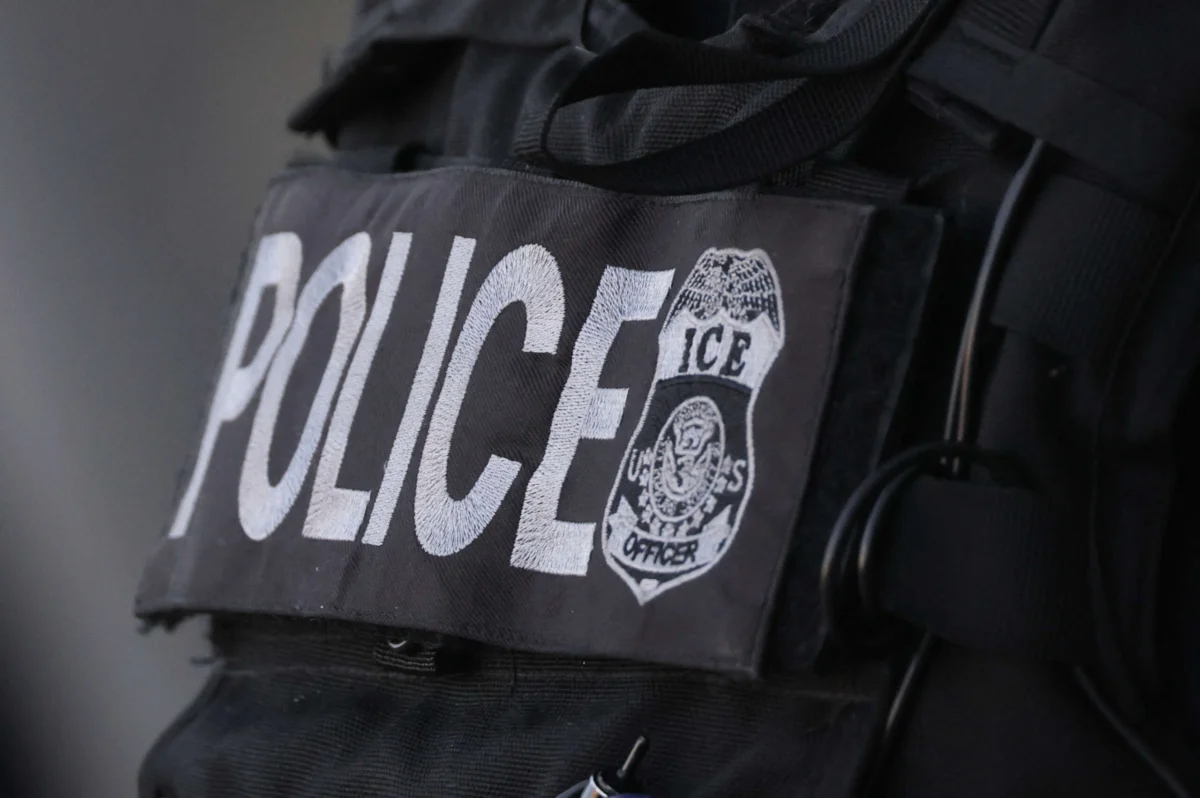
WASHINGTON, D.C. — In a landmark ruling that underscores the escalating tension between federal law enforcement and state-run election systems, a federal judge in California has ordered the Department of Homeland Security (DHS) to immediately suspend its "Unlawful Voter Initiative." The ruling comes after a coalition of labor and voting rights groups filed suit, alleging that the Trump administration is using Immigration and Customs Enforcement (ICE) to intimidate Latino voters and naturalized citizens ahead of the 2026 midterm elections.
The court’s decision effectively freezes field operations in nine key states—California, Wisconsin, New York, Missouri, Connecticut, Nevada, Georgia, Pennsylvania, and Washington—where federal agents had been deployed to conduct door-to-door "verification" of voter registrations. Democracy advocates warn that these tactics represent an unprecedented weaponization of federal resources to influence domestic elections.
Main Facts: A Collision of Law Enforcement and the Franchise
The "Unlawful Voter Initiative," launched in August 2026, was framed by the Department of Homeland Security as a necessary measure to protect the integrity of American elections from non-citizen participation. However, the initiative’s methods—which include sending armed federal agents to the private residences of registered voters—have drawn fierce condemnation from legal experts and civil rights organizations.
On October 19, 2026, a federal judge ruled that the DHS initiative likely violates the Voting Rights Act of 1965, specifically provisions that prohibit the intimidation or coercion of voters. The court order mandates an immediate halt to "elections-related field operations and field interviews."
The timing and geographic focus of the initiative have raised significant questions. The states targeted by DHS are home to some of the most competitive races in the country, including a Senate contest in Georgia and several House races in New York and California that could determine the balance of power in Congress. David Janovsky, a senior policy analyst at the Project On Government Oversight (POGO), noted that the selection of these jurisdictions appears highly strategic.
"I look at this list of states, and I can think of some high-profile races that may be anticipated to be close," Janovsky said. "There is a reasonable question about how the federal government is choosing to focus these efforts and the motivation behind that."
Chronology: From Executive Order to Field Operations
The roots of the current crisis can be traced back to May 2025, when President Trump issued Executive Order 14248, titled "Preserving and Protecting the Integrity of American Elections." The order directed the Department of Justice (DOJ) to obtain voter rolls from all 50 states and share them with DHS investigators.
The administration’s initial strategy was to use the courts to force state officials to hand over sensitive voter data. While several Republican-led states complied voluntarily, 26 states resisted, leading to a flurry of lawsuits. By early 2026, federal courts had largely dismissed these DOJ lawsuits, ruling that the federal government lacks the constitutional authority to micromanage state-run voter rolls.
Undeterred by these legal setbacks, DHS pivoted. Denied official state records, the agency began acquiring voter data from "independent and commercial sources of questionable provenance," according to recent court filings. This database, which reportedly contains over 48 million records, became the foundation for the "Unlawful Voter Initiative."
By August 2026, DHS began deploying ICE agents into the field. In the Central Valley of California and major urban centers like Chicago and Minneapolis, agents began knocking on doors, demanding that residents prove their citizenship status and justify their voter registration. This transition from legal maneuvering to physical presence in neighborhoods marked a significant escalation in the administration’s approach to election oversight.
Supporting Data: The High Cost of Inaccurate Information
A central pillar of the legal challenge against DHS is the demonstrable inaccuracy of the data being used to target individuals. The court order halting the initiative highlighted a "significant likelihood" that federal agents are misidentifying U.S. citizens as non-citizens.
The most striking example of this data failure occurred in Nevada. Recently, DHS officials claimed to have identified nearly 16,000 non-citizens on the state’s voter rolls. However, after a rigorous inquiry by Nevada state officials, that number was systematically debunked. The list of 16,000 was winnowed down to 185, and eventually to zero, after every single individual on the list was confirmed to be a U.S. citizen.
Despite these errors, the human impact of the initiative has been profound. In California’s Central Valley, immigrant advocates confirmed that over 100 farmworkers were arrested in a single week in October. While DHS claims these arrests are part of standard enforcement, the timing and proximity to the "Unlawful Voter Initiative" have created a climate of "chaos, fear, and death," according to community leaders.
Public records obtained by Democracy Forward via the Freedom of Information Act (FOIA) reveal that the initiative has been heavily influenced by Heather Honey, a prominent 2020 election denier who now serves as a senior advisor to DHS and ICE. The records also show that the administration considered sending undercover agents to infiltrate pro-democracy groups that conduct voter registration drives, particularly in Pennsylvania and New Jersey.
Furthermore, the administration’s mass deportation campaign has resulted in the detention of at least 506 U.S. citizens and many more legal permanent residents. The risks of these encounters are high; at least 51 people have died in ICE custody during the current administration, with reports of medical neglect being a recurring theme. Just last week, a lawful permanent resident was found dead in a Texas ICE jail.
Official Responses: Intimidation vs. Integrity
The Trump administration has remained defiant in the face of the court injunction. On social media, the President has attacked local and state officials who refuse to cooperate with federal voter investigations. When Los Angeles County officials refused a 48-hour deadline to investigate 20,000 names provided by DHS, Trump wrote, "They will all go to jail for a long period of time!!!"
The Justice Department has also continued its legal offensive, filing a lawsuit against the State of California to stop the processing of ballots from thousands of individuals the administration deems "likely non-citizens." On October 19, the DOJ announced criminal charges against 28 non-citizens in California for election-related crimes, a move Janovsky suggests is intended to provide a veneer of legitimacy to the administration’s broader claims of widespread fraud.
In contrast, Democratic leaders and civil rights activists have characterized the initiative as a transparent attempt at voter suppression. Representative Lateefah Simon (D-CA) stated, "We know what Republicans are trying to do—intimidate Latino citizens so they stay at home and don’t exercise their right to vote."
On the ground, grassroots organizations are preparing for the worst. In Arizona, the LUCHA coalition has trained hundreds of "constitutional defenders" to monitor polling locations. César Fierros, the group’s communications director, told Truthout, "Masked agents in tactical gear threatening people in line or attempting to raid polling locations would be an assault on democracy itself… We are preparing, but hoping for the best."
Implications: A Precedent for Federal Intervention
The suspension of the "Unlawful Voter Initiative" is a temporary victory for voting rights advocates, but the broader implications of the administration’s actions remain a source of deep concern for constitutional scholars.
1. The Weaponization of Personal Data
The use of commercial and "questionable" data to create federal target lists for voter verification sets a dangerous precedent. Elizabeth Laird, director of equity at the Center for Democracy & Technology, warned that this represents a "weaponization of personal information" that leads to "irreparable harm to individuals who are wrongly targeted." If federal agencies can bypass state protections by purchasing data, the traditional firewall between law enforcement and the electoral process is effectively breached.
2. Erosion of Public Trust
The psychological impact of ICE agents appearing at the doors of naturalized citizens cannot be overstated. Reports from California suggest that the surge in ICE activity has led to a decrease in school attendance and a reluctance to seek medical care among Latino populations. If the byproduct of "election integrity" initiatives is the total withdrawal of a demographic from public life, the democratic process is weakened rather than strengthened.
3. Preparation for Contesting Results
Analysts suggest that the DHS initiative may be less about stopping non-existent "mass fraud" and more about creating a paper trail of "suspicious" registrations that can be used to challenge election results if the administration’s preferred candidates lose. By identifying thousands of "likely non-citizens" (even with faulty data), the administration provides a ready-made narrative for contesting the legitimacy of the 2026 midterms.
4. The Future of State Sovereignty
The conflict highlights a fundamental tension in the American federalist system. Elections are constitutionally delegated to the states, yet the Trump administration is asserting a federal "police power" over voter rolls. The outcome of the ongoing litigation will likely determine whether the federal government can use its law enforcement apparatus to intervene in the mechanics of state elections.
As the 2026 midterms approach, the surge in early voting—with 21 million ballots already cast—suggests that the administration’s efforts may be meeting a wave of civic resilience. However, the shadow of federal intimidation remains. "This is the high-level problem," Janovsky concluded. "You have these targeted enforcement operations happening in a handful of states… it could freak people out, like, ‘maybe I don’t want to register to vote and put myself on this list.’"
The legal battle continues, but for many voters in the targeted states, the damage to their sense of security and their trust in the federal government has already been done.


 Nana
 Ammar Sabilarrohman






