




 Evan Lee Salim
The global energy landscape is currently undergoing a seismic shift. As climate change accelerates and the fragility of traditional power grids becomes increasingly apparent, the demand for decentralized, renewable energy solutions has moved from the fringes of the "prepper" community into the mainstream. In this context, portable solar technology has emerged as a cornerstone of modern energy independence.
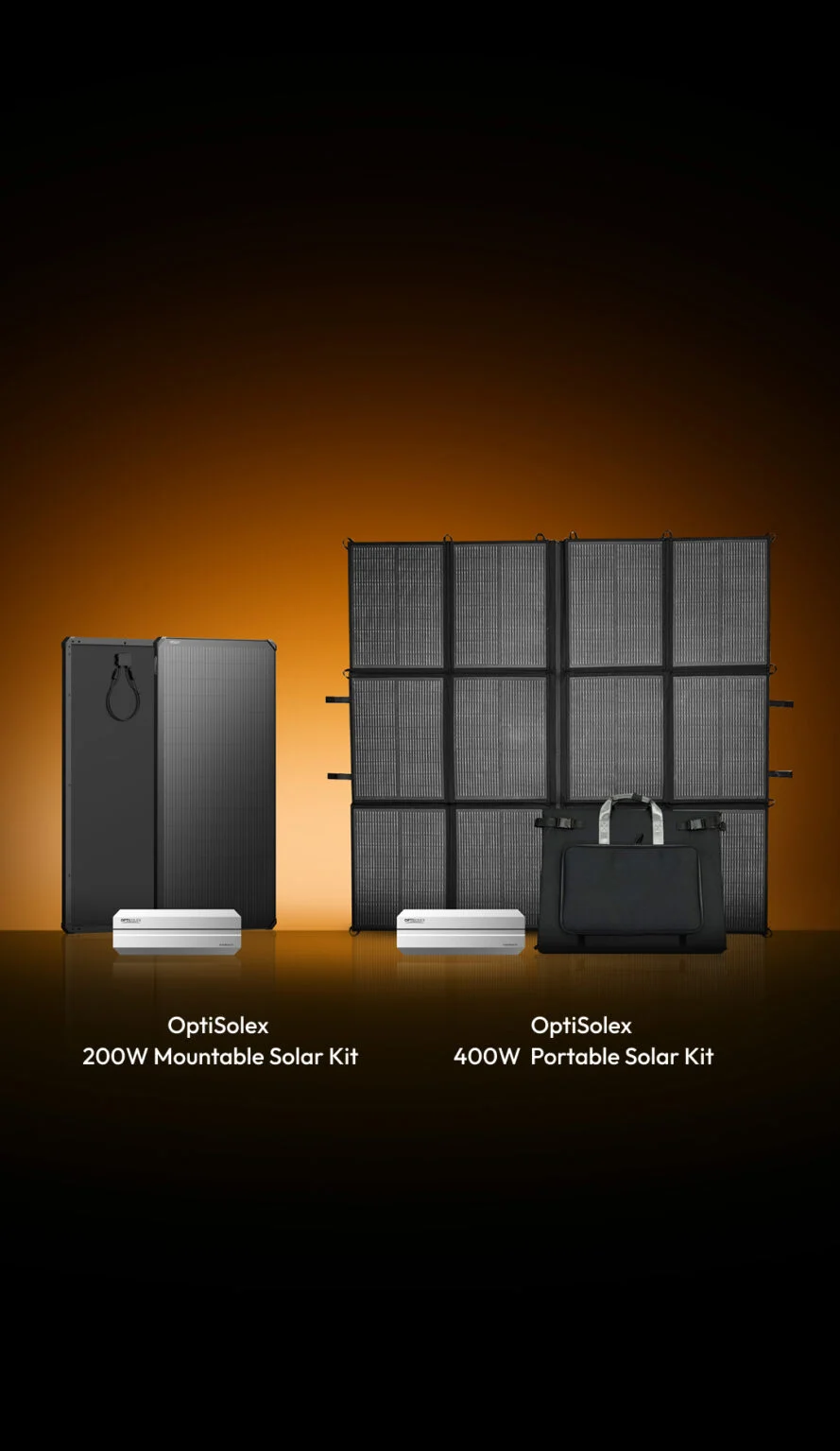
This April, the clean energy sector sees a significant new entry with the launch of the OptiSolex 400W Portable SolarBag kit. Aimed at bridging the gap between high-capacity output and extreme portability, this system represents a potential turning point in how consumers interact with off-grid power.
Main Facts: The Launch of a Modular Power Solution
OptiSolex has officially announced the release of its flagship product, the 400W Portable SolarBag kit, scheduled to debut on the crowdfunding platform Kickstarter on April 24, 2025. The launch, set for 9:00 am Pacific Time, introduces a system that claims to solve the primary pain points of existing portable solar arrays: weight, bulk, and efficiency loss.
The SolarBag kit is not merely a single panel but a modular ecosystem. Its defining characteristic is its ability to be unzipped and partitioned. While it functions as a high-output 400W array, it can be separated into two independent 200W panels. This modularity allows for greater flexibility in deployment, whether a user needs to save space at a small campsite or maximize intake across a larger surface area.

At the heart of the kit is the SolexBrick S1, a proprietary Maximum Power Point Tracking (MPPT) solar charge controller. The company asserts that this combination—high-efficiency N-type solar cells paired with a precision controller—allows the kit to outperform established market leaders in both raw wattage and conversion efficiency. With a retail price set at $799 and an "early bird" Kickstarter price of $499, OptiSolex is positioning itself as a high-value disruptor in a market often dominated by expensive legacy brands.
Chronology: From Lab Testing to Market Entry
The journey of the OptiSolex SolarBag kit from concept to consumer release has been marked by rigorous technical validation. Unlike many "white-label" solar products that saturate the market, the development of the SolarBag focused on the integration of N-type cell technology—a more sophisticated alternative to the standard PERC (Passivated Emitter and Rear Cell) technology.
Development and Testing Phase (Late 2024 – Early 2025):
Before the public announcement, the SolarBag underwent extensive testing to verify its durability and output. Independent evaluations, including those conducted by Inhabitat Labs, focused on real-world performance rather than theoretical maximums. During these trials, the 400W panel achieved a peak output of 360 Watts. In the solar industry, where panels rarely hit 80% of their rated capacity in field conditions, a 90% realization rate (360W out of 400W) represents a significant engineering achievement.
Pre-Launch Marketing (March 2025):
OptiSolex began building a community around the "SolarBag" concept, emphasizing the "hassle-free" nature of the SolexBrick S1 controller. The focus was on "Plug-and-Play" functionality, targeting users who are often intimidated by the complex wiring associated with traditional solar-to-battery setups.

Official Launch (April 24, 2025):
The Kickstarter campaign serves as the official entry point for the product. By utilizing crowdfunding, OptiSolex aims to gauge market demand while offering significant discounts to early adopters, a strategy common among innovative green-tech startups looking to bypass traditional retail markups.
Supporting Data: The Science of N-Type Cells and MPPT Efficiency
To understand why the OptiSolex kit is garnering attention, one must look at the underlying data regarding solar conversion. The kit utilizes N-type solar cells, which differ fundamentally from the P-type cells used in most consumer panels.
The Efficiency Gap
Most portable solar panels currently on the market utilize PERC technology, which typically offers an efficiency rate of 21% to 23%. OptiSolex’s N-type cells push this boundary to 25%. While a 2% to 4% difference may seem negligible, in the context of solar energy, this represents a 10% to 13% increase in total energy harvest.
N-type cells are also less susceptible to Light-Induced Degradation (LID) and have a better temperature coefficient, meaning they maintain higher efficiency as the panels get hot under direct sunlight—a critical factor for a product designed for outdoor use.

The SolexBrick S1: Technical Specifications
The performance of a solar panel is only as good as the controller managing the flow of electricity. The SolexBrick S1 boasts several industry-leading metrics:
- Dimensions: 4.33 × 1.6 × 1.18 inches (110 × 42 × 30 mm).
- Weight: 10.6 oz (300 g).
- MPPT Efficiency: 99.5%, ensuring that almost no power is lost between the panel and the battery.
- Environmental Rating: IP68. This means the unit is completely dust-tight and can be submerged in water, making it suitable for marine environments or heavy rain.
- Voltage Support: Versatility for 12V, 24V, and 48V battery systems.
The 10-year warranty on the SolexBrick S1 is particularly notable. Most consumer-grade solar controllers offer a 1- to 3-year warranty. A decade-long guarantee suggests a high level of confidence in the unit’s solid-state components and thermal management.
Official Responses and Manufacturer Claims
OptiSolex representatives have emphasized that their goal was to create a "democratized" energy solution. According to the company, the "SolarBag" design was a response to user feedback regarding the "clunkiness" of traditional folding panels.
"We didn’t just want to make another solar panel; we wanted to make a system that feels like a piece of high-end travel gear," the company stated in its promotional literature. "By integrating the controller and making the panels modular, we’ve removed the barriers that keep people from adopting solar."

The manufacturer also highlights the "shade-tolerant" design of the SolexBrick S1. In traditional solar setups, if a small portion of a panel is shaded by a tree branch, the output of the entire array can drop precipitously. OptiSolex claims their MPPT algorithm optimizes the energy harvest even under partial shading, which is a common reality in campsites and wooded areas.
Industry analysts suggest that OptiSolex’s move to include MC4 connectors as standard is a direct play for compatibility. By using the universal standard for solar connections, the SolarBag kit is "future-proofed," allowing it to work with power stations from competitors like Jackery, EcoFlow, and Goal Zero, as well as custom DIY lithium-iron-phosphate (LiFePO4) battery banks.
Implications: Redefining Portability and Emergency Resilience
The arrival of the OptiSolex 400W kit has broader implications for several sectors of the economy and society.
1. The "VanLife" and Overlanding Movement
As remote work becomes a permanent fixture for many, the "digital nomad" lifestyle has seen explosive growth. For these individuals, reliable power is not a luxury—it is a professional requirement. The SolarBag’s ability to generate 360W of actual power means a laptop, Starlink terminal, and portable refrigerator can be run simultaneously without draining the vehicle’s primary battery. Its lightweight design (smaller and lighter than many 300W competitors) is a crucial advantage for vehicles where every pound of "payload" matters.

2. Emergency Preparedness and Disaster Relief
The increasing frequency of extreme weather events has exposed the vulnerabilities of centralized power grids. The OptiSolex kit provides a viable "first-response" power source. Unlike gas generators, which require fuel that may be unavailable during a disaster and produce toxic exhaust, the SolarBag is silent and runs on infinite fuel. Its ease of use—the "Plug-and-Play" setup—means that even those with zero electrical experience can provide power for medical devices or communication tools during a crisis.
3. Sustainability and Carbon Reduction
On a macro level, the shift toward portable solar contributes to the overall reduction in fossil fuel dependence. By making solar energy "hassle-free" and affordable ($499 for a 400W system), OptiSolex is lowering the barrier to entry for green technology. If portable kits become a standard part of outdoor recreation and home emergency kits, the cumulative offset of carbon emissions from small gas generators could be substantial.
4. Market Competition
The aggressive pricing of the SolarBag kit is likely to force established players to reconsider their margins. For years, the portable solar market has seen high prices justified by "brand reliability." OptiSolex is challenging this by offering superior technical specs (N-type cells, 10-year warranties) at a fraction of the cost. This competition is ultimately beneficial for the consumer, driving innovation and making renewable energy more accessible.
Conclusion
The OptiSolex 400W Portable SolarBag kit arrives at a time when the world is hungry for reliable, clean, and portable energy. Through its use of advanced N-type cell technology, modular design, and a highly efficient, ruggedized controller, it sets a new benchmark for what consumers should expect from mobile solar power. As the Kickstarter launch approaches, the industry will be watching closely to see if this "disruptor" can fulfill its promise of delivering high-performance energy independence to the masses. For outdoor enthusiasts and those focused on resilience, the SolarBag represents more than just a gadget; it is a portable powerhouse for an uncertain age.


 Nana

 Ammar Sabilarrohman






