

 Asro
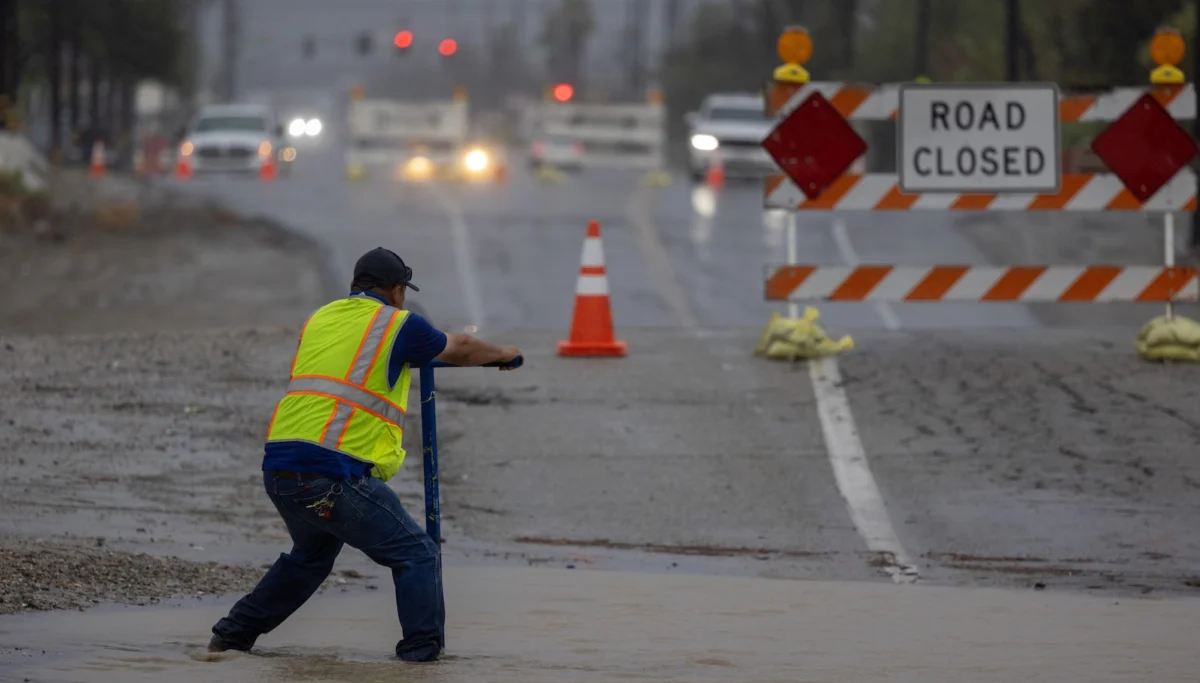
As the first heavy droplets of autumn begin to fall across the parched landscape of the Golden State, the atmosphere is thick with a familiar, yet evolving, sense of dread. In California, rain has long been a double-edged sword—a desperate necessity for a state plagued by chronic drought, but a harbinger of catastrophe for a region built on fragile hillsides and arid plains. This year, the stakes are unprecedented. Meteorological data indicates the arrival of the strongest El Niño event ever recorded, a phenomenon that threatens to unleash a torrent of "climate whiplash" upon a population still reeling from years of historic dryness.
However, beneath the surface of this impending meteorological crisis lies a profound transformation in how the world’s fifth-largest economy manages its most precious resource. California is no longer merely trying to survive the rain; it is attempting to capture it. Through a combination of "spongy" urban design, massive subterranean storage initiatives, and a fundamental "reverse-engineering" of 20th-century infrastructure, the state is renegotiating its relationship with the sky.
Main Facts: The Arrival of the Monster El Niño
The El Niño-Southern Oscillation (ENSO) is a global climate pattern characterized by the warming of surface waters in the central and eastern Pacific Ocean. While its effects vary globally—often bringing searing heat to Australia and drought to parts of Southeast Asia—for California, a "Strong" or "Godzilla" El Niño historically translates to atmospheric rivers: narrow corridors of concentrated moisture that can dump months’ worth of precipitation in a matter of days.
The current cycle is breaking records, raising fears of a repeat of the 1997-1998 season. During that period, the state was battered by a series of relentless storms that caused widespread flooding, triggered massive debris flows consisting of boulders and timber, and resulted in dozens of fatalities and billions of dollars in property damage.
The primary challenge for modern-day California is not just the volume of water, but the frequency of its arrival. Experts warn that while a single storm can be managed, a "train" of successive storms leads to soil saturation. Once the ground can no longer absorb moisture, the excess water transforms into a destructive force, overwhelming sewers and turning dry creek beds into raging rivers.
Chronology: From Concrete Channels to Sustainable Management
To understand California’s current strategy, one must look at the evolution of its water policy over the last century. For decades, the state’s philosophy was one of "evacuation"—moving water away from cities as quickly as possible through concrete-lined channels like the Los Angeles River.
The Era of Grey Infrastructure (1920s–1990s)
During the mid-20th century, the focus was on massive engineering projects. California built nearly 1,500 reservoirs to hold surface water. While effective for mid-sized storms, these dams have significant drawbacks. They destroy migratory routes for fish, such as salmon, and possess limited capacity. In extremely wet years, reservoirs like the Oroville Dam have faced near-catastrophic failures, forcing emergency releases that endanger downstream communities.
The Legislative Turning Point (2014)
The paradigm shifted in 2014 with the passage of the Sustainable Groundwater Management Act (SGMA). This landmark legislation was born out of necessity during a period of agonizing drought. For years, Central Valley farmers had pumped groundwater at unsustainable rates, causing the land to literally sink—a phenomenon known as subsidence. In some areas, the ground level dropped by nearly 30 feet, permanently damaging the storage capacity of the aquifers below.
The Urban Revolution (2018–Present)
In 2018, Los Angeles County voters took a decisive step toward self-sufficiency by passing Measure W. This initiative established a tax on "impermeable surfaces"—the concrete driveways and parking lots that prevent water from soaking into the earth. Generating nearly $300 million annually, this fund has paved the way for "spongy city" projects, turning the urban jungle into a giant filter for the aquifers below.
Supporting Data: The Immense Potential of Subterranean Storage
The logic behind California’s shift from surface reservoirs to underground aquifers is rooted in staggering mathematics. While the state’s 1,500 surface reservoirs can hold approximately 21 million acre-feet of water, the geological basins beneath the state have a potential capacity of nearly one billion acre-feet.
Michael Kiparsky, director of the Wheeler Water Institute at UC Berkeley, emphasizes that this vast "underground bank" is the key to the state’s future. "The enticing question is: Is there a way to grab those flood flows before they flow out to sea, and hold them underground?" Kiparsky asks.
Data from the 2025-2026 water year illustrates the success of this approach. The Los Angeles Department of Water and Power (LADWP) reported capturing approximately 37 billion gallons of stormwater. To put this in perspective, the average Los Angeles resident uses about 100 gallons of water per day; the captured stormwater alone could sustain hundreds of thousands of households for an entire year, significantly reducing the city’s reliance on expensive, energy-intensive water imported from the Colorado River or the Sacramento-San Joaquin Delta.
Furthermore, Managed Aquifer Recharge (MAR) offers a benefit that surface dams cannot: the elimination of evaporation. In the searing heat of a California summer, surface reservoirs lose massive quantities of water to the atmosphere. Once tucked safely underground, that water remains preserved until it is needed during the next inevitable dry spell.
Official Responses: Strategies for a "Whiplash" Climate
State and local officials are increasingly vocal about the need to adapt to a climate that swings violently between extremes. Steven Springhorn, a supervising engineering geologist with the California Department of Water Resources, notes that the state is actively working with landowners to facilitate "on-farm" recharge.
"If [dedicated basins] fill up, we talk to the growers in the area to see if there are opportunities to put that water on agricultural land," Springhorn explained. This method involves intentionally flooding orchards or fields during the winter, allowing the water to slowly seep into the depleted water table.
The LADWP has mirrored this sentiment, viewing the current El Niño not just as a threat, but as a "significant opportunity." A spokesperson for the department stated: "Stormwater capture is a critical pillar of LADWP’s long-term plan to reduce reliance on purchased imported water. While intense downpours require active management, they allow us to maximize local groundwater replenishment."
However, experts like Edith de Guzman of UCLA warn that the state cannot simply "engineer" its way out of the problem with more concrete. She argues for a "reverse-engineering" approach that mimics natural processes. "The gray infrastructure that we built in the 20th century was really built for a climate that is no longer here," de Guzman noted. She advocates for the proliferation of "green and brown spaces"—parks, roadside gardens, and unpaved areas—that act as natural sponges.
Implications: Beyond Water Supply—Biodiversity and Urban Heat
The move toward a spongier, more water-resilient California carries implications that extend far beyond the kitchen tap. By reimagining how water moves through the landscape, the state is inadvertently restoring lost ecosystems and improving the quality of life in its densest cities.
Ecological Restoration
California has lost an estimated 95 percent of its original wetlands. These areas were once nature’s primary defense against flooding. Projects like the Nature Conservancy’s "BirdReturns" program are now incentivizing farmers to flood their fields, creating "pop-up" wetlands that provide critical stopover points for millions of birds migrating along the Pacific Flyway. This creates a symbiotic relationship where landowners profit from ecological services that also serve as groundwater recharge projects.
Mitigating the Urban Heat Island Effect
In cities like Los Angeles, the transition from concrete to green space serves a dual purpose. As the climate warms, urban heat islands—areas where asphalt and buildings trap heat—are becoming increasingly deadly. By developing "spongy" infrastructure like park retrofits and roadside gardens, cities are not only capturing rain but also cooling their neighborhoods. Trees and vegetation provide shade and release moisture into the air, significantly lowering local temperatures.
The Psychological and Societal Shift
Perhaps the most profound implication is the shift in public consciousness. Edith de Guzman points out that there are significant "psychological and societal benefits" to these greening efforts. In an era of climate anxiety, transforming a neighborhood from a concrete heat-trap into a lush, water-capturing landscape provides residents with a reason to "celebrate where we live" and reconnect with the natural world.
As the strongest El Niño on record begins its assault on the West Coast, California stands at a crossroads. The "ominous" rain of the past is being rebranded as the "precious" resource of the future. While the risks of flooding and debris flows remain very real, the state’s aggressive pivot toward stormwater capture and aquifer replenishment suggests that California may finally be learning how to dance in the rain, rather than simply hiding from the storm.


 Nana Wu