

 Dwi Wanna
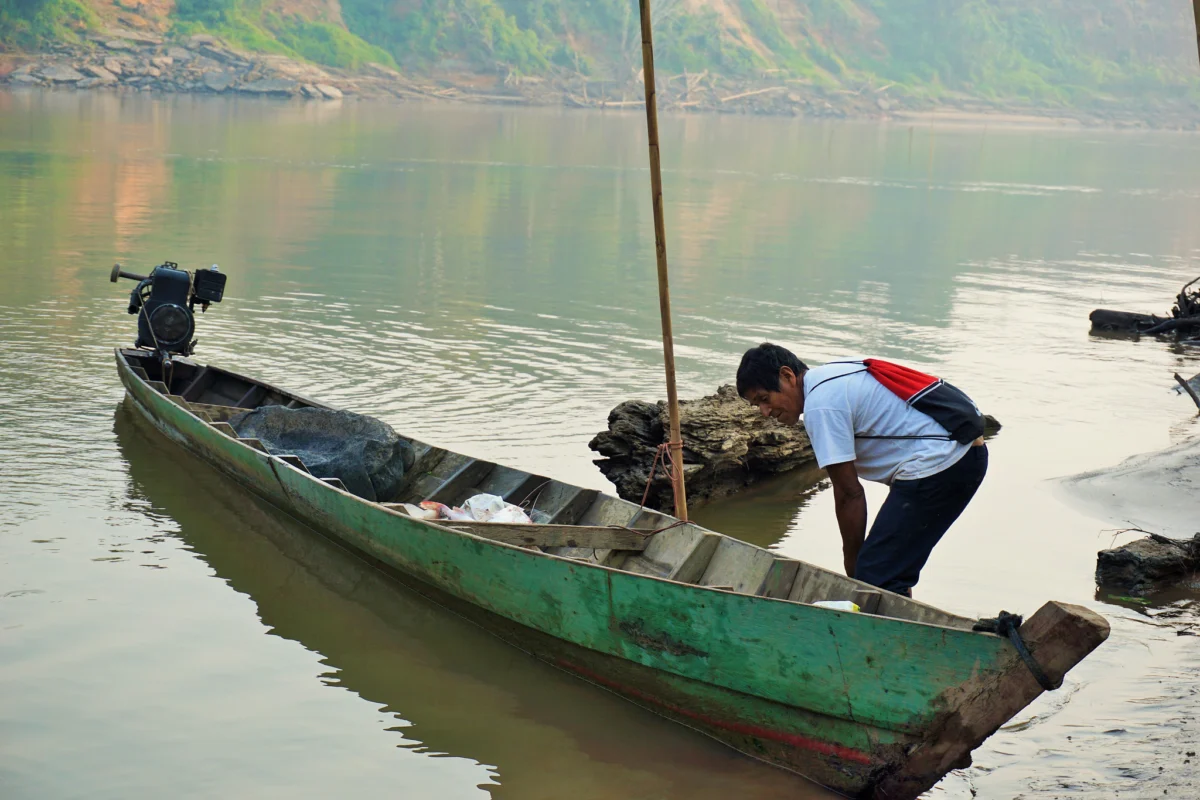
The global aquaculture industry, a colossal economic engine valued at approximately US$500 billion annually, is facing an existential reckoning. At the heart of this challenge is a fragile dependency on a single, climate-sensitive source: the Peruvian anchoveta (Engraulis ringens). As the El Niño-Southern Oscillation (ENSO) cycle intensifies, the volatility of the global fishmeal and fish oil supply—essential ingredients for high-quality aquafeed—has exposed a structural weakness in the world’s food system.
For smallholder farmers, who operate on razor-thin margins, feed costs typically represent the largest operational expense. When Peruvian supply chains falter, the ripple effects are felt from the coastal villages of Southeast Asia to the inland farms of Africa. This crisis, however, is catalyzing a shift toward a promising, sustainable alternative: algal oil.
Main Facts: The Anatomy of a Feed Crisis
The global aquaculture sector relies heavily on omega-3 fatty acids—specifically eicosapentaenoic acid (EPA) and docosahexaenoic acid (DHA)—to ensure the health and growth of farmed fish. These nutrients are primarily sourced from the marine food web, with Peru serving as the epicenter of production.
Peru supplies roughly 20 percent of the world’s fishmeal and fish oil. This concentration creates a "single-point-of-failure" scenario. When an El Niño event occurs, the Humboldt Current—the world’s most productive upwelling system—weakens. The nutrient-rich, deep-sea waters that typically fuel massive phytoplankton blooms are suppressed. Consequently, the anchoveta population migrates or suffers, leading to reduced catches, extended government-mandated fishing bans, and a subsequent spike in global commodity prices.
Algal oil offers a technological bypass to this cycle. By cultivating microalgae in controlled, land-based bioreactors, producers can extract the same essential EPA and DHA found in fish oil without harvesting a single forage fish. It is a decoupling of aquaculture growth from the volatility of wild marine ecosystems.
Chronology: A History of Vulnerability and Innovation
- 2017–2020: Growing recognition of the "fishmeal trap." Research, including pivotal studies by Cashion et al., reveals that 75 percent of the global forage fish catch is processed into feed, despite 90 percent of those species being suitable for human consumption.
- 2023–2025: The onset of a record-breaking El Niño event. Scientific reports from NOAA and NASA confirm that the phenomenon is among the strongest on record.
- 2025: The Centre for Feed Innovation (CFI) releases the Algal Oil 2025 State of the Industry Report, predicting an 80 percent increase in production by 2030, even as the global fish oil deficit is projected to balloon fivefold.
- 2026: Peru announces a series of extended fishing bans due to poor biomass recruitment. The global industry sees a sharp decline in fishmeal production, forcing a frantic search for alternatives.
- Present Day: Algal oil reaches a "price parity moment." As the cost of fish oil remains high due to scarcity, the historical price gap between marine-derived oil and algal-derived oil begins to narrow, incentivizing industry-wide adoption.
Supporting Data: The Case for Resilience
The economic and environmental argument for the transition to algal oil is supported by a growing body of quantitative research.
The Deficit Forecast
According to the CFI, the global fish oil deficit is expected to grow from 20,000 metric tonnes to 100,000 metric tonnes by 2030. This structural deficit is not merely a supply chain hiccup; it is a long-term supply-demand imbalance that traditional fisheries cannot solve without risking ecological collapse.
Environmental Impact
Life-cycle assessments (LCA) conducted by organizations such as Wageningen University and academic researchers show that algal oil typically possesses a 30 to 40 percent lower climate impact than fish oil, depending on the feedstock used for cultivation. Furthermore, the efficiency is staggering: one tonne of algal oil can provide the same DHA content as approximately 40 tonnes of wild-caught forage fish.
Market Dynamics
While algal oil historically traded between USD 6,000 and 15,000 per metric tonne, recent advances in photobioreactor and fermentation technologies are driving down production costs. As El Niño events make fish oil more expensive and less available, the "premium" price of algal oil becomes a secondary concern compared to the reliability of supply.
Official Responses and Industry Shifts
The industry is responding to the El Niño-induced supply shocks with a mix of caution and rapid experimentation.
The Regulatory Landscape
The Peruvian government has been forced to take drastic measures, repeatedly extending fishing suspensions to allow for stock replenishment. These closures are not just regulatory hurdles; they are signals to the global market that the status quo is unsustainable. Organizations like IFFO (The Marine Ingredients Organisation) have documented the widespread output decline, putting pressure on feed manufacturers to diversify their sourcing.

Corporate Strategy
Major feed producers are increasingly entering into long-term off-take agreements with algae biotech firms. By securing future supplies of algal oil, these companies are insulating themselves against the next climate-driven shock. Investors, too, are viewing the "microalgae-based aquafeed market" as a high-growth sector, with projections suggesting continued expansion through 2031.
Implications: A More Resilient Food System
The implications of transitioning to algal oil extend far beyond the balance sheets of aquaculture companies.
Food Security
Perhaps the most profound implication is the impact on human nutrition. Currently, we use massive quantities of edible fish to feed fish, which are then sold as a premium product. If the aquaculture industry pivots to algal oil, the pressure on forage fish populations is eased. This leaves more fish available for direct human consumption, particularly in developing nations where food insecurity and malnutrition are persistent challenges. By reducing the demand for fishmeal and fish oil, the aquaculture industry can cease its competition with human food systems.
Marine Ecosystem Health
Forage fish are the "connective tissue" of the ocean. They provide the primary food source for seabirds, marine mammals, and larger predatory fish. Overfishing these species for feed creates a "top-down" collapse risk in marine ecosystems. Moving toward algal oil allows these species to remain in the wild, playing their natural role in the food web and increasing the resilience of the ocean to climate change.
Economic Stability for Smallholders
For the small-scale farmer, price volatility is the enemy of progress. When feed prices fluctuate based on the strength of an El Niño event thousands of miles away, long-term planning becomes impossible. Algal oil, produced in controlled environments, offers a more predictable price point. As production scales up and costs continue to fall, smallholders will benefit from a more stable feed market, allowing them to reinvest in their operations and improve their livelihoods.
Conclusion: Turning a Crisis into a Catalyst
The current El Niño serves as a stark reminder that the global food system is tethered to the whims of the climate. The vulnerability of the anchoveta fishery is no longer just an environmental concern; it is a glaring systemic risk to a $500 billion industry.
However, this crisis has illuminated a clear path forward. Algal oil represents more than just a substitute ingredient; it is a critical technological intervention. It addresses the volatility of the supply chain, reduces the environmental footprint of farming, and aligns the aquaculture sector with the broader goals of global food security.
Whether this current El Niño event remains a temporary disruption or acts as the definitive catalyst for an industry-wide transition depends on the resolve of stakeholders. Feed manufacturers, investors, and policymakers are now standing at a crossroads. If they leverage this moment to accelerate the integration of algal oil, they will not only protect the industry from the next climate shock but will also secure a more sustainable, equitable, and resilient future for global aquaculture. The transition will not be instantaneous, but the trajectory is clear: the future of feed is not in the sea—it is in the lab.
Author: Saskia Doherty, Project Analyst at Clim-Eat.
Recommended Further Reading:
- Fish Farmers Intervention: We Need to Scale Up Climate Innovations for Aquaculture Resilience (Farming First, 2024).
- The World Has an Anchovy Problem (Bloomberg Opinion, 2026).
- Comparative Life Cycle Assessment of Heterotrophic Microalgae and Fish Oil (Elementa: Science of the Anthropocene, 2022).


 Evan Lee Salim

 Asep Darmawan