



 Nana Wu
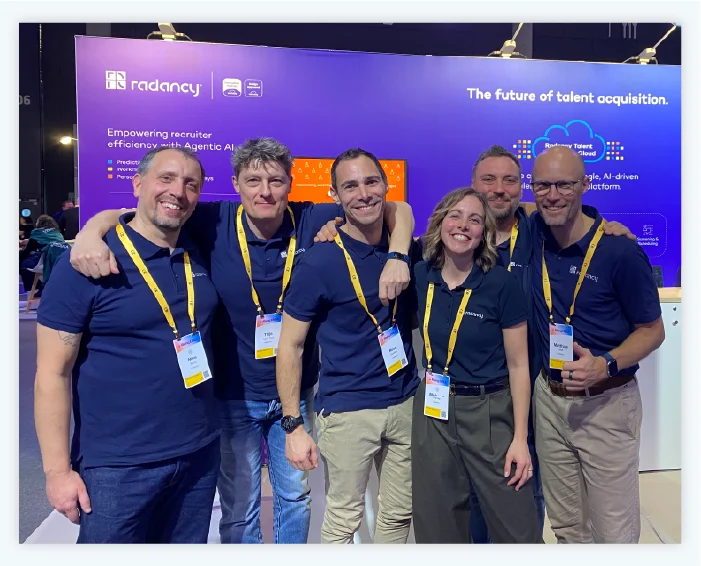
The bustling Fira Gran Via in Barcelona served as the epicenter of the HR tech universe this past September, as over 5,000 finance, HR, and IT leaders converged for Workday Rising EMEA. While the event’s keynote stage was dominated by grand visions of generative AI and enterprise-wide transformation, the true narrative of the conference unfolded in the quieter corners: at the networking booths, during the coffee breaks, and in the packed breakout sessions.
The consensus among industry experts was clear: the era of "AI experimentation"—where organizations dabbled in novelty tools—has officially ended. In its place has emerged a mandate for operational maturity. Talent acquisition (TA) teams are no longer asking if AI can work; they are demanding to know how it can be woven into the fabric of their existing Workday environments to solve the persistent challenges of speed, scale, and candidate experience.
The State of the Industry: Moving Past the Hype Cycle
For the better part of two years, the recruitment industry has been saturated with AI hype. Yet, as leaders gathered in Barcelona, the sentiment was decidedly pragmatic. The "do more with less" mantra, which has defined the post-pandemic economic landscape, was the recurring theme of every conversation.
Recruitment leaders are currently managing a paradox: they are expected to manage high-volume hiring needs while simultaneously dealing with leaner budgets and smaller talent acquisition teams. This tension has forced a shift in strategy. Instead of adopting fragmented "point solutions"—which often lead to data silos and increased friction—companies are pivoting toward consolidated, platform-based approaches.
The primary takeaway from Workday Rising EMEA is that organizations are now prioritizing the "connected journey." They want technology that integrates seamlessly with their core systems of record, such as Workday, to reduce the administrative burden on recruiters and eliminate the "swivel-chair" effect of toggling between disparate tools.
Chronology of the Shift: From Novelty to Necessity
The evolution of HR technology can be traced through three distinct phases, all of which were visible during the three-day conference:
- The Exploratory Phase (2023–2024): Organizations spent this period testing generative AI for drafting job descriptions and basic email automation. It was a time of low-stakes experimentation.
- The Integration Phase (2025): Leaders began to realize that standalone AI tools were not enough. The focus shifted toward ensuring these tools communicated with their Applicant Tracking Systems (ATS).
- The Operational Impact Phase (Present Day): As evidenced by the discussions in Barcelona, the industry has reached the phase of "Agentic AI." This is where automation doesn’t just assist a human task; it executes an entire end-to-end workflow—from screening and scheduling to candidate nurturing—with minimal human intervention.
Supporting Data: The Friction-Reduction Mandate
Throughout the event, the Radancy booth became a hub for leaders seeking to operationalize these concepts. Conversations highlighted three specific areas where manual effort is still killing productivity:
- Candidate Screening: Recruiters are spending nearly 40% of their time on initial resume screening, a process that is increasingly being handled by automated, criteria-based screening tools that integrate directly into Workday.
- The Scheduling Bottleneck: Research discussed at the conference suggested that scheduling remains the #1 cause of candidate drop-off. By implementing automated scheduling tools, firms reported a significant reduction in the time-to-interview window, directly improving candidate sentiment.
- Data Fragmentation: Organizations relying on multiple, non-integrated tools reported a 25% higher "cost-per-hire" than those using unified talent acquisition platforms. The correlation between a consolidated tech stack and lower operational costs was a dominant talking point.
Customer Spotlight: The Sanofi Transformation
One of the most compelling sessions of the week featured Sanofi. Andrew Phillips, Employer Brand Manager for Careers Website & Digital Channels, provided a roadmap for how large, complex organizations can modernize their recruitment marketing while maintaining a rigorous focus on data and ROI.
Sanofi’s challenge was not just about "hiring," but about "attracting." In a competitive life sciences market, they needed to ensure their employer brand was consistent across all digital touchpoints. By partnering with Radancy to create a more connected, data-driven career site, Sanofi was able to:
- Deepen the Talent Pool: By using better data analytics, they moved from "broad-casting" job ads to "narrow-casting," targeting specific talent segments with higher precision.
- Protect the Investment: By ensuring their candidate-facing experience was deeply integrated with their Workday environment, they ensured that data flow remained uninterrupted, allowing for better reporting and compliance.
- Measure Real Impact: Sanofi moved beyond vanity metrics (like clicks and impressions) to focus on conversion metrics that align with business outcomes, proving the value of their TA efforts to the C-suite.
The "Agentic" Future: What It Means for 2026
As the conference drew to a close, the mood was one of alignment. Looking toward 2026, the industry is bracing for a new wave of "Agentic AI"—systems that do not just provide suggestions to recruiters, but proactively take action to move a candidate through the pipeline.
The implication for HR leaders is profound. The traditional role of the recruiter is evolving from a manual processor to a "talent advisor." With AI handling the friction—the scheduling, the screening, the data entry—recruiters are finally being freed to focus on what they do best: building relationships and selling the company’s vision to prospective talent.
Official Industry Perspectives
Workday’s own product announcements mirrored this desire for simplification. The emphasis on "Workday-native" capabilities suggests that the enterprise software giant is listening to the market’s demand for a "single source of truth."

However, industry analysts were quick to note that technology alone is not a panacea. "You cannot automate a broken process," noted one roundtable speaker during the event. "The most successful companies in 2026 will be those that use AI to streamline their existing workflows rather than just throwing new software at the problem."
Strategic Implications for Talent Acquisition Leaders
For organizations looking to navigate this new landscape, the takeaway from Workday Rising EMEA is a clear, four-part strategy:
- Audit the Stack: Identify which tools are adding value and which are creating friction. If a tool doesn’t integrate natively with Workday, it is likely a candidate for replacement.
- Focus on Data Quality: AI is only as good as the data it consumes. Ensure that your recruitment marketing and candidate data are clean, accurate, and centralized.
- Prioritize the Candidate Journey: In a world where AI handles the administrative tasks, the human touch becomes a premium. Use the time saved by automation to improve the candidate experience, not just to cut staff.
- Embrace Platform-Based Approaches: The era of the "all-in-one" platform has arrived. By centralizing data and workflows within a single ecosystem like the Radancy Talent Acquisition Cloud, firms can reduce the administrative load that currently hampers growth.
Conclusion: A New Standard of Excellence
As the industry moves into 2026, the standard for success has changed. It is no longer enough to have an "innovative" recruiting strategy. Today’s leaders must demonstrate that their technology stack is efficient, their data is unified, and their hiring process is friction-free.
Workday Rising EMEA provided the blueprint for this shift. By focusing on operational impact rather than AI hype, organizations can finally realize the promise of a truly modern, automated, and effective talent acquisition machine. For those ready to move forward, the tools are ready, the integration paths are clearer than ever, and the path to a more efficient future is open.
If you are looking to audit your current hiring workflows and operationalize AI for your organization, now is the time to bridge the gap between intent and execution. Explore how a unified, Agentic AI-powered platform can transform your recruitment life cycle by booking a demo with the experts at Radancy today.


 Pevita Pearce





