




 Jia Lissa
For over a century, the American public education system has operated under a persistent, self-imposed shadow: the instinct for scarcity. We hoard resources, protect institutional turf, and engage in zero-sum battles—such as the heated debates over Education Savings Accounts (ESAs) or the panicked competition for elite college admissions—that leave learners as collateral damage.
Education leaders, often driven by a genuine desire to serve, frequently find themselves locked in a game of bureaucratic tug-of-war. The result is not progress, but stagnation. As we navigate a new era defined by shifting demographics and evolving economic realities, it has become clear that our system is failing not because it lacks funding—in fact, national education spending continues to climb—but because it has drawn its walls in the wrong places. We are operating a 20th-century model in a 21st-century world.
The path forward requires a fundamental paradigm shift: moving from a scarcity-based defensive posture to an "abundance mindset." By leveraging existing city infrastructure and dismantling the silos that keep schools isolated from the communities they serve, we can raise the collective floor for every learner.
The Crisis of the Status Quo: A Case Study in Denver
The urgency of this transition is perhaps best illustrated by the current state of Denver Public Schools (DPS). Former Denver Mayor Federico Peña recently highlighted the system’s struggle, noting that traditional, scarcity-focused management is insufficient to meet the challenges of today’s urban landscape.
Denver is far from an outlier. Across the United States, districts are grappling with the "new normal": declining birth rates, significant migration patterns, aging physical infrastructure, and a public that has grown increasingly skeptical of the institutional school model. According to analysis by Bellwether, these trends are not temporary fluctuations; they are structural shifts that demand a departure from business-as-usual.
Peña’s proposal, which suggests a deeper integration of school governance with city infrastructure, aims to reduce fiscal redundancy. By merging the administrative functions of the city and the school district, the goal is to drive efficiency and performance, yet the historical record on such governance shifts remains mixed.
A Chronology of Governance: The Rise of Mayoral Control
To understand the potential—and the pitfalls—of structural reform, one must look at the evolution of school governance. For decades, the elected school board model, largely unchanged since 1862, has been the standard. However, the 1983 publication of A Nation at Risk served as a catalyst for reform, focusing national attention on high dropout rates and the systemic failure of big-city districts.
By the late 1980s, the school board model was increasingly viewed as inadequate, characterized by fragmented accountability and dismal voter turnout—often falling below 10% in local school board elections. This perceived failure led to a wave of "mayoral control" initiatives in cities like Chicago, Boston, New York, Baltimore, and Los Angeles.
The Timeline of Transition
- 1862–1980s: The era of the traditional, independent elected school board.
- 1990s: The "Mayoral Control" boom. Cities sought to centralize accountability by placing the school district under the direct oversight of the mayor’s office.
- 2000s: The period of testing. While some cities, such as New York and Boston, saw initial gains in student achievement, others—like Detroit and Los Angeles—saw their mayoral control experiments end due to voter pushback or legal challenges.
- 2020s–Present: The "Abundance" shift. Educators and urban planners are moving beyond simple governance changes toward a vision of total city-school integration.
Supporting Data: Did the Governance Shifts Work?
The results of the mayoral control era are, at best, a complicated mosaic. Out of eleven major cities that adopted the model, five—New York, New Haven, Chicago, Philadelphia, and Baltimore—saw a narrowing of achievement gaps.
In Boston, the era of Superintendent Tom Payzant (appointed in 1995 under Mayor Menino) is frequently cited as the gold standard for stability. During this period, the proficiency rate for Latino fourth graders in reading roughly doubled. Similarly, New York City saw two decades of sustained reform, including rising graduation rates and a more efficient allocation of funds toward the classroom rather than administration.
However, the "success" was often front-loaded. In both Chicago and Boston, achievement improvements tapered off after the initial period of structural change, suggesting that the benefits were more dependent on the quality of individual leadership than the durability of the governance model. Furthermore, a review by the New York State Education Department concluded that academic gains were inconsistent and failed to eliminate the persistent race- and class-based achievement gaps that continue to plague public education.
Critics have also noted that mayoral control, when implemented without meaningful community input, often exacerbated tensions. In New York, for instance, the lack of checks and balances—where the mayor appoints the chancellor with little City Council oversight—has troubled government reformers across the political spectrum.

Official Responses and Perspectives
The current consensus among researchers is that no single governance structure serves as a panacea. The failure of past models often stemmed from the fact that they merely changed the "manager" of a broken system rather than redesigning the system’s objectives.
As Janice Jackson, former CEO of Chicago Public Schools, has observed, the decline in institutional confidence is unlikely to reverse without a fundamental change in how we define the role of a school.
The "Abundance" advocates argue that the real variable isn’t who controls the schools, but whether the structure is designed for transparency, genuine community voice, and the prevention of the "concentration of harm." The goal is to move from a system of top-down authority to a model of interoperability where the school is a node in a larger, city-wide ecosystem of support.
Implications: The Path Toward an Abundant Future
To move forward, we must stop viewing schools as isolated, self-contained silos and start viewing them as the core of a city’s social and economic infrastructure.
1. Rethinking Governance and Financing
A full merger of city and school government could allow for the consolidation of duplicative administrative roles—legal, human resources, and accounting departments—redirecting those funds toward teacher pay and student support. By aligning the city’s tax base with school district bonds, cities could prevent the "quiet debt" accumulation that currently threatens the solvency of many urban districts.
2. Radical Asset Management
The "Abundance" mindset treats school buildings as public assets. Why should a high school pool be closed to the public on weekends? Why should playgrounds remain locked during the summer? By opening facilities for community use—and potentially charging usage fees—schools can become revenue-generating hubs.
Furthermore, the integration of school and city transit systems could save billions annually. National expenditures for pupil transportation exceed $28 billion annually, with districts often bearing 60-70% of the cost. A unified system could coordinate public transit, school buses, and recreation access, significantly reducing the "transportation tax" on the public purse.
3. Redefining the Learner
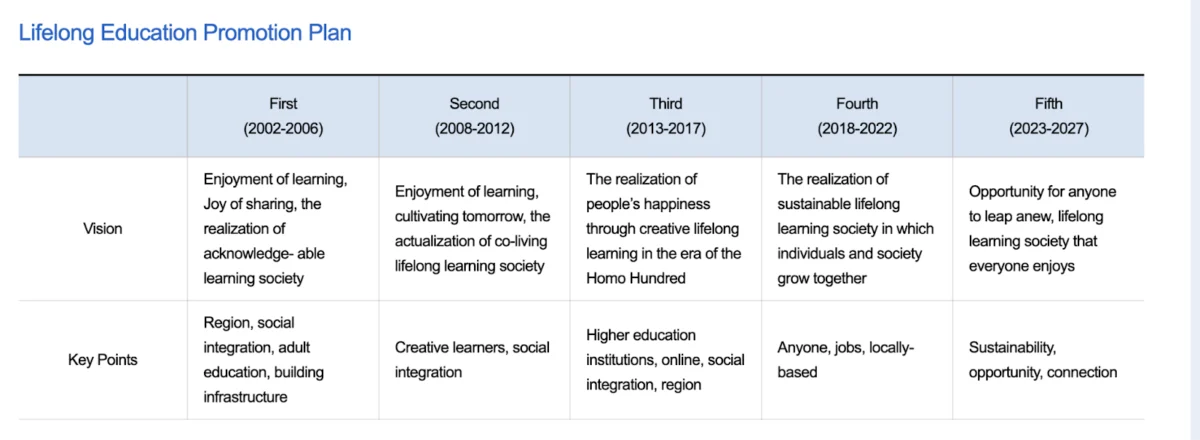
Perhaps the most disruptive idea is to expand the definition of who can learn. High schools are underutilized community assets. If we opened these facilities to lifelong learners—adults looking to upskill, reskill, or pursue entrepreneurial pathways—we could maximize the utility of our existing infrastructure.
Models like the "Launch Pad" in Cajon Valley or the community-integrated facilities in Forney, Texas, prove that schools can function as centers for healthcare, childcare, and social services. When a school serves the entire family, the entire community thrives.
Conclusion: A Call for Cultural Innovation
The transition to an abundance-based system is not merely a policy adjustment; it is a cultural evolution. It requires moving away from the fear-based desire for uniformity and toward a system built on trust, interoperability, and shared responsibility.
As Denver and other districts contemplate these structural mergers, the lesson of history is clear: centralization without community power is dangerous, but stagnation is fatal. We must be willing to amend constitutions, renegotiate contracts, and challenge the legacy assessments that keep our schools trapped in the past.
A bolder future is possible. It is a future where all learning counts, where the city and the schoolhouse are one, and where we finally stop fighting over the size of the box and start building a better, smarter, and more abundant world for everyone.


 Laily UPN

 Nila Kartika Wati






