


 Nana Wu
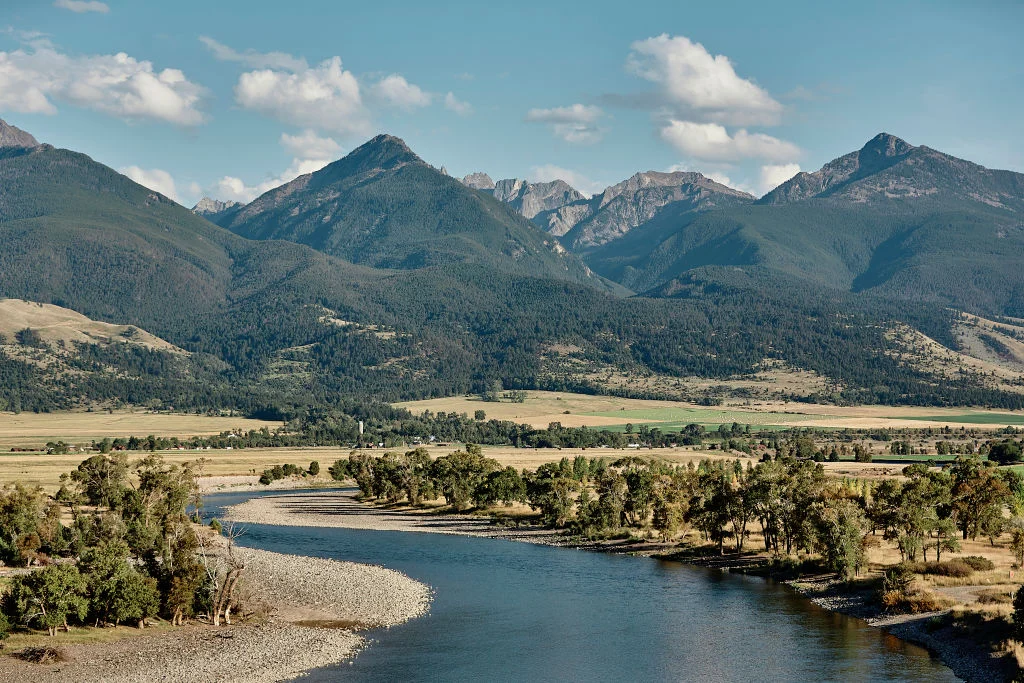
BILLINGS, Montana — In the sweeping vistas of the Yellowstone River Valley, where the horizon is defined by the jagged silhouettes of the Big Horn and Pryor Mountains, a new kind of industrial fever is taking hold. But unlike the coal and copper booms of the past, this modern "gold rush" is powered by silicon, liquid cooling, and an insatiable demand for electricity. As artificial intelligence (AI) developers eye Montana’s vast landscapes and cold climate, the state’s Indigenous nations are finding themselves at a crossroads, forced to weigh the promise of economic revitalization against the existential threat to their natural resources.
The divide reached a fever pitch this October when the Northern Cheyenne Tribal Council voted unanimously to ban data centers on their tribal lands. This move follows a similar prohibition enacted in August by the Fort Peck Tribes, creating a growing regional bloc of resistance against the digital infrastructure industry. However, just across the border on the Crow Reservation, a different story is unfolding—one of cautious silence and economic desperation born from the collapse of the coal industry.
Main Facts: A House Divided
The conflict centers on a fundamental tension: the massive resource requirements of AI data centers versus the sacred and legal obligations of tribal nations to protect their land and water. The Northern Cheyenne’s 8-0 vote to ban such developments reflects a historical pattern of resistance. For decades, the tribe has fought against coal bed methane and large-scale mining, viewing data centers as merely the latest iteration of extractive industry.
"We have fought historically to preserve our land," says Melissa Lonebear, a Northern Cheyenne citizen and tribal council member. "The Northern Cheyenne own nearly all the land within our reservation, which makes us a target for developers looking for large, contiguous sites. I felt like we were being targeted."
In contrast, the Apsáalooke, or Crow Tribe, has not issued a formal ban. For the Crow, the calculation is complicated by the 2024 closure of the Absaloka coal mine, which for decades served as the tribe’s primary economic engine. With the loss of coal revenue, some tribal leaders view data centers not as a threat, but as a potential lifeline.
The scale of the proposed projects is staggering. Texas-based Quantica Infrastructure is moving forward with its "Big Sky" campus near Broadview, Montana. If completed as planned, the eight-square-mile facility would be one of the largest data centers on Earth, requiring more power than the entire state of Montana currently consumes.
Chronology: From Coal to Code
The path to this confrontation began not in a server room, but in the coal pits of the Powder River Basin.
- April 2024: The Absaloka coal mine, the Crow Tribe’s marquee employer, effectively halted production. The mine lost its primary customer, Xcel Energy’s Sherburne County Generating Station in Minnesota, which transitioned to natural gas and renewables. The closure left a massive hole in the Crow tribal budget.
- May – July 2024: As the Crow Tribe sought new revenue through the Crow Revenue Act—a federal bill aimed at giving the tribe direct ownership of their coal reserves—AI developers began scouting Montana. The state’s low population density and perceived abundance of water made it an attractive destination for the cooling-intensive needs of AI.
- August 2024: The Fort Peck Tribes took preemptive action. Tribal Chairman Floyd Azure barred all tribal officials from engaging in discussions with data center developers after three companies approached the tribe. Azure cited the overwhelming demand these facilities place on local water and electricity as the primary reason for the rejection.
- September 2024: Construction began on the first phases of the Big Sky campus near Broadview, north of Billings. Simultaneously, a former cryptocurrency mine in the city of Hardin, located on the northern edge of the Crow Reservation, began its conversion into a high-density AI data center.
- October 2024: The Northern Cheyenne Tribal Council passed its unanimous ban. Meanwhile, the Montana Department of Environmental Quality opened a public comment period on water well permits for the Quantica project, signaling that state-level approval processes were accelerating despite tribal concerns.
Supporting Data: The Resource Toll
The environmental footprint of these facilities is difficult to overstate. To understand the scale of the "Big Sky" project, one must look at the power grid. Quantica Infrastructure has requested an interconnection of more than 7,000 megawatts from Northwestern Energy. To put that in perspective, the utility currently serves an average load of only 750 megawatts.
To bridge this gap, Quantica’s plan includes the construction of 1,700 megawatts of dedicated natural gas generation. Anne Hedges, executive director of the Montana Environmental Information Center, notes that this single project would produce more gas-fired electricity than all of Montana’s existing gas plants combined.
The air quality implications are equally severe. A retired pulmonologist from Billings utilized EPA modeling tools to project the impact of 1,700 megawatts of gas generation. The study found that fine-particulate pollution (PM2.5) would not remain localized but would drift east, blanketing the Crow, Northern Cheyenne, and Fort Peck reservations.
Water remains the most contentious data point. Data centers require millions of gallons of water daily for evaporative cooling. The proposed Hardin facility sits within the Bighorn River Basin, a region already "closed" to new water appropriations due to existing compacts. According to Patricia Spencer, a spokesperson for the Montana Department of Natural Resources and Conservation (DNRC), the department cannot legally grant new water rights in this basin, yet developers continue to move forward, leading to fears of illegal siphoning or "industrial creep" that could threaten tribal water seniority.
Official Responses: Sovereignty and Strategy
The responses from tribal and state officials reveal a complex legal landscape where tribal sovereignty is being tested at its borders.
The Northern Cheyenne: "We quash any extant or future discussions," says Melissa Lonebear. For her, the ban is a defensive necessity. "The governor remarked in a closed meeting that big corporations were looking for land. We knew then we had to act."
The Crow Tribe: While the executive branch has remained officially silent, Energy Director Conrad Stewart has been vocal about the tribe’s right to develop its resources. Speaking on the Crow Revenue Act, Stewart told Inside Climate News, "The Crow Tribe has decided to develop their coal… and so the rest of the world should not be in our way for that." This sentiment of self-determination appears to extend to their openness toward data centers as a "post-coal" transition strategy.
The State of Montana: The DNRC and the Department of Environmental Quality maintain that their hands are tied by standard permitting processes. "Public notice… is a part of the water rights permitting process," Patricia Spencer stated, suggesting that tribes have no special veto power over off-reservation projects, even if those projects affect shared aquifers.
The Developers: A spokesperson for Big Sky Digital Infrastructure (Quantica) remained dismissive of tribal concerns in a statement to Truthout: "We do not anticipate the construction and operation of our Big Sky Campus will impact tribal lands or water rights."
Implications: A Jurisdictional Gap
The unfolding situation in Montana highlights a significant gap in federal Indian law. While the "Winters Doctrine" guarantees tribes the water necessary to make their reservations a "livable homeland," enforcing those rights against off-reservation industrial giants is a legal uphill battle.
Matthew Fletcher, a University of Michigan Law professor, notes that tribal bans are ironclad on-reservation but "unlikely to be enforceable" off-reservation unless a tribe can prove a "very significant threat" to public health or tribal enterprises. This leaves the Northern Cheyenne and Fort Peck vulnerable to the "fringe impacts" of projects like Quantica—pollution they cannot regulate and water depletion they may not be able to stop.
Furthermore, the lack of federal involvement creates a "consultation vacuum." Because many of these projects are being built on private ranchland with private capital, they often bypass Section 106 of the National Historic Preservation Act and NEPA reviews, which would otherwise mandate formal consultation with tribal nations.
As the Montana state legislature prepares to convene in January 2027 with dozens of data center-related bills on the docket, the absence of Native legislators on the energy committee is a glaring omission. The "American Indian Caucus" is expected to be the primary line of defense for tribal interests, but they face a daunting task.
The conflict in Montana is a microcosm of a global struggle. As the world transitions to an AI-driven economy, the "cloud" is finding a very physical, very resource-heavy home on the edges of Indigenous territories. For the Northern Cheyenne, the choice is clear: protect the land at all costs. For the Crow, the choice is a gamble: embrace the digital future to save a collapsing economy. For the land itself, the result may be an "irreparable harm" that no amount of processing power can undo.
"If we put a project like this in the river valley," warns Shane Doyle, an Apsáalooke tribal member, "it’s going to be an environmental impact similar to a coal mine. We are trying to make sure there is enough water for the fish and for the people. A data center conflicts with every value we hold."

 Azzam Bilal Chamdy
 Iffa Jayyana