



 Rifan Muazin
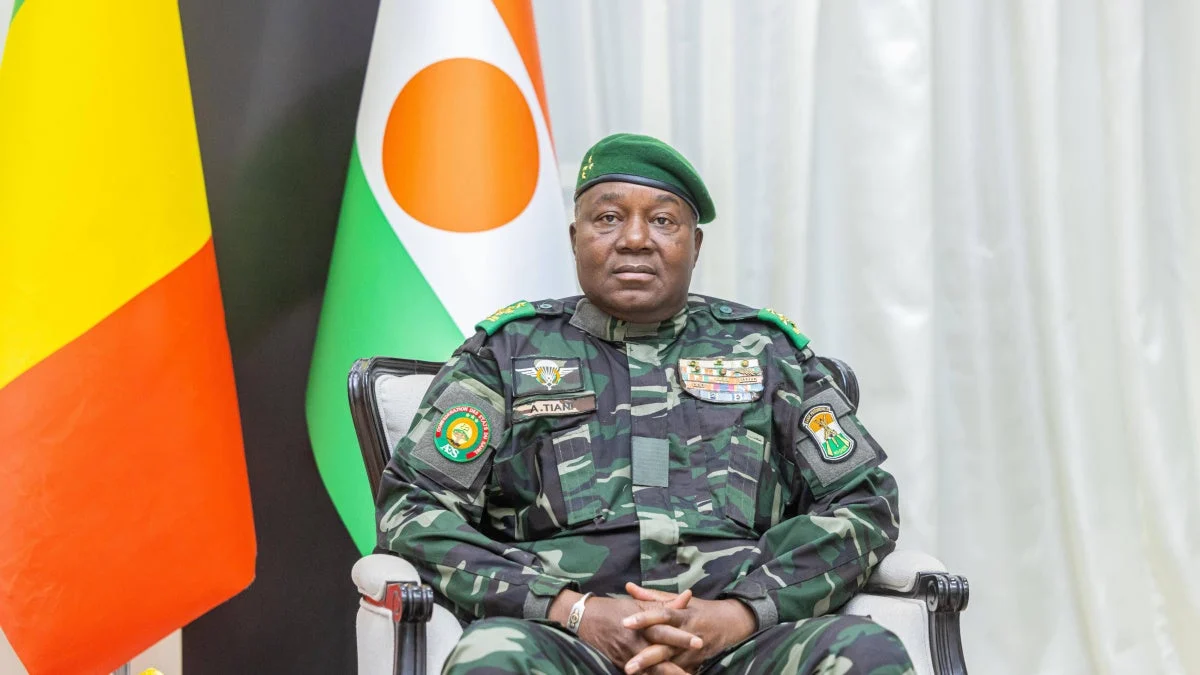
In a move that has drawn sharp criticism from the international community, Niger’s military junta has formally rejected a critical subset of human rights recommendations issued by United Nations member states. The decision, finalized in early September, underscores the deepening chasm between the military authorities in Niamey and the global consensus on fundamental human rights, the rule of law, and international legal obligations.
The rejections occurred within the framework of the Universal Periodic Review (UPR), a peer-review mechanism conducted by the UN Human Rights Council every five years to assess the human rights performance of all 193 UN member states. While Niger accepted the majority of the 265 recommendations presented to it in May, the 11 recommendations it chose to dismiss target the very pillars of justice and civil liberties that are essential to a democratic society.
The Chronology of a Widening Crisis
To understand the current impasse, one must look at the timeline of Niger’s democratic backsliding since the military coup of July 2023.
- July 2023: Military forces seize power, deposing democratically elected President Mohamed Bazoum, suspending the constitution, and triggering a cascade of international sanctions and condemnation.
- December 2023: The ECOWAS Court of Justice declares the detention of President Bazoum and his family arbitrary, demanding their immediate release. The junta ignores the ruling.
- February 2025: The UN Working Group on Arbitrary Detention reinforces the ECOWAS ruling, labeling the continued incarceration of the Bazoums a violation of international law.
- March 2025: The junta adopts a new, draconian penal code that codifies the criminalization of consensual same-sex relations, carrying sentences of up to 10 years in prison.
- May 2026: During the UPR session in Geneva, 97 UN member states present 265 recommendations to Niger, highlighting severe concerns regarding detention, judicial independence, and minority rights.
- June 2026: Niger initiates the formal process of withdrawing from the Rome Statute, effectively signaling its intent to leave the International Criminal Court (ICC).
- September 1, 2026: The junta submits its formal response to the UPR, accepting 254 recommendations but explicitly rejecting 11, including those concerning the ICC, political prisoners, and the rights of LGBT individuals.
The Anatomy of the Rejections
The 11 rejected recommendations are not merely bureaucratic disagreements; they represent a fundamental departure from the international human rights framework.
Withdrawal from the International Criminal Court
The decision to abandon the ICC is perhaps the most alarming for international justice observers. By initiating the withdrawal process, the junta is insulating itself and its security forces from potential accountability for war crimes, crimes against humanity, and genocide. The ICC represents a "court of last resort" for victims when national courts are either unwilling or unable to prosecute. By closing this door, the junta leaves victims of violence in Niger with no external avenue for justice.
The Arbitrary Detention of Political Figures
The junta’s refusal to release ousted President Mohamed Bazoum and his wife defies both regional and international legal bodies. In their response to the UN, the authorities claimed that these cases fall exclusively under "national jurisdiction" and flatly denied the existence of arbitrary detention in the country. This assertion is directly contradicted by findings from the UN Working Group on Arbitrary Detention and the ECOWAS Court of Justice. The continued detention of the Bazoums has become a litmus test for the junta’s willingness to adhere to basic legal standards.
Criminalization of LGBT Individuals
The junta’s rejection of calls to repeal laws targeting consensual same-sex relations is framed by the authorities as a matter of "cultural, social, and religious sensitivities." However, this stance ignores the fact that human rights are universal and non-negotiable, regardless of local customs. The implementation of the March 2025 penal code has institutionalized discrimination, placing LGBT individuals at extreme risk of state-sponsored harassment, imprisonment, and social ostracization.
Supporting Data: A Landscape of Repression
The rejection of UPR recommendations cannot be viewed in isolation. It is part of a broader, documented pattern of state-led repression that has accelerated over the last three years.
The Erosion of Civic Space
Since the 2023 coup, the junta has systematically dismantled the mechanisms of a free society. Data collected by international human rights organizations indicates:
- Media Censorship: Multiple media organizations have been suspended, and journalists face constant threats of arrest, leading to widespread self-censorship.
- Targeting of Civil Society: Prominent activists, such as Moussa Tiangari—who has been in arbitrary detention since December 2024—have been silenced. This is a clear tactic to prevent domestic oversight of military activities.
- Nationalism as a Weapon: The government has begun stripping exiled critics of their nationality, a move that renders individuals stateless and effectively prevents them from ever returning to participate in the country’s political future.
Official Responses and Justifications
The junta’s formal response to the UN, while appearing conciliatory in its acceptance of 254 recommendations, reveals a strategy of selective compliance. By agreeing to "strengthen civilian protection" and provide "human rights training to security forces," the junta attempts to maintain a veneer of cooperation with the international community.
However, the rationale provided for the 11 rejected recommendations—citing sovereignty and cultural sensitivity—is a common rhetorical strategy used by authoritarian regimes to bypass international scrutiny. By asserting that the detention of political rivals is a "national" matter, the junta attempts to invalidate the jurisdiction of the UN and ECOWAS. This creates a dangerous precedent where domestic legal frameworks are used as a shield against accountability for human rights abuses.
The Global Implications: A Test for International Law
The situation in Niger poses a significant challenge to the international human rights architecture. If a member state can reject findings from the UN Working Group on Arbitrary Detention and the ICC with impunity, it weakens the efficacy of the entire UPR process.
The Risk of Regional Contagion
Niger is a critical player in the Sahel region. Its withdrawal from the ICC and its blatant disregard for international standards may embolden other regimes in the region to follow suit, potentially leading to a "human rights retreat" across West and Central Africa.
The Impact on Victims
The most profound impact is felt by the people of Niger. The lack of an independent judiciary and the absence of international oversight mean that ordinary citizens, journalists, and political dissenters have no recourse when their rights are violated. As the junta tightens its grip, the space for civil society to advocate for change is rapidly closing.
Conclusion: The Path Forward
The international community stands at a crossroads regarding its engagement with Niger. While the junta has accepted 254 recommendations—many of which relate to humanitarian aid and security sector reforms—the rejection of the core issues of justice and individual rights renders these promises hollow.
Meaningful engagement requires more than the acceptance of non-controversial recommendations. It requires the junta to:
- Halt the withdrawal from the ICC: Recommitting to the Rome Statute would demonstrate a willingness to be held to international standards.
- Comply with Court Rulings: The immediate and unconditional release of Mohamed Bazoum and other political prisoners is a necessary prerequisite for restoring any sense of constitutional order.
- Protect Vulnerable Minorities: Repealing the discriminatory penal code and ensuring the protection of all citizens, regardless of sexual orientation or gender identity, is essential for a modern, inclusive state.
Without these steps, the "human rights crisis" in Niger will likely deepen. The UPR process, while designed as a tool for dialogue, risks becoming a performative exercise if there are no consequences for states that ignore the fundamental principles upon which the United Nations was founded. The world is watching, but for the people of Niger, the time for mere observation has long since passed; they require concrete, urgent action to restore the rule of law.


 Evan Lee Salim

 Nila Kartika Wati