 Laily UPN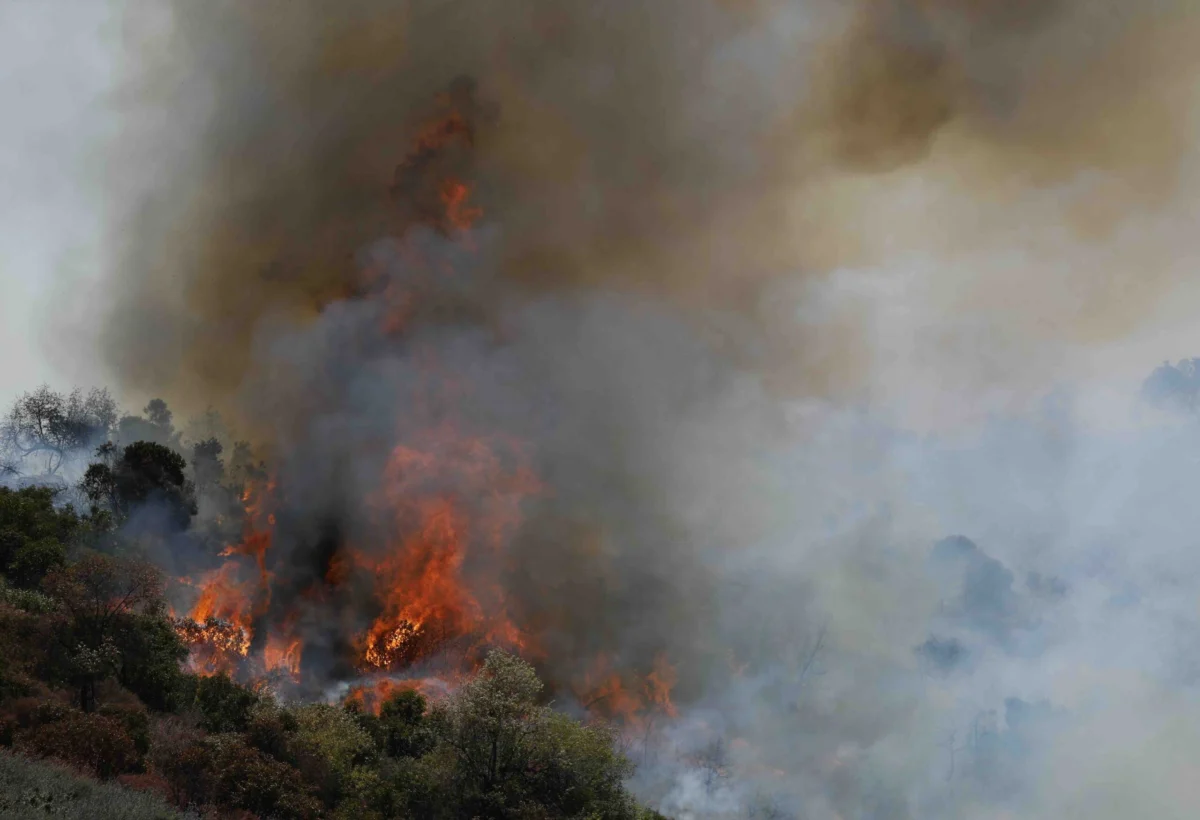
As the world prepares for the 2026 FIFA World Cup, a looming environmental crisis threatens to overshadow the beautiful game. With wildfire season intensifying across North America, the intersection of professional sports and climate change has reached a critical juncture. While major North American leagues have established clear, data-driven protocols to protect athletes and fans from hazardous air, FIFA—the governing body of the world’s most popular sport—appears to be operating without a transparent or comprehensive plan to address the threat of wildfire smoke.
The Looming Threat: A Summer of Smoke
Last month, southern California served as a stark preview of the challenges ahead. Nearly a dozen wildfires erupted in quick succession, blanketing the region in thick, particulate-heavy smoke. Public health officials in Los Angeles issued a multi-day air quality advisory, explicitly warning residents to "avoid unnecessary outdoor exposure" and to "limit physical exertion."
The advisory’s "red zone" encompassed SoFi Stadium, one of the primary venues for the upcoming World Cup. With the tournament set to host eight games in Los Angeles between June 12 and July 10, the convergence of record-breaking temperatures and dry, fire-prone landscapes has turned the event into a high-stakes gamble. Tens of thousands of fans and elite athletes are expected to descend upon the stadium, yet the environmental conditions remain dangerously unpredictable.
Chronology of a Growing Crisis
The escalation of wildfire frequency in the United States and Canada is not a new phenomenon, but its impact on the sports calendar has become increasingly impossible to ignore.
- June 2023: A massive plume of wildfire smoke from Canada drifted across North America, forcing the postponement of games across Major League Baseball (MLB) and the Women’s National Basketball Association (WNBA). The event served as a wake-up call for the sports industry, highlighting that no venue is truly immune.
- May 2026: The "Sandy Fire" in California’s Simi Valley burned through heavy brush, providing a visceral demonstration of the volatility of the current season. The fire underscored the reality that air quality can deteriorate with as little as a few hours’ notice.
- June 2026: The World Cup begins. With the National Interagency Fire Center projecting an elevated risk of wildfires across the West—fueled by a warm winter and a potent El Niño—the tournament is entering a window of high environmental volatility.
The Data: Why Air Quality Matters
The Air Quality Index (AQI) is the standard metric used to track common air pollutants, ranging from 0 to 300+. Once the index crosses the 100 threshold, the air is classified as "unhealthy for sensitive groups." Above 200, the air is deemed "very unhealthy" for the general population.
"Wildfire smoke often causes acute spikes that are harmful to both players and fans," explains Mary Johnson, an environmental health researcher at Harvard University’s T.H. Chan School of Public Health. "Exposure can cause burning throats, persistent coughing, and headaches."
Beyond immediate symptoms, the long-term health implications are significant, particularly for sensitive demographics such as children, the elderly, and those with pre-existing respiratory conditions like asthma. While professional athletes are peak physical specimens, their high respiratory rates during intense 90-minute matches make them particularly vulnerable to the inhalation of fine particulate matter (PM2.5), which can penetrate deep into the lungs and enter the bloodstream.
Comparative Protocols: How Other Leagues Lead
While FIFA remains opaque regarding its safety measures, other major organizations have integrated air quality management directly into their operational manuals:
- NWSL: The National Women’s Soccer League triggers mandatory hydration breaks at an AQI of 101. At an AQI of 180, they begin the process of rescheduling, and at 200, postponement or cancellation becomes mandatory.
- NFL: The league’s game operations manual explicitly states that they are prepared to relocate games if there is definitive evidence that the AQI will remain consistently above 200.
- NCAA: The collegiate sports governing body mandates that games be moved indoors or canceled entirely if the AQI exceeds 300.
"FIFA has basically done nothing," says Nicholas Watanabe, a professor of sport and entertainment management at the University of South Carolina. "They are lagging behind even minor leagues in North America. It is frankly ridiculous that the biggest sporting event in the world lacks a formalized, transparent protocol."

Official Responses and FIFA’s Stance
When pressed for details regarding safety protocols, FIFA’s response was notably vague. In a statement to Grist, the organization noted that "climate-related risks are assessed as part of overall tournament planning and managed in close coordination with host cities, stadium authorities, and national agencies."
FIFA highlighted its protocols for extreme heat—including mandatory water breaks—but remained silent on air quality specific thresholds. They mentioned a "tournament-wide preparedness exercise" for severe weather, but declined requests for interviews and did not provide further details on what those exercises entail or if they specifically account for smoke inhalation.
Local organizing committees have largely deflected questions, often pointing back to FIFA. James Garrow, a spokesperson for the Philadelphia Department of Public Health, admitted, "There are no specific AQI levels that would automatically trigger suspension of FIFA events." Instead, the city would merely "monitor air quality and consider possible recommendations," placing the burden of responsibility on fluid, potentially slow-moving bureaucratic decisions rather than pre-established safety triggers.
Implications: The High Cost of Inaction
The fundamental conflict for FIFA is the balance between public health and the massive financial and logistical demands of a global tournament. As John Quindry, a professor of physiology at the University of Montana, notes, "There is a lot of money at stake."
However, ignoring the risk does not eliminate it. Some venues, such as Atlanta’s Mercedes-Benz Stadium, are enclosed with modern filtration systems, offering a degree of protection. Yet, many other host cities—including Los Angeles, Seattle, and Vancouver—utilize open-air stadiums that are historically prone to smoke intrusion.
Dominik Kulakowski, a geographer at Clark University who studies wildfires, argues that the current "wait and see" approach is fundamentally flawed. "It would make sense for FIFA to think ahead and implement some air quality standards that would trigger decisions about whether or not to play," Kulakowski says. "We are seeing wildfires become a larger part of life. We are one bad Pacific Northwest wildfire away from some very big concerns."
Conclusion: A Smoky Future
The 2026 World Cup serves as a litmus test for how global sports organizations will adapt to a rapidly changing climate. While FIFA may be betting that the skies will remain clear, experts agree that the era of "safe" summers is behind us.
As the tournament approaches, the absence of a "decision tree"—a pre-baked algorithm for when to halt play—leaves athletes, staff, and fans exposed to the whims of the wind. Whether FIFA will adopt the rigorous standards of their domestic counterparts or continue to treat the air we breathe as a secondary concern remains the most significant, and potentially dangerous, question of the summer. As Quindry aptly summarizes, "People call games for lightning and nobody argues with it. There is no reason why air quality should be treated any differently."

 Siti Muinah
 Neng Nana