

 Reynand Wu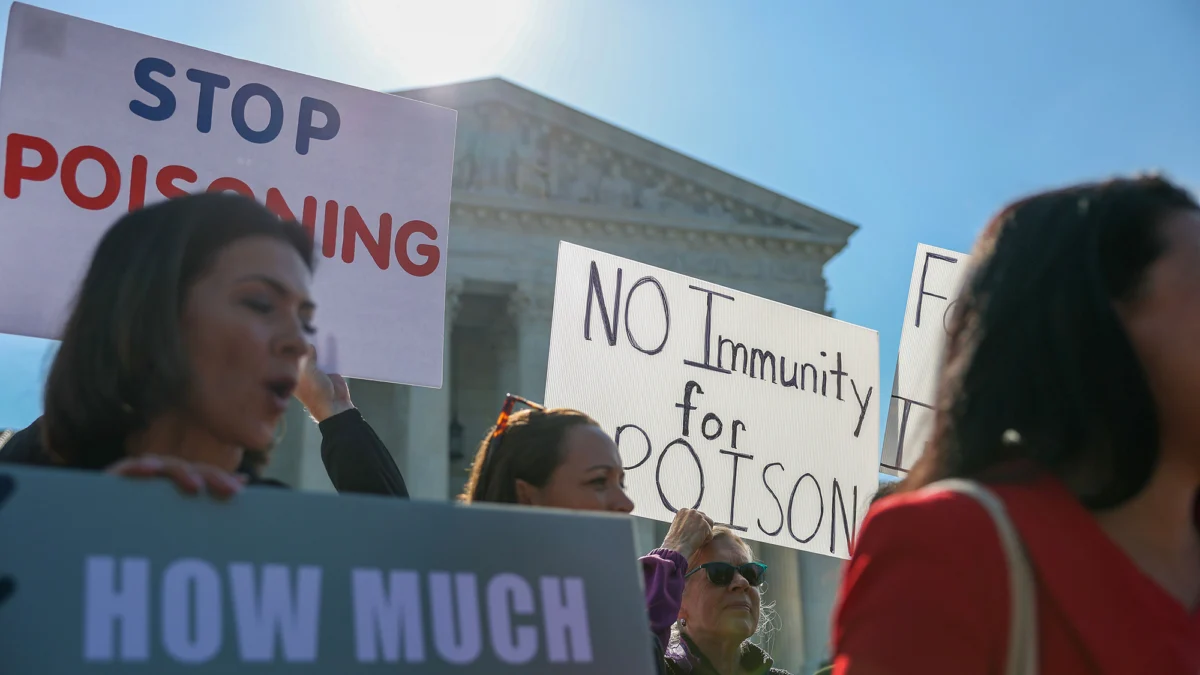
In April 2026, the steps of the U.S. Supreme Court became a focal point for a burgeoning grassroots movement. Among the protesters was Terri McCall, a California rancher whose life was irrevocably altered by a chemical she once trusted. Standing before the highest court in the land, McCall recounted the harrowing final years of her husband, Jack, who passed away in 2016 from non-Hodgkin’s lymphoma after three decades of using Roundup on their 20-acre property. Their family dog, too, succumbed to the same aggressive cancer—a tragedy McCall attributes directly to decades of exposure to widely used agricultural chemicals.
McCall’s story is not an outlier; it is a catalyst for a national debate. Across the United States, more than 57,000 pesticide products are registered for use, ranging from potent, large-scale industrial herbicides to common insect repellents marketed for children. As scientific research continues to establish links between these chemicals and a litany of life-altering health conditions—including Parkinson’s disease, neurodevelopmental delays, respiratory ailments, and various cancers—a powerful coalition of chemical manufacturers has launched an aggressive, coordinated legislative counter-offensive to shield themselves from the growing tide of litigation.
The Legislative Playbook: Shielding the Chemical Giants
Beginning in 2024, a sophisticated and well-funded campaign emerged from the boardrooms of major chemical manufacturers. The goal: to pass “immunity laws” at the state level that would effectively grant pesticide companies a "get-out-of-jail-free" card. These bills are designed to bar individuals from filing "failure to warn" lawsuits, even when plaintiffs can prove that companies knowingly withheld information regarding the health risks of their products.
Industry proponents argue that as long as a pesticide label has been vetted and approved by the Environmental Protection Agency (EPA), the manufacturer should be legally insulated from liability. However, critics point to a fundamental flaw in this logic: the EPA’s review process has long been a subject of intense scrutiny. Despite the World Health Organization’s International Agency for Research on Cancer (IARC) classifying glyphosate—the active ingredient in Roundup—as "probably carcinogenic," the EPA’s official labels remain devoid of cancer warnings.
This legislative strategy has been spearheaded by groups like the Modern Ag Alliance (MAA), a lobbying and public relations entity founded by Bayer in 2024. Public records reveal the immense financial power behind this effort. In Tennessee alone, the MAA reported spending approximately $1.6 million on lobbying in 2025. Similarly, reports from the Idaho Sun identified the MAA as the top outside spender in Idaho politics during that same year. Over the last three years, lobbyists have pushed these immunity bills in 15 different states, succeeding in Georgia, North Dakota, and Kentucky.
A Chronology of Conflict
- 2016: Jack McCall, a California rancher, passes away from non-Hodgkin’s lymphoma, sparking a long-term legal and personal battle for his wife, Terri.
- 2022–2023: A series of landmark court victories for plaintiffs leads to billions of dollars in settlements against chemical giants like Bayer, which has paid over $11 billion in damages related to Roundup.
- 2024: The Modern Ag Alliance (MAA) is founded by Bayer, marking the start of a coordinated, national lobbying effort to secure state-level immunity from "failure to warn" litigation.
- 2025: Lobbying expenditures skyrocket. The MAA becomes a top political spender in states like Idaho and Tennessee, aggressively pushing for immunity legislation.
- April 2026: The Supreme Court hears Monsanto v. Durnell, a case that pits federal regulatory preemption against the rights of states to allow consumer lawsuits. Simultaneously, a national protest rally occurs at the steps of the Court.
- May 2026: A major defeat for the industry as federal lawmakers reject a last-minute attempt to attach pesticide immunity language to the Farm Bill, with 73 Republicans joining Democrats in the opposition.
Supporting Data: The Human and Environmental Cost
The scientific community has provided an increasingly grim picture of the health impacts associated with routine pesticide exposure. Research published in reputable medical journals has linked these chemicals to a range of chronic illnesses. For instance, children exposed to certain pesticides have shown higher risks of reduced IQ and neurodevelopmental impacts. Other studies have highlighted a strong correlation between chemical proximity and the development of liver and metabolic diseases.
The geographical data is equally concerning. Iowa, which in 2025 saw the application of 53 million pounds of pesticides, currently holds the ignominious title of having the second-highest cancer rate in the nation. This correlation between intensive chemical usage and public health crises is at the heart of the argument presented by advocates like Rob Faux, an organic farmer turned activist.
Faux, who was diagnosed with cancer following a 2012 incident where he and his livestock were sprayed by a crop duster, emphasizes that the scope of these immunity bills extends far beyond commercial farming. "If these laws pass," Faux notes, "and someone sells a mosquito repellent for children that makes them sick, these immunity bills will eliminate pathways for families to hold the makers accountable."
The Legal Battleground: The "Failure to Warn" Question
At the heart of the current legal battle is the concept of "failure to warn." Currently, if a company is found to have suppressed data regarding the toxicity of their product, they can be held liable in court. The industry’s push for immunity seeks to make the EPA’s label the final word. If the label doesn’t say it, the company can’t be sued for it.
Daniel Hinkle, senior counsel for policy and state affairs at the American Association for Justice, argues that this is a direct attack on the judiciary’s role in protecting citizens. "The science is pretty clear," Hinkle says. "The evidence continues to accumulate, and the pesticide makers continue to lose in the courtroom. This is a coordinated campaign by the industry to absolve themselves of legal liability."
The outcome of Monsanto v. Durnell at the Supreme Court is viewed by many as the definitive battle for states’ rights. If the Court rules in favor of the industry, it could effectively strip state courts of their ability to adjudicate these cases, rendering local laws and regulations regarding pesticide safety virtually unenforceable.
Implications: A New "Silent Spring"
The momentum behind the pesticide immunity movement has sparked what many activists call "today’s Silent Spring movement," referencing Rachel Carson’s 1962 seminal work that fundamentally changed the global approach to environmental conservation. Unlike the environmental movements of the past, however, this current wave of activism is remarkably cross-partisan.
"It’s diverse. It’s far-reaching," says Joy Reeves, director of policy and strategic development at the Rachel Carson Council. "The states where these bills are passing have some of the highest cancer rates in the nation. The reality now is, if you’re a farmer and get sick, you have fewer options to hold the pesticide companies accountable."
The implications of these immunity laws extend into the realm of local governance. Many of the proposed bills contain provisions that would prohibit municipalities from enacting stricter pesticide safety rules than those set by the federal government. This would effectively strip communities of the power to protect their own drinking water, air quality, and local ecosystems from chemical runoff.
A Path Forward
Despite the massive resources of the chemical lobby, the recent defeat of the immunity provision in the federal Farm Bill provides a glimmer of hope for advocacy groups. The fact that 73 Republicans joined Democrats in voting down the measure suggests that the issue of corporate accountability is one that transcends traditional political divides.
Max Sano, a senior policy and coalitions associate with Beyond Pesticides, notes that while the federal victory was significant, the battle is far from over. "These bills are still popping up everywhere on a state level," Sano warns. "We can’t afford to slow down."
For the average citizen, the path forward involves active engagement. Advocates urge individuals to maintain open lines of communication with their local and state representatives. As Hinkle points out, "Every single call or email matters. Concerned constituents and grassroots organizing have really been the decisive forces in holding off this onslaught."
The fight over pesticide immunity is not merely a legal debate; it is a fundamental question about the relationship between corporate profit, public health, and the right of citizens to hold powerful entities accountable for the safety of their communities. As the movement continues to grow, the legacy of Rachel Carson’s ecological ethic remains a guiding light, reminding a new generation that the protection of the environment is, ultimately, the protection of ourselves.


 Siti Muinah
 Neng Nana