




 Asep Darmawan
By [Your Name/Journalistic Desk]
For Mohamed Adow, founder and director of the Nairobi-based think tank Power Shift Africa, the climate crisis has long transcended the realm of academic debate or philosophical inquiry. In the boardrooms of the Global North, climate change is often discussed in terms of future targets, economic transitions, and political feasibility. But on the ground in Africa, the crisis is an immediate, visceral, and lethal reality. It is a daily negotiation with rising floodwaters, failing harvests, and the slow, agonizing erosion of traditional livelihoods.
The fundamental question—what does it mean to ask a continent to adapt to a crisis it did little to create?—has shifted from a theoretical inquiry to an existential challenge. As Africa grapples with the fallout of a warming planet, the disconnect between global culpability and regional suffering has never been more stark.
Main Facts: A Disproportionate Burden
The central tension of the current climate era is the "brutal contradiction" facing the African continent. While the developed world continues to wrestle with the logistical and political hurdles of decarbonization, Africa is currently serving as the world’s climate shock absorber.
According to data from the World Meteorological Organization (WMO), Africa accounts for a negligible share of historical and current global greenhouse gas emissions. Despite this minimal contribution, the continent is disproportionately represented in global climate casualty statistics. Between 1970 and 2021, Africa accounted for approximately 35% of all climate-related deaths worldwide.
This statistic is not merely a numerical outlier; it is a profound indictment of global environmental injustice. The continent’s vulnerability is compounded by high levels of poverty, reliance on rain-fed agriculture, and infrastructure that lacks the resilience to withstand the frequency and intensity of modern extreme weather events. When a cyclone hits a developed nation, it is a disaster; when it hits a region like the Horn of Africa, it is a development-ending event that wipes out decades of progress in a matter of hours.
Chronology: A Half-Century of Escalating Volatility
The trajectory of climate impact in Africa can be mapped against a timeline of accelerating environmental degradation.
1970s–1990s: The Warning Signs
During the latter decades of the 20th century, the Sahelian droughts signaled the beginning of a long-term shift in precipitation patterns. The loss of life during these periods was catastrophic, yet the international response was largely framed as humanitarian aid rather than climate-related mitigation.
2000–2010: The Frequency Shift
The first decade of the 21st century saw the intensification of weather anomalies. The frequency of severe flooding in West and East Africa began to outpace historical norms. Scientific consensus began to coalesce around the reality that these events were no longer "natural" occurrences but were being amplified by anthropogenic warming.
2011–2020: The Era of "Megadroughts" and Cyclones
The decade was defined by extreme volatility. In 2019, Cyclone Idai devastated Mozambique, Zimbabwe, and Malawi, causing billions in damage and displacing hundreds of thousands. Simultaneously, the Horn of Africa entered a prolonged, multi-year drought that decimated livestock—the primary economic engine for millions of pastoralists—leading to a state of chronic food insecurity.
2021–Present: The Loss and Damage Pivot
In the wake of COP26 and COP27, the focus shifted toward "Loss and Damage." Africa began to demand formal recognition of the fact that some climate impacts are now beyond the scope of adaptation. The establishment of a dedicated fund at COP27 was a victory for advocates like Adow, though the implementation and capitalization of such funds remain points of fierce contention.
Supporting Data: Economic and Social Tolls
The economic implications for Africa are staggering. Climate-related disasters are not merely destroying assets; they are effectively taxing the continent’s growth potential.
- Agricultural Output: In many African nations, agriculture accounts for up to 30% of GDP and employs over 60% of the workforce. Climate change, through shifting rainfall patterns and extreme heat, is projected to reduce agricultural productivity by as much as 30% by 2050 if adaptation measures are not scaled rapidly.
- Budgetary Stress: African governments are increasingly forced to divert funds from healthcare, education, and infrastructure to disaster response. This creates a "debt trap" where countries must borrow to rebuild after climate shocks, further limiting their fiscal space to invest in the very green technologies that could mitigate future risks.
- The Adaptation Gap: According to the UN Environment Programme (UNEP), Africa’s annual adaptation needs are estimated to be in the tens of billions of dollars. Current international financing flows cover only a fraction of this requirement, leaving a yawning "adaptation gap" that is effectively being paid for by the most vulnerable citizens through their loss of property, health, and life.
Official Responses and Political Maneuvering
The international community’s response has been a mix of rhetorical commitment and operational inertia.
The Global North Perspective
Developed nations, particularly those with the highest historical emissions, have acknowledged the moral weight of the "climate debt" owed to the Global South. However, this acknowledgment is frequently tempered by domestic political constraints, inflation concerns, and a reluctance to codify legal liability for climate damages. The pledges made in the Paris Agreement remain largely unmet in terms of the $100 billion annual climate finance goal, which was intended to support developing nations.
The African Union Stance
The African Union (AU) has moved toward a unified diplomatic front, emphasizing that Africa is "open for business" in the green energy sector but will not sacrifice its developmental sovereignty. African leaders argue that the continent requires a "just transition" that allows for the use of natural gas as a bridge fuel, alongside massive investment in solar, wind, and geothermal capacity.
The Power Shift Africa Vision
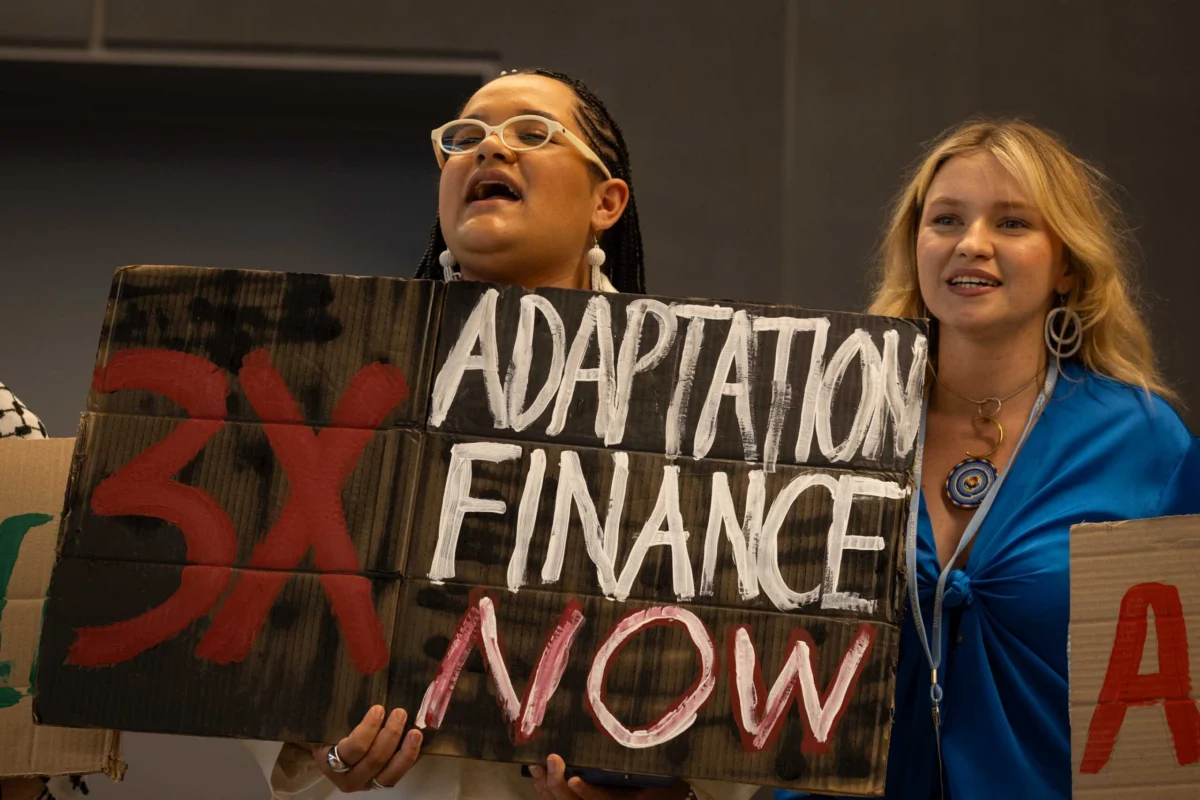
Mohamed Adow and other grassroots advocates argue that the current financial architecture is fundamentally broken. They posit that climate finance should be provided as grants, not loans, to prevent the cycle of debt that currently plagues the continent. Furthermore, they demand that the focus shift from "climate aid" to "climate justice"—a systemic redistribution of resources that recognizes the historic atmospheric space occupied by the Global North.
Implications: The Path Toward a New Social Contract
The implications of failing to address this climate injustice are global in scale.
- Migration and Displacement: As ecosystems become unlivable, migration is no longer a choice but a survival strategy. Climate-induced displacement in Africa is expected to reach tens of millions by mid-century, posing significant challenges for regional stability and international policy.
- Geopolitical Realignment: The frustration felt by African nations is creating a vacuum that is being filled by non-traditional partners. Nations that feel abandoned by the West regarding climate support are increasingly looking toward emerging economies that offer infrastructure development without the conditionalities associated with Western climate finance.
- The Moral Crisis of Capitalism: The climate crisis in Africa exposes the limits of a global economic system that prioritizes growth over planetary stability. If the most vulnerable continue to pay the price for the prosperity of the few, the legitimacy of global institutions—such as the UN, the IMF, and the World Bank—will continue to erode.
Conclusion: Beyond Adaptation
The narrative of Africa as a "victim" is incomplete. It is a continent of immense innovation, resilience, and renewable energy potential. However, the capacity to harness this potential is being throttled by a global system that continues to treat the climate crisis as a peripheral issue rather than the central challenge of our time.
As Mohamed Adow suggests, the time for philosophical debate is over. The reality of flooded communities and failed harvests is not a future threat; it is the current state of affairs. Until the global community shifts from viewing climate finance as a charitable donation to acknowledging it as a debt owed for the destruction of the global commons, the "brutal contradiction" of the 21st century will only deepen. Africa is not just asking for help; it is demanding a reckoning with the fundamental inequities that have defined the climate era. The world’s ability to solve this will determine not only the future of the African continent but the integrity of the global order itself.


 Nila Kartika Wati
 Laily UPN





