

 Neng Nana
In the quiet corridors of Silicon Valley and the bustling halls of international policy forums, a singular, existential question is dominating the discourse: Is artificial intelligence a tool for human flourishing, or a catalyst for societal collapse?
"AI will either be the greatest equalizer ever invented, or the worst source of injustice," Bill Gates noted in a recent open letter, encapsulating the binary anxiety that has gripped the technology sector. As the pace of innovation accelerates at a rate that seems to outstrip legislative capacity, a growing chorus of industry leaders, including Anthropic CEO Dario Amodei, have called for a measured slowdown. Yet, the challenge remains: How do we govern a technology that changes daily, and how do we ensure the voices of ordinary citizens are heard amidst the cacophony of corporate and governmental interests?
The answer may lie in a centuries-old democratic tradition revived for the digital age: the civic assembly.
The Main Facts: A Crossroads of Innovation and Policy
The central tension in the current AI debate is the "governance gap." While developers at OpenAI, Google DeepMind, and SpaceX race to push the boundaries of large language models and neural networks, policymakers are struggling to define the regulatory framework required to prevent catastrophic outcomes—ranging from systemic bias and privacy erosion to mass workforce displacement.
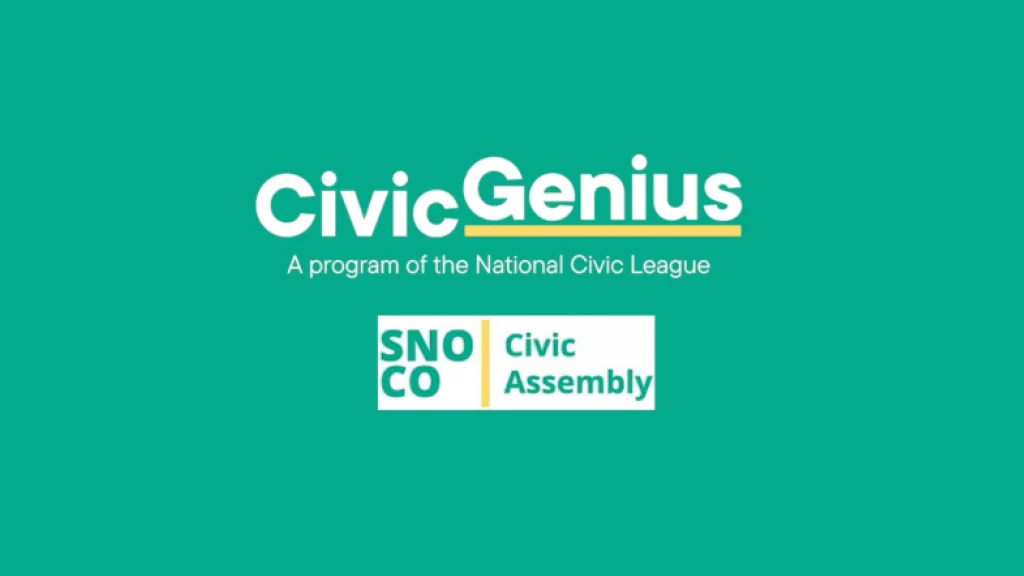
The fundamental problem is one of representation. Historically, decisions regarding the trajectory of transformative technology have been made behind closed doors by a select group of engineers and venture capitalists. However, initiatives like those led by the non-profit organization Civic Genius, specifically the recent Snohomish County Civic Assembly on AI, suggest a shift. By bringing together a demographically representative cross-section of the public to deliberate on complex technical issues, these assemblies aim to bridge the divide between the abstract world of code and the lived reality of communities.
A Chronology of the AI Governance Debate
To understand the urgency of the current moment, one must trace the rapid escalation of the AI discourse over the last 18 months:
- Late 2022: The public release of ChatGPT triggers a global awakening regarding the capabilities of generative AI, moving the technology from academic curiosity to household utility.
- Early 2023: High-profile warnings emerge from within the industry. Leaders, including those at the Center for AI Safety, begin to sound the alarm on the potential for "extinction-level" risks.
- Spring 2023: Dario Amodei of Anthropic publicly advocates for a "pause" or a significant deceleration in the deployment of advanced AI systems to allow for safety testing and robust policy development.
- June 2023: The Snohomish County Civic Assembly on AI concludes, providing a real-world test case for how non-experts engage with the technical nuances of AI.
- Late 2023–Present: Governments globally, including the European Union with its AI Act and the United States with various executive orders, scramble to codify standards that the public can trust.
Supporting Data: The Public Perspective
When the participants of the Snohomish County Civic Assembly gathered, they were not presented with a sanitized version of the future. Instead, they were immersed in a comprehensive analysis of the trade-offs inherent in AI integration.
Data from the assembly revealed a striking, if contradictory, consensus. Participants demonstrated a sophisticated understanding of the "dual-use" nature of the technology. For instance, there was a palpable fear surrounding the deployment of "Flock" cameras—AI-enabled surveillance systems—due to privacy and civil liberty concerns. Simultaneously, these same participants expressed a desperate optimism regarding the potential for AI to revolutionize medical diagnostics and improve the efficiency of government services.
This "deliberative ambiguity" is the hallmark of a healthy democracy. It proves that the public is not merely "anti-tech" or "pro-tech," but rather deeply concerned with the distribution of power that accompanies these new tools. When presented with the facts, citizens are capable of nuanced deliberation that often evades the partisan shouting matches of national politics.
Official Responses and Industry Stance
The response from industry leaders to the growing demand for public oversight has been varied.
Executives at major AI firms have largely adopted a strategy of "cooperative regulation." By proactively calling for government intervention, they effectively shape the discourse around how the technology is regulated, rather than whether it should continue to evolve.
However, critics argue that this is a tactical maneuver. By focusing on "existential risk"—the hypothetical scenario where AI becomes sentient and uncontrollable—industry leaders effectively distract from the "immediate harms" that occur today: algorithmic bias in hiring, the degradation of the creative economy, and the erosion of digital privacy.
Civic assemblies offer a counter-balance to this industry-led narrative. By centering the conversation on community impact—such as local law enforcement’s use of surveillance or the automation of municipal social services—these assemblies force a grounding of the debate that corporate press releases cannot replicate.
The Implications: Why Deliberation Matters
The implications of utilizing civic assemblies for AI governance are profound. If we are to avoid a future of "techno-authoritarianism," the legitimacy of our AI policies must be derived from the consent of the governed.
1. Demystifying the Black Box
The primary implication of the assembly model is education. AI is often marketed as a "black box," a magical entity beyond the comprehension of the average person. Deliberative sessions strip away the jargon, allowing citizens to assess AI not as a deity, but as a tool. When citizens understand the limitations of a predictive model, they become better equipped to demand accountability.
2. Bridging the Partisan Divide
In an era of hyper-polarization, AI is one of the few issues that cuts across traditional party lines. Concerns about the environmental impact of data centers, for example, attract environmentalists, while concerns about government surveillance resonate with libertarian-leaning citizens. The civic assembly acts as a neutral space where these disparate groups can find common ground on the necessity of oversight.
3. Creating a "Social License" for Innovation
For AI developers, the greatest risk is a public backlash that leads to draconian, innovation-stifling legislation. By engaging the public in a transparent, deliberative process, the tech sector can secure a "social license" to operate. When communities feel they have had a seat at the table, they are significantly more likely to accept the benefits of technological change while remaining vigilant against its abuses.
Looking Forward: Toward a Participatory Policy
The Snohomish County experience is not an isolated success; it is a blueprint. As the world stands on the precipice of an AI-driven economic and social transformation, the mechanism of the civic assembly provides a necessary check on the speed of progress.
We are currently in a race between the rate of technological change and the speed of human wisdom. If we leave the steering wheel entirely to the creators of these machines, we risk the "worst source of injustice" that Bill Gates warned of. However, if we leverage models of direct democratic participation, we can ensure that the AI of the future is not something done to us, but something done with us.
The path forward requires more than just corporate ethics boards or international summits. It requires the quiet, persistent, and intelligent work of the citizen. The AI revolution will be defined not by the code itself, but by the social contract we build around it. The deliberations have only just begun.


 Muslim

 Basiran