

 Basiran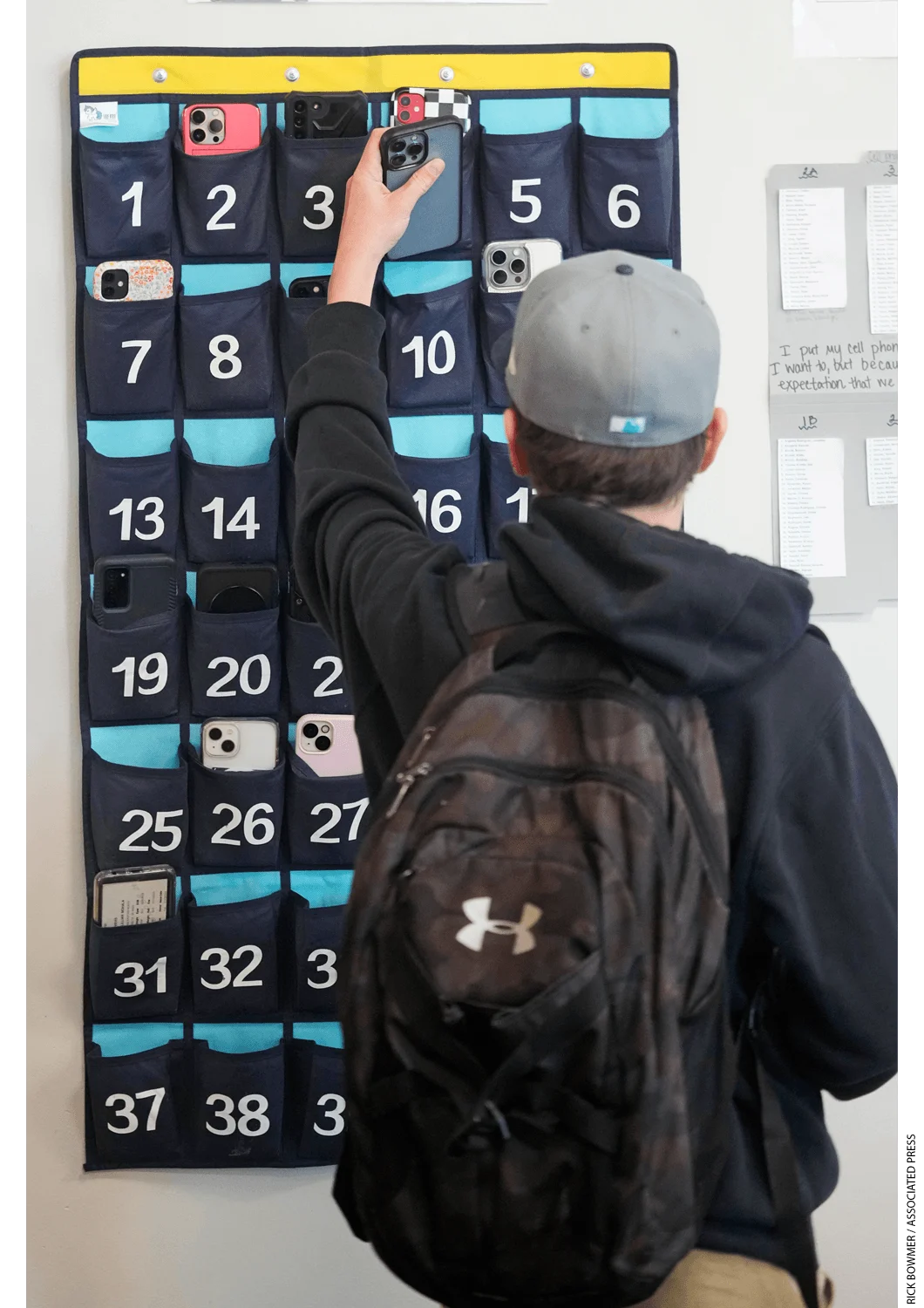
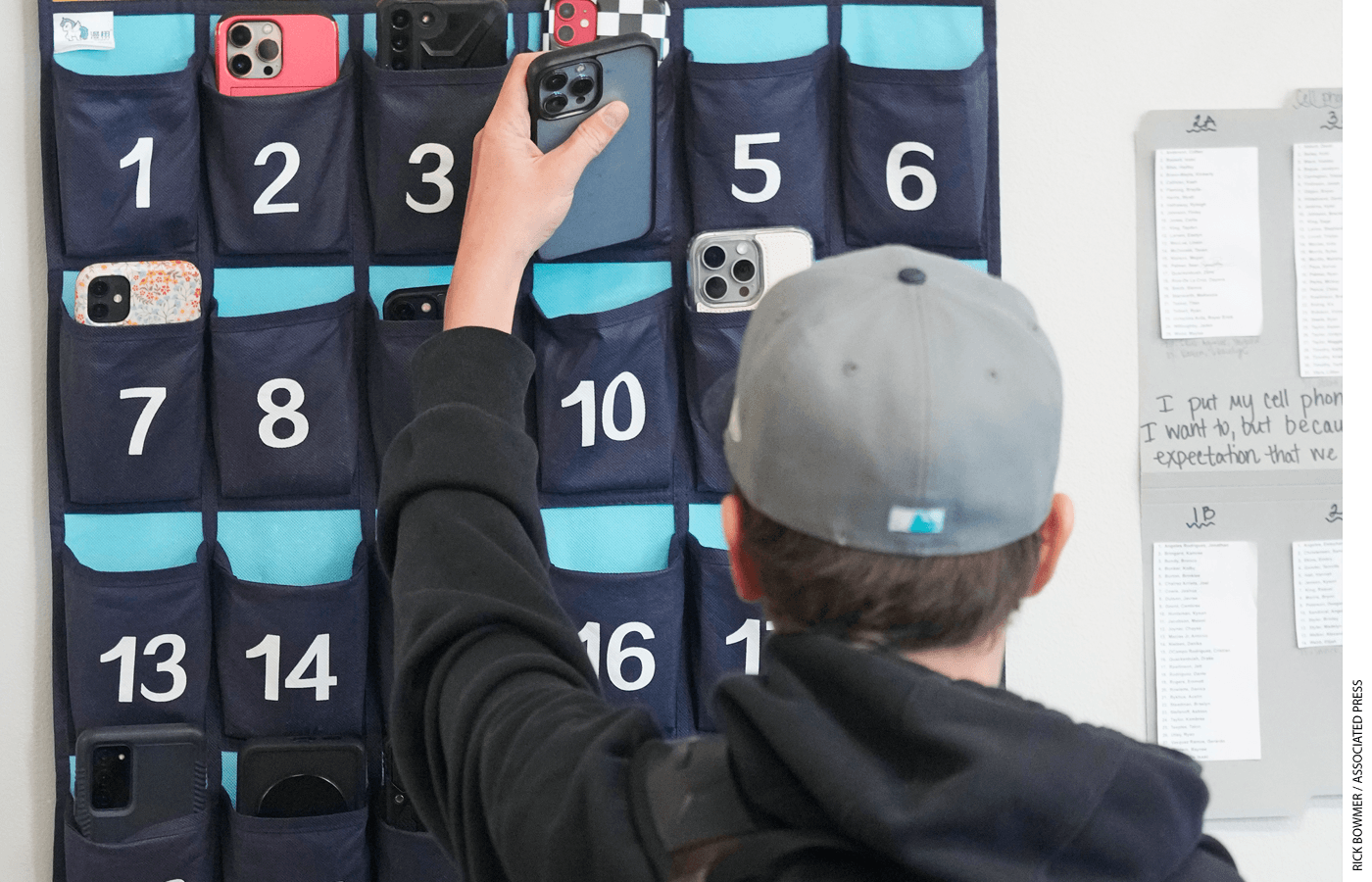
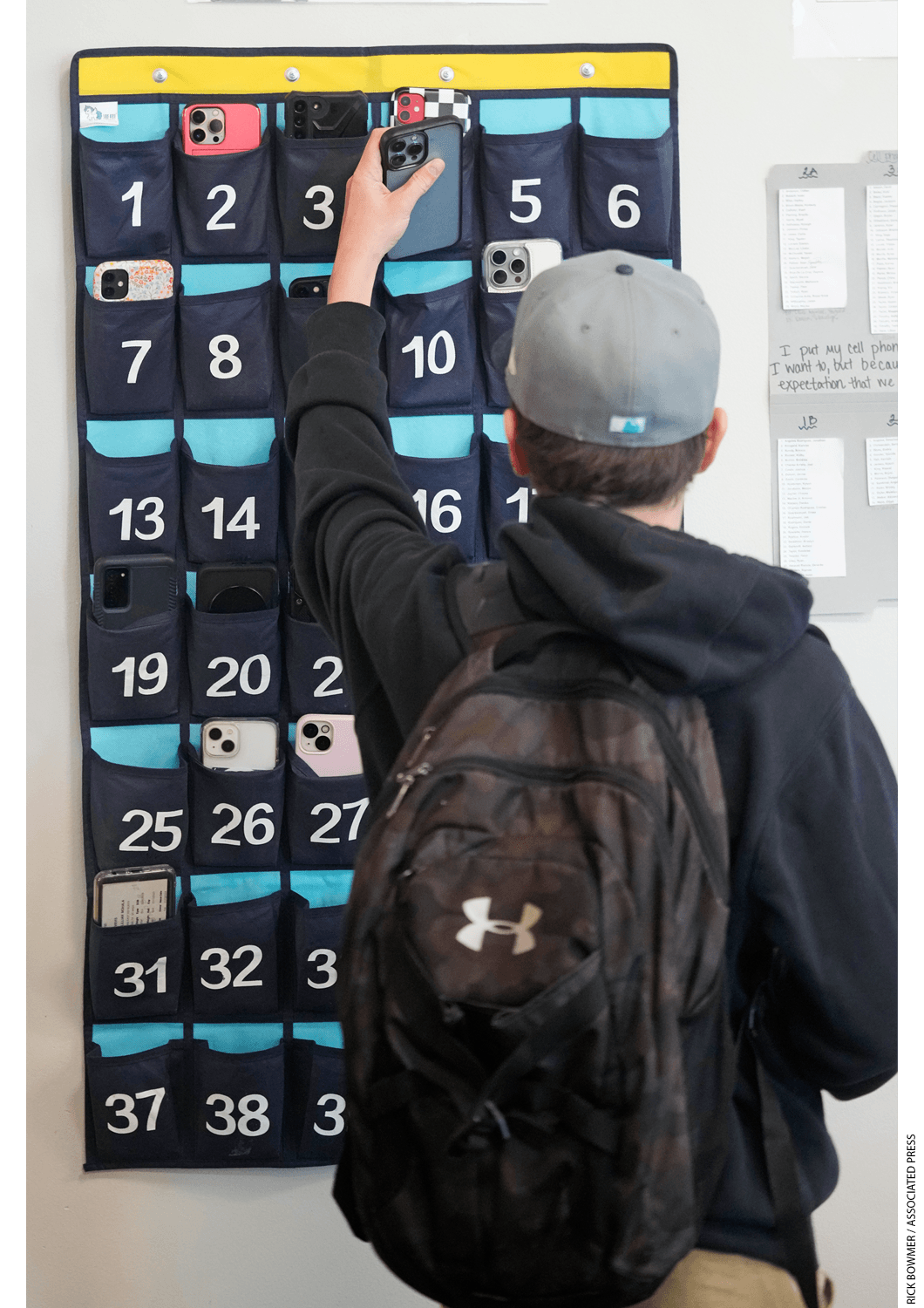
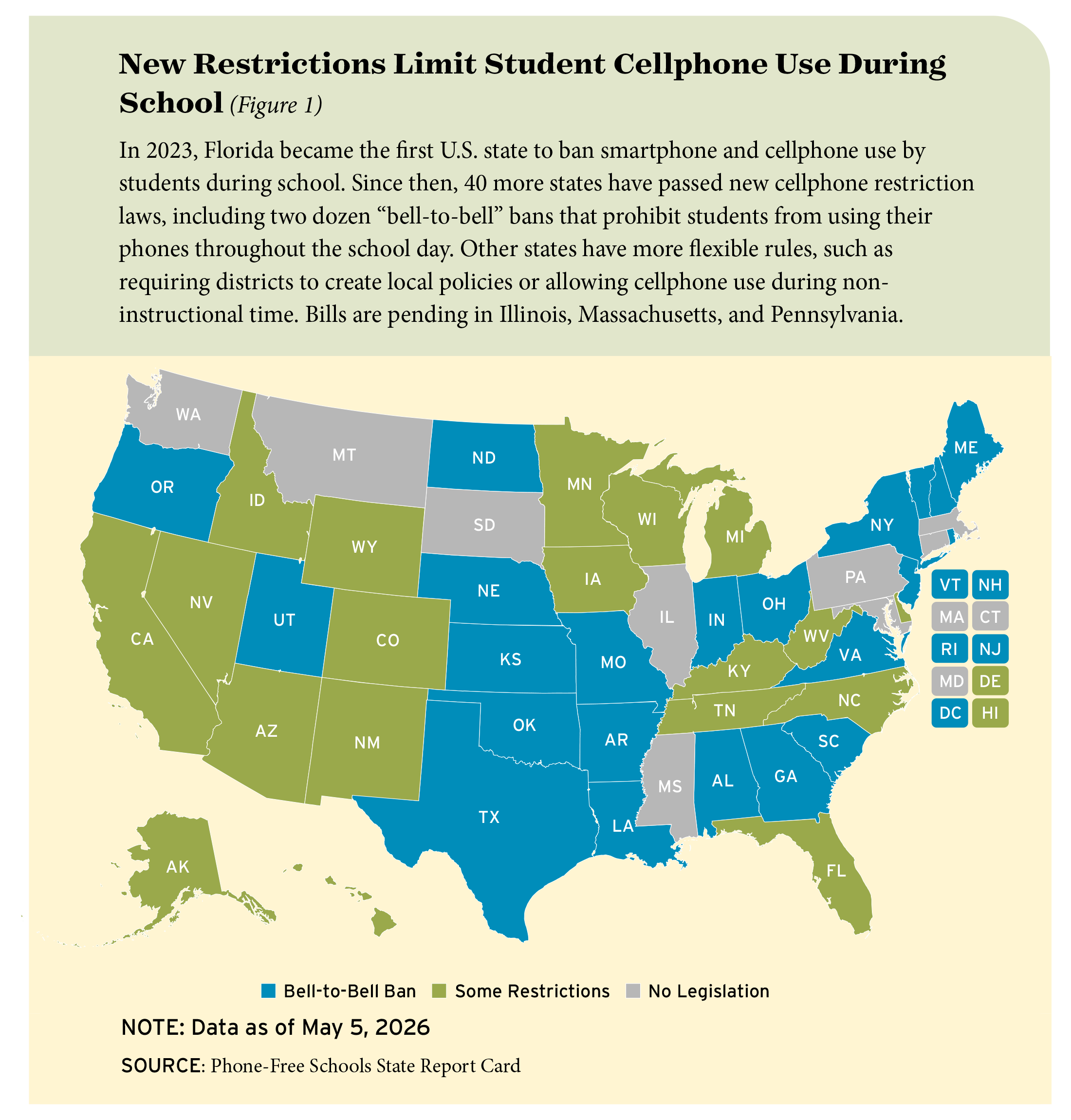
As the American educational landscape grapples with a post-pandemic decline in student engagement and academic performance, a growing number of states are turning to a seemingly retro solution: the total prohibition of smartphones in classrooms. Across the United States, school-wide cellphone restrictions have transitioned from local pilot programs to a mainstream policy movement. Today, 22 states and the District of Columbia have enacted “bell-to-bell” laws, mandating that students keep their personal devices silenced and stowed for the duration of the school day. With another 19 states implementing flexible, district-led frameworks, the era of the “connected” classroom is rapidly giving way to a new, phone-free status quo.
However, until now, the debate has been largely driven by anecdote and frustration rather than empirical evidence. A landmark study from a major Florida school district—the site of the nation’s first statewide mandate—now provides the most rigorous analysis to date on how these bans affect student behavior, disciplinary records, and, most importantly, academic achievement.
The State of Play: A National Movement
The surge in legislative action is not occurring in a vacuum. It is a direct response to a decade of declining mental health and academic metrics among adolescents. Since 2015, smartphone ownership among teenagers has skyrocketed, with roughly 95% of today’s teens reporting that they own or have access to a smartphone. Concurrent with this rise in screen time, educators have reported a parallel rise in distraction, cyberbullying, and social anxiety.
Teachers have been at the forefront of this push. According to a 2024 National Education Association survey, 90% of educators favor restrictions during class time, and 83% advocate for total bell-to-bell bans. While the sentiment among school administrators is equally positive—with 81% of secondary school principals reporting a better school climate after implementing bans—the policy remains contentious among students and parents. A 2024 poll from the National Parents Union revealed that 56% of parents believe students should retain some access to their phones, often citing safety and emergency communication as primary concerns.
Chronology of a Policy Shift
The legislative path to this moment began in earnest in May 2023, when Florida Governor Ron DeSantis signed House Bill 379, part of the “Teachers’ Bill of Rights.” This law prohibited the use of wireless communication devices during instructional time unless a teacher specifically directed their use for academic purposes.
Following the statewide directive, many districts chose to go further. One of the nation’s 10 largest school districts implemented a strict "bell-to-bell" policy, requiring devices to be stored away not just during class, but during lunch and passing periods as well. The implementation followed a standard rollout:
- August 2023: The policy goes into effect.
- September 2023: A "grace period" concludes; the district begins strict enforcement, including confiscation and potential suspension for repeat offenders.
- 2023–2024 Academic Year: Initial data collection shows a sharp drop in phone usage, coupled with an unexpected rise in disciplinary referrals.
- 2024–2025 Academic Year: The "settling in" phase; disciplinary rates return to baseline, while academic gains begin to manifest in standardized testing.
Supporting Data: The Evidence from Florida
To measure the impact, researchers David N. Figlio of the University of Rochester and Umut Özek of the RAND Corporation utilized a combination of student-level performance data and geolocated cellphone “ping” data. By tracking unique smartphone visits within school buildings, the researchers were able to quantify the effectiveness of the ban.
The Behavioral Impact
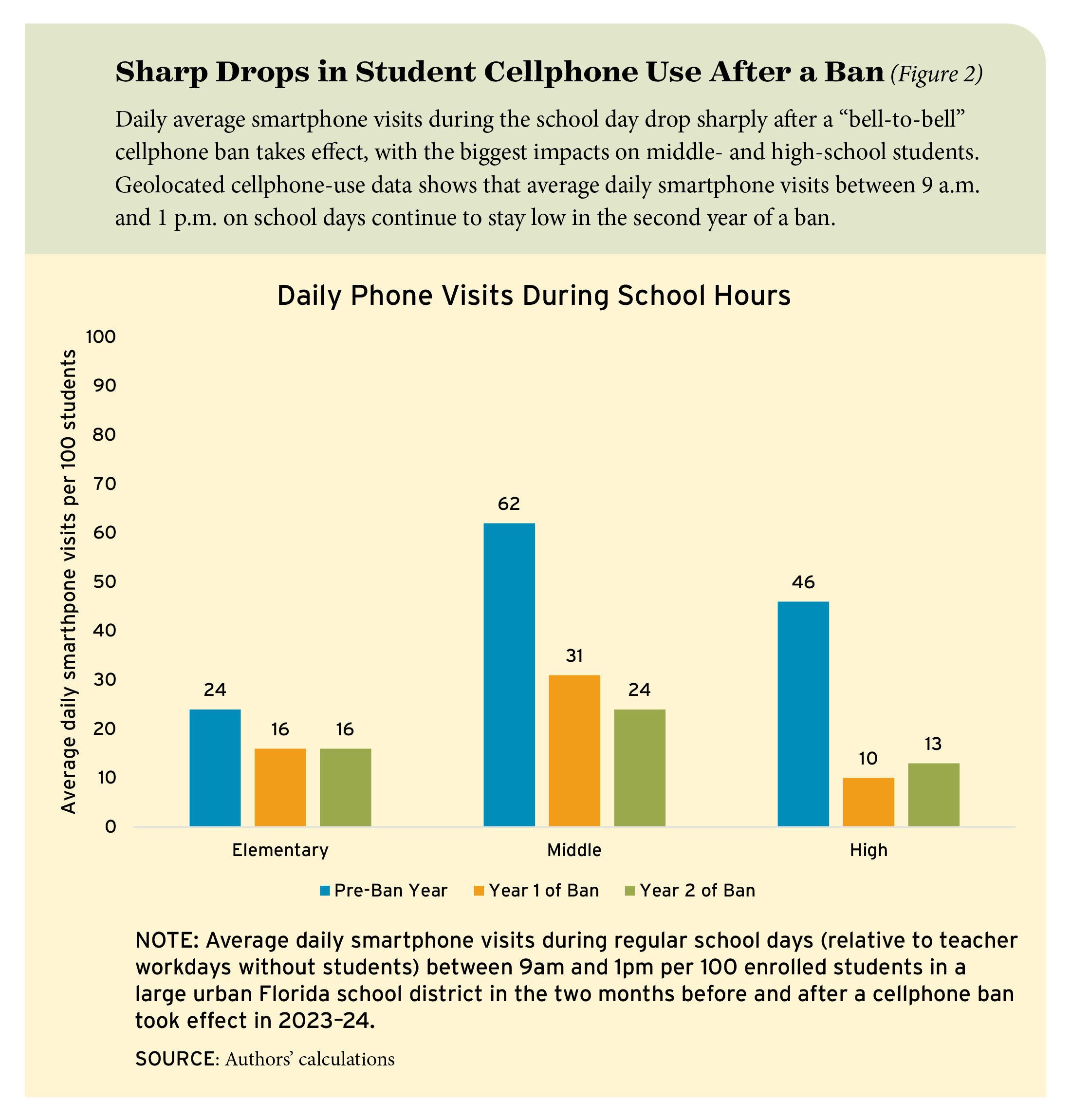
The policy was undeniably successful in curbing phone usage. In high schools, daily cellphone interactions plummeted by more than 80%, dropping from 46 daily visits per 100 students to just 10 in the first year. Middle schools saw a 50% reduction. By the second year, these low levels of engagement remained consistent, suggesting that the school culture had successfully shifted to a phone-free environment.
The Academic Dividend
The academic results were delayed but significant. In the first year of the ban, test scores remained relatively flat. However, by the end of the second year, students showed a 3.5 to 4 percentile improvement in reading and math scores compared to the pre-ban baseline. The gains were most pronounced in schools that had the highest levels of pre-ban cellphone usage, suggesting that the policy provided the greatest benefit to the students who were previously the most distracted.
The Cost of Enforcement
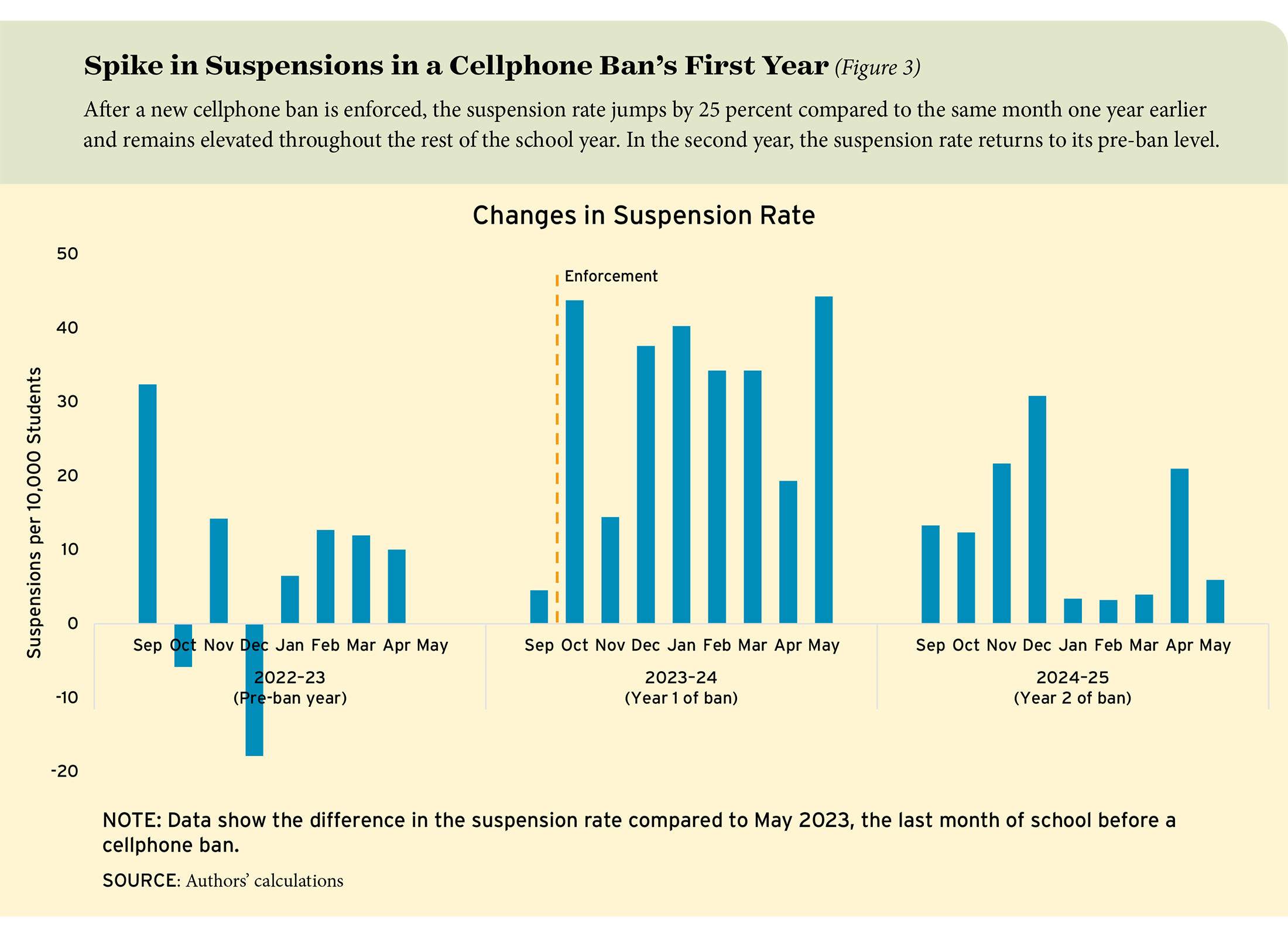
The transition, however, was not without friction. In the first year, the district experienced a 25% spike in suspension rates. This increase was not distributed equally; Black students, in particular, faced a 30% increase in in-school suspensions during the first year of the ban, a disparity not mirrored among their white or Hispanic peers. Crucially, the researchers noted that this disciplinary spike was temporary. By the second year, suspension rates returned to their historical norms, indicating that once the new expectations were established, the need for punitive intervention diminished.
Official Perspectives and Educational Implications
The correlation between the ban, improved attendance, and higher test scores provides a compelling case for policymakers. Researchers point to the 5% to 10% reduction in unexcused absences as a potential indicator of a healthier school climate. When students are not tethered to their phones, they appear more engaged in the school day, which in turn boosts attendance and, subsequently, academic performance.
For administrators, the "Teachers’ Bill of Rights" in Florida serves as a blueprint. It included provisions to protect students with documented health conditions and allowed for device usage in the event of a schoolwide emergency. These guardrails are essential for addressing the valid concerns raised by parents regarding student safety.
However, the findings also serve as a warning. The disproportionate impact on disciplinary rates for minority students during the first year of implementation is a critical equity issue. It suggests that schools cannot simply "ban and forget." Successful implementation requires clear, consistent, and equitable enforcement policies that prioritize student support over immediate punishment.
The Future of the "Phone-Free" Classroom
As more states move toward full implementation, the lessons from the Florida study are clear: the benefits of a cellphone-free school are real, but they are not instantaneous. The "bell-to-bell" approach appears to be a viable tool for improving educational outcomes, provided that schools are prepared to manage the volatile adjustment period that accompanies such a significant cultural shift.
The decline of the smartphone as a classroom fixture represents a major reset in American education. By reducing the constant stream of digital distractions, schools are effectively creating more space for the deep, focused work that is essential for learning. Yet, the challenge remains for policymakers to ensure that the transition to a phone-free school is not just effective in terms of test scores, but also fair and inclusive for all students.
As we look toward the 2026–27 school year, when mandates in states like Utah and others reach full fruition, the focus will likely shift from the "why" to the "how." The goal for the next generation of school leaders will be to minimize the short-term disciplinary "hiccups" and solidify the long-term gains in student engagement and well-being. The smartphone-free school is no longer a distant ideal; it is a reality that is currently being stress-tested in districts across the nation. Whether this change will be the silver bullet for the current academic crisis remains to be seen, but the preliminary evidence suggests that when the screens go dark, the focus—and the learning—brightens.

 Raul Delapena Setiawan
 Laily UPN