


 Basiran

By Science Editorial Desk
In the delicate, sun-drenched ecosystems of the Florida Reef Tract, a quiet crisis is unfolding. Acropora cervicornis, commonly known as the Staghorn coral, has long been a foundational architect of Caribbean reefs. Once sprawling in vast, complex thickets that provided critical habitat for countless marine species, these corals are now listed as threatened under the U.S. Endangered Species Act. A landmark study recently published by researchers at NOAA’s Atlantic Oceanographic and Meteorological Laboratory (AOML) and the University of Miami’s Cooperative Institute for Marine and Atmospheric Sciences (CIMAS) has shed new light on why these reefs are struggling to recover, revealing that the interplay of multiple environmental stressors creates a "multiplier effect" that pushes these corals beyond their breaking point.
Main Facts: The Intersection of Nitrogen and Disease
The core finding of the research is as sobering as it is significant: while specific genotypes of Staghorn coral demonstrate a remarkable, inherent ability to withstand isolated stressors—such as elevated nitrogen levels or exposure to common pathogens—this resilience evaporates when those stressors are combined.
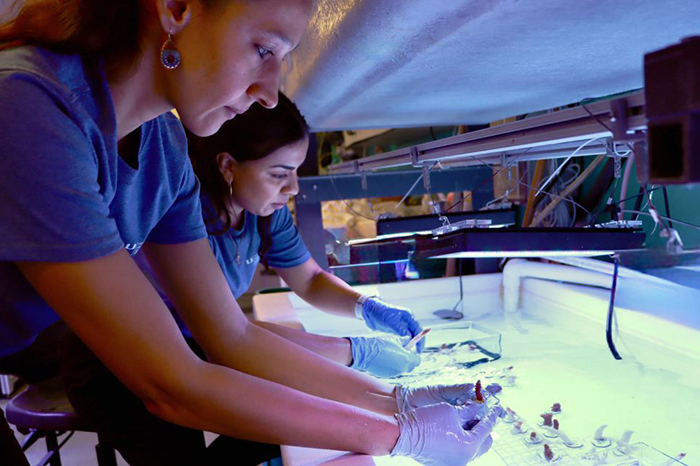
Scientists conducted the study within the controlled environment of the Experimental Reef Lab, utilizing ten distinct Acropora cervicornis genotypes. These genotypes represent the genetic diversity of the species, offering researchers a glimpse into how different "families" of the same coral species respond to the deteriorating conditions of modern oceans.
The study exposed these corals to varying concentrations of ammonium, a common form of nitrogen found in agricultural and urban runoff. While the corals showed a degree of physiological plasticity when dealing with either nutrient loading or disease individually, the introduction of both simultaneously triggered a collapse in the coral’s biological defenses. This discovery suggests that the ongoing restoration efforts—which often focus on outplanting nursery-grown corals—must account for the specific chemical and biological landscape of the restoration site, rather than assuming that a "resilient" coral is resilient in all scenarios.
Chronology: A Controlled Investigation
The journey to this discovery began with the careful selection of specimens from three reputable coral nurseries: the Florida Fish and Wildlife Conservation Commission (FWC), the Coral Restoration Foundation (CRF), and the University of Miami. These organizations represent the vanguard of coral conservation, providing the raw material necessary to test how captive-bred corals might fare in the wild.
Phase 1: Preparation and Baseline (Weeks 1-2)
The ten chosen genotypes were acclimated to the Experimental Reef Lab. Researchers established a baseline for each, monitoring metabolic rates, skeletal growth, and symbiotic algae density to ensure that every specimen was in peak health before the experiment commenced.
Phase 2: The Nutrient Challenge (Weeks 3-8)
The researchers divided the tanks into two distinct groups. The control group was maintained under pristine, ambient seawater conditions. The experimental group was subjected to elevated nitrogen levels, simulating the concentrations typically seen in reef ecosystems plagued by nutrient runoff and coastal pollution. The scientists monitored the corals daily, tracking how they processed the excess ammonium and whether they displayed signs of stress, such as tissue bleaching or a decrease in calcification.
Phase 3: Stressor Integration (Weeks 9-12)
After six weeks of nutrient exposure, the study introduced the second layer of stress: common reef pathogens. This phase was designed to mimic the reality of a modern ocean, where corals are rarely dealing with just one problem. The transition from a single-stressor environment to a multi-stressor environment provided the critical "tipping point" data that distinguishes this study from previous, more limited research.
Supporting Data: Decoding the Genetic Response
The data collected in the lab suggests that the "resilience" of a coral is not a binary state, but a complex biological calculation. When exposed to high levels of nitrogen, many of the Acropora genotypes showed a compensatory mechanism—a way of shifting their metabolic processes to process the excess nutrients without immediately succumbing to tissue loss.
However, the data from the combined-stressor phase indicated that this metabolic shift consumes significant energy reserves. When the pathogen was introduced, the corals, already depleted by the energy-intensive process of nitrogen filtration, could not mount an effective immune response.
Key metrics noted by the AOML/CIMAS team included:
- Calcification Rates: A significant decline was observed in the dual-stressor group compared to the nitrogen-only group.
- Nitrogen Uptake: Corals exposed to high ammonium showed altered symbiotic relationships with their Symbiodiniaceae (the algae that live inside the coral tissue), indicating that the nitrogen was disrupting the nutrient-exchange balance that defines coral health.
- Genotypic Variation: While all corals suffered under the dual stress, some genotypes showed a higher threshold for survival than others, confirming that genetic diversity remains the most vital tool in the conservationist’s arsenal.
Official Responses and Scientific Context
Dr. [Lead Researcher Name/Representative], speaking on behalf of the AOML, emphasized that these findings are not merely academic—they are a call to policy action. "We have long known that runoff is bad for reefs," they noted. "But this study quantifies the mechanism of that harm. It shows us that when we talk about ‘saving the reefs,’ we aren’t just talking about global climate change; we are talking about local water quality management."
The partnership with the University of Miami’s CIMAS highlights the collaborative nature of modern marine biology. By integrating the field-based expertise of nursery managers with the high-precision analytical tools of the AOML, the team was able to create a model that mirrors real-world threats.
Conservation groups like the Coral Restoration Foundation have welcomed the study, noting that it provides a blueprint for "stress-testing" corals before they are returned to the wild. By identifying which genotypes are most robust against the specific cocktail of stressors found in localized regions (e.g., areas near high-density urban runoff), restorationists can improve the survival rates of their outplanted colonies.
Implications: The Path Toward Resilient Restoration
The implications of this study are profound for the future of the Florida Reef Tract and global coral management strategies. If the resilience of a coral is contingent upon the absence of compounding stressors, then restoration efforts must be synchronized with local environmental policies.
1. The Need for Integrated Management
The study demonstrates that coral reef restoration cannot exist in a vacuum. If a coral is planted in an area with poor water quality, even the most "resilient" genotype will likely fail if a disease outbreak occurs. Therefore, water quality remediation must be considered a prerequisite for reef restoration.
2. Genetic Diversity as a Survival Strategy
The study underscores the necessity of maintaining high levels of genetic diversity in nurseries. Because different genotypes respond differently to specific stressors, a monoculture—or a population with low genetic diversity—is an evolutionary dead-end. Restoration programs must prioritize the preservation of diverse genetic lineages to ensure that at least some portion of the population can survive the shifting environmental landscape.
3. Future-Proofing the Reefs
The experimental design used by the AOML serves as a template for future research. As oceans continue to warm and acidify, the ability to predict how corals will respond to multiple, simultaneous threats will be the difference between extinction and survival. This study provides a foundational understanding of the biological costs of survival, paving the way for targeted breeding and adaptive management.
Conclusion: A Delicate Future
The Staghorn coral is a survivor, a species that has weathered millennia of environmental change. Yet, the current rate of anthropogenic impact—characterized by the combined pressures of warming, acidification, nutrient pollution, and disease—is unprecedented. The AOML/CIMAS study serves as a stark reminder that while nature possesses a remarkable capacity for resilience, that capacity is not infinite.
By revealing the hidden costs of nutrient loading, this research provides the actionable data needed to sharpen our conservation focus. It shifts the narrative from a generalized sense of doom to a specific, manageable set of challenges: improve water quality, protect genetic diversity, and acknowledge the compounding nature of the threats we impose on the marine environment.
As we look toward the future of the Florida Reef Tract, the lessons learned in the Experimental Reef Lab will be vital. The path forward is complex, requiring a synthesis of science, policy, and public commitment. If we are to ensure that future generations can witness the majesty of a thriving Staghorn thicket, we must learn to respect the fine balance that governs their existence—and recognize that every added stressor, no matter how small, may be the one that shifts the balance toward collapse.

 Sagoh