 Iffa Jayyana
Generosity is often viewed as a singular act—a donation, a volunteer hour, or a helping hand. However, a new digital initiative, the Stories of Generosity Map, is fundamentally shifting that narrative. By documenting the myriad ways individuals, organizations, and entire communities mobilize resources for the greater good, the map reveals that generosity is not a static concept but a dynamic, creative, and global force. As we approach December 1, this repository of human kindness serves as a vital reminder that the capacity to give is universal, transcending borders, industries, and socioeconomic backgrounds.
The Geography of Goodwill: An Overview
The Stories of Generosity Map is more than just a data point; it is a collaborative archive of the GivingTuesday movement. It chronicles the transition of altruism from private, quiet acts into highly visible, community-driven movements. From the bustling concert stages of San Juan to the rural villages of Uttar Pradesh, the map highlights that the "what, where, and how" of giving is evolving.
By aggregating these stories, the project offers a new lens through which we can view the social fabric of the 21st century. It illustrates that modern generosity relies heavily on collaboration, the gamification of kindness, and the subversion of traditional industry standards to serve humanitarian ends.
Chronology: A Timeline of Collective Action
The initiatives captured on the map reflect a strategic maturation of the GivingTuesday movement over the last year:
- Mid-2025 (Puerto Rico): The Demands for Giving campaign successfully challenged the status quo of entertainment industry "riders," replacing superficial backstage demands with tangible support for animal welfare.
- Late 2025 (India/Nigeria): Community leaders in Balrampur and organizers in Nigeria scaled up localized efforts, moving from individual volunteerism to large-scale, multi-stakeholder festivals that addressed health, education, and social hygiene.
- Early 2026 (Nigeria): The momentum from the 2025 Giving Festival spilled over into specialized outreach, with targeted support programs for internally displaced persons, focusing on reproductive health and dignity.
- Ongoing (Slovakia/United States): The continuous implementation of "Good Deeds Generators" and community-based sports events signifies a transition toward making generosity a habitual, daily practice rather than a once-a-year occurrence.
Supporting Data: Impact and Reach
The scalability of these efforts is evidenced by the metrics provided by the participating organizations:
- Resource Redirection: In Puerto Rico, the Demands for Giving campaign moved over 1,500 pounds of essential supplies to local animal rescues, effectively turning private celebrity demands into public goods.
- Community Saturation: In Balrampur, a single blood donation camp collected 73 units of blood, proving that connecting localized efforts to a global brand can significantly boost participation and awareness.
- Institutional Synergy: Nigeria’s inaugural Giving Festival demonstrated the power of cross-sector collaboration, uniting over 35 nonprofits, 10 corporate brands, and 70 volunteers. This model effectively created a one-stop-shop for health screenings, hygiene kits, and educational workshops.
- Gamification of Kindness: The Slovakian "Good Deeds Generator" has seen widespread adoption, expanding into 64 companies across seven cities. With over 75 nonprofits and 53 companies involved, the initiative demonstrates that providing a "menu" of kind acts lowers the barrier to entry for prospective donors.
- Community Investment: In Corpus Christi, Texas, the Nate’s Next Kid Up initiative engaged over 200 young athletes, proving that sports-based philanthropy is a potent vehicle for fostering belonging and local business involvement.
Case Studies in Innovation
1. Puerto Rico: Disrupting the Industry Standard
The Demands for Giving campaign is perhaps the most innovative example of "repurposing" capital. By challenging reggaeton stars like Jowell & Randy to swap traditional luxury requests for life-saving supplies, the campaign engaged fans and artists in a conversation about privilege. This strategy proved that when cultural influencers pivot their platform toward charity, they normalize generosity among their fan bases.
2. Nigeria: The Festival Model
The Nigerian Giving Festival represents a structural shift in how aid is delivered. By creating themed spaces—health, food, education, and hygiene—the festival moved away from the "charity as a transaction" model toward "charity as a shared experience." The subsequent outreach to internally displaced persons camps further emphasizes that the most successful initiatives are those that maintain a consistent presence rather than a fleeting visit.
3. Slovakia: The "Low-Friction" Approach
Slovakia’s success with the Good Deeds Generator proves that human beings often want to be generous but lack the immediate pathway to do so. By placing QR codes in supermarkets and break rooms, the organizers reduced the "friction" of giving. This is a critical insight for future non-profit strategy: convenience is a catalyst for compassion.
Official Responses and Expert Perspective
Leaders within the GivingTuesday movement emphasize that these stories are not outliers but indicators of a broader cultural shift. "We are seeing a move away from top-down charity toward a model of horizontal, community-based support," says one project lead. "The map proves that when you provide the right tools—whether it’s a list of 120 kind acts or a collaborative festival platform—people naturally step into the role of the giver."
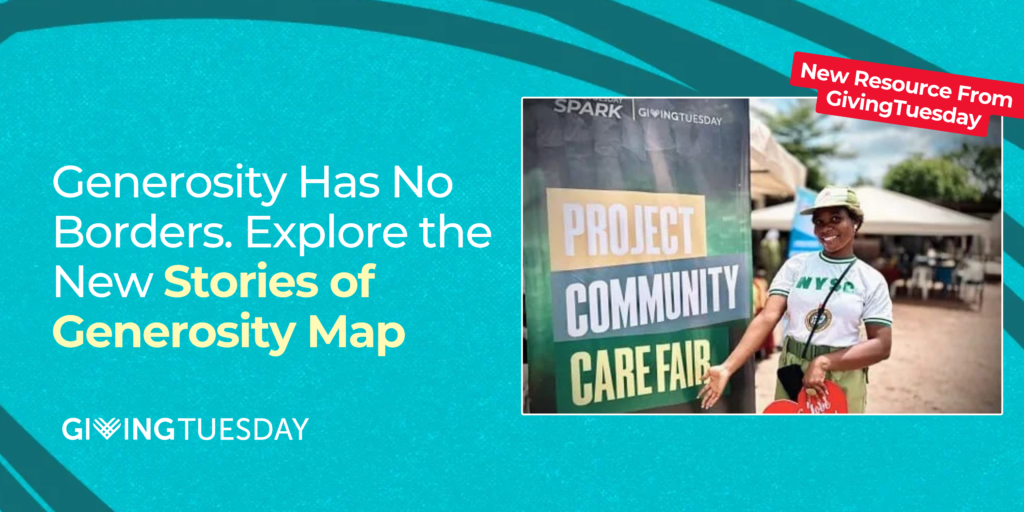
Furthermore, data from organizations like Blackbaud suggests that GivingTuesday is no longer just a calendar event; it is a critical "launchpad" for building long-term donor relationships. The integration of data analytics with grassroots storytelling allows nonprofits to bridge the gap between anonymous donations and meaningful, lasting engagement.
Implications for the Future of Altruism
What do these developments mean for the future of civil society?
The Normalization of Micro-Generosity
The Slovakian model suggests that if we integrate altruism into the mundane aspects of daily life—shopping, work breaks, commuting—we can effectively "gamify" the betterment of society. This normalization is essential for creating a culture of sustained, rather than episodic, generosity.
Cross-Sector Collaboration
The success of the Nigerian and Puerto Rican campaigns highlights a vital lesson: impact is maximized when non-profits, corporate sponsors, and cultural influencers align. Corporations, in particular, are finding that their involvement in these movements does more than bolster their CSR (Corporate Social Responsibility) scores; it builds deeper, more authentic connections with the communities they serve.
The Power of Visibility
Finally, the Stories of Generosity Map serves a psychological purpose. By making generosity visible, it combats the "cynicism gap." In an era where news cycles are dominated by conflict and scarcity, seeing a map populated by thousands of acts of kindness provides a necessary counter-narrative. It signals to the individual that they are not alone in their desire to help, effectively creating a "contagion of kindness."
Conclusion: The Path Ahead
As we look toward the future of global philanthropy, the lessons from these stories are clear. Generosity is not limited by a lack of resources, but often by a lack of imagination or access. By utilizing digital tools to share stories, creating low-barrier paths to participation, and fostering cross-industry partnerships, the global community is proving that there is no limit to what can be achieved when we decide to "show up" for one another.
Whether it is a blood drive in India, a baseball game in Texas, or a festival in Nigeria, the message remains the same: the world is not short on kindness. It is merely waiting for the right moment—and the right inspiration—to be expressed. As we count down to the next major day of giving, let these narratives serve as a blueprint. Every individual has the capacity to be a catalyst; every organization has the potential to be a connector. The map is open, the stories are waiting, and the opportunity to contribute to the global tapestry of generosity is, as ever, right in front of us.

 Pevita Pearce
 Reynand Wu