


 Rifan Muazin
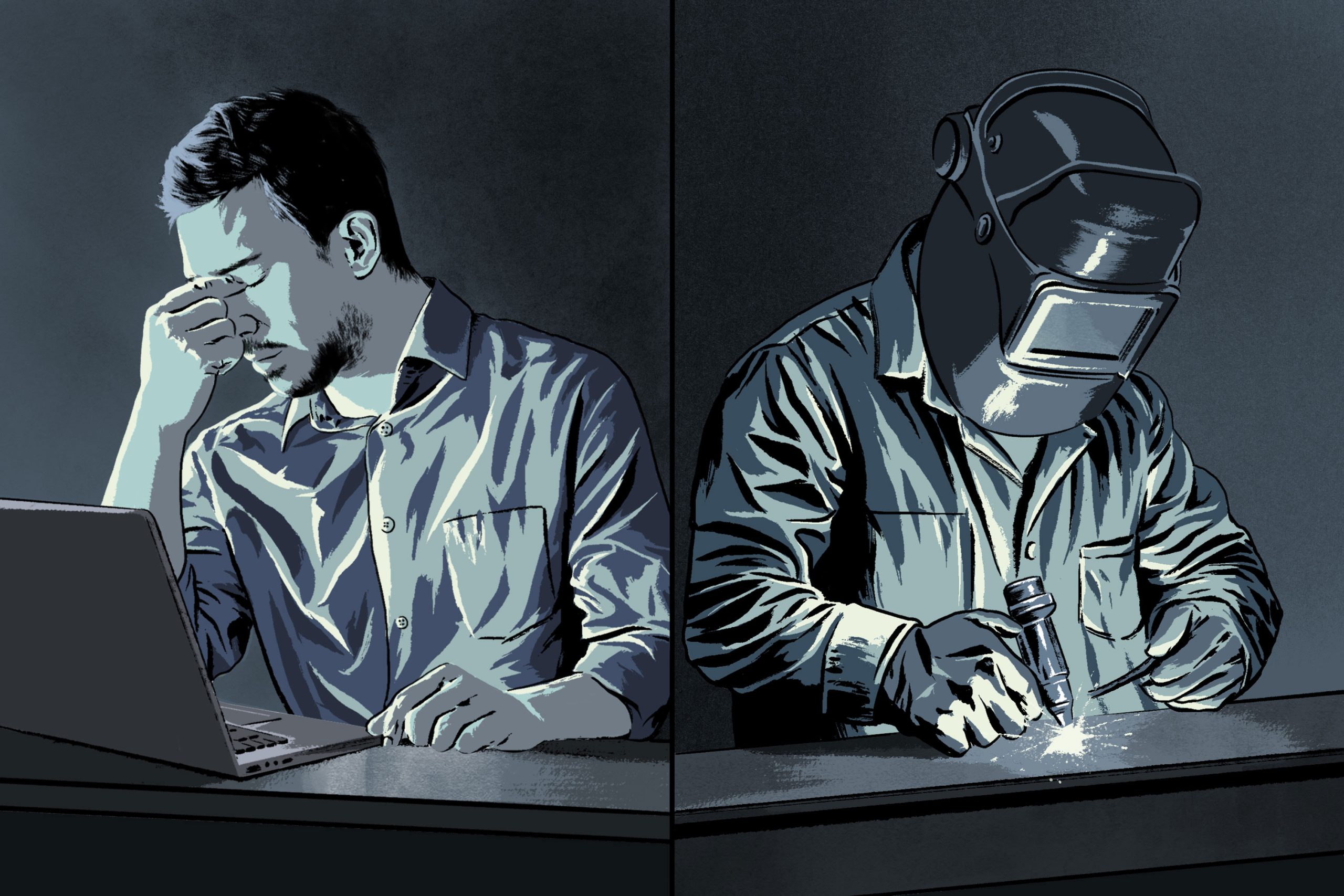
In the wake of the rapid, transformative arrival of generative artificial intelligence in late 2022, the American workforce is undergoing a seismic, albeit quiet, shift. As AI tools demonstrate an increasing proficiency in drafting marketing copy, writing software code, and managing administrative logistics, a growing cohort of young professionals and recent college graduates is intentionally abandoning digital-first careers.
Driven by a visceral fear of obsolescence, these workers are bypassing the traditional corporate ladder in favor of "AI-proof" sectors. From teaching and nursing to the skilled building trades, the trend represents a fundamental reassessment of the value of human touch, physical labor, and local expertise in an era of silicon-based automation.
The Catalyst: A Crisis of Confidence in the Office
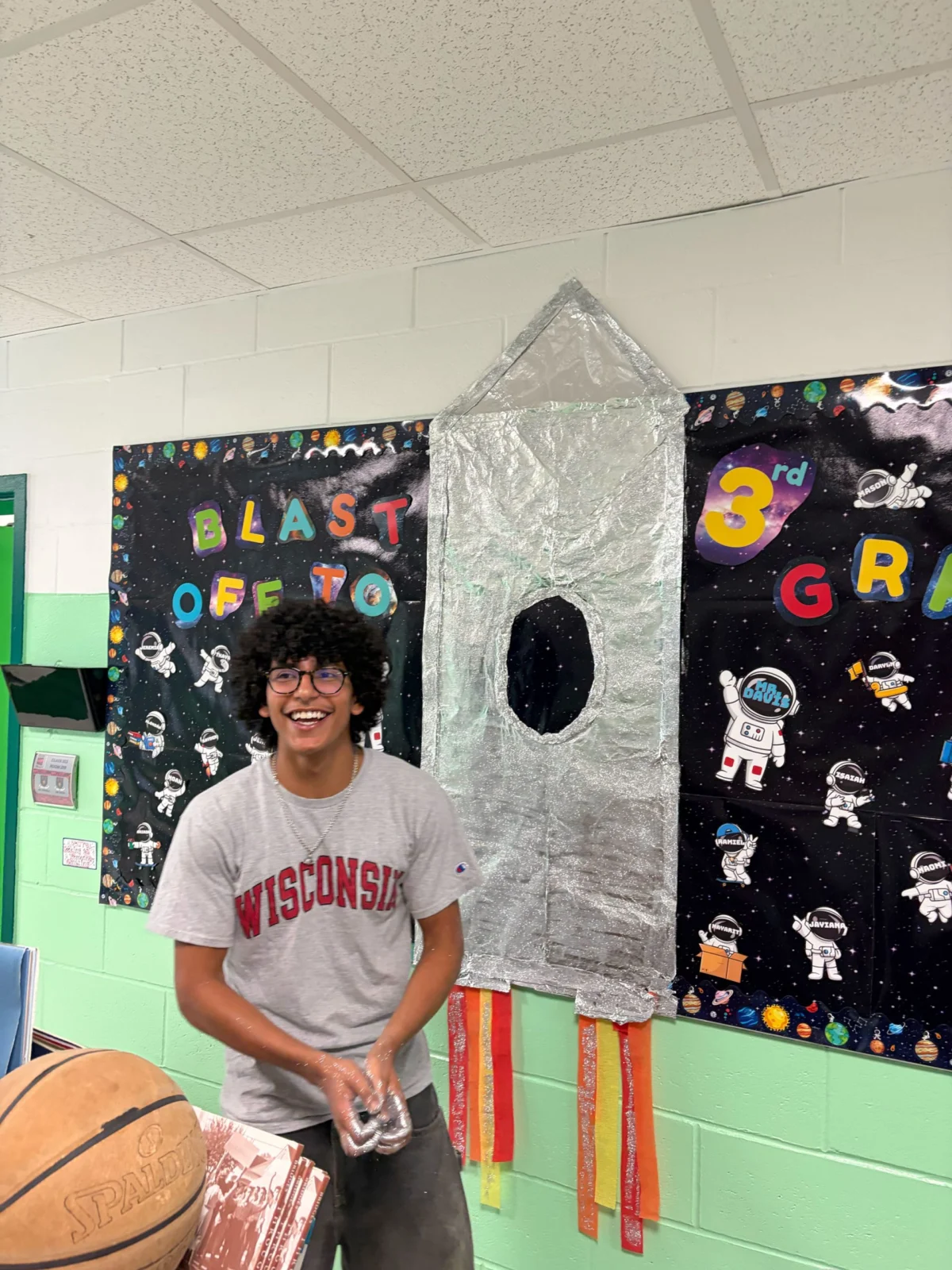
For Keon Davis, the realization arrived during his junior year at the University of Wisconsin-Madison. As he balanced his marketing studies with a summer internship, he watched in real-time as the tasks he was assigned—crafting outreach emails and conducting consumer research—were being handled with uncanny speed and efficiency by early versions of ChatGPT.
"Seeing how easily I might be replaced was one reason I changed direction," Davis reflects. Just months before his May 2024 graduation, he pivoted. He abandoned his aspirations for a corporate marketing role, instead joining Teach for America. Today, he manages a third-grade classroom in New York City, a role he believes is fundamentally immune to the logic of algorithms.
"Building trust with students, understanding their individual emotional needs, and helping them believe in themselves—stuff like that cannot be automated," he says. Davis is not an outlier; he is a representative of a generation that is increasingly skeptical of the long-term stability of desk-bound, knowledge-work careers.
Chronology: From AI Excitement to Employment Anxiety
The shift in career trajectory follows a clear timeline tied to the rapid advancement of Large Language Models (LLMs):
- November 2022: The public release of ChatGPT triggers a surge in corporate experimentation with AI.
- 2023–2024: Companies begin integrating AI into workflows, leading to subtle but widespread downsizing in sectors like software development, copywriting, and customer service.
- August 2026: A Pew Research Center poll reveals that 73% of U.S. adults under 30 believe AI will lead to fewer jobs, a sharp increase from 61% just two years prior.
- Late 2026: Data from the Stanford Digital Economy Lab indicates that workers aged 22–25 in "high-exposure" roles, such as software development, have seen a 19% decline in employment compared to those in low-exposure roles like maintenance and repair.
This trend is not merely anecdotal. The National Student Clearinghouse has tracked a noticeable cooling in computer science enrollment, while interest in health professions and vocational training has steadily climbed. Programs like Teach for America saw an enrollment increase of 43% between 2022 and 2025, while trade-focused institutions, such as Rosedale Technical College in Pittsburgh, have seen enrollment numbers swell by 50% over the last two years.
The "AI-Proof" Economy: Data and Trends
The economic argument for moving toward the trades is supported by more than just fear; it is supported by structural demand. As the U.S. builds out massive infrastructure for data centers, renewable energy, and new housing, the demand for human, onsite labor has never been higher.
According to the U.S. Bureau of Labor Statistics, growth for electricians, HVAC technicians, and roofers is currently tracking at two to three times the national average for all occupations. This surge is compounded by the "silver tsunami"—the retirement of older, skilled tradespeople that has left a massive vacuum in the workforce.
Kevin Brough, 34, serves as a poignant example of this transition. A software developer with a degree in computer engineering, Brough was laid off in May 2024. Despite his background in tech, he recognized that his coding skills were being rapidly commoditized by AI. In 2025, he enrolled in an automotive technology program.

"I never thought I’d be changing from software development, but here I am," Brough notes. He now spends his days performing mechanical tasks that require tactile feedback and complex spatial problem-solving—skills that he argues remain safely beyond the reach of robotics for at least the next two decades.
The Physicality Trade-Off
While the move to the trades offers a sense of security, it is not without significant cost. The transition from a climate-controlled office to a job site is physically demanding and often requires a complete recalibration of one’s daily lifestyle.
Meagan Acevedo, a 33-year-old former human resources professional, transitioned into a five-year apprenticeship with an electrical union (UEWA Local 363-A) after seeing her retail management roles erased by self-checkout kiosks and AI-powered chatbots. While she now earns a stable wage with benefits—and has a clear, long-term career path—the reality of the job is grueling.
"I’ll be honest, all of it was kind of rough," says Acevedo, who now wakes up at 3:00 a.m. to commute to job sites where she lifts 75-pound spools of wire. However, she views this physical toll as an investment in a future that she can actually control. "I feel like I can see where my career is going," she adds, a sentiment that many of her former white-collar peers can no longer claim.
The Failures of Transition: The "Skill Gap" Illusion
The transition to a "safe" career is not always successful. For some, the reality of the labor market is more complex than simply choosing a new field. Cassie, a 31-year-old in Florida, attempted to escape the decline of the media industry by earning an associate degree in forensic science, hoping to pivot to law enforcement.

She quickly discovered that her education did not necessarily grant her entry. "I overestimated how much better the workforce would be with a degree in a science," she says. "Departments move slowly, and they often prefer veterans or current officers over new graduates." Her story highlights a growing friction: as white-collar workers rush to "AI-proof" their resumes, they are hitting institutional barriers that do not account for mid-career pivots.
Implications for Policy and Higher Education
The mass exodus from traditional degree paths presents an existential challenge to higher education. Universities are being forced to adapt or risk irrelevance. Purdue University has implemented an "AI working competency" mandate, requiring students to demonstrate mastery of AI tools, while institutions like MIT are creating interdisciplinary degrees that pair AI with traditional fields.
On a national level, the conversation has turned toward the necessity of a safety net. Economists like Jacob Leibenluft have argued that the current disruption mirrors the era of free-trade liberalization, suggesting that the government should provide federal retraining programs and wage insurance for workers displaced by automation.
Proposals have surfaced from both sides of the aisle, ranging from Senator Mark Kelly’s call for a federal trust fund to Bernie Sanders’ proposal for an "AI tax" on corporations that replace human workers with algorithms. Despite these efforts, substantial federal action remains stalled. As it stands, the burden of adaptation rests on the individual.
Conclusion: The New Definition of Job Security
The current trend represents a profound shift in the American ethos. For decades, the "knowledge worker" was the gold standard of professional success, promising both status and security. Today, that narrative has fractured.

The young workers and career-changers interviewed for this report are not merely running away from the machines; they are running toward a new definition of value. Whether it is in the wiring of a skyscraper, the education of a child, or the repair of a combustion engine, there is a renewed appreciation for work that is messy, physical, and profoundly human. In an age of synthetic intelligence, the most valuable asset may no longer be the ability to process data, but the ability to perform the tasks that an algorithm cannot touch.
As Acevedo and others like her demonstrate, the "AI-proof" career is not just a strategy for survival—it is a choice to remain relevant in a world that is rapidly forgetting the necessity of the human hand.

 Laily UPN

 Nila Kartika Wati