
 Basiran
In the bustling neighborhoods of the Bronx, Brooklyn, Manhattan, and Staten Island, the signature blue-and-gray Amazon vans have become as ubiquitous as yellow taxis. To the average New Yorker, the individual behind the wheel is an Amazon employee. But in the eyes of the law, that driver is a ghost—a worker employed by a third-party subcontractor, operating in a corporate structure that keeps the tech giant at arm’s length from the people who power its logistics empire.
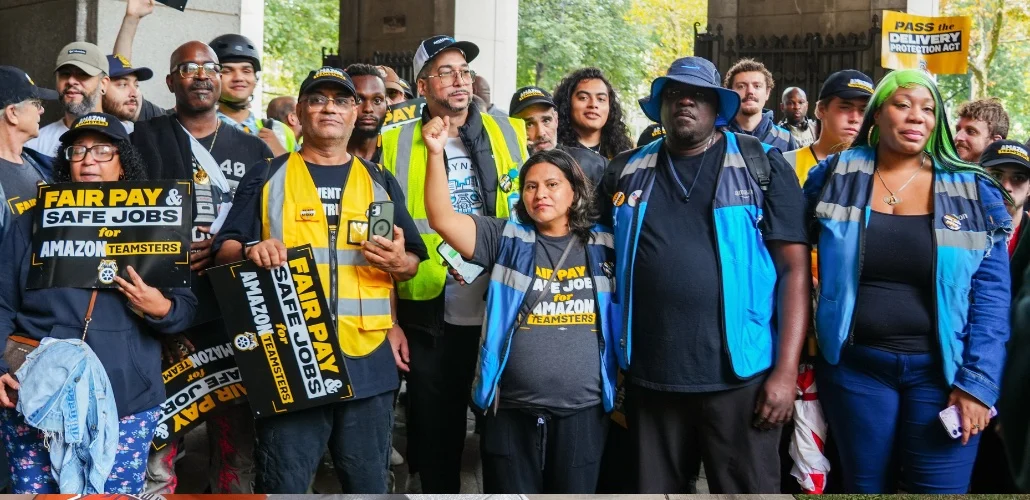
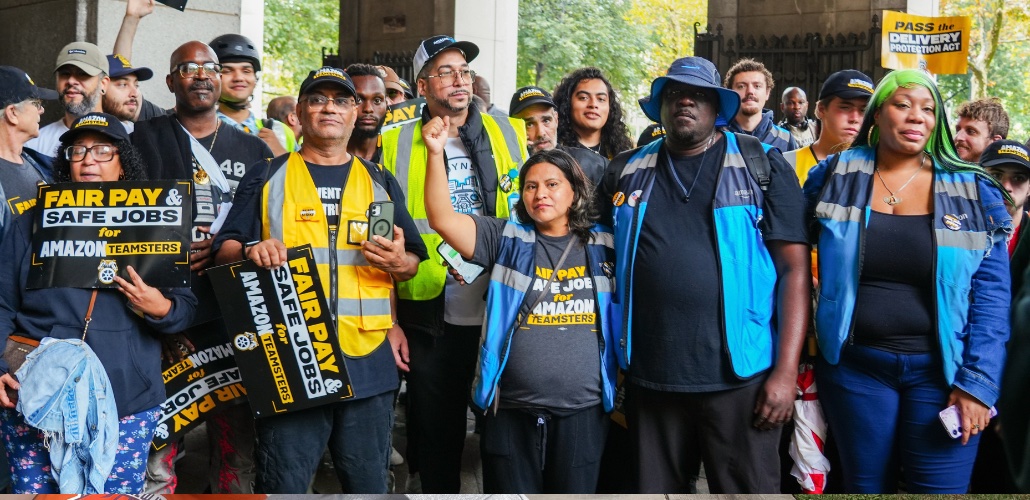
This legal fiction, however, is facing a formidable challenge. A coalition of Teamsters, labor activists, and members of the Democratic Socialists of America (DSA) are currently pushing the “Delivery Protection Act” through the New York City Council. If passed, the legislation would fundamentally disrupt Amazon’s operating model by mandating that the company directly employ its last-mile delivery drivers, effectively ending the reliance on its convoluted Delivery Service Partner (DSP) system.
The Legislative Battleground
The Delivery Protection Act is more than a local labor ordinance; it is a high-stakes standoff between one of the world’s most powerful corporations and a grassroots labor movement. Sponsored by Queens City Councilmember and DSA member Tiffany Cabán, the bill has already secured majority support in the 51-member chamber.
The bill’s proponents, including Councilmember Zohran Mamdani, argue that the current subcontracting system is a mechanism designed to bypass wage protections, safety standards, and collective bargaining rights. By forcing Amazon to classify drivers as direct employees, the legislation would shift legal liability for workplace injuries, wage theft, and labor violations squarely onto the logistics behemoth.
However, the path to enactment is fraught with resistance. The lobbying effort to defeat the bill is spearheaded by high-profile political operatives, including Jessica Schumer, daughter of Senate Minority Leader Chuck Schumer. Furthermore, the bill lacks the support of Council Speaker Julie Menin, creating a significant hurdle for its passage. Amazon, for its part, has unleashed a massive counter-offensive, spending over $5 million on television advertisements, social media campaigns, and direct mailers to convince New Yorkers that the bill will lead to slower, more expensive deliveries.
A Chronology of Conflict
The struggle to regulate Amazon’s last-mile delivery is the culmination of years of mounting tension between the company and its workforce.
- 2015–2023: Amazon refines its DSP model, effectively insulating itself from the legal responsibilities of an employer. Meanwhile, drivers begin to organize, citing intense surveillance via Netradyne AI cameras and punishing delivery quotas.
- 2023: In Palmdale, California, drivers and dispatchers at an Amazon DSP successfully form a union with the Teamsters. In a move that becomes a signature tactic, Amazon abruptly severs its contract with that specific DSP, effectively firing the entire unionized workforce.
- 2025 (September): In a stark display of power, 150 drivers at the DBK4 warehouse in Maspeth, Queens, are terminated with less than a day’s notice after the company shuts down their DSP following a strike.
- 2026 (June): The National Labor Relations Board (NLRB) rules that Amazon is not a “joint employer” with its DSPs, providing the company with a significant legal victory that shields it from liability for union-busting activities at its subcontractors.
- 2026 (Present): With federal avenues for labor protection stalled, the movement pivots to municipal government. As of October 3, organizers have knocked on over 11,400 doors across New York City to build public support for the Delivery Protection Act.
Supporting Data: The Cost of Convenience
The impetus for the Delivery Protection Act is backed by troubling data regarding the impact of Amazon’s logistics operations on New York’s infrastructure and public safety. A study by the NYC Office of the Comptroller revealed that in areas surrounding new last-mile delivery facilities, traffic crashes increased by 78 percent.
Labor advocates argue this is a direct result of the "punishing quotas" imposed on drivers. To meet these demands, drivers are subjected to pervasive surveillance. Beyond the aforementioned Netradyne cameras, reports indicate that Amazon is piloting "smart glasses" to track delivery movements in real-time.
The economic disparity is equally stark. While Amazon spends roughly $26 million annually on "union avoidance" consultants and legal fees to fight off organizing efforts, its drivers are often left in a precarious state of employment. Latrice Johnson, a former driver from the DBK4 facility, noted that her termination came just one month after she received a top performance award. "There’s no more routes, so you no longer have a job," she was told. Her experience, shared by hundreds of other drivers in the city, has become a rallying cry for the legislation.
Official Responses and Corporate Strategy
Amazon’s official stance remains that the Delivery Protection Act is an existential threat to the small businesses it claims to support. "This bill is threatening the small businesses that deliver to customers," an Amazon spokesperson stated, framing the DSPs as independent entities that the city is trying to "make extinct."
The company has utilized aggressive rhetoric, threatening to pull out of New York City entirely and force residents to pick up their orders from regional hubs in New Jersey. This tactic, while intended to incite public panic, has been met with skepticism by labor organizers.
"Amazon is always trying to put fear in the hearts of workers by talking about moving the work, or drones, or robots," says Antonio Rosario, an Amazon Teamster organizer. "But they forget that robots don’t pay taxes, and they don’t buy the products they deliver."
The Drone Distraction
In the face of intensifying labor scrutiny, Amazon has increasingly leaned into the narrative of technological automation, specifically with its drone delivery program. The company aims to expand drone services to 500 U.S. cities, promising 30-minute delivery for small packages.
However, the reality of the drone program suggests it is more of a public relations gambit than a logistical replacement for human labor. In Texas, where the program is currently active, residents have complained of noise pollution and privacy violations, with drones "buzzing like a battalion of bees" over residential backyards.
Experts like Benjamin Fong have noted that the drone program is highly limited in scale. Even by Amazon’s own ambitious, and likely unrealistic, projections, drone deliveries would account for less than 6 percent of their total volume by 2030. When compared to the 6 billion packages Amazon delivered in the U.S. last year—an average of 18 million per day—the drone program is, as one scholar put it, "a pinprick."
Implications: The Future of the Gig Economy
The outcome of the Delivery Protection Act will have profound implications for the future of labor in the United States. If New York succeeds in reclassifying these workers, it could set a legal precedent that forces the largest retailer in the world to abandon the subcontracting model that has fueled its growth.
For the Teamsters, the fight is about more than just the drivers currently on the road. It is about protecting the standards of the entire logistics industry. As Amazon continues to operate as a parallel, nonunion system, it exerts downward pressure on the wages and working conditions of unionized workers at companies like UPS.
For the workers themselves, the stakes are deeply personal. Despite the intimidation tactics and the fear of retaliation, the organizing momentum shows no signs of slowing. As Latrice Johnson, who now spends her time canvassing for the bill, puts it: "I come from a struggle, so there’s no standing down. There are still people out there who are in fear of losing their job, and I just want them to know—you could still lose your job without organizing. So why not fight for something better?"
As the New York City Council weighs the bill, the city stands at a crossroads. The decision will determine whether the "last mile" of delivery remains a Wild West of corporate subcontracting or becomes a regulated space where workers are granted the basic dignity, safety, and protections of direct employment. Regardless of the immediate outcome, the campaign has already succeeded in pulling back the curtain on the true cost of two-day shipping, transforming the conversation from one of consumer convenience to one of fundamental labor rights.

 Rifan Muazin
 Ammar Sabilarrohman






