



 Reynand Wu
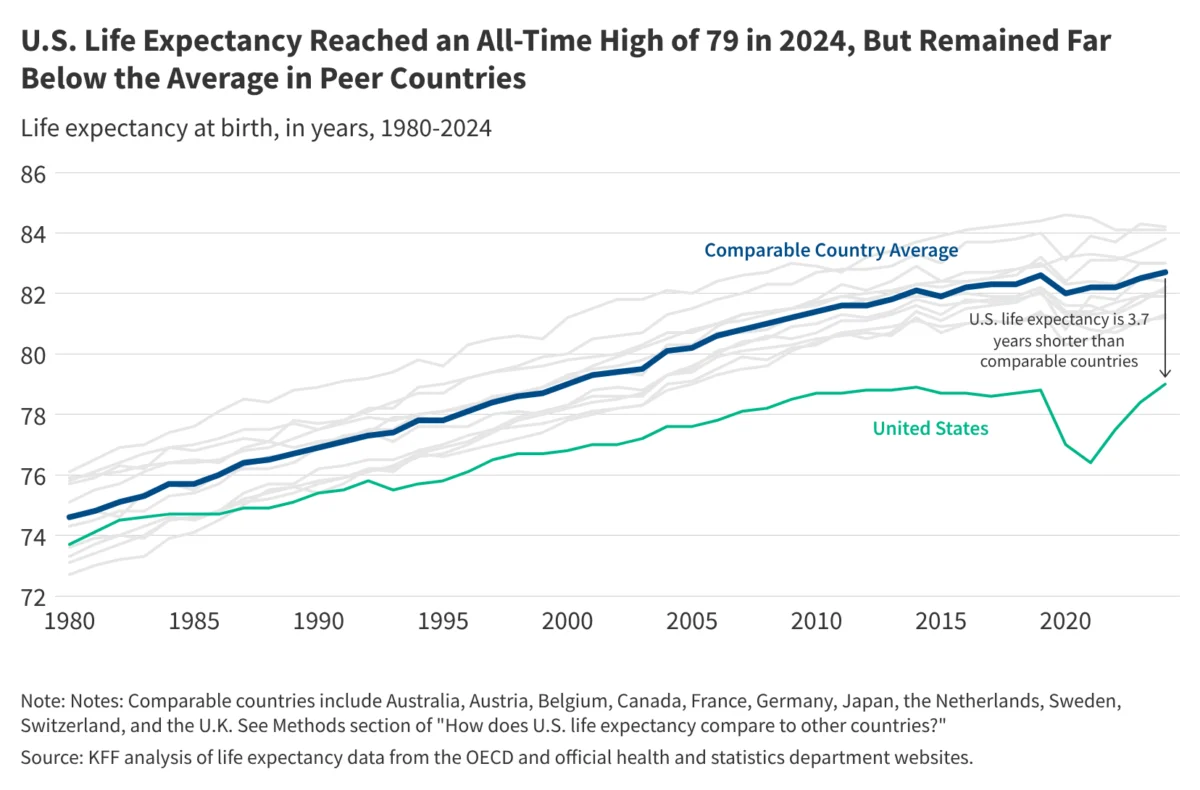
For decades, the United States has stood as a global outlier in the arena of public health. While the nation boasts some of the world’s most advanced medical technology, the most prestigious research institutions, and the highest per capita healthcare spending in the world, the actual health outcomes of its citizenry tell a far more sobering story. According to the latest comprehensive data from the Peterson-KFF Health System Tracker, the U.S. healthcare system faces a persistent "paradox of value": Americans pay significantly more for their care than their counterparts in other wealthy nations, yet they consistently live shorter, less healthy lives.
The Core Disparity: A System Out of Balance
The fundamental tension within the American healthcare landscape is a matter of simple arithmetic. The United States spends nearly double what peer nations—such as Canada, the United Kingdom, Germany, and Japan—allocate to healthcare on a per capita basis. Despite this massive financial commitment, the U.S. continues to trail its peers in essential metrics of longevity and long-term health.
The most glaring indicator of this disparity is life expectancy. While citizens of other wealthy, large nations have seen life expectancy figures climb steadily over the last few decades, the U.S. has experienced stagnation and, in some recent periods, even decline. This is not merely a matter of lifestyle choices or socioeconomic inequality; it is a structural failure of the healthcare system to provide preventative care and long-term health management at a standard comparable to other developed economies.
A Chronology of the Divergence
To understand the current crisis, one must look at the historical trajectory of U.S. healthcare policy and performance.
The Post-War Boom (1950s–1980s)
In the mid-20th century, the U.S. was broadly competitive with the rest of the industrialized world. With the expansion of employer-based insurance and the creation of Medicare and Medicaid in 1965, the country focused on expanding access. However, as the system matured, it began to prioritize technological innovation and specialist care over primary and preventative health.
The Cost Explosion (1990s–2010)
During the 1990s and early 2000s, the cost of medical services in the U.S. began to decouple from the cost of living. Advances in pharmaceutical development and high-tech diagnostic equipment drove spending upward. During this era, peer nations began implementing universal health coverage models that focused on primary care gatekeeping and cost-containment, while the U.S. maintained a fragmented, fee-for-service model that incentivized volume over value.
The Era of Reform and Stagnation (2010–Present)
The passage of the Affordable Care Act (ACA) in 2010 was intended to bridge the gap in access. While it successfully reduced the number of uninsured Americans, it did little to address the systemic cost drivers or the underlying health outcomes that continue to lag behind peer nations. The Peterson-KFF data confirms that over the last decade, the gap in quality metrics between the U.S. and its peers has remained stubbornly wide, despite periodic attempts at legislative reform.
Supporting Data: Where the U.S. Falls Short
The Peterson-KFF Health System Tracker provides a granular look at the areas where the U.S. system fails to keep pace with the international standard.
Long-term Outcomes and Maternal Health
The U.S. performs poorly in long-term health outcomes. Perhaps most alarming is the maternal mortality rate—a key indicator of a healthcare system’s efficacy. American women are significantly more likely to die from pregnancy-related complications than women in other wealthy nations. Furthermore, the U.S. shows higher rates of hospital admissions for preventable conditions, such as congestive heart failure, suggesting that the primary care layer of the system is failing to catch and manage chronic issues before they become life-threatening emergencies.
Capacity Constraints
A critical factor in these outcomes is "health system capacity." The U.S. has a noticeably lower rate of general practitioners per capita compared to its peers. Because the U.S. relies heavily on specialists and emergency department care, patients often lack the consistent, longitudinal relationship with a primary care provider that is essential for managing long-term health.
The "Bright Spots"
It would be inaccurate to label the entire American system as a failure. The data shows that the U.S. performs similarly to—and sometimes better than—peer nations in specific acute care scenarios. For example, in the 30-day mortality rate following acute hospital treatments (like heart attacks or strokes), the U.S. is highly competitive. This confirms that when a patient is already in a high-tech facility, the quality of care provided is world-class. Additionally, the U.S. performs well in certain patient safety measures, such as the reduction of post-operative complications, proving that the technical execution of surgery and trauma care remains a significant strength of American medicine.
The Official Response: A Call for Systemic Change
Policymakers and health experts have reacted to this data with a mixture of urgency and strategic debate. The Peterson-KFF Health System Tracker serves as a primary resource for these stakeholders, offering an objective baseline for reform.
Many advocates for change argue that the "fee-for-service" model must be replaced by "value-based care." In this model, providers are reimbursed based on patient outcomes rather than the number of tests or procedures performed. The federal government, through the Centers for Medicare & Medicaid Services (CMS), has begun to pilot such programs, though adoption remains slow across the private sector.
Conversely, some industry stakeholders caution against over-regulation, arguing that the high cost of U.S. healthcare is directly tied to the country’s role as the global engine for medical innovation. They contend that if the U.S. were to artificially suppress prices or limit spending, the global pipeline for new drugs and medical devices—which are disproportionately funded by U.S. consumers—would dry up, harming health outcomes worldwide.
Implications: The High Cost of the Status Quo
The implications of this performance gap are profound, extending far beyond the doctor’s office.
Economic Consequences
The high cost of healthcare is a significant burden on the U.S. economy. For businesses, rising insurance premiums act as a hidden tax on employment, limiting wage growth. For households, medical debt is a leading cause of personal bankruptcy, creating a cycle of financial instability that further degrades health.
Social Inequality
The disparities noted in the data are not distributed equally. The U.S. healthcare system often exacerbates existing social inequalities. Low-income populations and marginalized communities are disproportionately affected by the lack of primary care and the high costs of treatment, leading to a widening gap in life expectancy based on geography and socioeconomic status.
The Need for a Holistic Approach
The Peterson-KFF data suggests that the U.S. cannot "spend its way out" of this problem. If twice the spending results in worse outcomes, the issue is not a lack of resources, but a lack of efficiency and alignment. Moving forward, the U.S. faces a difficult path: it must determine how to maintain its status as a leader in medical innovation while simultaneously building a primary care infrastructure that serves the entire population.
Conclusion: A System at a Crossroads
The comparison between the United States and its peer nations offers a mirror that the American public and its leaders must face. The data is clear: high-intensity, high-cost medicine is not a substitute for a functioning public health infrastructure.
While the U.S. system excels at the "rescue" phase of medicine—saving lives in the operating room—it struggles with the "maintenance" phase of medicine. Until the U.S. shifts its focus toward primary care, preventative measures, and reducing the administrative and financial barriers that prevent citizens from accessing timely care, the paradox of paying more for less will remain a defining, and tragic, feature of the American experience. As the Peterson-KFF Health System Tracker continues to monitor these metrics, the hope remains that objective data will provide the roadmap for the systemic reforms required to finally align American health spending with American health outcomes.

 Ammar Sabilarrohman

 Layla Zulfa