



 Raul Delapena Setiawan
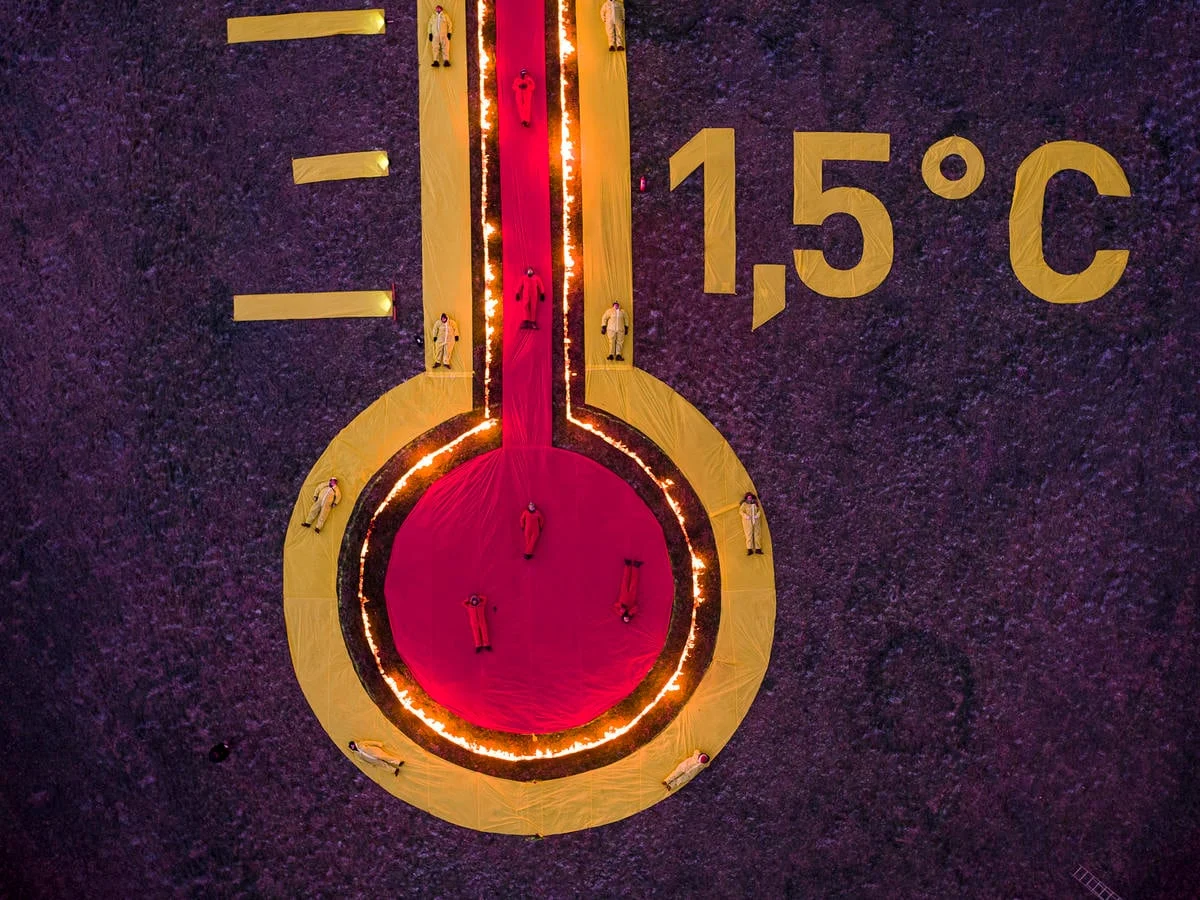
AMSTERDAM — As international delegations prepare to convene in Antalya, Turkey, for the United Nations Climate Change Conference (COP31), the global environmental watchdog Greenpeace has issued a stark ultimatum to world leaders: the window to prevent catastrophic climate change is rapidly closing, and the time for incremental policy adjustments has long since passed.
The urgency of the moment is underscored by the United Nations Environment Programme’s (UNEP) latest release, Emissions Gap Report 2026: The Point of Return. The document paints a harrowing picture of a planet on a collision course with a 2.8°C warming scenario by the end of the century—a projection that exceeds previous models and signals a systemic failure of current international climate governance.
The Main Facts: A Trajectory Toward Instability
The core finding of the 2026 Emissions Gap Report is simple yet devastating: current national climate policies are insufficient to meet the goals of the Paris Agreement. While the world has made strides in the deployment of renewable energy, the pace of the transition remains vastly inadequate to counteract the continued reliance on fossil fuels.
According to the UNEP, to stand a realistic chance of limiting global temperature rise to the 1.7°C–1.8°C range—a necessary compromise given the increasing likelihood of a temporary breach of the 1.5°C threshold—the world must achieve monumental emissions reductions. Specifically, the report calls for a 18% reduction by 2030, 45% by 2035, and 69% by 2040, all measured against 2025 levels. These reductions must be supplemented by large-scale carbon dioxide removal technologies, which remain largely unproven at the necessary scale.
"The pathway back to 1.5°C is still there in front of us, but only if governments wake up to the reality that the stability of our climate is rapidly slipping away," said Jasper Inventor, Deputy Programme Director at Greenpeace International.
Chronology: From Ambition to Overshoot
To understand the severity of the current situation, one must look at the timeline of international climate policy over the last decade:
- 2015 (Paris Agreement): The international community commits to limiting global warming to well below 2°C, preferably 1.5°C, relative to pre-industrial levels.
- 2023 (COP28, Dubai): Parties reach a landmark agreement to conduct a "Global Stocktake," explicitly calling for the tripling of renewable energy capacity and doubling energy efficiency by 2030, alongside an "orderly and equitable" transition away from fossil fuels.
- 2025 (The Baseline Year): The year against which current UNEP emissions reduction targets are measured.
- 2026 (The Point of Return): UNEP releases its report acknowledging that the world is likely to exceed the 1.5°C limit in the coming years. The report shifts the focus toward "limiting the overshoot"—the duration and depth of the temperature breach—and finding a pathway to return to cooler temperatures.
- November 2026 (COP31, Antalya): Governments gather under the shadow of the new emissions gap data, facing mounting pressure to translate the rhetoric of previous summits into tangible, binding legislative action.
Supporting Data: The Policy Chasm
The discrepancy between what governments promise and what they deliver remains the central friction point in international climate diplomacy. The UNEP report highlights a massive "policy chasm" that persists despite years of high-level meetings.
The NDC Shortfall
Nationally Determined Contributions (NDCs)—the climate action plans submitted by individual countries—are the bedrock of the Paris Agreement. However, the 2026 report reveals that even if all current NDCs are fully implemented, global emissions will only drop by 5-8% by 2030 and 11-15% by 2035 relative to 2025 levels. These figures fall drastically short of the 18% and 45% targets required for even a 1.7°C–1.8°C pathway.
The Renewables Paradox
While the rollout of solar, wind, and battery storage technology has accelerated significantly, it has not yet succeeded in displacing fossil fuels at the required velocity. Instead, renewable energy is often being used to meet the increase in global energy demand rather than replacing coal, oil, and gas, effectively keeping the carbon-intensive infrastructure locked in for decades to come.
Official Responses and Civil Society Critique
Greenpeace has emerged as one of the most vocal critics of the "snooze button" mentality displayed by world leaders. Jasper Inventor’s statement reflects a deep frustration with the disparity between scientific warning and political action.
"This UNEP report is yet another alarm, but governments keep hitting the snooze button," Inventor remarked. "Climate action delayed is climate harm multiplied."
The organization is shifting its strategy ahead of COP31, moving away from merely requesting cooperation toward demanding accountability. Greenpeace argues that leaders must stop shielding fossil fuel corporations from the true cost of their pollution. They are advocating for a "just transition"—a process that protects workers and vulnerable communities while simultaneously dismantling the economic and political influence of the fossil fuel lobby.
Implications: Navigating the Overshoot
The prospect of an "overshoot"—a period where global temperatures rise above 1.5°C—is no longer a theoretical risk but a looming reality. The implications for the planet are profound:
Ecological Destabilization
Every fraction of a degree matters. An overshoot increases the likelihood of triggering "tipping points," such as the collapse of the West Antarctic ice sheet, the thawing of permafrost, or the mass die-off of coral reefs. These events are often irreversible and could accelerate warming further, regardless of subsequent human intervention.
Economic and Social Disruption
The economic cost of climate change is shifting from a future burden to a current crisis. Frequent extreme weather events—floods, heatwaves, and droughts—are already straining national budgets, disrupting supply chains, and fueling migration. A failure to meet the 2030 and 2035 targets will likely lead to greater social instability and an increase in climate-induced conflict.
The Responsibility of COP31
As the Antalya summit approaches, the eyes of the world are on the delegates. The expectations for COP31 are specific:
- Reaffirmation: A clear, unified commitment to the energy goals established at COP28.
- Implementation: Concrete, legally binding mechanisms to ensure that the tripling of renewables and doubling of energy efficiency are not just targets, but operational realities.
- Accountability: A transparent system for tracking national progress, ensuring that those who fail to meet their commitments face meaningful diplomatic and economic scrutiny.
Conclusion: A Turning Point or a Terminal Decline?
The title of the UNEP report, The Point of Return, serves as a double entendre. It is a scientific assessment of the pathways available to return the climate to a stable state, but it is also a moral challenge to humanity. We are at a juncture where the choices made in the next five years will determine the habitability of the planet for the next century.
Greenpeace’s message is clear: the era of incrementalism must end. The political leaders gathering in Antalya hold the power to either catalyze a rapid, equitable transition to a renewable-powered future or to lock in a trajectory of catastrophic warming. For the millions of people already feeling the impacts of a changing climate, the time for "stock-taking" has passed; the time for radical, decisive, and immediate action is now.
As COP31 begins, the world will see whether leaders choose to stand with the people or with the profiteers. The atmosphere, as the data shows, does not bargain, and it certainly does not wait.
Media Contact Information:
- Aaron Gray-Block, Climate Politics Communications Manager, Greenpeace International.
- Greenpeace International Press Desk: +31 (0)20 718 2470 (available 24/7).


 Siti Muinah

 Nila Kartika Wati





