



 Dwi Wanna
In the high-stakes arena of international arbitration, the line between a victory and a defeat is often blurred by the systemic architecture of the Investor-State Dispute Settlement (ISDS) mechanism. Recently, the Mexican government celebrated a narrow technical win against Legacy Vulcan, the largest U.S. producer of crushed construction stone. While the ruling from the World Bank’s International Centre for the Settlement of Investment Disputes (ICSID) technically favored the corporation, the tribunal awarded just $15 million—a mere 1 percent of the $1.5 billion in damages originally sought by the firm.
This outcome, while sparing the Mexican treasury from an astronomical payout, highlights a growing crisis: Mexico is currently the third-most sued country in the world under an international arbitration regime that many critics argue is fundamentally rigged against national sovereignty. As a wave of corporate litigation mounts, the case of Legacy Vulcan serves as a microcosm of a broader struggle between the profit motives of multinational corporations and the rights of local communities to protect their water, land, and environmental health.
The Legacy Vulcan Case: A Microcosm of Conflict
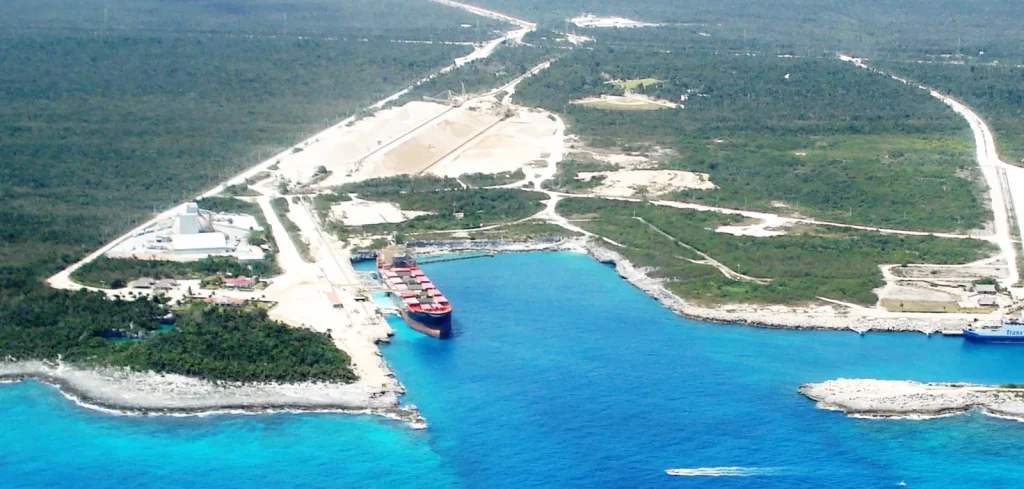
The conflict centers on the CALICA quarry, a sprawling limestone mining operation situated in the ecologically sensitive Yucatan Peninsula, near the world-renowned tourist destination of Playa del Carmen. For decades, the local population—including indigenous Mayan communities—has protested the mine, citing severe environmental degradation and long-term health risks to their children.
In 2018, the Mexican government finally moved to close the facility, citing critical concerns over the destruction of the local water table and the environmental impact of extractive operations. Legacy Vulcan responded by filing an ISDS claim, asserting that the government’s regulatory action unfairly impeded its expected profits.
The ICSID tribunal’s decision to award only a fraction of the requested damages is being viewed by activists as a testament to the power of grassroots mobilization. Indigenous leader Quetzal Tzab González played a pivotal role, filing an amicus curiae (friend of the court) brief that forced the otherwise opaque tribunal to consider the perspective of the impacted communities.
"What is clear to us is that it was the community mobilization, both inside and outside the country, that ensured the communities’ voices would reach the court and be formally included in the arbitration record," said Araceli Domínguez, representing the Peninsular Maya Indigenous Movement and the Mayab Environmental Group.
Chronology of a Mounting Corporate Siege
The pressures facing Mexico are not isolated incidents but part of a persistent pattern of litigation that has escalated in recent years.
- 1939–Present: Ongoing tensions regarding agrarian reform land rights, often exploited by foreign corporations to initiate expropriation claims.
- 2018: Legacy Vulcan initiates ICSID arbitration against Mexico following the closure of its CALICA quarry.
- 2020: The United States-Mexico-Canada Agreement (USMCA) is ratified, introducing reforms to the ISDS system, though many legacy disputes continue under older NAFTA-era rules.
- 2024: An ICSID tribunal rules on the Odyssey Marine Exploration case regarding seabed mining, awarding the company $37.1 million—less than 3 percent of its $1.3 billion demand.
- July 29, 2024: Cadence Minerals and REM file a new lawsuit against the Mexican government over the nationalization of the Sonora Lithium project.
- Ongoing: Access Business Group (owner of Amway/Nutrilite) files a second lawsuit against Mexico, challenging land returns to peasants that date back to the Lázaro Cárdenas administration.
Supporting Data: The Cost of "Legal Certainty"
The ISDS system is frequently criticized as a "one-way street." Under these rules, corporations possess the legal standing to sue sovereign nations, yet the reverse is rarely, if ever, true. Even when a government "wins" a case, the defense costs alone can run into the tens of millions of dollars—funds that are diverted from essential public services, infrastructure, and social programs.
Research conducted by the Transnational Institute (TNI) and the Institute for Policy Studies (IPS) underscores the severity of the situation. Mexico currently faces dozens of pending lawsuits with total claims reaching into the billions of dollars.
In the case of Odyssey Marine Exploration, the company demanded $1.3 billion for a denied seabed mining project. The tribunal’s eventual award of $37.1 million, while a reduction, still represents a significant outflow of public funds for a project that was deemed environmentally hazardous. Similarly, the first lawsuit filed by Access Business Group was dismissed on jurisdictional grounds, but not before the Mexican government was forced to mount a massive, multi-year legal defense against a claim of $2.7 billion.
Official Responses and the Policy Contradiction
The Mexican Ministry of Economy’s stance has been characterized by a troubling duality. In recent public statements regarding the Legacy Vulcan ruling, the Ministry emphasized its commitment to "foreign investment that brings innovation, good wages, and environmental protection," while simultaneously reiterating the importance of "respecting the rules and procedures contained in international treaties."
Critics argue this is a fundamental contradiction. The "legal certainty" that the Ministry seeks to uphold is the very instrument being used by corporations to circumvent local environmental regulations and labor standards. By validating the sanctity of these investment treaties, the state arguably undermines its own ability to enforce the very "environmental protection" it claims to prioritize.
The business community, represented by firms like Cadence Minerals and Access Business Group, maintains that these lawsuits are necessary to protect the sanctity of contracts and capital. However, the nature of these disputes—often involving land reform or nationalization of natural resources—suggests that these corporations are challenging the fundamental right of a nation to govern its own resources for the public good.
Implications for Sovereignty and Future Policy
The systemic threat posed by ISDS to Mexican sovereignty cannot be overstated. As the country navigates its trade relationships, the current arbitration framework acts as a "chilling effect" on public policy. Government officials may hesitate to implement necessary environmental or social reforms for fear of triggering multi-billion-dollar lawsuits.
The Path Toward Reform
To reclaim its policy space, observers suggest that Mexico must pursue a multi-pronged strategy:
- Renegotiation of Trade Pacts: Mexico should push for the total elimination of ISDS mechanisms in all regional and bilateral trade agreements during upcoming reviews.
- Audit of Investment Treaties: A comprehensive review of all existing international investment agreements is necessary to identify and terminate those that grant corporations excessive, extra-judicial powers.
- Prioritizing Local Rights: Legal frameworks must be restructured to ensure that the "legal certainty" of communities—their right to clean water, land, and health—takes precedence over the speculative profit margins of foreign investors.
Conclusion: The Power of the People
Despite the systemic disadvantages, the Legacy Vulcan case offers a glimmer of hope. It demonstrates that when grassroots organizations, indigenous leaders, and international researchers align, they can disrupt the corporate-dominated narrative of the tribunal.
The people of the Mayan Riviera remain steadfast in their demands: they are calling for no further payments to be made to Legacy Vulcan, a permanent prohibition on the reopening of the mine, and a ban on any future extractive projects in the region.
The success of these communities in bringing their voices to the arbitration record serves as a stark reminder: the power of the people in defending their livelihoods and their environment is a force that, while often ignored by international tribunals, cannot be underestimated. As Mexico moves forward, the choice is clear—it must decide whether to continue serving a system designed for corporate "legal certainty" or to begin the work of dismantling the siege and re-centering the sovereignty of its people and its land.


 Rifan Muazin
 Ammar Sabilarrohman






