


 Ammar Sabilarrohman
By [Your Name/News Outlet Name]
A stark paradox defines the current struggle against climate change: a vast segment of the American population acknowledges the severity of the crisis and expresses a desire for action, yet only a fraction translates this concern into tangible political engagement. This disconnect, amplified by decades of strategic disinformation and a failure of progressive advocacy to effectively communicate, represents a critical bottleneck in achieving the urgent societal transformation required to avert catastrophic warming.
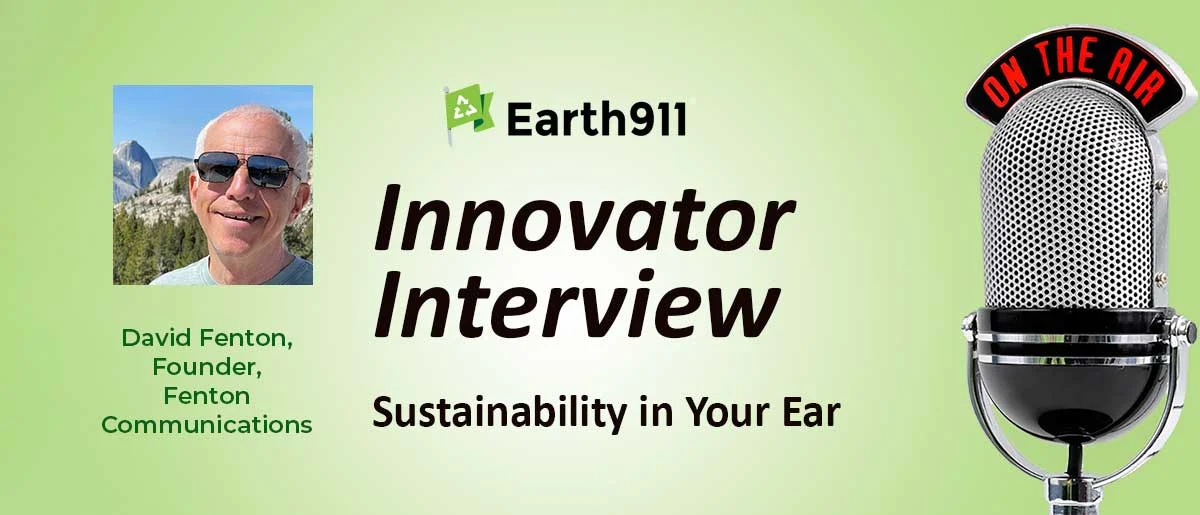
This analysis delves into the findings and perspectives presented by veteran communications strategist David Fenton, founder of Fenton Communications and author of "The Activist’s Media Handbook: Lessons from Fifty Years as a Progressive Agitator." Fenton, a pivotal figure in numerous progressive campaigns, argues that the climate movement is engaged in a devastating information war with an underfunded and strategically misaligned defense, leaving a vast reservoir of public concern untapped and unmobilized.
The Alarming Gap: From Concern to Action
New research from Yale University offers a sobering snapshot of the American climate consciousness. An estimated 80 million Americans express alarm about climate change. Of these, a significant 40 million indicate a desire to become politically active on the issue. However, the reality on the ground is starkly different: only approximately 3 million Americans are actively engaged. This leaves a chasm of 37 million individuals who want to act but don’t. When surveyed, the most frequently cited reason for this inaction is surprisingly simple yet profoundly impactful: "nobody has asked me."
This reveals a fundamental failure in outreach and mobilization. Data from the Yale Program on Climate Change Communication underscores this deficiency, indicating that a mere 12% of Americans report ever seeing content about climate change on social media, their primary source of information. Furthermore, two-thirds of the population rarely or never hear about climate change from friends or through traditional media channels.
In stark contrast, the fossil fuel industry has long recognized persuasion and communication as core business functions. David Fenton characterizes this disparity as "unilateral disarmament at a moment when an information war is needed." The precarious nature of even hard-won legislative victories, such as the Inflation Reduction Act, which passed by a single vote and was subsequently threatened with repeal by a single vote, highlights the fragility of progress when broad public consensus is absent. Fenton asserts, "A bill you win by a single vote is a bill you never really won."
The Communication Deficit: Blame and Language Barriers
Fenton places significant blame for this communication failure not solely on the machinations of the fossil fuel industry, but also on the internal practices and strategic blind spots within the climate advocacy sector itself. Billions are poured annually into policy, law, and scientific research, yet communication efforts are largely confined to fundraising from existing donor lists, rather than engaging and educating the broader public.
This oversight, Fenton argues, stems from what cognitive linguist George Lakoff terms the "Enlightenment fallacy." This fallacy posits that a strong idea, by virtue of its correctness, will inevitably reproduce itself. This is coupled with a corollary belief that the "dirty work" of persuasion and public engagement is beneath serious academics and policymakers.
Beyond strategic neglect, the very language employed by climate advocates acts as a significant barrier. Terms like "Net Zero" hold little meaning for the average person. "Carbon," while central to the scientific understanding of climate change, remains an abstract concept for many. Even "climate justice," intended to convey fairness and a shared mission, can evoke images of the legal system rather than its intended meaning, further alienating potential allies.
Fenton advocates for a pivot to simpler, more resonant language. "Pollution," he suggests, is a word universally understood and defended by no one. The imagery of "a blanket of pollution trapping heat that would otherwise escape into space" is a readily graspable concept that can activate existing mental frameworks and inspire action.
Reclaiming the Narrative: Strategies for Public Engagement
The common American response to the question of how to solve climate change—"reduce, reuse, and recycle"—while a valid materials strategy, is insufficient for systemic decarbonization. Earth911 has dedicated three decades to promoting this vocabulary, but increased recycling rates alone do not necessarily lead to a decarbonized grid or transportation sector.
Fenton’s prescription for listeners is direct: talk about climate change, post about it, and urge funders to invest in generating public demand for change rather than relying solely on direct mail fundraising. His own illustrious career, which includes campaigns that helped free Nelson Mandela, ban fracking in New York, and launch the fossil fuel divestment movement, underscores the power of strategic communication and the crucial role of effective messengers.
The Influence of Language and Framing
George Lakoff’s work on framing and metaphor is central to Fenton’s critique and proposed solutions. Lakoff identifies two dominant moral worldviews in American politics: the "strict father" and the "nurturing parent." Fenton posits that a significant portion of the electorate, the "biconceptuals," can be swayed by appeals that activate either of these frames. The progressive movement, he argues, often alienates potential allies by focusing on division rather than common ground, failing to build the broad coalitions necessary for enduring change.
For instance, Fenton highlights the efficacy of using conservative messengers to discuss climate change, framing it as a threat to conservative values like stewardship, self-reliance, and national security. This approach, he notes, is rarely deployed at scale, leaving conservative audiences exposed only to disinformation that portrays climate action as a liberal agenda.
The Power of the Messenger
In an era of declining trust in institutions, the individual messenger has become paramount. Fenton draws parallels to Marshall McLuhan’s "the medium is the message," suggesting that in today’s media landscape, "the messenger is the message." The success of campaigns like the divestment movement, utilizing the prominent Rockefeller name, or Yoko Ono’s impactful anti-fracking billboard, demonstrates the power of leveraging credible and recognizable figures.
However, this also presents a vulnerability. The fossil fuel industry is actively cultivating online influencers and personalities to spread their narrative. Fenton points to the deluge of disinformation on platforms like X (formerly Twitter), often amplified by individuals who claim to have renounced climate activism.
Conversely, the climate movement possesses a wealth of talented communicators who are often left to operate without adequate support. Fenton cites Dr. Katharine Hayhoe, an evangelical climate scientist with a significant following, as an example of a highly effective messenger who lacks the necessary resources—a video team, social media support, or a public relations strategist—to maximize her reach. This highlights a critical failure of philanthropic and NGO funding to prioritize communication infrastructure for proven advocates.
The Specter of Disinformation and the Role of Technology
The battle against climate change is inextricably linked to the fight against disinformation. Fenton emphasizes the need to "fight falsehood immediately," recognizing that lies, once repeated, can harden into perceived truths. The speed and reach of digital platforms, particularly with the advent of Artificial Intelligence, exacerbate this challenge.
Fenton calls for legislative action to ensure AI-generated content is labeled and that social media platforms verify human users to combat bot activity. He draws a parallel to European regulations, arguing that historical experiences with unchecked demagoguery have fostered a greater understanding of the need for media regulation. The United States, he contends, remains in a "frontier" phase, clinging to a flawed notion of absolute freedom that is detrimental to public discourse.
The coordinated messaging strategies of well-funded conservative infrastructures, exemplified by the Koch brothers’ network, stand in stark contrast to the fragmented and often ideologically rigid approach of the progressive movement. Fenton stresses the cognitive science principle that repetition of simple messages is key to persuasion, a tactic the climate movement often shies away from due to an academic inclination towards complexity and specialization.
The Merging Fight for Democracy and a Livable Planet
Concerns about the state of democracy are now ranking alongside climate change in public consciousness, creating a potential convergence of these critical struggles. Fenton argues that the unchecked influence of wealthy individuals and corporations, whether from the fossil fuel industry or Silicon Valley, is corrupting democracy and threatening public well-being. He echoes Justice Louis Brandeis’s observation that one cannot have both great concentrations of wealth and a functioning democracy.
Historically, periods of extreme wealth inequality have led to societal unrest and demands for checks and balances on private power, reminiscent of Theodore Roosevelt’s trust-busting era. Fenton points to initiatives like California’s proposed billionaire tax as a step towards rebalancing power and resources, arguing that current levels of wealth disparity are fundamentally incompatible with a healthy democracy.
While the urgency of climate action is paramount, the timeline for political and social change remains a critical concern. The cumulative impact of greenhouse gas emissions, which persist in the atmosphere for millennia, means that even a successful movement may not avert all consequences. The question, therefore, becomes not if change will happen, but if it will happen in time to secure a livable Earth.
A Call to Action: Demand Creation and Public Voice
The overwhelming message from David Fenton is one of urgent need for a strategic shift in how climate advocacy is conducted. The focus must move beyond policy and science to the fundamental task of persuading and mobilizing the public.
For individuals listening to this call to action, Fenton’s advice is simple yet profound:
- Talk about it: Engage in conversations about climate change with friends, family, and colleagues. Break the silence that has allowed the issue to fade from daily discourse.
- Post about it: Utilize social media platforms, not just to share information, but to spark dialogue and encourage engagement.
- Press funders: Advocate for philanthropic organizations and NGOs to redirect resources towards building robust, permanent communications infrastructures that aim to generate broad public demand for climate action.
The solutions to climate change exist, and the urgency is undeniable. The missing ingredient is not knowledge or will, but a unified, effective, and pervasive public voice demanding change. As Fenton powerfully concludes, "We don’t lack solutions; we lack demand." The 37 million Americans who want to be active but haven’t been asked are waiting. It is time to ask them, equip them, and empower them to become the driving force for a sustainable future.


 Nana