



 Lina Hope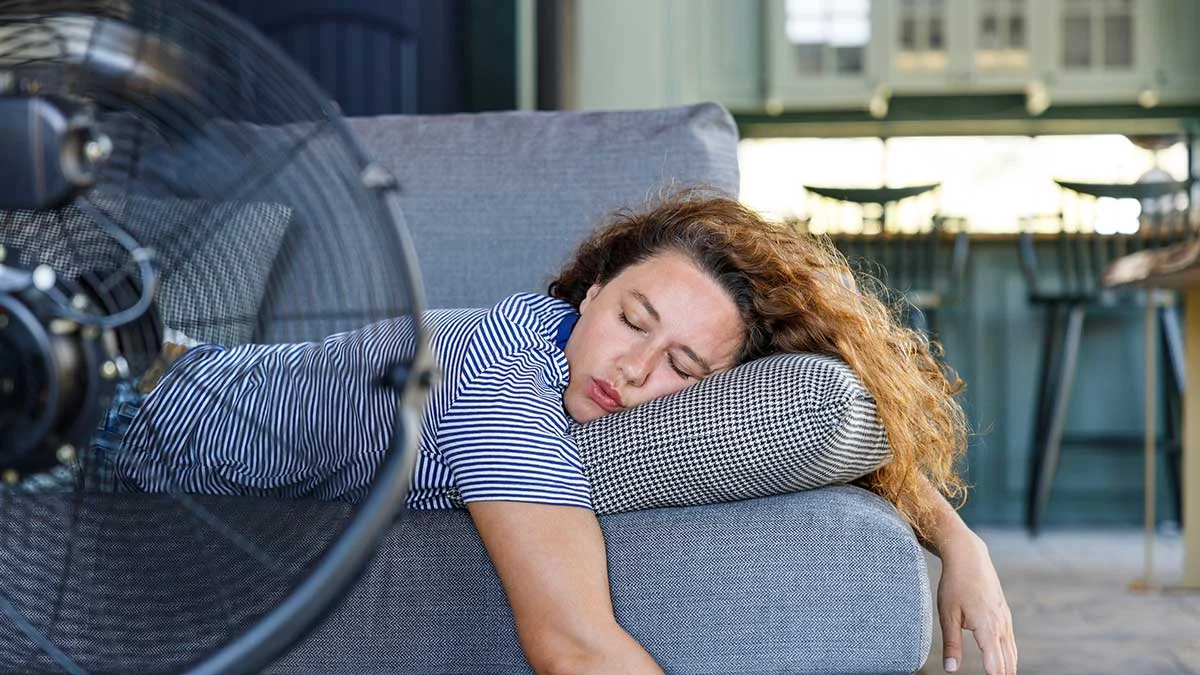
By [Your Name/News Outlet Name]
[Date]
A stark new analysis published in the esteemed journal Nature Sustainability reveals a deeply unsettling chain of consequences stemming from a warming planet, one that directly impacts our most basic biological need: sleep. By the end of this century, hotter nights are projected to steal an average of 16 hours of sleep per person annually, with the most vulnerable populations, particularly children in regions least equipped for cooling, bearing the brunt of this sleep deprivation. This loss of rest, researchers warn, has a cascading effect, potentially blunting cognitive development in childhood and ultimately leading to significantly reduced lifetime earnings, with global economic costs estimated in the trillions of dollars.
The study, a meticulous synthesis of pre-existing research, connects three critical, yet often disconnected, phenomena: the impact of rising temperatures on sleep duration, the profound influence of childhood sleep on cognitive abilities, and the well-established correlation between cognitive function and long-term economic productivity. The chilling conclusion is that a warmer world, if unchecked, will not only diminish our physical comfort but also erode our intellectual capital and financial prosperity for generations to come.
The Uncomfortable Chain: From a Warm Bedroom to a Diminished Future
The research, spearheaded by Bowen Chu and his colleagues at Nanjing University, meticulously links together established scientific findings to paint a comprehensive picture of climate change’s insidious impact on human capital. The study’s core premise is built upon three foundational observations:
- Temperature and Sleep: Numerous studies have already demonstrated that elevated nighttime temperatures disrupt sleep patterns, leading to reduced sleep duration and quality. Our bodies naturally lower their core temperature to initiate and maintain sleep, a process that is significantly hampered by a warm environment.
- Sleep and Cognitive Development: The critical early years of life are a period of rapid brain development. Adequate sleep during childhood is paramount for optimal cognitive function, including learning, memory, and problem-solving abilities. Sleep deprivation in this crucial window can have lasting detrimental effects.
- Cognitive Ability and Economic Outcomes: Decades of research in economics and psychology have consistently shown a strong positive correlation between higher cognitive abilities, often measured by IQ scores, and greater lifetime earnings. Individuals with stronger cognitive skills tend to be more productive, adaptable, and innovative in the workforce.
By weaving these threads together, Chu and his team have created a predictive model that quantifies the aggregate and individual consequences of a warming climate on future generations. Their projections, based on a high-emissions scenario where global temperatures rise significantly, offer a sobering glimpse into a future where sleep, and consequently cognitive potential and economic well-being, are compromised.
Quantifying the Loss: Hours of Sleep, Points of IQ, and Trillions in Value
The study’s "no adaptation" scenario, which assumes current trends and a lack of significant efforts to mitigate warming or adapt to its effects, paints a stark picture. By the 2100s, under a high-emissions pathway that could see global temperatures rise by as much as 2.4°C by 2060, individuals are projected to lose approximately 16.4 hours of sleep per person per year. This equates to losing the equivalent of roughly two full nights of sleep over the course of a year, a substantial deficit with far-reaching implications.
The impact of this sleep loss is not distributed evenly across the globe. The research pinpoints the largest projected impacts clustering in southern and eastern Africa and southern and eastern Asia. These regions, often characterized by higher baseline temperatures and limited access to cooling infrastructure, are precisely where the consequences of warmer nights will be most acutely felt.
The downstream effects are then meticulously mapped out in a powerful commentary accompanying the study. While the individual loss of IQ points may seem modest – estimated at approximately 0.026 points in high-income settings and a more significant 0.058 points in lower-income ones – the aggregate effect is staggering. When extrapolated across the global population, this diminished cognitive capacity translates into an economic cost due to lost intelligence on the order of $2.86 trillion in the 2100s. This figure underscores the profound economic implications of failing to address climate change.
It is crucial to emphasize, as the researchers themselves highlight, that these projections are not immutable forecasts but rather a stark quantification of potential cascading impacts. They serve as a powerful impetus for action, demonstrating that the future consequences of our current emissions trajectory are not merely environmental but deeply human and economic.
The Biological Basis of a Hot Night’s Sleep Loss
The fundamental reason why heat robs us of rest lies in our body’s natural thermoregulation. To initiate and maintain sleep, particularly the crucial deep and REM (Rapid Eye Movement) stages, our core body temperature must decrease. This physiological cooling process is intrinsically linked to our circadian rhythm, reaching its lowest point in the early hours of the morning.
A warm bedroom directly interferes with this essential biological process. When the ambient temperature is too high, the body struggles to dissipate heat effectively, hindering the necessary drop in core temperature. This prevents the brain from reaching its deepest, most restorative stages of sleep. As Michelle Drerup, a sleep specialist at the Cleveland Clinic, aptly puts it, "Heat is a huge disruptor for REM sleep." REM sleep is vital for memory consolidation, emotional regulation, and learning, making its disruption particularly concerning.
The Disproportionate Burden: Who Loses the Most Sleep?
The study’s findings align with consistent research indicating that the burden of sleep loss due to warming nights is not shared equally. Certain demographic groups are demonstrably more vulnerable:
- Older Adults: Age-related changes in thermoregulation can make older individuals more susceptible to heat stress and sleep disturbances.
- Women: Hormonal fluctuations and differences in metabolic rates can influence how men and women respond to heat, with some studies suggesting women may experience greater sleep disruption.
- People in Lower-Income Countries: These populations often lack access to essential resources like air conditioning, fans, and well-insulated housing, making them acutely vulnerable to rising nighttime temperatures.
- Individuals Already Living in Hot Climates: Those who reside in regions with naturally high temperatures face an amplified challenge as temperatures continue to climb.
These are precisely the same groups that tend to have the fewest resources to implement effective cooling strategies, creating a vicious cycle where the most vulnerable are exposed to the greatest risk with the least capacity to adapt.
The "Cooling Trap": Adaptation’s Uneven Terrain
The most intuitive solution to a hot bedroom is air conditioning (AC). However, the study’s "no adaptation" assumption, while a useful baseline for projection, highlights the complexities of real-world solutions. While AC can provide immediate relief, its widespread adoption is fraught with its own environmental challenges.
- Increased Emissions: In many parts of the world, electricity generation relies heavily on fossil fuels. The increased energy demand for AC directly contributes to greenhouse gas emissions, exacerbating the very problem it seeks to solve.
- Refrigerant Potency: Many air conditioning units utilize refrigerants that are themselves potent greenhouse gases, contributing to warming even when the unit is not actively cooling.
- Unequal Access: Crucially, air conditioning is least available in the very lower-income, hotter regions that the study identifies as most exposed to the negative impacts of warming nights. This creates a "cooling trap," where the most effective individual adaptation strategy is inaccessible to those who need it most.
This uncomfortable reality forms the core of the study’s most profound finding: while adaptation strategies exist, their distribution is profoundly uneven. The most effective, universal, and sustainable solution remains addressing the root cause of the problem by reducing atmospheric CO₂ levels. The stark 16-hour sleep loss projection is intrinsically tied to a high-emissions future. Conversely, lower-emissions pathways, achieved through concerted global efforts, can significantly bend this curve downwards, mitigating the projected harm. Ultimately, the extent of this future damage is, to a significant degree, a matter of collective choice.
A Call to Action: What Can Be Done?
The findings of this Nature Sustainability study are not merely academic; they represent a pressing call to action, urging individuals, communities, and governments to confront the multifaceted impacts of climate change. While the research focuses on the "no adaptation" scenario to highlight the severity of the problem, it implicitly underscores the power of proactive measures.
For a Cooler Night’s Sleep, Starting Tonight:
- Optimize Bedroom Temperature: Aim for a cool bedroom environment. If AC is available, use it judiciously. Consider setting it to a cooler temperature before bed and then adjusting it higher once asleep, or using a programmable thermostat.
- Utilize Fans: Even without AC, ceiling fans or portable fans can create airflow and enhance evaporative cooling, making a noticeable difference.
- Invest in Breathable Bedding: Opt for natural, breathable materials like cotton, linen, or bamboo for your sheets and pillowcases. Avoid synthetic fabrics that trap heat.
- Cooling Linens and Sleepwear: Consider cooling mattress pads, pillowcases, or sleepwear specifically designed to wick away moisture and heat.
- Pre-Cool Your Bed: Placing a cool washcloth on your forehead or neck before bed can help lower your core temperature.
- Hydration: Staying adequately hydrated can help your body regulate its temperature more effectively.
- Limit Evening Stimulants: Avoid caffeine and heavy meals close to bedtime, as these can increase body temperature and interfere with sleep.
For Your Home and Your Footprint:
- Improve Home Insulation: Proper insulation in walls, attics, and windows can help keep homes cooler in the summer and warmer in the winter, reducing the need for excessive heating and cooling.
- Energy-Efficient Appliances: When purchasing new appliances, including AC units, prioritize energy-efficient models to reduce electricity consumption.
- Consider Renewable Energy: Explore options for solar panels or other renewable energy sources to power your home, reducing reliance on fossil fuels.
- Plant Shade Trees: Strategically planted trees around your home can provide natural shade, significantly reducing the heat absorbed by your house.
- Mindful Consumption: Reducing overall energy consumption through conscious use of electricity and other resources contributes to lower emissions.
In Your Community:
- Advocate for Climate Action: Support policies and initiatives aimed at reducing greenhouse gas emissions at local, regional, and national levels.
- Promote Green Infrastructure: Encourage the development of green spaces, urban forests, and sustainable urban planning that can help mitigate urban heat island effects.
- Support Community Cooling Centers: In areas prone to extreme heat, advocate for the establishment and accessibility of public cooling centers during heatwaves.
- Educate and Engage: Share information about climate change impacts and solutions with friends, family, and community members to foster broader awareness and action.
Related Reading:
- [Link to original Nature Sustainability study]
- [Link to accompanying commentary]
- [Link to relevant Cleveland Clinic article on sleep temperature]
- [Link to article on reducing AC’s climate impact]
- [Link to general information on climate change and health]
The evidence is clear: the warming of our planet carries a hidden cost, one that infiltrates our homes, disrupts our sleep, and diminishes our future potential. The choice to mitigate these impacts, to secure a future with better sleep and greater prosperity, rests with us.


 Reynand Wu