



 Sagoh
In the fractured landscapes of the Donetsk region, the silence is never absolute. It is a fragile, deceptive pause—a heavy, suffocating atmosphere that hangs over villages like Mykilske. For the civilians trapped in the shadow of the ongoing international armed conflict between Russia and Ukraine, the question, "Is it quiet in your village now?" does not elicit a sigh of relief. Instead, it is met with a weary, knowing response: "No, it isn’t quiet."
This is the reality for Olga Andriivna, an 85-year-old resident of Mykilske, whose life has been narrowed down to the length of a street she once navigated with ease, but which for months remained a lethal gauntlet. Her existence is a microcosm of a larger, systemic tragedy unfolding across the front lines—a story of the elderly, the forgotten, and the profound resilience required to endure when the world has seemingly moved on.
The Anatomy of Survival: A Life Defined by Ruins
Olga moves across the street using two walking sticks, her gait deliberate and fragile. Her home, like so many others in this battered region, bears the scars of the conflict. Inside, the interior is a landscape of destruction: sofas smashed into splinters, wardrobes pulverized by concussive blasts, and couches propped up on bricks to serve as makeshift beds.
"The house is badly damaged," Olga says, her tone devoid of both self-pity and performative optimism. "But other than that, we’re managing."
In the vocabulary of the frontline, "managing" has been stripped of its traditional meaning. It no longer implies thriving or planning for the future; it has been reduced to the bare, biological imperative: still breathing, still finding a place to lie down, and still maintaining a shred of dignity amidst the wreckage.
For Olga and her neighbors, the local monastery has become the final anchor of their existence. When electricity grids fail, water supplies are severed, and local governments are unreachable, the sacred space serves as a lifeline. It provides not only material aid but a sense of belonging and metaphysical stability. Under international humanitarian law, such sites are granted specific protections, recognized not just as architecture, but as vital living heritage—the social glue that binds a community together during its darkest hour.
A Chronology of Cruelty: The Price of Decency
The conflict in Donetsk is not merely measured in territorial gains or artillery barrages; it is measured in the erosion of human instinct. Olga’s personal history offers a harrowing insight into this phenomenon.
Her son, once her primary support, is now confined to a hospital bed, a victim of the very impulse that defines the best of humanity: the urge to help a neighbor. When a shell struck a nearby house, her son instinctively rushed out to check for survivors. As he reached the site, a second shell—a hallmark of the "double-tap" tactics often seen in this conflict—detonated nearby. Shrapnel sliced through the air, narrowly missing his carotid artery.
Olga recounts the incident with the clinical, rhythmic precision of those for whom dread has become a mundane fact of life. "Where could I possibly go?" she asks, the tears coming despite her resolve. "There was no one left. I was the only person on the whole street."
Her lament is a sharp indictment of the conflict’s "quieter cruelties." The war punishes the impulse of compassion, turning basic human decency into a death sentence. It has rendered the village a ghost town, leaving behind the most vulnerable—those who lack the mobility, the stamina, and the financial means to flee. When asked about evacuation, her query is not rhetorical; it is a logistical impossibility. At 85, displacement is not an act of survival; it is a sentence of homelessness and alienation.
Supporting Data: The Vulnerability of the Elderly
The situation in Mykilske is not an anomaly; it is a pattern replicated in every protracted conflict globally. Demographic data from the Donetsk and Luhansk regions underscores a grim reality: the elderly are disproportionately affected by the breakdown of essential services.
As the front line shifts, the infrastructure—the arteries of modern life—is systematically dismantled. Entire communities find themselves cut off from:
- Medical Care: The loss of pharmacies and access to hospitals leaves chronic conditions—common among the elderly—untreated, leading to preventable mortality.
- Clean Water and Heating: In the harsh winters of Eastern Europe, the destruction of power plants and pipelines transforms survival into a battle against the elements.
- Food Security: Supply chains have been severed, forcing residents to rely on humanitarian convoys that are themselves subject to the dangers of the shelling.
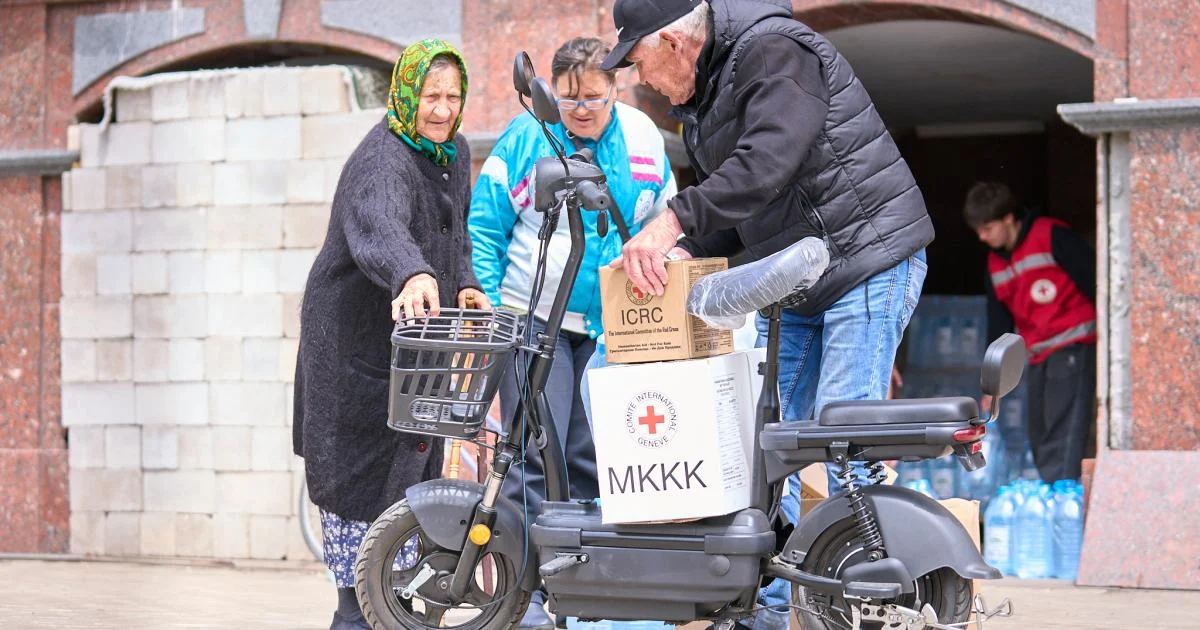
The International Committee of the Red Cross (ICRC), working alongside operational partners, has been on the ground attempting to bridge this gap. Their interventions—providing tarpaulins for roofs, basic food parcels, and cash assistance—are the only things preventing total collapse for many. Yet, these efforts are stop-gap measures against a tide of destruction that shows no signs of receding.
Official Responses and Humanitarian Imperatives
International humanitarian law (IHL) is clear on the protection of civilians and the critical infrastructure upon which they rely. However, the reality on the ground in Donetsk suggests a widening gap between legal frameworks and operational outcomes.
The ICRC continues to emphasize the need for safe, unhindered access to conflict-affected populations. "Every day this conflict continues, the toll grows for everyone caught in it," a representative stated. The organization’s mandate in Donetsk and Luhansk focuses on the immediate restoration of dignity. By providing essential materials—roofing, fuel, and medical supplies—they are not merely repairing houses; they are attempting to maintain the physical integrity of a community that has been systematically targeted by the pressures of war.
Despite these efforts, the logistical challenge of reaching the most isolated, such as those in Mykilske, remains immense. The volatile nature of the front line means that aid delivery is often delayed or rendered impossible by renewed fighting, leaving civilians like Olga in a state of indefinite, precarious suspension.
The Psychological Toll: Living in the Shadow of Uncertainty
Perhaps the most insidious aspect of the conflict is the psychological weight of the "long wait." Communities in Donetsk are trapped in a state of permanent, unresolved grief. They are not afforded the luxury of mourning the past or planning for the future; they are forced to grieve while the bombardment is still ongoing.
This constant state of high-alert stress, coupled with the lack of certainty regarding whether their walls will stand tomorrow, creates a unique form of trauma. Even when the guns eventually fall silent, the echoes of the conflict will remain. Experts in post-conflict recovery note that the trauma of such protracted exposure to violence does not fade with the cessation of hostilities. It requires a generational effort of psychological and social rehabilitation.
For the elderly, this mental burden is compounded by the feeling of being "left behind" by history. The world’s attention shifts to new headlines, while the frontline in Donetsk remains a static, festering wound.
Implications: A Future in the Balance
The story of Olga Andriivna and the people of Mykilske is a stark reminder of the human cost of geopolitical failure. As the conflict drags on, the demographic landscape of these regions is being permanently altered. The young have fled, and the elderly are dying—either from the direct impact of shells or from the slow, systematic failure of the systems that once sustained them.
The implications for the future are profound. If international institutions cannot secure the basic protections required for civilian life to continue in the near-frontline areas, the result will be the total erasure of these communities. Rebuilding is not merely a matter of masonry and timber; it requires the return of people and the restoration of trust.
For now, the village of Mykilske remains in the crosshairs. The memories of the residents, like the damaged homes they inhabit, are not silent. They are a loud, persistent demand for a peace that remains elusive. As Olga looks toward an uncertain future, her plea remains a haunting testament to the tragedy of the forgotten: "I’ve been through so much, God forbid anyone should have to endure it."
Until the shelling stops and the rebuilding begins, the silence in the village will remain, as it always has been, a lie.

 Reynand Wu
 Layla Zulfa






