

 Nana
Nana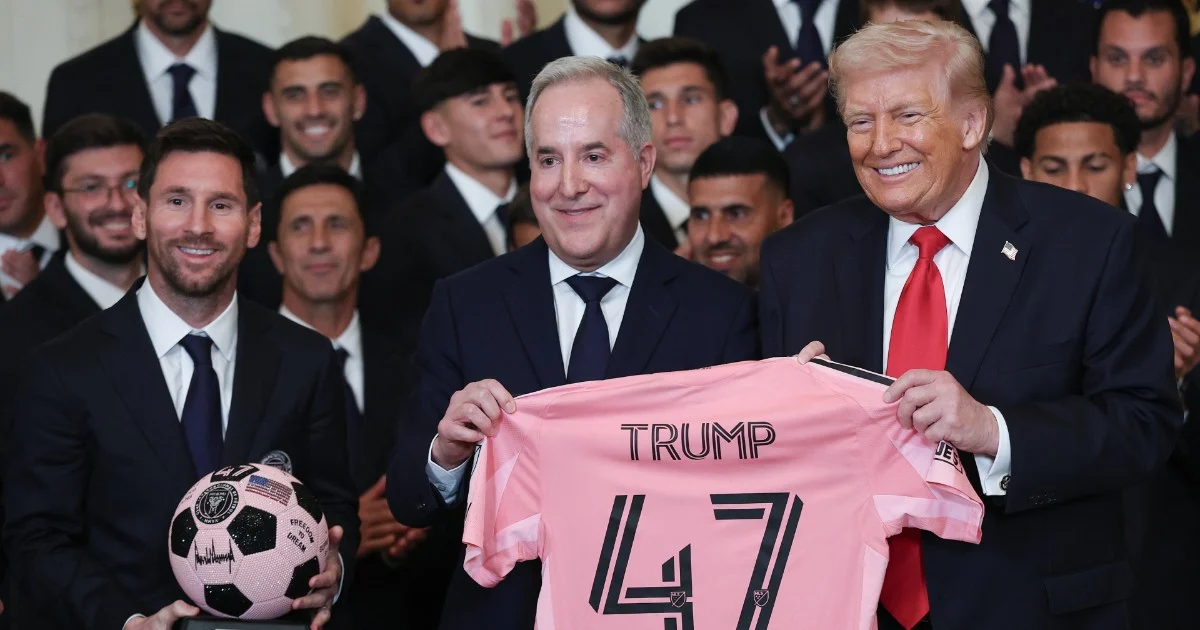
Introduction: A Tale of Two Moments
In the vast, sprawling timeline of Lionel Messi’s storied career, two disparate moments have emerged as the defining pillars of his legacy. The first is the incandescent glory of the 2022 World Cup final in Qatar, a heart-wrenching, high-stakes duel against France that culminated in a penalty-kick victory. For millions of Argentines, that triumph felt like a poetic, long-overdue rectification of nearly two decades of near-misses and dashed expectations. Messi, widely heralded as the greatest to ever grace the pitch, had finally ascended to the pantheon of immortality.
However, the second defining moment has arrived not on the grass, but in the sterile, high-pressure environment of Washington, D.C. In March 2025, following Inter Miami CF’s championship run, Messi and his teammates visited the White House to be honored by U.S. President Donald Trump. While the tradition of sporting champions visiting the White House is a staple of American civic life, this visit occurred against a backdrop of intense geopolitical volatility. To many in Argentina—a nation where football is not merely a sport but a primary vessel for cultural identity and political expression—this photograph of Messi shaking hands with a leader characterized by aggressive protectionism and authoritarian rhetoric felt less like a ceremonial duty and more like a betrayal of the values that birthed the Argentine football ethos.
The Chronology of Discontent
The trajectory of public sentiment toward Messi shifted rapidly following the announcement of the Inter Miami visit. The context was grim: President Trump’s second term has been defined by a series of controversial actions, including severe immigration crackdowns and the widely condemned bombing of an Iranian school that resulted in the deaths of over one hundred children. Furthermore, FIFA President Gianni Infantino had recently awarded Trump an inaugural “peace prize,” a move that drew widespread international scorn.
Despite this climate, Messi and Inter Miami managing owner Jorge Mas—a right-wing billionaire and head of the Cuban American National Foundation—appeared to be in high spirits at the White House. During the event, footage captured Mas expressing visible delight while Trump made bellicose remarks regarding the Cuban government. Messi, typically a figure of reticence and apoliticism, was seen nodding and smiling as the President complimented his teammate, Rodrigo De Paul, on his physical appearance. The backlash was instantaneous. Argentine journalist Fernando Borroni encapsulated the public’s fury, stating, "The talent of your legs has not and cannot cure the insensitivity of your hands."
The Weight of the "Pecho Frio" Label
To understand why Messi’s visit triggered such profound anger, one must examine the specific cultural anxieties of Argentina. In the Argentine public sphere, football is the theater where the nation debates democracy, corporate influence, and social justice. For years, Messi’s introverted nature and perceived lack of political engagement were sources of frustration for a fanbase that historically championed the raw, working-class defiance of figures like Diego Maradona and Juan Román Riquelme.
For much of his career, Messi was branded as pecho frio—literally "cold-chested"—a term dripping with sexist and nationalist undertones, suggesting a lack of passion for the flag. While he eventually won over the public through his unparalleled talent, the White House visit reawakened these dormant resentments. By aligning himself with the American political establishment, Messi inadvertently signaled a detachment from the communal, populist roots that define the Argentine game.
The Ghost of Maradona and the Myth of the Rebel
The evaluation of Messi cannot be disentangled from the shadow of Diego Maradona. Maradona was the antithesis of the corporate athlete; he was a man who lived his politics. His "Hand of God" goal against England in 1986 was framed by him as "symbolic revenge" for the Falklands (Malvinas) War. He wore his allegiances on his skin, with tattoos of Che Guevara and Fidel Castro, and maintained lifelong ties to shantytown residents and the working class.
Critics argue that while Maradona represented a rebellious spirit that stood against the global football apparatus, Messi has become the ultimate product of that very apparatus—a player disciplined, branded, and managed by FIFA and corporate interests. The comparison is stark: where Maradona was the "people’s champion," many now view Messi as an asset of an elite class that operates at the behest of white-collar interests, far removed from the concrete, non-VIP stadiums that serve as the heartbeat of Argentine football.

The Domestic Front: Milei and the Battle for Privatization
The controversy surrounding Messi’s visit coincides with a broader existential crisis within Argentine football. President Javier Milei, a radical free-market economist, has been pushing for the privatization of Argentine football clubs, which have traditionally operated as member-owned, non-profit entities (sin fines de lucro).
In 2024, Milei issued an executive decree demanding that the Argentine Football Association (AFA) open the door to private ownership. His attempt to stop the government from broadcasting the 2025 World Cup—forcing citizens to rely on expensive private media—was only narrowly thwarted by public outcry. This agenda of privatization is seen as a direct assault on the communal nature of the sport. Clubs in Argentina have historically functioned as mutual aid societies, providing education, food, and social services. By supporting this transition to "hyper-capitalism," the influence of global figures like Messi, who play in the highly commercialized MLS, takes on a more ominous political weight for those fighting to keep Argentine clubs in the hands of the people.
Historical Context: Immigration, Race, and Football
The tension in Argentine football is also deeply rooted in the nation’s complex history with race and immigration. Since the late 19th century, Argentina has used football as a vehicle to construct a national identity that emphasized "European values" while systematically marginalizing its Indigenous and Black populations. This "whitening" project manifested in the sport, where players from the interior regions—often of African or Indigenous descent—were historically labeled as "uncivilized" and excluded from the national team.
This history continues to fuel modern-day racial tensions. Recent incidents, such as the racial abuse directed at Brazilian players by Argentine fans during the Copa Libertadores, and accusations of racial and homophobic slurs by Argentine players against international stars like Vinícius Júnior, reflect a toxic undercurrent that many believe the national team has failed to address. In this light, Messi’s silence on political and social issues is no longer viewed as neutrality; it is viewed by many as complicity in a system that ignores these deep-seated inequalities.
Implications: A Legacy at the Crossroads
As the 2026 World Cup approaches, the Argentine national team faces a reckoning. The team, once affectionately known as Los Muchachos, now finds itself at the center of a cultural divide. The question is no longer just about their performance on the pitch, but about their moral standing in a world increasingly polarized by the politics of the far right and the influence of global capital.
Will the team be able to reconcile their celebrity with the aspirations of the millions of Latin American immigrants in the U.S. who felt betrayed by the White House meeting? Or will the image of Messi shaking hands with a leader who threatens their communities permanently stain his legacy in the eyes of his own people?
While figures like Juan Román Riquelme continue to fight in the trenches against the privatization of the sport, maintaining the link between the club and the community, Messi appears to have chosen a different path. The struggle for the soul of Argentine football is far from over. As the global footballing establishment continues to prioritize profit over people, fans are increasingly looking beyond the superstars of the pitch to find their true heroes—in the local clubs, the community leaders, and the activists who refuse to trade their principles for a seat at the table of the powerful. In the end, the history of Argentine football suggests that the game is never just a game; it is a mirror reflecting the country’s own battle for its identity, and that battle is far from settled.


 Asep Darmawan