
 Lina Irawan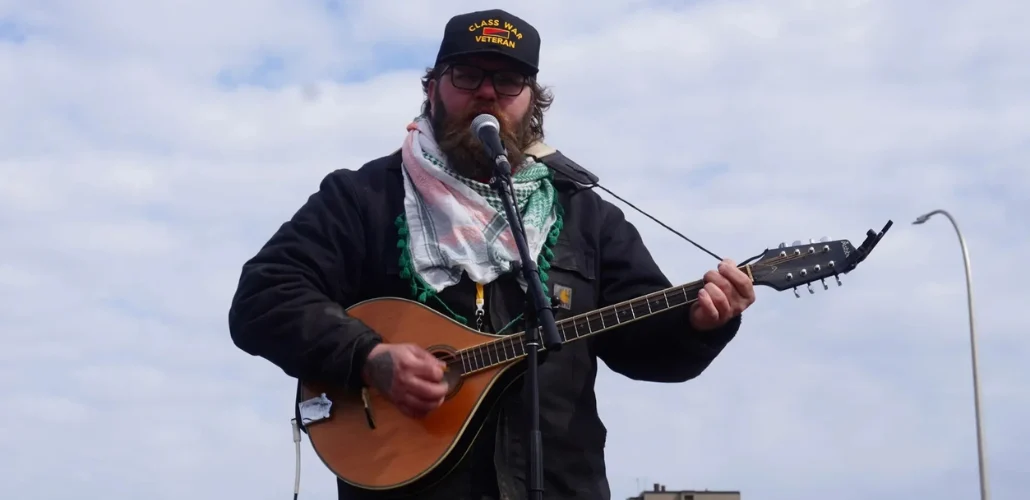
Executive Summary: A Crackdown on Solidarity
In a move that has sent shockwaves through the American labor movement, the federal government has arrested and indicted 15 prominent labor activists in Minnesota. These individuals, collectively known as the "Minnesota 15," represent a broad coalition of union workers—including carpenters, electricians, teachers, university staff, and nursing home employees. The charges stem from their involvement in protests and a massive, months-long strike against Immigration and Customs Enforcement (ICE) operations in the Twin Cities earlier this winter.
The indictments, which include serious conspiracy charges, represent a significant escalation in the federal government’s response to labor-led civil disobedience. As these activists face the legal apparatus of the state, their stories from inside the detention facility reveal a resilient spirit, where the tradition of labor song and collective memory has become a primary tool for maintaining morale under duress.
Chronology: From the Picket Line to the Federal Holding Cell
The roots of the current legal crisis lie in the "Twin Cities Massive Strike against ICE," a winter mobilization that paralyzed key logistical hubs and challenged federal deportation operations. The protests, which saw widespread participation from rank-and-file union members, were marked by an unprecedented level of inter-union cooperation and community support.
Following these events, the federal government conducted a sweeping operation yesterday, apprehending 15 organizers and activists. For Emmett Doyle, a union carpenter and one of the accused, the reality of the situation hit home the moment he was processed into the detention center.
"When I got to my cell after they took me, I did not know who else was targeted in the sweep," Doyle recounted. "I saw one person I knew, and then was put into a cell alone."
Isolated and cut off from his comrades, Doyle turned to a long-standing tradition among those who find themselves on the wrong side of state power: music. He began singing a repertoire of protest songs, ranging from "The Fields of Athenry" to "The Ballad of Joe McDonnell." His goal was simple: to assert his presence in the silence of the facility.
The breakthrough came while he was singing "The Town I Loved So Well." When he reached the lyrics, "with their tanks and their guns, oh my God what have they done," he was interrupted by a shout from down the hallway: "Play ‘Dick Blizzard’!"
The moment transformed the sterile environment of the jail. A chorus of laughter echoed through the cell block, followed by the voices of friends and fellow activists. Doyle realized that he was not alone; the federal sweep had landed many of his colleagues in the same facility.
Once processed and moved into a shared cell block, the group began to organize their spirits through song. One older activist, revered for his wisdom and long history in the labor movement, initiated a chorus of "Solidarity Forever." Within minutes, the entire cell block was singing the full, original IWW (Industrial Workers of the World) version of the anthem. Throughout the day, the group cycled through international labor classics like "Bella Ciao" and "A Las Barricadas," and even performed an anti-ICE adaptation of the Irish republican prisoner song "Men Behind the Wire," which the group had composed during the height of the Metro Surge protests.
Supporting Data: Who are the Minnesota 15?
The Minnesota 15 are not professional agitators, but rather the bedrock of the Minnesota workforce. The group includes:
- Construction Trades: Union carpenters and electricians who provided the backbone for the strike’s logistical defense.
- Education Sector: Teachers and university staff who bridged the gap between the classroom and the picket line.
- Healthcare Workers: Nursing home staff who emphasized the human cost of the policies being protested.
The inclusion of these specific workers suggests a calculated effort by the federal government to dismantle the infrastructure of the Twin Cities labor movement. The legal defense fund for the Minnesota 15, currently hosted via Chuffed, is soliciting donations to cover mounting legal costs. Supporters argue that the indictments are designed to intimidate union members from participating in future social justice movements, effectively criminalizing the act of protest itself.
The Power of the "Strike Song"
The arrest of two of the 15 activists occurred shortly after their return from the 2026 Labor Notes Conference, where the culture of labor music was a central theme. Emmett Doyle’s own composition, "Hold the Line," was awarded the Strike Song of the Year for 2025.
The song, which has become an anthem for the current movement, was performed by members of the Pittsburgh Labor Choir at the conference. Its lyrics serve as a manifesto for the Minnesota 15: a call to maintain unity in the face of overwhelming corporate and state pressure. The fact that the federal government chose to indict the very people championing these songs of defiance has only served to increase their popularity, with "Hold the Line" being shared across social media platforms as a symbol of the ongoing resistance.
Official Responses and Legal Implications
While the Department of Justice has remained largely silent regarding the specific details of the conspiracy charges, legal experts suggest that the government is utilizing broad statutes to treat peaceful civil disobedience as a criminal conspiracy.
"The attempt to classify labor protest as a criminal conspiracy is a dangerous precedent," says one labor attorney familiar with the case. "If the government succeeds in framing these protests as a federal offense, it lowers the bar for how the state can suppress any form of organized labor dissent."
The activists, meanwhile, remain defiant. As they were transported to their initial hearings, they were heard whistling "Colonel Bogey’s March," a sign that the federal attempt to silence them had failed. The legal defense team is currently preparing for a protracted battle, arguing that the activists’ actions were protected under the First Amendment and that the indictments represent a gross overreach of federal authority.
The Broader Implications for the Labor Movement
The case of the Minnesota 15 serves as a flashpoint for the future of the U.S. labor movement. As unions increasingly align themselves with broader social justice causes—such as immigrant rights—they are finding themselves in the crosshairs of federal law enforcement.
This confrontation raises critical questions:
- Can labor movements survive the criminalization of their tactics? The Minnesota 15 suggest that when the physical space for protest is restricted, the movement will move into the halls of the jail, using song and shared history to maintain its integrity.
- Will the broader union movement rally behind the Minnesota 15? The case is being closely watched by labor federations nationwide. If the federal government succeeds in punishing these individuals, it could have a chilling effect on the "social movement unionism" that has seen a resurgence in the Twin Cities and beyond.
- The role of technology and surveillance: The indictments are also a reminder of the heightened surveillance capabilities now employed against labor organizers. The move from tracking protests to building conspiracy indictments suggests that the state is viewing labor activism through a national security lens.
Conclusion: A Call to Support
As the legal proceedings move forward, the Minnesota 15 continue to rely on the solidarity of the labor movement. The call to "Hold the Line" has moved beyond a song title and into a literal directive for the activists and their supporters.
"We whistled on our way to the hearing," Doyle noted. "They can put us in cells, but they cannot stop the music, and they cannot break the solidarity we built on the line."
For those interested in supporting the legal defense of the Minnesota 15, donations can be made through the established legal defense fund portal. The outcome of this case will likely set the tone for labor activism for the remainder of the decade.


 Asep Darmawan