
 Sagoh
Sagoh
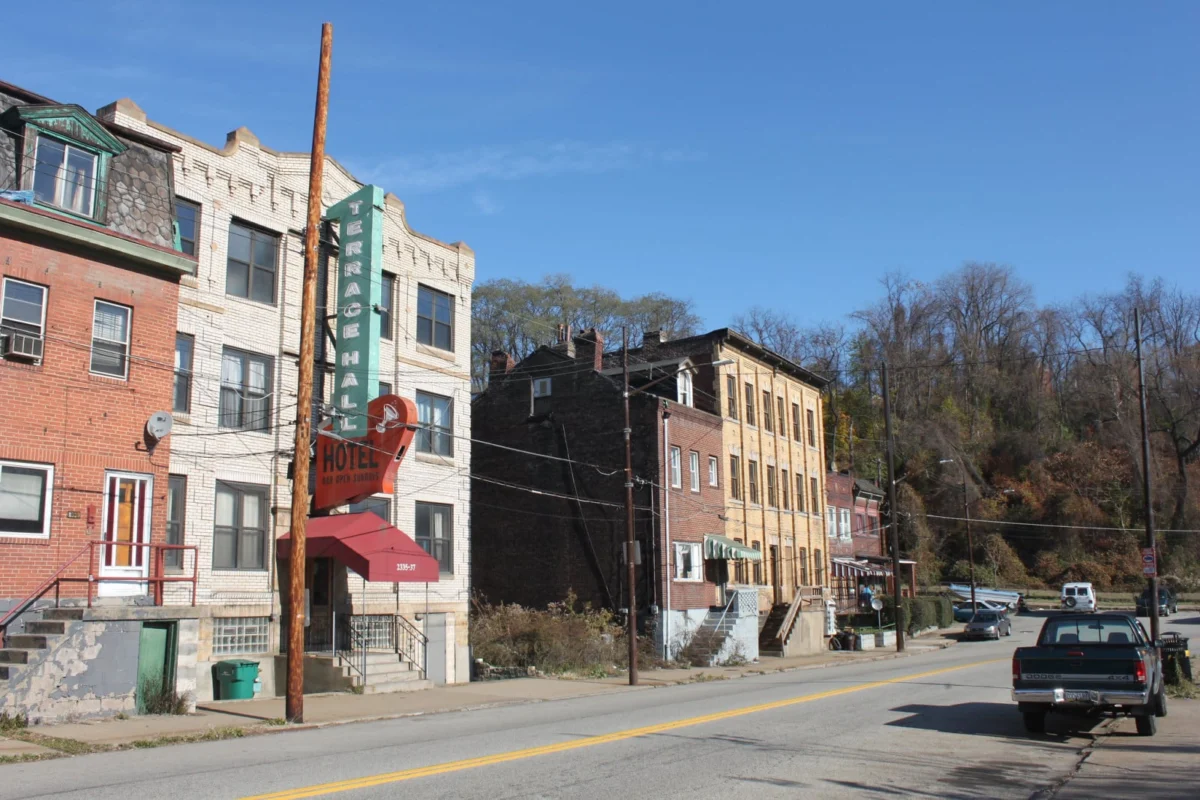
When massive development projects—stadiums, corporate campuses, and data centers—descend upon urban neighborhoods, the script is often predictable: promises of jobs and investment are made, local residents are displaced, and the "community benefits" touted by developers evaporate the moment market conditions turn sour. For years, this was the trajectory of Pittsburgh’s historic Hill District. However, after a decade of legal battles and stalled construction, the neighborhood has achieved something rare: a "failure-proof" community benefits model that is finally delivering tangible results.
The Greater Hill District Neighborhood Reinvestment Fund is not just a pool of money; it is a testament to the power of community-led advocacy, rigorous legal strategy, and a fundamental shift in how cities negotiate with private capital.
A Legacy of "Root Shock"
To understand the significance of the current breakthrough, one must look at the scars left by mid-20th-century urban renewal. In the 1950s, the City of Pittsburgh leveraged "slum clearance" powers to demolish 100 acres of the Lower Hill, displacing over 8,000 residents and 400 businesses. This mass removal destroyed a vibrant Black cultural hub and left the land to be repurposed for the Civic Arena, a home for the Pittsburgh Penguins that ultimately isolated the remaining neighborhood from the downtown core.
For decades, the area remained a landscape of parking lots—a physical manifestation of broken promises. When the Penguins eventually moved to the nearby PPG Paints Arena in 2010, the 28-acre site of the old arena remained underutilized, with development rights held by the hockey franchise. The Hill Community Development Corporation (Hill CDC) recognized that if they did not act, the land would again be developed in ways that bypassed the people who lived there.
Chronology of a Hard-Won Victory
The road to the current reinvestment fund was paved with "very, very hard labor," according to Marimba Milliones, executive director of the Hill CDC. The timeline of this transformation reveals the persistence required to shift the power dynamic:
- 2011–2014: The Hill CDC leads a robust campaign to negotiate a community benefits agreement (CBA) with the Pittsburgh Penguins. The goal is to ensure the 28-acre site generates wealth for the surrounding community.
- 2014: The Penguins and the Hill CDC sign a formal CBA. However, the agreement is abruptly excluded from the city’s preliminary land development plan by the Planning Commission.
- 2015: Realizing the agreement is being sidelined, Milliones files a lawsuit against the city and the Penguins. The resulting pressure leads to a settlement in January 2015, establishing a Local Economic Revitalization Tax Assistance (LERTA) district.
- 2015–2021: The "U.S. Steel" headquarters project, the anchor for the LERTA, falls through, leaving the fund dormant.
- 2021: A new deal is struck for a First National Bank headquarters. The development partners agree to a $7.2 million lump-sum payment into the fund.
- 2025: The Pittsburgh Penguins officially relinquish their exclusive development rights over the remaining Lower Hill parcels.
- 2026: The fund announces its first round of grants, officially moving from legal battle to community investment.
The LERTA Mechanism: Subsidizing the Neighborhood
The genius of the Hill District’s approach lies in the LERTA structure. Typically, a LERTA is used to subsidize a developer by reducing their property tax burden to make a project "pencil out" financially. In the Hill District’s case, the community negotiated a version that turned the tax break on its head.
Under this arrangement, the city, the school district, and Allegheny County agreed to forgo property tax revenue from the 28-acre site for a decade. Crucially, that money was diverted into the Greater Hill District Neighborhood Reinvestment Fund rather than staying in the developer’s pocket. By attaching this obligation to the land rather than a specific developer, the community ensured that no matter who builds on the site, the tax-break-turned-benefit-fund continues to accrue value for the neighborhood.
This structural protection shields the community from the risks of market volatility. Even when U.S. Steel pulled out, the framework remained intact, ready to capture the funds from the next project that arrived.
Supporting Data: Ensuring Accountability
The fund is overseen by a 12-member community advisory council, but the rigor of the project extends beyond the fund itself. The Hill District utilizes a Development Review Panel (DRP)—a coalition of seven neighborhood groups—to evaluate all development proposals within the district against the 2011 Greater Hill District Master Plan.
The data behind this oversight is striking:

- 44 projects approved: Each has undergone a scoring process where they must achieve at least 80% alignment with the community’s vision.
- 10 projects declined: Demonstrating that the DRP is not a rubber stamp but a meaningful gatekeeper.
- 16 projects under review: Signaling a consistent pipeline of interest in the corridor.
These metrics provide a quantitative basis for community power, forcing developers to engage with the neighborhood’s priorities—such as affordable housing, local hiring, and cultural preservation—long before they break ground.
Official Responses and Stakeholder Perspectives
The success of this model has drawn attention from urban planners and policymakers nationwide. Supporters argue that the Hill District’s strategy serves as a blueprint for "failure-proofing" CBAs.
"When big capital comes to communities that are impoverished and challenged, you have all types of dynamics that manifest as a result," says Milliones. "It’s just a very complex terrain to navigate, and I would love to see more people educated around how to navigate it, so they know they’re not alone."
However, the process is not without its friction. Emerging developers, such as architect-turned-developer Alicia Volcy, have noted the challenges of the rigorous review process. Volcy, who is currently working on "Rhythm Square"—a project aimed at revitalizing a former lumber warehouse into commercial and artist space—noted that the burden of producing detailed renderings and capital stacks before receiving community support can be a barrier for developers without significant "friends and family" capital.
"The panel wants to see drawings and capital stacks," Volcy explains. "It can put a developer in a situation where they’re having to present a project that is pretty much complete before coming to the community, which doesn’t allow the community to have more of a voice up front."
Despite these challenges, the $250,000 grant Rhythm Square received from the Reinvestment Fund has provided the necessary momentum to keep the project viable.
Implications for the Future of Urban Development
The Hill District’s story offers several profound implications for urban development policy in the United States:
- Standardization of CBAs: The movement toward community-driven development is highlighting the need for better regulation of CBAs. Without legally binding frameworks, these agreements remain at the mercy of shifting corporate interests.
- Asset-Based Development: By focusing on the LERTA as an asset that stays with the land, the community has effectively claimed a perpetual seat at the table of local economic development.
- The Power of Narrative: As Milliones emphasizes, the struggle is as much about education as it is about finance. "When we deprive people of the real story, we deprive ourselves of future generations knowing their power, too."
By refusing to accept the "done deal" presented by outside developers and instead creating a process that mandates community alignment, the Hill District has transitioned from a community defined by what was taken from it, to one defined by how it invests in itself. The success of the Reinvestment Fund and the ongoing work of the Development Review Panel suggest that the "Hill District way" of doing business is no longer an anomaly—it is a rising standard for cities looking to ensure that growth is synonymous with equity.
As the first projects funded by the LERTA begin to manifest—ranging from workforce development programs to the vibrant studio spaces at Rhythm Square—the community is finally seeing the returns on a decade of struggle. The money did not fall from the sky; it was claimed, through the hard work of residents, organizers, and architects who refused to be left behind by the next wave of development.

 Muslim
 Asro
Asro