

 Basiran
In an era defined by hyper-connectivity and unprecedented digital saturation, the mental well-being of the American adolescent has emerged as a focal point of national concern. A landmark legal development earlier this year, K.G.M. v. Meta Platforms, Inc. et al., brought this crisis to the forefront of the judiciary, as a jury held major social media conglomerates accountable for the psychological harm inflicted upon a minor. The ruling—which centered on the "addictive design features" inherent in algorithmic platforms—serves as a watershed moment in the growing debate over corporate responsibility in the digital age.
However, the challenges facing today’s youth extend far beyond the screen. From the lingering shadows of the COVID-19 pandemic to the pervasive threat of gun violence and the persistent opioid epidemic, the environmental stressors impacting adolescents are multifaceted and systemic. As policymakers grapple with these realities, the data suggests a precarious landscape where modest gains in mental health trends are constantly threatened by shifting political priorities and reduced access to care.
The Chronology of a Crisis: From Pandemic Surge to Policy Rollback
The trajectory of youth mental health in the United States has been marked by significant volatility over the past five years.
- 2021: The U.S. Surgeon General issued a formal advisory, declaring a "youth mental health crisis." At the height of pandemic-related isolation, 21% of adolescents reported a major depressive episode (MDE).
- 2022: In response to mounting pressure, Congress passed the Bipartisan Safer Communities Act (BSCA). This legislation represented a historic investment, providing critical funding to bolster school-based mental health services and leveraging Medicaid to expand behavioral health access in high-need districts.
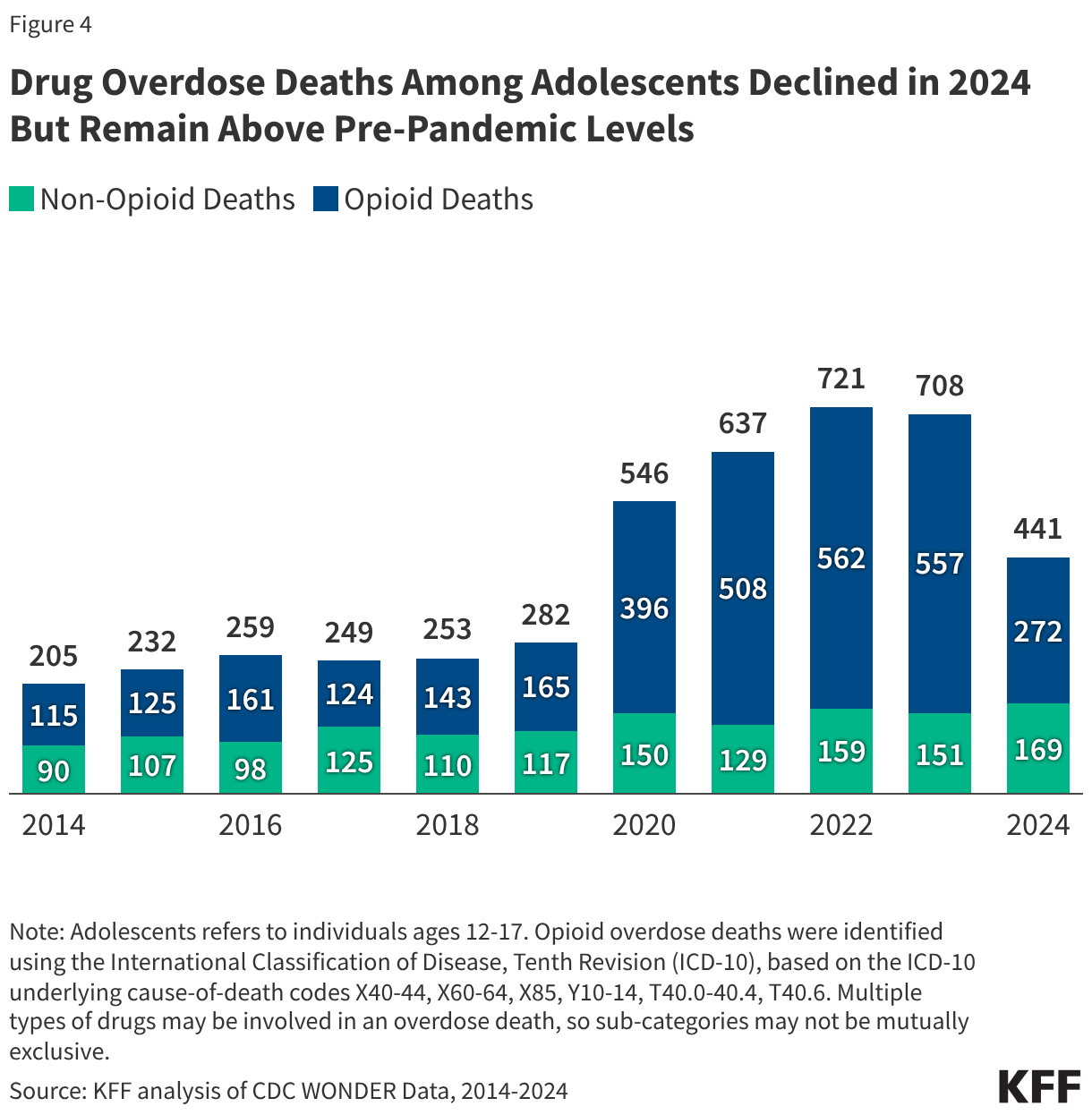
- 2023–2024: While drug overdose deaths—which had surged during the pandemic—saw a sharp decline due to increased naloxone availability and public awareness, overall mental health outcomes remained uneven.
- 2025–2027: The political climate has shifted significantly. Under the current Trump Administration, key funding mechanisms established by the BSCA have faced disruption. Concurrently, the 2027 federal budget proposal outlines substantial cuts to agencies governing mental health, including the Substance Abuse and Mental Health Services Administration (SAMHSA).
Supporting Data: The 2024 Landscape
Analysis of the 2024 CDC WONDER mortality database and the National Survey on Drug Use and Health (NSDUH) reveals a paradoxical reality: while certain indicators are trending downward, the baseline of distress remains alarmingly high.
Prevalence of Mental Health Conditions
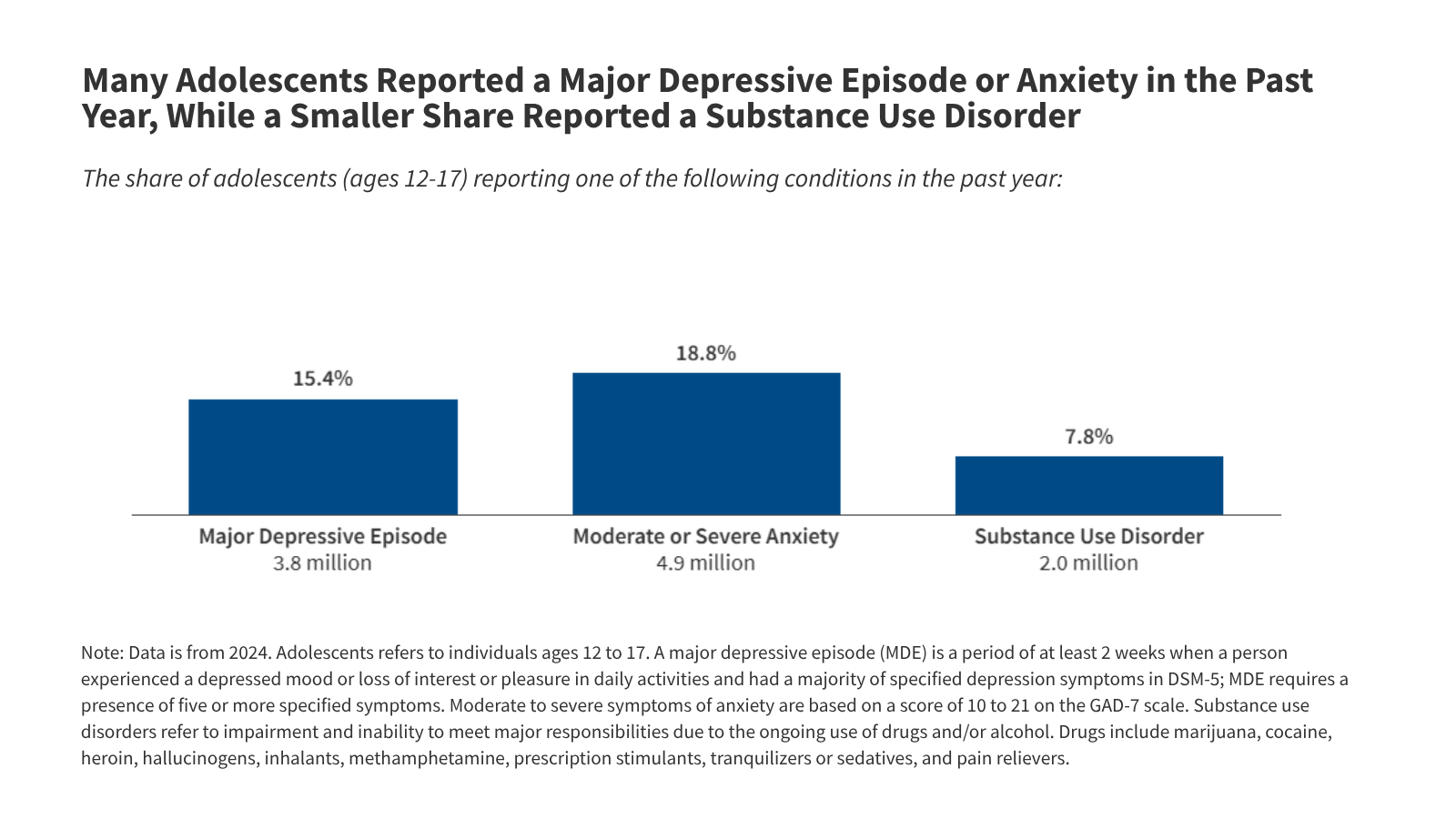
In 2024, approximately 3.8 million adolescents (15%) reported a past-year major depressive episode. While this is a decrease from the 21% peak in 2021, it remains a staggering figure. Furthermore, 19% of the adolescent population—roughly 4.9 million youth—reported moderate to severe symptoms of anxiety. Anxiety remains the most prevalent mental health condition among this demographic, with levels consistently exceeding pre-pandemic norms.
The Substance Use Correlation
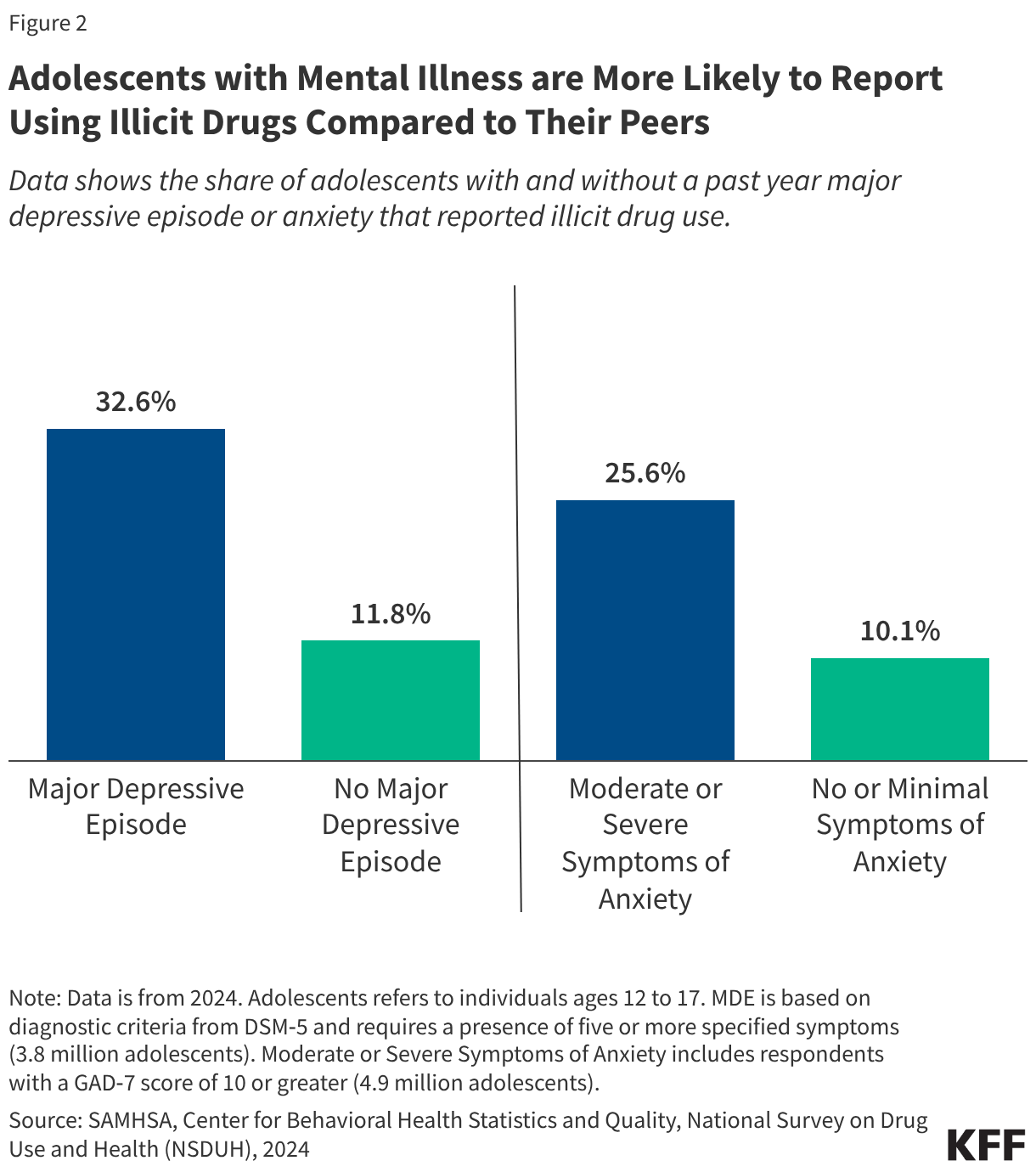
There is a clear, documented link between mental illness and substance use. In 2024, 7.8% of adolescents (2 million) met the criteria for a substance use disorder. Notably, the prevalence of illicit drug use is significantly higher among those suffering from mental health issues: 33% of adolescents with an MDE reported illicit drug use, compared to just 12% of their peers without an MDE.
Marijuana, increasingly legalized and normalized in the adult sphere, presents a unique challenge for the adolescent brain. Currently, 25% of adolescents with an MDE report using marijuana. Medical research consistently links early and frequent marijuana use to an increased risk of psychotic disorders, including schizophrenia. With the rising potency of THC in modern cannabis products, experts warn that the window of vulnerability for developing long-term psychological disorders is widening.
Suicide and Mortality: A Grim Metric
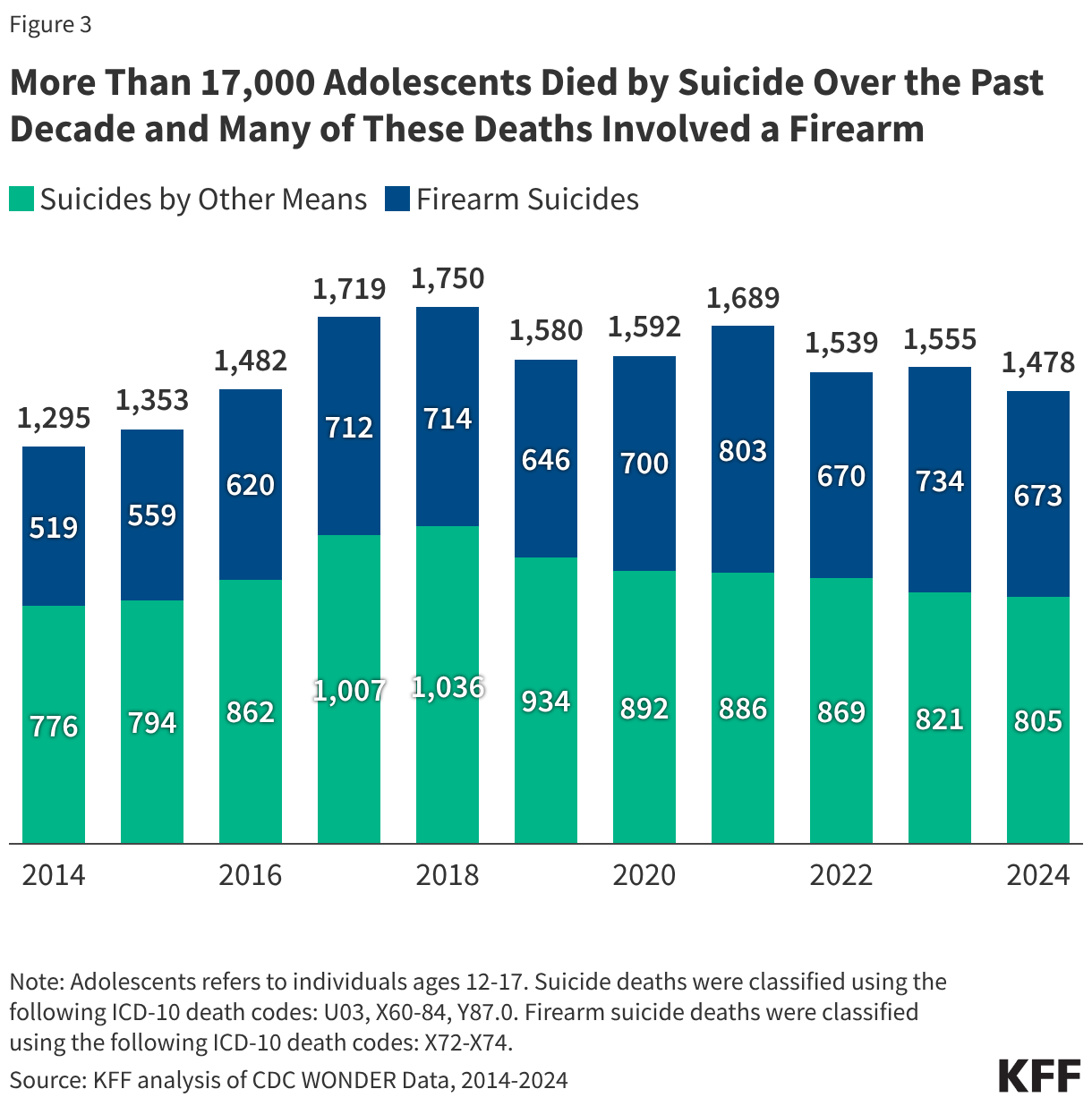
Perhaps the most harrowing aspect of the current crisis is the toll taken on human life. Over the past decade, more than 17,000 adolescents have died by suicide. While there was a 5% reduction in suicide deaths between 2023 and 2024—dropping from 1,555 to 1,478—the long-term trend remains significantly higher than it was a decade ago.
Firearms play a central role in this tragedy, involved in more than 4 in 10 adolescent suicides. The correlation between firearm access in the home and successful suicide attempts is well-established in public health literature, yet it remains a deeply polarized area of policy intervention.
Furthermore, the "opioid shadow" continues to loom. While synthetic opioids like fentanyl drove a massive spike in overdose deaths between 2020 and 2023, 2024 saw a correction, with opioid-related deaths dropping from 557 to 272. While this is a success story for public health intervention—including the placement of naloxone in schools—it is tempered by the reality that these figures remain well above pre-pandemic baselines.
Official Responses and the Policy Tug-of-War
The federal government’s approach to these issues has undergone a dramatic pivot. The Bipartisan Safer Communities Act was intended to create a sustainable pipeline for school-based mental health professionals. However, recent policy actions have stalled these efforts, creating uncertainty for school districts that rely on federal grants to keep counselors and therapists on staff.
The administration’s 2027 budget proposal seeks to restructure SAMHSA, the agency responsible for overseeing the 988 Suicide & Crisis Lifeline. While 988 has been statistically linked to a decrease in adolescent suicide mortality, the service has not been immune to political scrutiny. Specifically, the removal of specialized extension lines—such as those dedicated to LGBTQ+ youth—has drawn sharp criticism from advocates. Given that LGBTQ+ youth are statistically more likely to experience suicidality, the reduction of targeted support services is viewed by many as a step backward in inclusive care.
Implications: The Future of Access
As we look toward the future, the stability of the mental health safety net is in question. Currently, 6 out of 10 adolescents with a major depressive episode receive some form of treatment, often through outpatient care or telehealth. However, the reliance on Medicaid is profound; 4 in 10 adolescents with mental health or substance use disorders rely on the program for coverage.
Proposed structural changes to Medicaid, which currently covers nearly 40% of all children and teens in the U.S., could severely limit the scope of services provided under the Early and Periodic Screening, Diagnostic and Treatment (EPSDT) benefit. If states are given more autonomy to restrict these benefits, the result could be a significant barrier to the "medically necessary" services that currently keep many at-risk youth stabilized.
Furthermore, the crisis in substance use treatment remains largely unaddressed. Of the 2.4 million adolescents in need of substance use care, only 30% receive it. The lack of residential facilities that accept adolescents, coupled with the systemic refusal of many facilities to administer buprenorphine—a gold-standard medication for opioid use disorder—creates a "treatment gap" that is difficult for families to bridge.
Conclusion: A Call for Sustained Investment
The data from 2024 suggests that while the United States has moved past the acute phase of the pandemic, the underlying "slow-motion" crisis in adolescent mental health is far from over. The decline in overdose deaths and the slight reduction in suicide rates are victories, but they are fragile.
The path forward requires a recognition that mental health is not merely a clinical issue, but a structural one. Whether through the regulation of social media algorithms, the enforcement of safe firearm storage, or the continued funding of school-based behavioral health programs, the protection of the next generation demands a consistent, long-term commitment that transcends political cycles. Without such a commitment, the millions of adolescents currently navigating the complexities of depression, anxiety, and substance use risk falling through the cracks of a crumbling support system.


 Ali Ikhwan
 Asep Darmawan