

 Nila Kartika Wati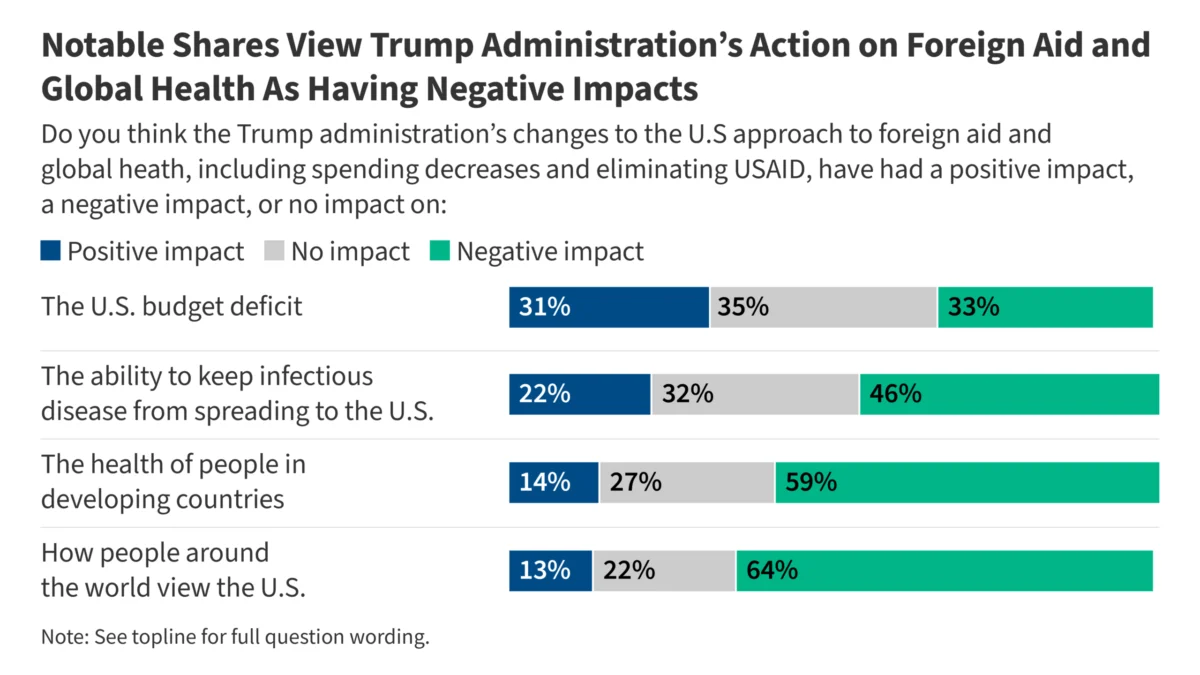
In a profound shift in foreign policy that marks the most significant reorganization of U.S. international engagement in decades, the second Trump administration has effectively dismantled the existing global health infrastructure. This move, centered on the "America First Global Health Strategy," has dissolved the United States Agency for International Development (USAID)—historically the world’s largest foreign aid organization—and replaced long-standing multilateral commitments with a series of restrictive, time-limited bilateral agreements.
As the administration accelerates plans to slash billions of dollars in international assistance over the coming years, a new KFF Health Tracking Poll reveals a public that is deeply divided, largely aware of the magnitude of these cuts, and increasingly uncertain about America’s future role on the world stage.
A Chronology of Policy Shifts
The reconfiguration of U.S. foreign aid did not happen in a vacuum; it was the result of a deliberate, multi-stage process initiated in early 2025.
- Early 2025: Upon the commencement of the second Trump administration, an immediate freeze was placed on global health funding. This freeze served as a precursor to the systemic cancellation of hundreds of ongoing projects worldwide.
- The Dissolution of USAID: Perhaps the most historic pivot was the formal dissolution of USAID. The agency, which had served as the primary conduit for U.S. humanitarian and development aid since 1961, was absorbed or shuttered, signaling the end of the post-WWII model of U.S. soft-power projection.
- The "America First" Doctrine: Following the dissolution, the State Department unveiled the America First Global Health Strategy. The core premise of the document is a critique of the previous status quo, characterizing existing global health programs as "inefficient and wasteful." The strategy argues that recipient nations have become overly reliant on American largesse, and it mandates a transition toward a more transactional, short-term engagement model.
- The New Bilateral Framework: Moving away from broad international partnerships, the administration began implementing time-limited Memorandums of Understanding (MOUs). These agreements are designed to ensure that U.S. financial commitment is minimal and strictly tied to specific, measurable American interests.
Public Awareness and Partisan Polarization
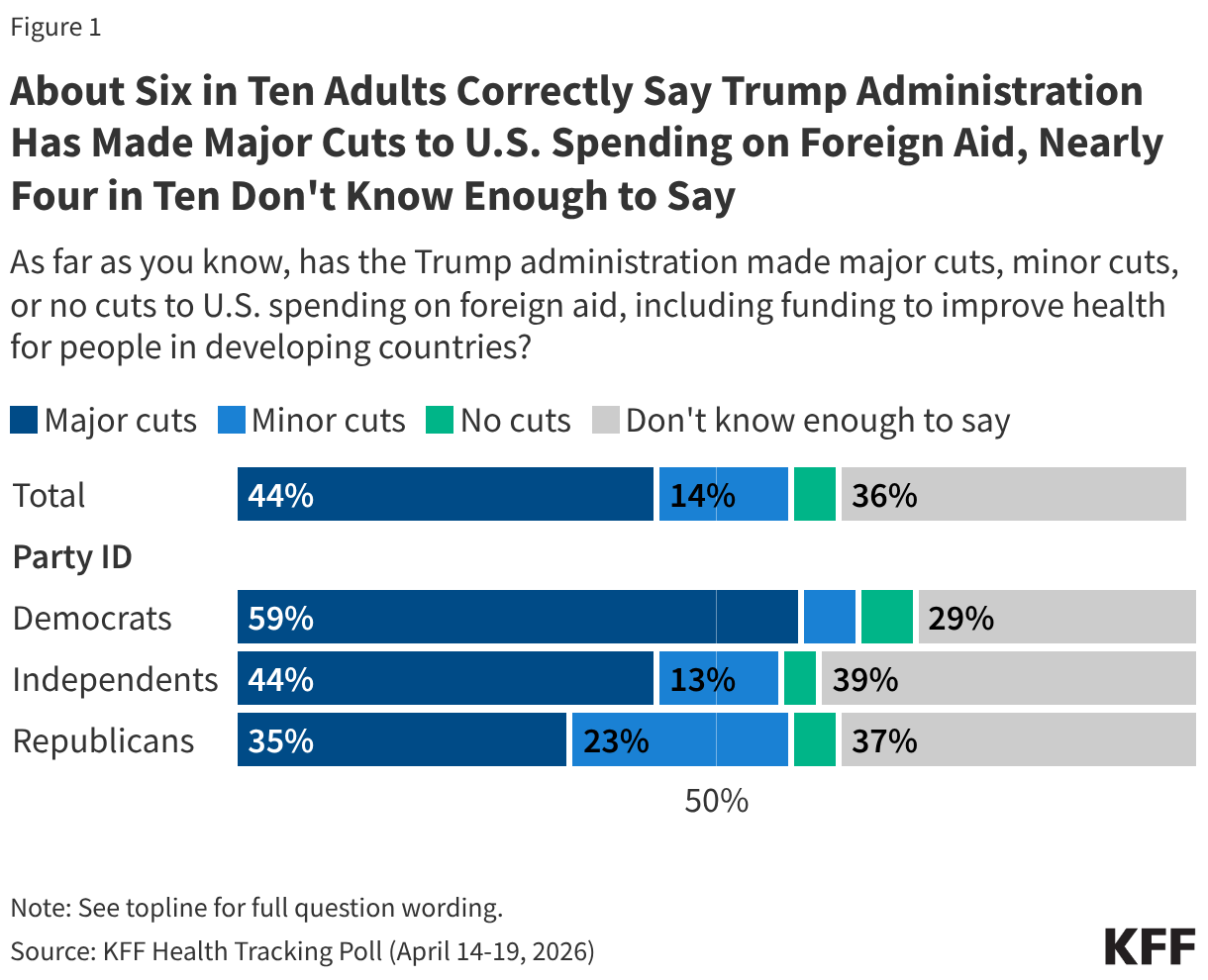
The scale of these changes has not gone unnoticed by the American public. According to the April 2026 KFF poll, 58% of U.S. adults correctly identify that the administration has implemented cuts to foreign aid. Specifically, 44% characterize these as "major" cuts, while 14% describe them as "minor." A significant portion of the electorate (36%) remains either unaware or unable to comment on the scope of these changes.
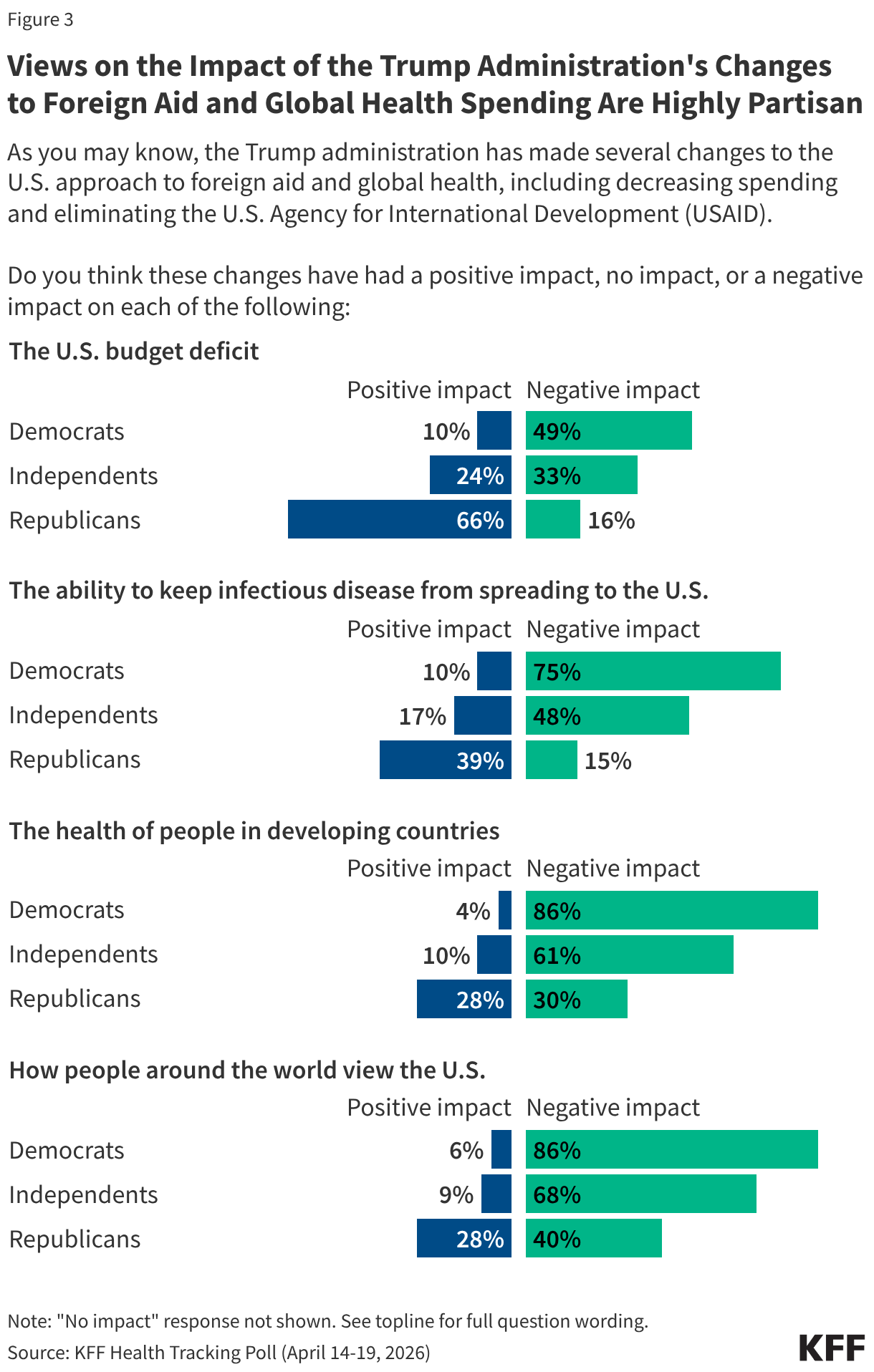
However, the interpretation of these actions remains sharply polarized along party lines. The polling data illustrates a stark disconnect in how different political segments perceive the necessity and impact of these reductions:
- The Democratic Perspective: 59% of Democrats identify the cuts as "major." They are significantly more likely to view the reduction in foreign aid as a negative development, particularly regarding international perceptions of the U.S. and the health outcomes of vulnerable populations in developing nations.
- The Republican Perspective: While Republicans also acknowledge the reductions, they are more likely to categorize them as "minor" (23%) compared to Democrats (6%). Furthermore, a clear majority of Republican respondents (66%) view the impact of these cuts on the U.S. budget deficit as a positive outcome, reflecting the administration’s rhetoric regarding fiscal responsibility.
- The Independent Middle: Independents mirror the national average, with 44% acknowledging major cuts. Their views on the impact of these policies are more tempered, though they lean toward the negative when discussing global health outcomes and international standing.
Supporting Data: The Perception Gap
A critical finding in the research is the persistent "perception gap" regarding the actual cost of foreign aid. When asked to estimate the share of the federal budget dedicated to foreign aid, the average U.S. adult guessed 26%. In stark contrast, historical data shows that foreign aid has typically accounted for roughly 1% of the total federal budget, with global health spending representing only a fraction of that.
This discrepancy suggests that the administration’s "inefficient and wasteful" narrative resonates with a public that significantly overestimates the financial burden of international health programs.
Furthermore, when asked about the specific impacts of these policy shifts, the public’s concerns center on three primary areas:
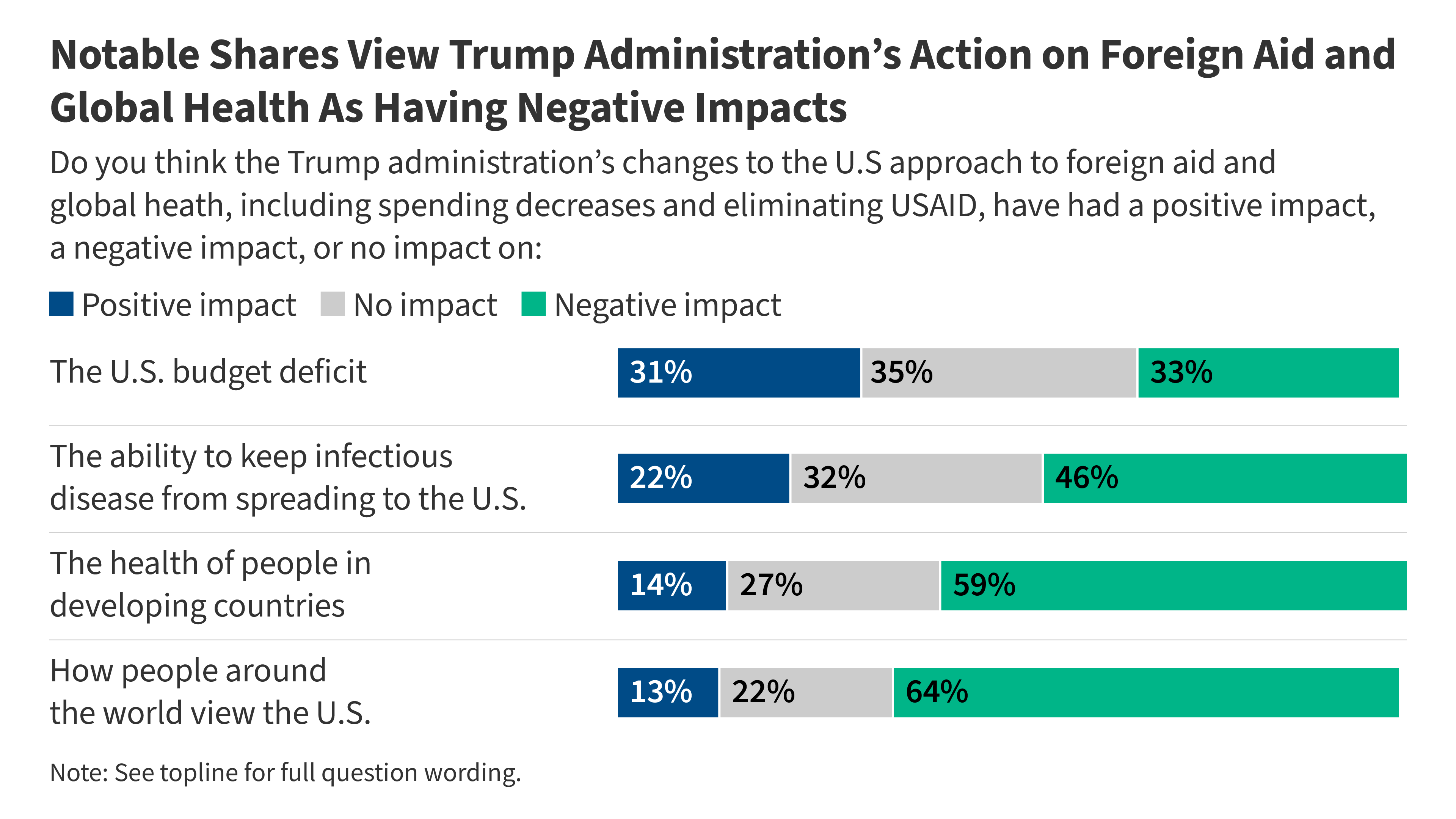
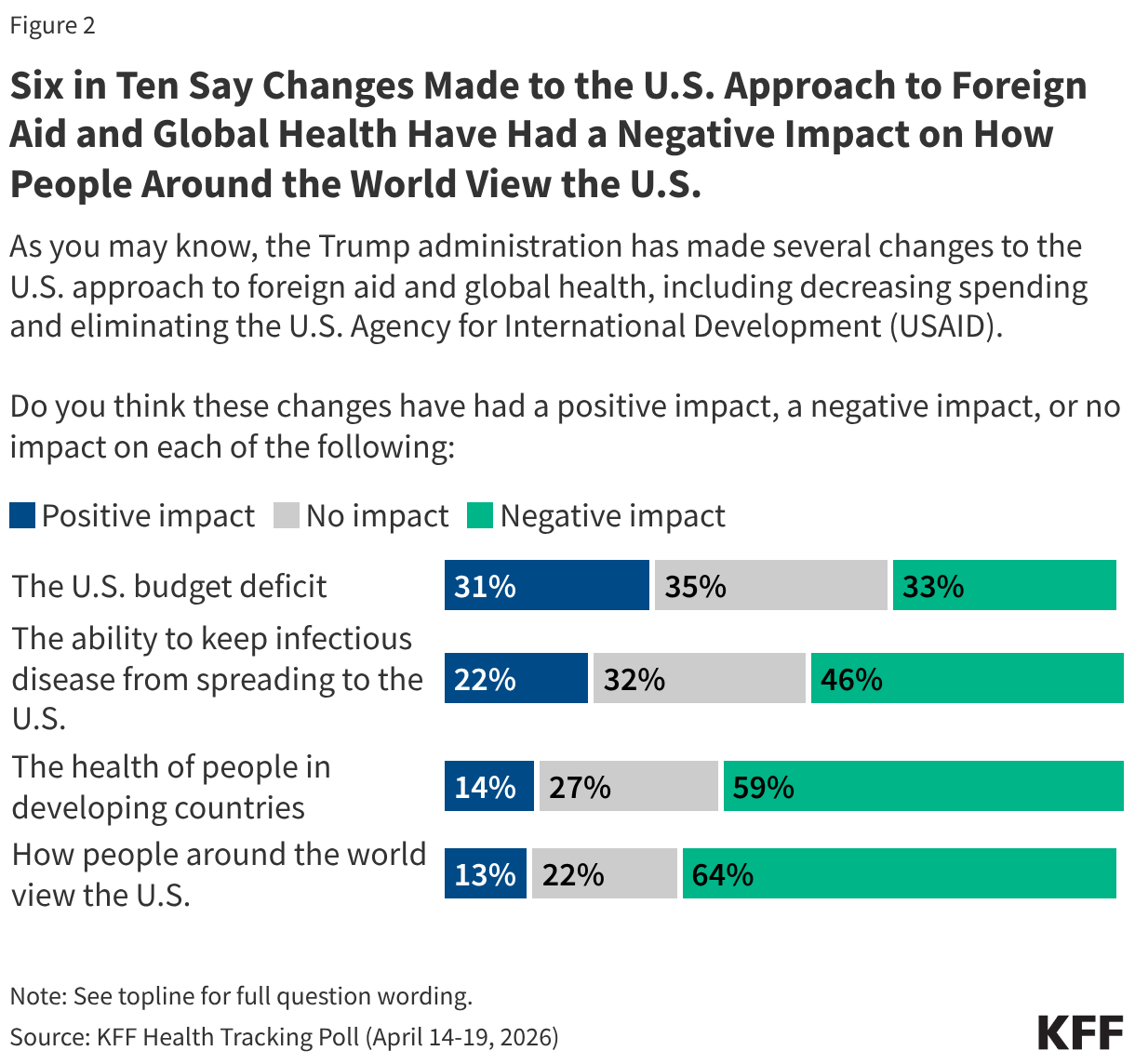
- Global Reputation: 64% of respondents believe the changes have negatively impacted how the world views the United States.
- Developing World Health: 59% believe the health of people in developing countries has suffered as a direct result of these policy changes.
- Domestic Security: Nearly half (46%) of the public expressed concern that the reduction in global health initiatives negatively impacts the ability of the U.S. to prevent infectious diseases from spreading domestically.
Official Responses and Strategic Rationale
The State Department’s position, articulated through the America First Global Health Strategy, emphasizes that the traditional model of foreign aid was unsustainable. Officials have argued that by moving away from long-term, open-ended funding, the U.S. can focus on programs that provide direct, tangible benefits to American citizens.
The strategy highlights a pivot toward "burden-sharing," essentially pressuring other nations to contribute more to their own healthcare infrastructure. Proponents within the administration argue that this "tough love" approach will ultimately lead to a more stable global environment by fostering self-sufficiency. However, critics within the public health sector, as reflected in the poll’s negative sentiment metrics, argue that this creates a power vacuum that may be filled by competing global powers, while simultaneously increasing the risk of regional health crises that do not respect national borders.
Implications for the Future
The implications of this shift are far-reaching. The decline in the public’s desire for the U.S. to lead in global health is perhaps the most concerning trend for advocates of international engagement.
Since 2016, KFF has tracked the public’s appetite for a "leading" or "major" U.S. role in global health. In 2026, that support reached a new low of 45%, down from 50% just one year prior. The decline is most pronounced among Democrats, who have seen an 11-percentage point drop in support for a major U.S. role.
This waning support, combined with the administrative dismantling of agencies like USAID, suggests that the U.S. is undergoing a fundamental identity crisis regarding its role as a global superpower. As the administration moves to reduce funding by billions more over the next few years, the U.S. is effectively retreating from a decades-long effort to be the primary architect of global health stability.
Conclusion
The data paints a picture of a nation at a crossroads. While a significant portion of the public remains committed to the idea of international aid, the combination of fiscal anxiety, political polarization, and an administration actively dismantling the machinery of aid has shifted the baseline of what is considered "normal." Whether this new, leaner approach to global health will result in a "safer, stronger, and more prosperous" America—or whether it will leave the nation more vulnerable to the next global health crisis—remains the central debate of the era.
Methodology Note
This KFF Health Tracking Poll was conducted between April 14 and April 19, 2026, utilizing a nationally representative sample of 1,343 U.S. adults. The survey was executed through a dual-method approach, combining the SSRS Opinion Panel (both online and phone) and a random digit dial (RDD) cell phone sample to ensure reach across diverse demographics. The data was rigorously weighted to match the U.S. Census Bureau’s 2024 Current Population Survey and the 2025 KFF Benchmarking Survey, accounting for variables including race, education, political affiliation, and regional distribution. The margin of error for the total sample is ±3 percentage points, with subgroup margins of error at ±6 percentage points. All survey data underwent strict quality control measures to ensure accuracy and reliability.


 Ali Ikhwan
 Asep Darmawan