

 Jia Lissa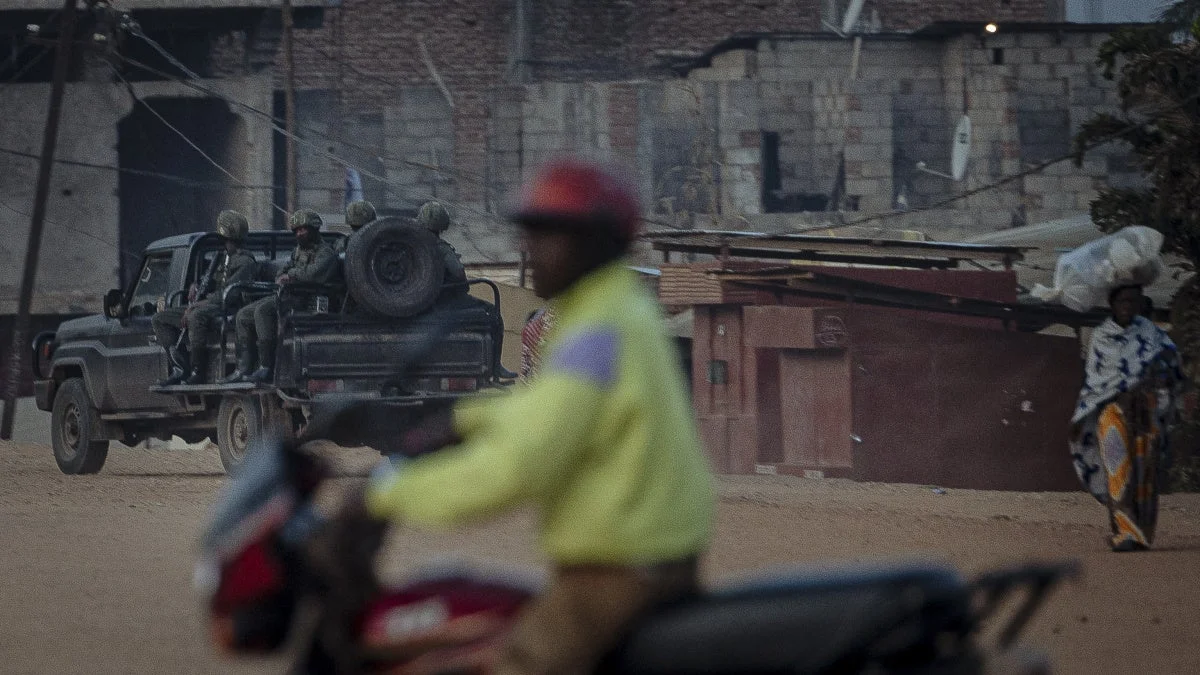
By Investigative Desk
(Kinshasa) – In a harrowing report that exposes the brutal realities of the ongoing conflict in the Democratic Republic of Congo (DRC), Human Rights Watch (HRW) has unveiled a chilling account of the occupation of Uvira, the second-largest city in South Kivu province. The 23-page report, titled “We Are Civilians!”: Killings, Sexual Violence, and Abductions by the M23 and Rwandan Forces in Uvira, provides definitive evidence that the M23 rebel group, acting in concert with Rwandan military forces, orchestrated a campaign of terror against the civilian population between December 2025 and January 2026.
The findings, released today, paint a picture of systematic abuse that suggests potential war crimes and crimes against humanity. Based on over 120 interviews conducted in the spring of 2026, the report documents a period of unchecked violence that occurred in the immediate aftermath of the U.S.-brokered “Washington Accords,” exposing the fragility of international peace efforts in the Great Lakes region.
Main Facts: A City Under Siege
The occupation of Uvira was not merely a military maneuver; it was, according to the evidence gathered, an operation characterized by targeted violence against non-combatants. From December 10, 2025, until their withdrawal on January 17, 2026, the M23 and Rwandan forces exerted total control over the city, stripping it of its security and turning the streets into a hunting ground.
The primary violations documented include:
- Summary Executions: At least 53 civilians were killed during door-to-door searches, with the majority of these executions taking place on the first day of the occupation.
- Targeted Violence: Soldiers specifically sought out men and boys, often accusing them of sympathizing with the “Wazalendo”—a coalition of local militias allied with the Congolese armed forces.
- Sexual Violence: At least eight women were confirmed victims of rape, though HRW suggests this figure likely represents a significant undercount due to the stigma and lack of medical support.
- Forced Disappearances: At least 12 individuals were abducted by the forces, and their families remain without knowledge of their whereabouts or fate.
“After taking control of Uvira, M23 fighters and Rwandan forces went door-to-door to summarily kill men and boys and committed rape and abductions,” said Philippe Bolopion, executive director at Human Rights Watch. “Human Rights Watch documented numerous horrific abuses but may have only scratched the surface. Criminal investigations are needed, including by the International Criminal Court, to ensure these crimes do not go unpunished.”
Chronology of the Occupation
The Failure of the Washington Accords
The occupation began on December 10, 2025, a mere six days after the signing of the Washington Accords. These diplomatic agreements were intended to stabilize the volatile eastern DRC by creating a framework for a ceasefire and the withdrawal of foreign forces. Instead, the M23’s advance into Uvira signaled a total collapse of these diplomatic promises.
December 10: The Assault
As the M23 and Rwandan forces entered the city, chaos ensued. Civilians attempting to flee toward the shores of Lake Tanganyika were met with gunfire. One survivor recounted the horror of the initial incursion: “It was chaos. We had small bags that we threw off and we ran. I wasn’t hit so I just ran to the lake. I saw my brother, his wife, and two of his children fall.”
December – January: The Occupation
During the following month, the city lived under a regime of fear. The forces established a system of control that relied on intelligence-gathering through intimidation. Neighborhoods were cordoned off, and residents were subjected to brutal screenings. Those suspected of links to the Wazalendo were frequently dragged from their homes and executed in public view or in private, leaving behind communal graves that still serve as grim reminders of the occupation today.
January 17: The Withdrawal
The occupying forces eventually withdrew on January 17, 2026. However, their departure did not bring immediate relief. The city was left with a broken infrastructure, a traumatized population, and the task of locating the missing and honoring the dead buried in scattered, unmarked graves.
Supporting Data and Evidence of Atrocity
The HRW report relies on rigorous field research conducted in March and April 2026. By triangulating witness accounts, medical records, and site visits to burial locations, researchers built a comprehensive timeline of the atrocities.
The Medical Crisis
A secondary tragedy unfolding in Uvira was the collapse of healthcare. Survivors of sexual violence faced a “near-total lack” of medical services. In the wake of the conflict, there was a critical shortage of post-exposure prophylactic (PEP) treatments, which are essential for preventing HIV infection. Many victims suffered from infections and severe trauma with no access to professional care, a failure that constitutes a severe violation of humanitarian law.
The Recruitment of Civilians
The M23’s tactics extended beyond execution and sexual violence; they also practiced forced abduction. The 12 documented cases of disappearance suggest that the rebels were forcibly recruiting civilians—or eliminating those they deemed a threat to their occupation—as part of their broader strategy to consolidate power in South Kivu.
Official Responses and Diplomatic Fallout
The international community’s response to the occupation has been marked by a shift toward more punitive measures. On March 2, 2026, the United States government imposed sanctions on the Rwandan army and its commanders for their direct role in the occupation of Uvira. This rare move against a U.S. partner underscores the severity of the intelligence gathered regarding Rwanda’s military involvement.
Human Rights Watch reached out to the government of Rwanda and to Bertrand Bisimwa, the leader of the M23, prior to the publication of the report. Neither party provided a response. The silence from Kigali and the M23 leadership is viewed by analysts as a tacit refusal to acknowledge the findings or address the demands for accountability.
Implications for the Future of the DRC
The occupation of Uvira serves as a microcosm of the wider conflict that has gripped eastern Congo since the M23’s resurgence in 2021. With the support of Rwanda, the M23 has effectively displaced hundreds of thousands of people, contributing to one of the world’s most acute humanitarian crises.
The Path to Justice
The report highlights several critical steps required to address the impunity in the region:
- Independent Investigation: The Congolese government must facilitate access for international human rights monitors to document the contents of communal graves and preserve forensic evidence.
- Accountability: Both the Congolese and Rwandan authorities, with the help of international bodies like the International Criminal Court (ICC), must pursue those responsible for command-level decision-making during the occupation.
- Sanctions and Cooperation: International partners must review all security and military cooperation with Rwanda to ensure that such assistance is not being diverted to fuel further human rights abuses.
- Domestic Security Reform: The Congolese government must address its own shortcomings, specifically the reliance on “Wazalendo” militias, which have also been implicated in human rights violations. The government must move toward a professionalized national army capable of protecting its own citizens without resorting to abusive proxy forces.
A Call for Global Action
As Bolopion noted, the victims and their families in Uvira are not merely looking for aid; they are looking for justice. The impunity that has allowed the M23 to operate for years is the primary driver of the conflict. The international community, particularly the United Nations and the Human Rights Council, must move beyond rhetoric and provide the necessary support to the Independent Commission of Inquiry established in 2025.
The occupation of Uvira is more than a historical footnote; it is a warning. If the perpetrators of these crimes are not held accountable, the cycle of violence in the Kivu provinces will continue to claim lives, dismantle communities, and defy the international norms intended to protect the vulnerable in times of war. The world now has the evidence—the question remains whether it has the will to act.

 Siti Muinah
 Sagoh
Sagoh