


 Laily UPN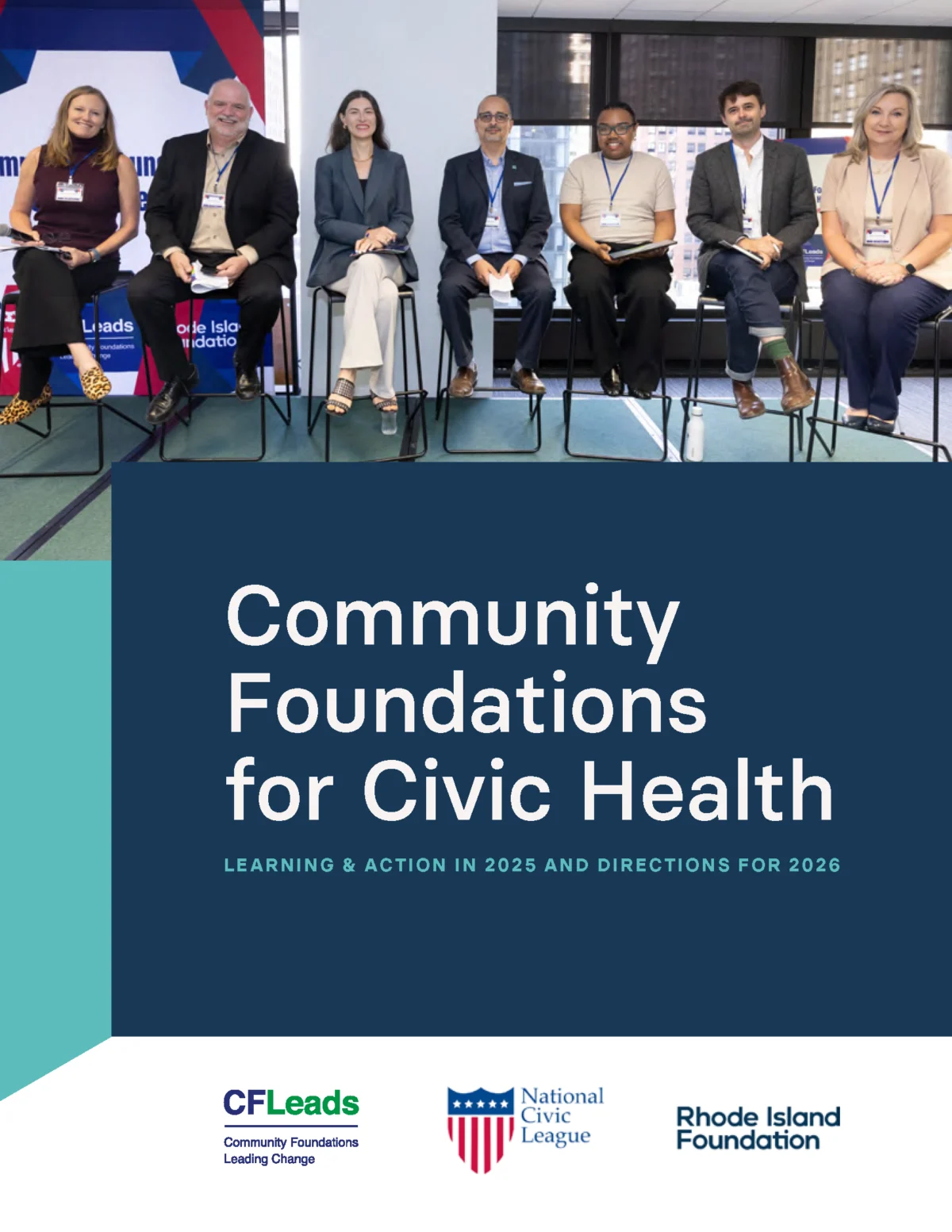
In an era defined by political polarization and the erosion of local trust, the bedrock of American society—its civic health—is undergoing a profound transformation. At the center of this shift are community foundations, place-based institutions that have long served as the silent engines of local philanthropy. Now, these foundations are stepping out of their traditional roles as grantmakers and into the spotlight as essential architects of civic engagement and democratic resilience.
A groundbreaking initiative, "Community Foundations for Civic Health" (CFCH), is currently signaling a new chapter for these organizations. By leveraging their unique position as neutral, durable, and trusted brokers, community foundations are proving that they are uniquely equipped to bridge the divides that currently splinter the American public.
The Pillars of Community Trust
The efficacy of community foundations lies in their "place-based" DNA. Unlike national organizations or government bodies, which often struggle with local nuances, community foundations possess an intimate understanding of the social, economic, and political dynamics of the regions they serve.
They operate, crucially, "above the fray." Because their mission is tethered to the long-term well-being of a specific geography rather than a partisan agenda, they command a rare form of institutional trust. This neutrality allows them to act as conveners, bringing together stakeholders who, in the current political climate, might otherwise refuse to share a room: local government officials, nonprofit leaders, corporate executives, and grassroots community activists.
"They are built to endure," says an industry spokesperson. "By upholding the long-term interests of the community over short-term political cycles, they offer a stable platform for problem-solving that is increasingly difficult to find elsewhere."
Chronology of a Civic Evolution
The path to the current CFCH initiative began in the early 2020s, as leaders at the National Civic League, CFLeads, and the Rhode Island Foundation observed a troubling trend: the decline of participatory democracy at the local level.
- 2023–2024 (The Inception Phase): Leaders from the National Civic League and CFLeads began identifying a need for a national framework to empower local foundations to take a more proactive stance in civic engagement. Discussions were held regarding how to move community foundations from "passive funders" to "active civic catalysts."
- Early 2025 (The Catalyst): With a strategic initial investment from the Charles Stewart Mott Foundation, the framework for the "Community Foundations for Civic Health" (CFCH) initiative was formally established. The goal was to provide technical assistance, peer learning, and tangible resources to foundations willing to prioritize civic health as a core mission.
- Mid-2025 (The Pilot Year): The initiative launched its first full year of operations, engaging 168 community foundations across 45 states. This pilot phase served as a laboratory for identifying best practices in civic engagement.
- Early 2026 (The Assessment): The release of the report, Community Foundations for Civic Health: Learning & Action in 2025 and Directions for 2026, marked a turning point. It codified the findings from the pilot year and set a roadmap for scaling these efforts in the coming decade.
Supporting Data: The Scope of the Movement
The scale of the CFCH initiative is reflective of the widespread appetite for civic renewal. The involvement of 168 community foundations across 45 states indicates that this is not merely a regional phenomenon, but a nationwide shift in institutional priority.
The pilot year focused on four core pillars of support provided to participating foundations:
- Tools for Engagement: Digital and physical frameworks for hosting town halls, deliberative polling, and community visioning sessions.
- Peer Learning Networks: A structured exchange where foundations in disparate parts of the country shared strategies for navigating local political resistance.
- Measurement and Evaluation: A new data-driven approach to tracking "civic health," moving beyond traditional metrics like voter turnout to include indicators like social cohesion, volunteer rates, and the efficacy of public-private partnerships.
- Amplification: Using storytelling to elevate local successes, proving to citizens that their input in public decision-making processes leads to tangible, positive change.
The data suggests that when foundations move beyond writing checks and start facilitating conversations, the "civic temperature" of a community tends to cool. The report notes that in jurisdictions where community foundations actively led civic health initiatives, there was a measurable increase in the diversity of voices participating in municipal problem-solving.
Official Responses and Strategic Vision
The leadership behind the CFCH initiative views this work as a critical defensive strategy against the decay of democratic norms. By creating space for public decision-making, these foundations are not just "doing good"—they are protecting the infrastructure of democracy.
"We are providing the scaffolding for a more robust civic life," stated one of the lead authors of the 2026 report. "The goal is not to dictate what the community decides, but to ensure that the process by which they decide is inclusive, informed, and resilient."
The Mott Foundation’s support has been instrumental, providing the "patient capital" necessary to launch long-term projects that do not offer immediate, quarterly returns. For foundations involved in the initiative, the feedback has been overwhelmingly positive. Many participating CEOs have noted that their role as "neutral arbiters" has allowed them to mediate disputes between city councils and neighborhood associations, a role they had previously avoided for fear of appearing political.
Implications for the Future of Local Governance
The implications of this movement are far-reaching. If community foundations successfully transition into the role of civic catalysts, it could redefine the relationship between the state and the citizen.
1. From Transactional to Relational Philanthropy
Historically, philanthropy has been a transactional exercise: an organization submits a grant request, and a foundation provides funds. The new model is relational. It requires foundations to stay involved in the outcome of projects, ensuring that the community members affected by the funding have a seat at the table.
2. A New Standard for Accountability
By implementing measurement and evaluation protocols, CFCH is setting a new standard for what it means to be a "successful" foundation. It is no longer enough to manage an endowment well; foundations are now being judged by their ability to foster social capital and inclusive decision-making.
3. Resilience Against Polarization
As the nation faces ongoing debates regarding its core democratic values, the local level remains the most fertile ground for progress. Community foundations, by focusing on "civic health" rather than partisan politics, offer a blueprint for how local communities can stay connected even when national discourse is fractured.
Challenges Ahead
Despite the optimism, the road ahead is not without obstacles. Foundations operating in highly contentious political environments face the risk of being labeled "biased" simply for encouraging civic participation that might challenge the status quo. Furthermore, the sustainability of these programs after the initial grant cycles conclude will require a shift in how foundations allocate their own internal resources.
"The challenge," as noted in the 2026 report, "is to make civic engagement a permanent line item in every foundation’s budget, rather than a special project that disappears when the wind changes."
Conclusion: A Blueprint for Renewal
The "Community Foundations for Civic Health" initiative is more than a professional development program; it is a vital intervention in the American democratic experiment. By empowering the institutions that know their communities best, the initiative is creating a decentralized network of civic resilience.
As the program moves into 2026 and beyond, the success of these foundations will likely serve as a litmus test for the health of American democracy itself. If they can successfully foster a culture where local problems are met with collective, informed, and respectful action, they will have provided the most important gift of all: a renewed belief in the power of the community to govern itself.
For citizens, the message is clear: look to your local community foundation not just as a provider of grants, but as a potential partner in the ongoing, urgent work of building a more robust, engaged, and equitable society. The foundation for that work is already in place; it is now time to build upon it.

 Neng Nana
 Nana Muazin