




 Asro
Asro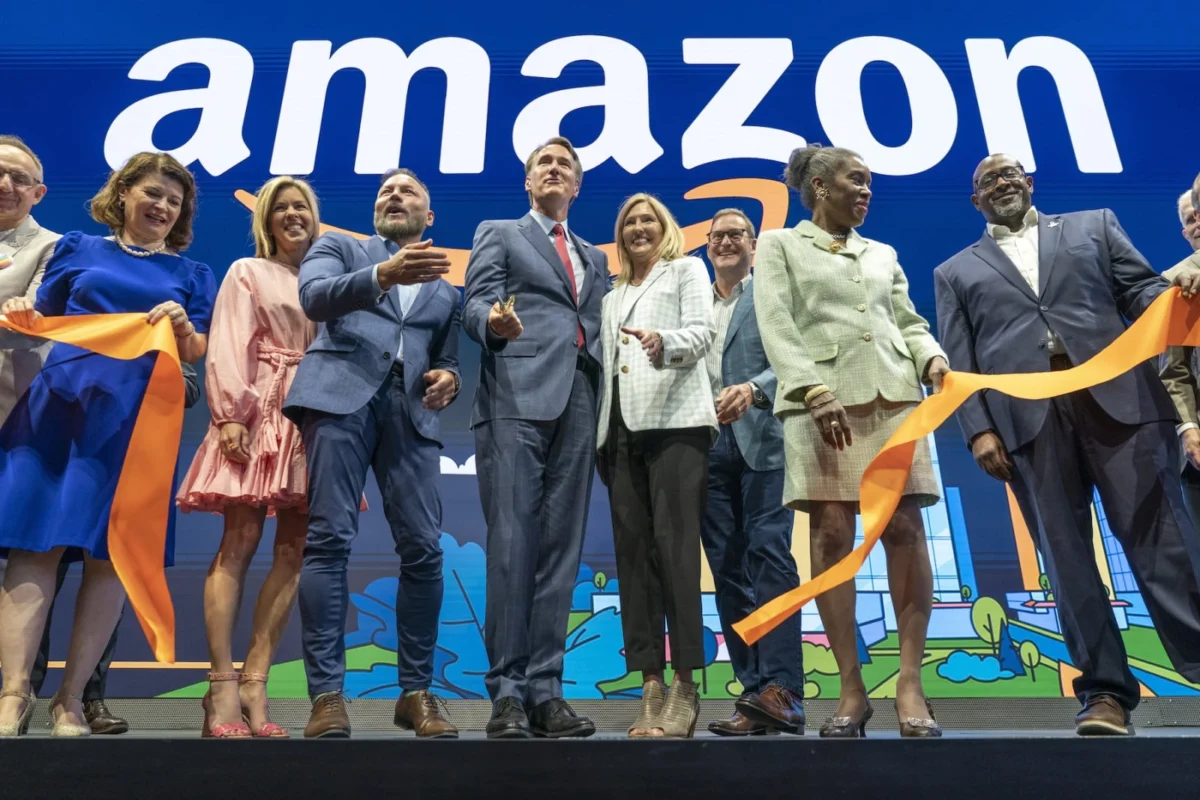
For decades, the standard playbook for American city officials has been remarkably consistent: identify a massive corporate entity, assemble a sprawling package of tax breaks and subsidies, and entice them to move in. It is a strategy of "attraction and retention," a high-stakes game of economic musical chairs that has cost taxpayers billions annually while frequently failing to deliver the promised prosperity.
But as the rise of artificial intelligence accelerates "creative destruction" and the middle class in major metropolitan hubs continues to erode, a growing chorus of urbanists and policymakers are questioning the efficacy of this model. At the center of this shifting paradigm is New York City, where Mayor Zohran Mamdani is attempting to pivot the city’s economic strategy toward a philosophy of "economic justice"—a move that seeks to prioritize the density of small and medium-sized businesses over the pursuit of corporate monoliths.
The Architecture of Stagnation: A Chronology of Failure
The current obsession with corporate attraction is not merely a modern oversight; it is the culmination of a half-century of urban planning philosophy.
- The Mid-Century Pivot (1950s–1970s): The era was defined by "urban renewal," epitomized by Robert Moses’s construction of the Cross Bronx Expressway. By bulldozing diverse, thriving neighborhoods to prioritize automobile efficiency, planners began the process of rationalizing land use into rigid, isolated zones. In doing so, they decimated the informal, overlapping economic networks—the small manufacturers, independent retailers, and suppliers—that Jane Jacobs identified as the true engines of urban vitality.
- The Decline of Dynamism (1978–2012): As cities focused on large-scale rationalization, the broader U.S. economy saw a precipitous decline in entrepreneurial spirit. New business startups per capita fell by nearly half during this period. The "connective tissue" of local economies—small and medium-sized enterprises (SMEs)—was systematically squeezed out by consolidation, soaring commercial real estate costs, and a financial system rigged in favor of scale.
- The Modern "Attraction" Era (2010s–Present): Despite a lack of empirical evidence supporting its efficacy, the "attraction-retention" model reached its zenith. Cities began competing in a race to the bottom, offering massive subsidies to tech and finance giants. By the height of the pandemic, New York City and State were spending an staggering $11 billion annually on corporate incentives, a figure that has failed to decrease significantly despite the obvious economic shifts.
Supporting Data: The Case Against the Current Model
The "Big Fish" strategy is increasingly under fire from researchers who argue that the return on investment (ROI) is abysmal. According to data from the Upjohn Institute for Employment Research, local economic development incentives often fail to produce meaningful, long-term growth.
The numbers suggest a stark imbalance:
- Fiscal Misalignment: New York City currently directs roughly $2.1 billion in tax breaks toward large corporations, while allocating a mere $180 million in direct grants to existing small businesses.
- The Multiplier Effect: Research consistently shows that locally rooted, small-to-midsize firms are more likely to recirculate profits within the regional economy. In contrast, externally owned, massive corporations tend to extract earnings, limiting the "spillover" effects that local economies rely on to sustain middle-class wages.
- Job Market Instability: A 2024 McKinsey report on Generative AI warns that by 2030, the New York region could face 1.1 million "occupational shifts." The industries currently being courted by the city—tech, finance, and professional services—are the very sectors most vulnerable to AI-driven automation.
The "Process Knowledge" Problem
Beyond the raw economics lies a structural issue that historian and researcher Dan Wang calls "process knowledge." In his 2025 book Breakneck, Wang argues that industrial strength is not just about owning intellectual property or branding; it is about the tacit, embodied understanding of how to build and manufacture things.
This knowledge accumulates through years of iteration, failure, and the proximity of machinists to engineers. By offloading manufacturing and focusing purely on "high-value" corporate headquarters, American cities have allowed this process knowledge to atrophy. The U.S. construction industry is a prime example: productivity has remained flat since the 1970s, largely because the U.S. has resisted the modular, factory-based systems that other nations have successfully integrated. When design is separated from production, innovation stalls.
Official Responses and Policy Shifts
Mayor Zohran Mamdani’s administration has signaled a radical departure from the status quo. By appointing former U.S. Labor Secretary Julie A. Su as the first-ever Deputy Mayor for Economic Justice, the administration is attempting to formalize a new governing philosophy.
Recent internal memos from the Mayor’s office suggest a mandate to redefine the mission of the NYC Economic Development Corporation (EDC). The goal is to elevate "economic justice" as a core pillar, standing alongside the traditional metrics of growth and investment.
Proponents of this shift argue that the city must stop viewing economic development as a zero-sum game of tax incentives. Instead, the focus should be on "ecosystem management"—creating the physical, regulatory, and educational conditions that allow a diverse array of firms to thrive. Critics, however, warn of the risks. There is a valid concern that by reorienting the EDC too heavily toward small-scale support, the city may lose its ability to deliver the large-scale, generational infrastructure projects that only a centralized agency can facilitate.
Implications: Building the City of Tomorrow
The challenge facing New York is to avoid the pendulum swing that leads to total stagnation. If the Mamdani administration can successfully thread the needle—using the EDC to foster the density of small businesses while maintaining the capacity for major infrastructure—it could provide a template for the rest of the nation.
The historical lesson, as noted by Jane Jacobs, remains the most vital: "Cities have the capability of providing something for everybody, only because, and only when, they are created by everybody."
The Path Forward:
- Rebalancing Incentives: Transitioning from "attraction" subsidies to "investment" grants that focus on workforce development and technical assistance for SMEs.
- Infrastructure for Diversity: Investing in "new work" infrastructure—shared maker spaces, incubator zones, and modular construction hubs that allow for the cross-pollination of industries.
- Prioritizing Resilience: Moving away from a monoculture of large, volatile corporate tenants toward a more diversified economic base that is less susceptible to sector-specific AI disruptions.
The era of the "Big Fish" is reaching its natural conclusion, not because it was inherently malicious, but because it was intellectually and economically insufficient. Whether New York City can pivot toward a more generative, diverse economic model will determine its trajectory for the next half-century. The stakes are not merely about tax revenue or corporate headquarters; they are about whether the modern city can remain a place of opportunity for the many, rather than a playground for the few.


 Muslim
 Raul Delapena Setiawan