
 Muslim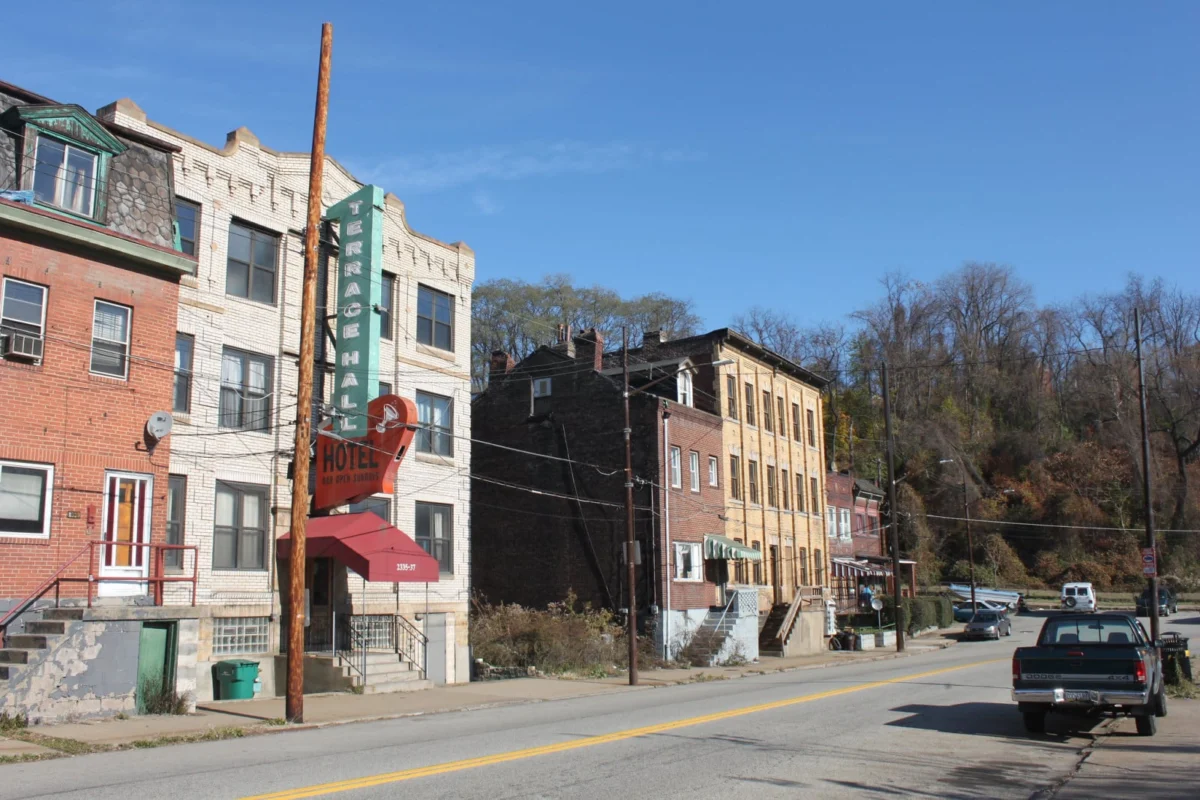
When massive capital projects descend upon historic neighborhoods—be they stadiums, corporate headquarters, or expansive data centers—the resulting "community benefit agreement" (CBA) is often heralded as a shield against displacement. However, history is littered with the carcasses of these agreements. Developers walk away, corporations pivot, and real estate firms face insolvency, leaving communities with nothing but a signed piece of paper and a vacant lot.
In Pittsburgh’s historic Hill District, a neighborhood that has spent decades navigating the scars of mid-20th-century urban renewal, leaders decided that a standard promise was not enough. They needed a model that was "failure-proof." After a decade of legal battles, stalled development, and immense community labor, that strategy has finally begun to pay out. In March 2026, the Greater Hill District Neighborhood Reinvestment Fund officially announced its first round of development grants, marking a turning point for a community that refused to be sidelined.
The Weight of History: A Legacy of "Root Shock"
To understand the significance of the current fund, one must look back at the systemic devastation of the mid-20th century. During the era of "urban renewal," cities across the United States used federal slum-clearance powers to bulldoze thriving African American communities. The social psychologist Mindy Fullilove termed the psychological toll of this forced displacement "Root Shock."
In the early 1950s, Pittsburgh decimated 100 acres of the Lower Hill, displacing over 8,000 residents and 400 businesses. The neighborhood, once a vibrant cultural mecca, was replaced by the Civic Arena. For decades, the site remained a testament to broken promises, eventually becoming little more than vast, empty parking lots surrounding the new PPG Paints Arena. The Hill District did not merely watch this happen; it organized. When the city began to re-evaluate the 28-acre vacant site, the Hill Community Development Corporation (HCDC) launched a campaign to ensure that any future development would, for once, serve the people who lived there.
Chronology of a Ten-Year Struggle
The journey to the current payout was neither swift nor linear.
- 2014: The HCDC, led by executive director Marimba Milliones and Councilman R. Daniel Lavelle, signed a landmark CBA with the Pittsburgh Penguins, who held exclusive development rights to the 28-acre Lower Hill site.
- The Breach: Shortly after the agreement was finalized, the City Planning Commission approved a development plan that excluded the CBA. The community, having spent two years negotiating in good faith, was blindsided.
- The Lawsuit: Milliones filed a lawsuit against the city and the Penguins, effectively stalling the development of a proposed U.S. Steel headquarters. The litigation forced the developers back to the table.
- 2015 Settlement: The parties reached a historic settlement. The centerpiece was the creation of a Local Economic Revitalization Tax Assistance (LERTA) district. Unlike traditional tax breaks that pad a developer’s bottom line, this LERTA diverted property tax revenue directly into two funds: one for on-site infrastructure and one for the Greater Hill District Neighborhood Reinvestment Fund.
- 2015–2021: The project faced a severe setback when U.S. Steel pulled out, leaving the LERTA empty. It wasn’t until 2021, when a deal for a new First National Bank headquarters was struck, that the fund finally received a $7.2 million lump-sum injection.
- 2026: The fund began distributing its first grants, supporting local projects that align with the community’s long-term vision.
Failure-Proofing the Benefit: The LERTA Mechanism
The brilliance of the Hill District’s model lies in its detachment from specific developers. In many CBAs, if the primary developer goes bankrupt or sells the land, the agreement vanishes. By using a LERTA district, the community anchored the funding to the land itself.
Regardless of which corporation builds on the 28-acre site, the tax-abated status remains, and the mandatory payments to the community fund continue. This structural shift moves the power dynamic from "begging for scraps" to "receiving a guaranteed dividend of growth." It is a model of community-controlled finance that experts point to as a potential blueprint for other cities grappling with large-scale gentrification.
Supporting Data: Development by Design
The fund does not operate in a vacuum. It is governed by a 12-member community advisory council that ensures funds are distributed based on a rigorous, community-vetted process. This is bolstered by the Development Review Panel (DRP), a partnership of seven neighborhood groups.
Since the drafting of the Greater Hill District Master Plan in 2011, the DRP has acted as the gatekeeper for local development. Their metrics are exacting: projects must score at least 80% on alignment with the Master Plan to receive a letter of support. To date, the panel has:

- Approved: 44 projects.
- Declined: 10 projects.
- Under Review: 16 projects.
These numbers reflect a community that has moved from a defensive posture—trying to stop harmful projects—to an offensive one, actively curating the type of development that fosters economic justice.
Official Perspectives: The Power of Persistence
Marimba Milliones, who served as the architect of this strategy, remains vocal about the necessity of telling the "real story."
"Everybody wants to act like the money just fell out of the sky, but it didn’t," Milliones says. "It came from a lot of very, very hard labor and a very difficult period. When we deprive people of the real story, we deprive ourselves of future generations knowing their power, too."
For the local government, the transition has been a learning process. The Urban Redevelopment Authority (URA) has moved from a position of historical antagonist to a partner, eventually taking over development rights for the remaining Lower Hill parcels in 2025 after the Penguins finally relinquished their exclusive hold. The URA’s willingness to engage with the DRP process has provided a layer of stability that was non-existent a decade ago.
Case Study: Rhythm Square
The tangible impact of this persistence is best exemplified by "Rhythm Square," a project led by Black architect-turned-developer Alicia Volcy. The project, which seeks to transform a former lumber warehouse at 2239 Centre Avenue into a hub for artists and entrepreneurs, faced the daunting reality of modern development in a disinvested area.
Volcy, who draws inspiration from her home in Miami’s Overtown, had to navigate the DRP’s rigorous approval process. Despite the difficulty of presenting a "finished" project before securing funding, the support of the community—backed by a $250,000 grant from the Reinvestment Fund—has turned a pipe dream into a viable construction project.
"I feel confident saying that," Volcy notes regarding her project’s future. "There’s been so much that’s happened over the past few years, it’s easy sometimes to lose sight of everything it took to get here."
Implications for the National Movement
The Hill District’s success has profound implications for the national movement for community benefits. As cities continue to court mega-projects, the traditional CBA model has proven fragile. The Pittsburgh experiment suggests three critical takeaways for other communities:
- Detach from the Developer: Use legal mechanisms like LERTAs or community land trusts to ensure benefits are tied to the property, not the personality of the developer.
- Institutionalize Community Power: Creating a standing body like the Development Review Panel ensures that community voice is not just a one-time consultation, but a continuous oversight mechanism.
- Invest in Infrastructure of Advocacy: The Hill District succeeded because they had an organized HCDC capable of filing lawsuits, drafting master plans, and engaging in years of administrative negotiation.
As of March 2026, the Hill District is no longer just fighting to survive the city’s plans; it is actively directing the city’s future. By turning a site of historical trauma into a engine of community-led investment, the neighborhood has provided a masterclass in how to demand—and eventually, secure—a seat at the table. The "real story" of the Hill District is one of sustained, organized power, proving that while money may not fall from the sky, a community that knows its worth can move the earth to get it.


 Asro
Asro
 Raul Delapena Setiawan