


 Suro Senen
By: Editorial Staff
May 21, 2026
In an era defined by polarized political discourse and a resurgence of both antisemitism and anti-immigrant sentiment across the United Kingdom and beyond, a quiet but potent movement is taking root on British university campuses. Led by a coalition of Jewish students, this grassroots effort is not merely a social club—it is a sophisticated, evidence-based advocacy network designed to confront the misinformation surrounding the global refugee crisis.
The Student Refugee Ambassador Program (SRAP), a pioneering initiative spearheaded by HIAS+JCORE in collaboration with the Union of Jewish Students (UJS), has successfully completed its inaugural year. By bridging the gap between historical Jewish trauma and the contemporary struggle of displaced populations, these young advocates are transforming empathy into actionable, systemic change.
The Genesis of an Movement: Main Facts and Motivations
The motivation for SRAP was born from a convergence of necessity and moral imperative. As the political climate in the U.K. grew increasingly hostile toward asylum seekers, many Jewish students felt a disconnect between the values they were raised with—the biblical mandate to “welcome the stranger”—and the harsh realities of current government policy.
Samantha Lewkowicz, a recent graduate of the University of East Anglia and the Sabbatical Officer for Social Action and Holocaust Education at UJS, became the primary architect of this vision. Her inspiration was sparked during a HIAS+JCORE event last summer, where she heard harrowing, first-hand testimonies from young refugees.
“We developed this program and weren’t sure there would be any interest, but then 50 students signed up,” Lewkowicz recalled. “I know how busy students are. Trying to get them involved in anything is a challenge, let alone something where you’re devoting your free time to advocating for refugees and asylum seekers.”
The program focuses on three core pillars: education, de-radicalization of rhetoric, and direct political engagement. By providing students with the facts required to dismantle xenophobic tropes, the program ensures that the next generation of Jewish leaders is equipped to participate in high-level policy discussions with confidence and authority.
A Chronological Journey: Building the SRAP Framework
The success of SRAP was not accidental; it was the result of a meticulously structured academic and advocacy cycle.
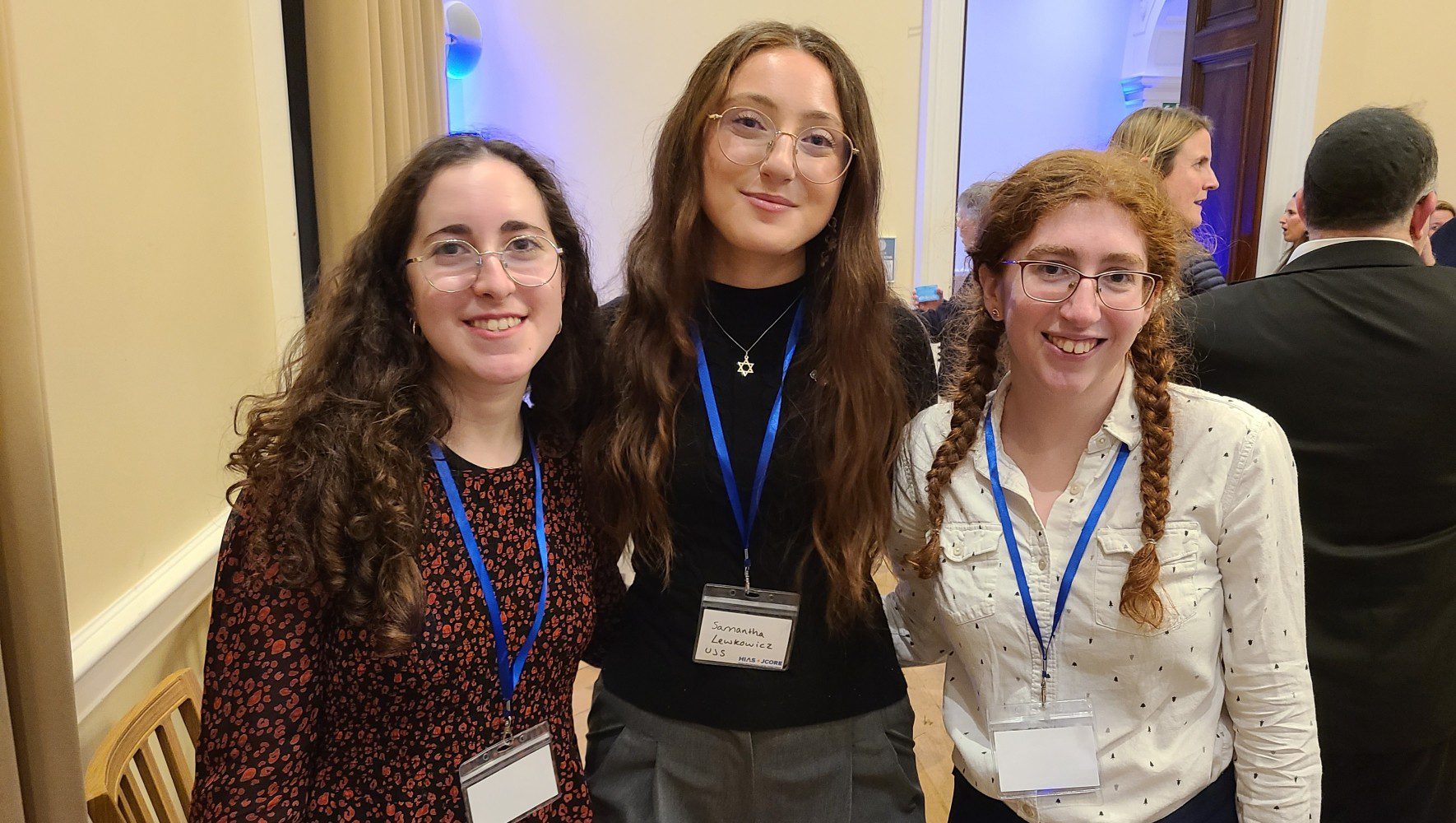
- Summer 2025: Conceptualization and strategic planning between HIAS+JCORE and UJS. The initial outreach campaign targeted students with an existing interest in social justice and Jewish communal leadership.
- Autumn 2025: The first cohort of 50 student ambassadors is selected. Training begins, focusing on the history of the refugee experience and the nuances of the U.K. asylum system.
- Winter 2026: Students begin meeting with policy experts and legal professionals. The focus shifts to “evidence-based advocacy,” ensuring students can articulate the human cost of current legislation.
- March 2026: The program culminates in the launch of “Refugee Shabbat” in London. Ambassadors play a central role, facilitating community discussions and bridge-building events, such as the partner cooking event with OLAM.
- May 2026: The program wraps up its first year, with participants reflecting on their successes in legislative meetings and campus outreach.
Supporting Data: The Impact of Student-Led Advocacy
The effectiveness of the SRAP program is measured not only by the number of participants but by the quality of the engagement. Throughout the school year, ambassadors engaged in a rigorous curriculum that stripped away the sensationalism often found in mainstream media coverage of refugees.
Ambassadors were trained to address the “misinformation gap.” According to internal assessments from HIAS+JCORE, participants reported a 70% increase in confidence when discussing complex asylum policies with peers or skeptical members of the public. This data is critical, as the U.K. continues to debate policies that experts warn could violate international human rights standards.
Furthermore, the program bridges a significant generational divide. By connecting students with Members of Parliament (MPs), the program has normalized the presence of young voices in the corridors of power. These students are no longer just passive observers of history; they are actively shaping the narrative of how the U.K. should treat those fleeing violence and persecution.
Official Responses and Reflections: The "Full Circle" Perspective
The program has gained significant traction due to the personal nature of the work. For many participants, the mission is deeply rooted in ancestral memory.
Phoebe, a master’s student at King’s College London originally from Maryland, provides a unique, cross-Atlantic perspective. Her father’s work in the United States, resettling Afghan families, served as the catalyst for her involvement in the U.K.
“It’s important to me that we as the Jewish community reach out because so many of us are descended from refugees ourselves,” Phoebe explained. “I grew up hearing about how my own great-grandparents came to the U.S. to escape persecution under the Russian Empire.”
Phoebe’s experience highlights the growing recognition that the challenges faced by refugees in the U.K.—such as bureaucratic hurdles and the constant fear of deportation—are mirrored in the United States. Her call for a globalized Jewish response to xenophobia highlights a shift in strategy for international NGOs.
Yael Peleg, HIAS+JCORE’s Community Engagement Director, notes that the program’s value extends beyond politics into the realm of identity. “With this program, we provide students with knowledge about refugees, but also we teach them to be proud of being Jewish,” Peleg said. “They understand our responsibility as Jews and our commitment to creating communities of welcome.”

Implications: The Road Ahead for Grassroots Advocacy
As the program looks toward the next two academic years, the implications for the broader Jewish community and the U.K. political landscape are profound. The rise of xenophobia is a global phenomenon, but the SRAP model suggests that localized, identity-driven advocacy can effectively counter extremist narratives.
Addressing the “Unpopular Opinion”
Advocating for asylum seekers in a climate of economic anxiety and political instability is often categorized as an “unpopular opinion.” However, the ambassadors have learned that silence is a policy choice in itself. By standing up for refugees, these students are redefining what it means to be a modern Jewish leader—one who is unafraid to challenge the status quo.
Future Expansion
The goal for 2027 and 2028 is to scale the program. Yael Peleg’s vision is clear: “Our voices aren’t loud enough at the moment. We need advocates for refugees, and my aspiration is that SRAP will grow in numbers from year to year, creating student grassroots advocacy on campuses.”
The program is currently exploring partnerships with universities in other regions, aiming to create a network of "Refugee Ambassadors" that spans the U.K. university system. The objective is to ensure that wherever a Jewish student studies, they have the tools to be a voice for the voiceless.
A Moral Imperative for 2026 and Beyond
As the article concludes, it is worth noting the sentiment shared by Samantha Lewkowicz: “People fleeing war and persecution just want an opportunity to start over with their families. They are regular people just like us who want a normal life. They deserve the same respect as everyone else.”
The SRAP initiative serves as a beacon of hope, proving that even in a world where anti-immigrant rhetoric is loud and pervasive, the quiet, persistent work of informed, compassionate youth can change the conversation. By mobilizing the next generation, HIAS+JCORE and the UJS are not just teaching students how to advocate—they are building the moral infrastructure for a more inclusive future.
The work is far from finished, but for these students, the classroom was only the beginning. The real test will be in the legislative chambers, the town halls, and the conversations they have in their daily lives, ensuring that for refugees, the gates of welcome remain open.

 Rifan Muazin
 Asep Darmawan