



 Nana Wu
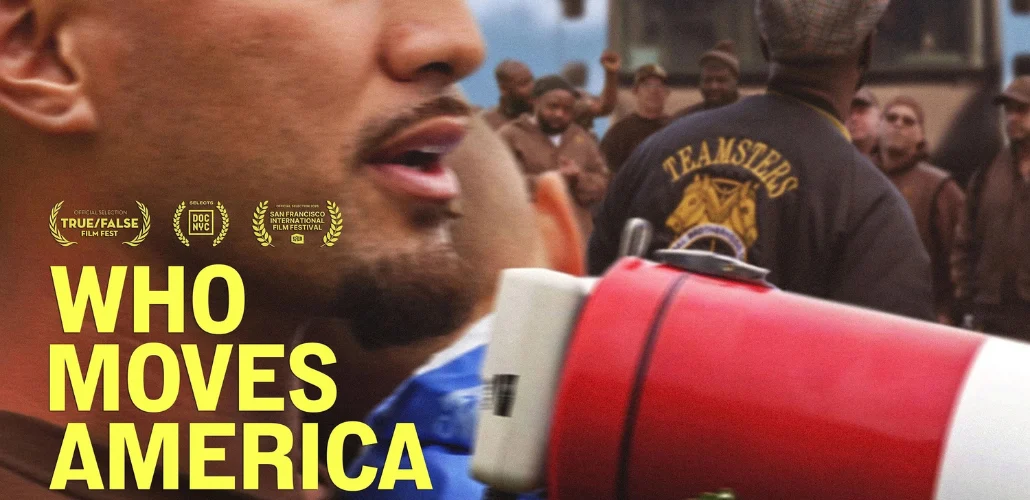
In the summer of 2023, the American labor landscape stood at a precipice. With 340,000 workers represented by the International Brotherhood of Teamsters threatening to walk off the job at United Parcel Service (UPS), the nation braced for the largest private-sector strike in North American history. The potential fallout was immense: the Teamsters move roughly 6 percent of the United States’ Gross Domestic Product (GDP). A strike would not only have crippled the logistics giant’s profits but would have sent shockwaves through a fragile post-pandemic economy.
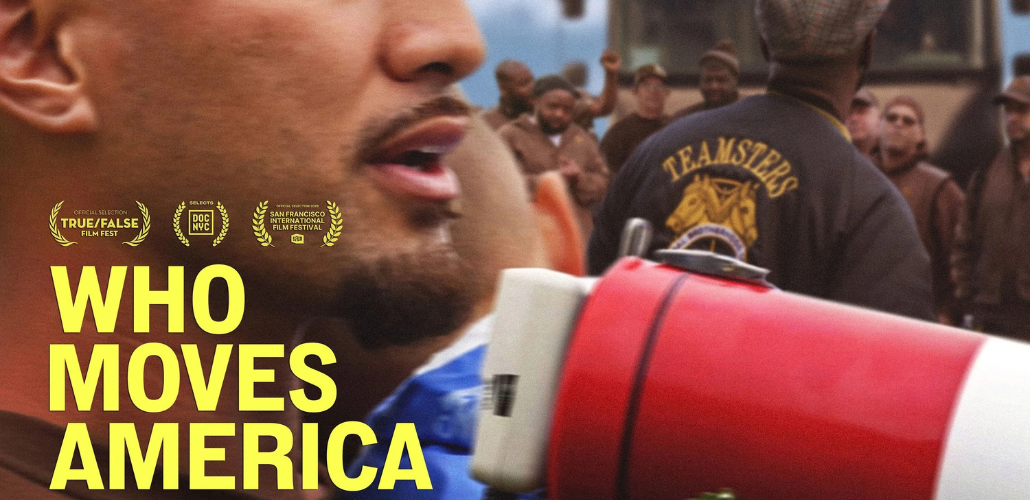
Filmmaker Yael Bridge’s new documentary, Who Moves America, offers an intimate, unvarnished look at this high-stakes standoff. Rather than focusing solely on the boardroom maneuvers of union brass or the public relations posturing of corporate executives, Bridge trains her lens on the "lower frequencies"—the rank-and-file workers whose sweat and solidarity define the heartbeat of the American labor movement.
The Anatomy of a Potential Strike
The documentary functions as a time capsule, capturing the visceral energy of a workforce that had been pushed to the brink. During the COVID-19 pandemic, these workers were labeled "essential," yet they faced grueling, often dangerous conditions. The film highlights the physical toll of the job, noting that in the year leading up to the contract negotiations, two drivers had tragically succumbed to heat-related illnesses while on the clock.
The tension in the film is palpable. For the workers, the fight was personal. "This company hates you," says Teamsters Local 804 President Vinnie Perone in a standout scene. "If they could, they would replace you with a hand-truck." This sentiment served as the emotional fuel for the mobilization. The film utilizes archival footage from the legendary 1997 UPS strike—the last time the union successfully walked out—to contextualize the stakes for a new generation of workers, many of whom were not even born during that historic conflict.
Chronology of a Mobilization
The journey toward the 2023 contract negotiations was not a spontaneous eruption, but a carefully orchestrated campaign of grassroots organizing.
- Early 2023: As the expiration date of the existing contract loomed, rank-and-file members began to organize in earnest. Through the efforts of groups like Teamsters for a Democratic Union (TDU), workers held "practice pickets" and informational meetings in local sandwich shops, union halls, and parking lots.
- The Build-up: The film documents the slow, deliberate work of building power. We see organizers training co-workers to discuss contract demands, collect strike pledge cards, and engage the most vulnerable segments of the workforce, including part-time package sorters.
- The Summer of Tension: As negotiations in Washington D.C. progressed, Teamsters President Sean O’Brien adopted a confrontational posture, effectively shifting the narrative from corporate dominance to worker-led leverage.
- The Tentative Agreement: In late July 2023, a tentative agreement was reached. While the film shows the anticipation of a strike, the outcome surprised many: the members voted to ratify the new five-year contract by a 5-to-1 margin, effectively averting a work stoppage.
Supporting Data and The Human Cost
The documentary succeeds because it refuses to sanitize the experience of the worker. One of the most poignant narratives in the film follows Justin Alo, a driver from San Marcos, California. Alo, classified under the controversial "22.4" system—a tier that allowed for lower pay and fewer protections—finds himself at the center of the debate.
Bridge captures the quiet anxiety of the Alo household as they grapple with the financial reality of a potential strike. They discuss the possibility of pausing essential therapy sessions for their autistic son, a sacrifice that underscores the heavy burden carried by those on the front lines of labor disputes. This is the reality behind the statistics: for the working class, a strike is not just a bargaining tactic; it is a life-altering event that requires profound personal sacrifice.
The Role of Organized Networks
Who Moves America draws parallels to the 2024 documentary Union, which chronicled the successful organization of Amazon workers in Staten Island. Both films highlight that true labor power is woven through dense, interpersonal networks.
The film demystifies the "army" versus "town meeting" dynamic described by labor historian A. J. Muste. The union operates as an army when it needs to project discipline on the picket line, but it functions as a democratic town meeting during the deliberative process of contract ratification. We see workers in Southern California and Kentucky debating the merits of the deal, weighing the desire for a transformative strike against the security of a contract that offered significant gains in pay and safety.
Official Responses and Corporate Perspective
While the documentary centers on the workers, it does not ignore the presence of the Teamsters’ leadership. Sean O’Brien’s appearances provide a counterpoint to the grassroots narrative, highlighting the strategic tension between the union’s top-down negotiations and the bottom-up pressure of the membership.
From the corporate side, the silence is as loud as the noise. UPS, a massive entity that relies on the efficiency of its workforce, found itself in a position where its internal "human" costs could no longer be ignored by the public. The film suggests that the mere threat of a strike was enough to force the company to the table, demonstrating the latent power of the labor force even when the physical picket line is never fully formed.
Implications: The Legacy of 2023
The ratification of the 2023 contract brings with it a complex legacy. For some workers, there is a lingering sense of "what if?" As one California worker notes in the film, the momentum they built felt like a wind-up toy car that was fully charged but never allowed to release its energy.
The implications for the future of the American labor movement are significant. The 2023 UPS contract cycle serves as a masterclass in how to build a strike-ready organization. By focusing on the "lower frequencies"—the education of co-workers, the building of cross-generational relationships, and the democratization of the negotiation process—the Teamsters provided a blueprint for other sectors.
However, the film also highlights the challenge of institutional memory. As veterans of the 1997 strike approach retirement, the challenge for the labor movement is to transfer that knowledge to the next generation. The five-year contract term, while providing stability, limits the frequency with which workers can flex their collective muscles, creating longer periods of dormancy.
Conclusion
Who Moves America is more than a documentary about a delivery company; it is a profound exploration of class consciousness in the 21st century. It captures a moment where 340,000 individuals decided that their labor was not a commodity to be exploited, but a force to be reckoned with.
By refusing to provide a simple, heroic ending, Yael Bridge allows the film to reflect the true, messy nature of democracy. The workers didn’t get their "sexy" picket line, but they did achieve a significant victory, one that redefined their relationship with their employer and with each other. As the film concludes, the audience is left with the realization that the work of organizing is never finished. It is a constant, iterative process of weaving relationships into the dense knots that form the backbone of the American workforce.
Whether or not one agrees with the final ratification, the film serves as a vital reminder: the economy does not move itself. It is moved by people, and when those people decide to move together, the world has no choice but to take notice.
For those interested in exploring the themes of the documentary further, screenings are currently being held across the United States. You can find a local screening or request one for your community by visiting the official film website. A more in-depth analysis of the film and its implications can also be found in the latest issues of Lower Frequencies and Jacobin.


 Muslim

 Rifan Muazin






