


 Azzam Bilal Chamdy
Introduction: A Stalled Homecoming
Nearly a decade has passed since the Myanmar military launched its systematic campaign of violence against the Rohingya, a predominantly Muslim ethnic minority. What began as a localized crackdown in Myanmar’s western Rakhine state in 2017 rapidly metastasized into one of the most severe and enduring displacement crises in modern history. Today, over a million Rohingya remain trapped in the sprawling, precarious refugee camps of Cox’s Bazar, Bangladesh, caught in a geopolitical deadlock that shows little sign of resolution.
For the Rohingya, the passage of time has not brought the promise of a "safe, voluntary, and dignified" return. Instead, it has brought a harrowing cycle of aid dependency, regional instability, and fading international interest. As the world’s attention shifts to newer theaters of conflict, the Rohingya face a quiet, existential erosion. Yet, amid the systemic collapse of their traditional lifelines, a resilient spirit of advocacy and a slow, grinding machinery of international justice continue to offer a glimmer of hope.
Chronology: From 2017 to the Present
The 2017 Exodus
In August 2017, the Myanmar military initiated a scorched-earth campaign described by international observers and the United States government as genocide. Hundreds of thousands of Rohingya fled across the border into Bangladesh, joining thousands who had arrived in earlier waves of persecution.
The Stagnation Period (2018–2023)
For several years, the camps in Cox’s Bazar stabilized into a state of "temporary" permanence. While humanitarian aid provided a baseline for survival, the legal status of the refugees remained in limbo. The assassination of prominent civil society leader Mohib Ullah in 2021 signaled a darker turn, as internal camp security deteriorated and the space for political organizing shrank.
The Renewed Crisis (2024–2026)
The landscape shifted dramatically in 2024 when renewed fighting between the Burmese Army and the Arakan Army—an ethnic armed group fighting for control of Rakhine state—triggered a fresh wave of displacement. Approximately 150,000 new arrivals have since sought refuge in Bangladesh, fleeing atrocities that mirror the brutality of 2017. The situation has reached a breaking point, with the Arakan Army now consolidating control in Rakhine and actively targeting the remaining Rohingya population, effectively closing the door on any immediate prospects for repatriation.
Supporting Data: A Humanitarian System Under Strain
The scale of the crisis is immense, yet the financial support required to manage it is rapidly evaporating.
The Funding Gap
Humanitarian requirements for the Rohingya response have averaged roughly $900 million per year. However, global aid contributions have plummeted. Following significant shifts in U.S. foreign policy—marked by a reduction in funding for international aid agencies—the United Nations has been forced to slash its aid appeals by 25 percent. Even with these reduced targets, less than half of the necessary funding was met for 2026.
The Human Cost of Austerity
The direct consequence of this fiscal shortfall is a drastic reduction in food rations. Refugees who once received a meager $12 per month now subsist on a tiered system that drops as low as $7 per month. The correlation between these cuts and human suffering is undeniable:
- Malnutrition: Rates of acute malnutrition have hit record highs since the initial 2017 exodus.
- Protection Risks: The desperation caused by food insecurity has led to a surge in child marriages and human trafficking.
- The Deadly Sea: With no legal path to resettlement or employment, thousands are taking to the sea in a desperate search for safety. In 2025 alone, an estimated 900 Rohingya lost their lives in maritime crossings, and 2026 is currently on track to exceed that death toll.
Official Responses and the Pursuit of Justice
While the humanitarian situation falters, the legal and diplomatic battleground remains active, though progress is agonizingly slow.
Accountability Mechanisms
The international community has taken significant, if belated, steps toward holding the Myanmar military accountable:
- The U.N. Independent Investigative Mechanism (IIMM): This body continues to systematically collect evidence of genocide, crimes against humanity, and war crimes, building a dossier that names individual perpetrators.
- The International Court of Justice (ICJ): A landmark genocide case against Myanmar remains active, representing the most significant attempt to establish state responsibility under international law.
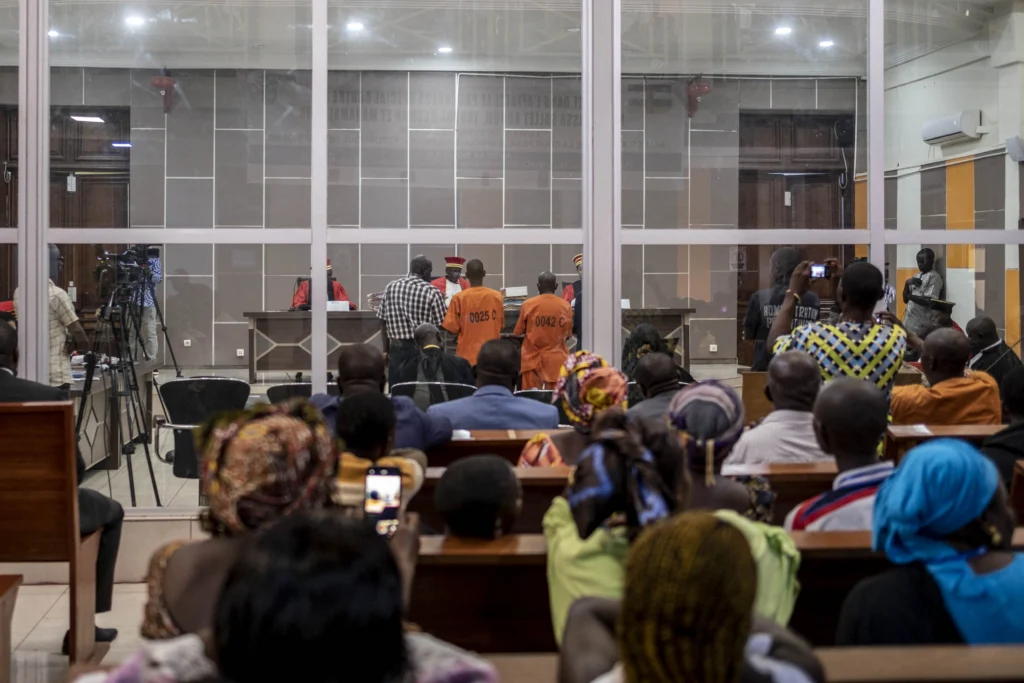
- Universal Jurisdiction: A historic development occurred in Argentina, where a case filed by Rohingya advocates resulted in an international arrest warrant for Min Aung Hlaing, the leader of Myanmar’s military-backed government. This represents a seismic shift, as it pierces the veil of sovereign immunity for those accused of genocide.
The Reality of Justice
Legal scholars and activists emphasize a critical distinction: the existence of a court case is not equivalent to justice. For the Rohingya, these proceedings are only meaningful if they culminate in tangible action—arrests, trials, and the eventual dismantling of the military structures that facilitated the genocide. Without political will to enforce these warrants, the judicial process risks becoming a symbolic exercise rather than a restorative one.
Implications: The Path Forward
The Rohingya crisis is no longer just a refugee problem; it is a test of the international order’s commitment to human rights. The path forward requires a three-pronged approach:
1. Rebuilding Self-Reliance
The paradigm of aid-dependency must shift. The government of Bangladesh has begun to recognize that for a sustainable future, refugees need more than just rations—they need skills. Allowing access to learning centers, utilizing the Myanmar educational curriculum, and providing opportunities for vocational training are essential. These steps allow the Rohingya to maintain their culture and professional capabilities, which will be vital for any eventual return to their homeland.
2. Inclusive Representation
For too long, the future of the Rohingya has been discussed by international actors with little input from the Rohingya themselves. Following the 2025 high-level U.N. conference, where four Rohingya representatives were included, there is a clear mandate for continued, meaningful participation. Civil society groups within the camps—though vulnerable—are the most legitimate voice for the community’s needs and must be protected and empowered.
3. Diplomatic Pressure and Resettlement
The global community cannot continue to ignore the "friendless" nature of the Rohingya. Resettlement programs, which currently benefit less than 1 percent of refugees globally, must be expanded. Furthermore, diplomatic pressure must be exerted on the Arakan Army and the remaining factions within Myanmar to end the confiscation of Rohingya land and the targeted violence that prevents any hope of repatriation.
Conclusion: Commemoration as Catalyst
Every August 25, the world marks Rohingya Genocide Remembrance Day. However, the true commemoration of the tragedy lies not in words, but in the structural support of the living. Rebuilding the future for the Rohingya requires a dual focus: maintaining the pressure of international law to ensure those responsible for the genocide face justice, and fostering the dignity and autonomy of the survivors in the camps.
The Rohingya have endured a decade of unimaginable hardship, yet they remain a people defined by their resilience. By ensuring they are seen, heard, and supported in their quest for justice, the international community can move beyond mere rhetoric and finally offer a pathway to a life of safety and dignity. The goal remains, as it has always been, a return to their homeland—not as victims of history, but as citizens with a future.

 Layla Zulfa
 Asro






